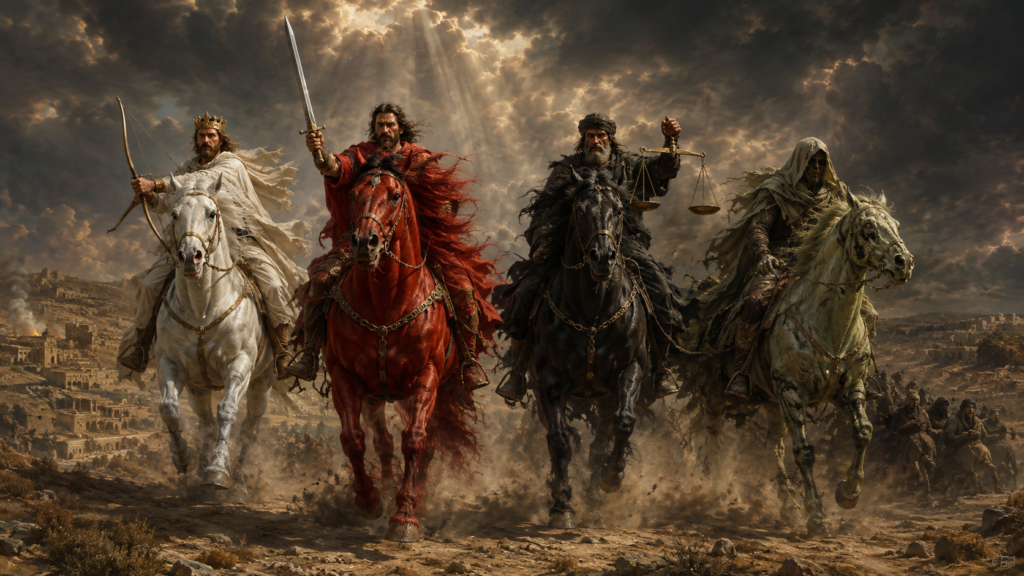
Armchair Apocalypse: Revelation Was Written To Real People In Real Cities

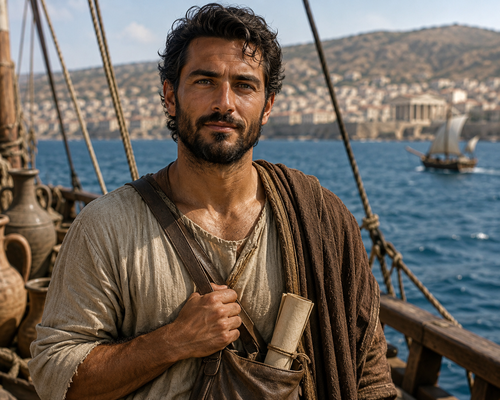
Imagine you’re 25 years old, living in Ephesus around A.D. 95—the same city that received one of the seven letters in Revelation.

You’re living in one of the richest, busiest cities in the Roman Empire. Merchants from around the world crowd the streets. The harbor is packed with ships. Money flows. So does corruption and idolatry.

The city is dominated by the massive Temple of Artemis—one of the Seven Wonders of the Ancient World. Religion isn’t just personal. It’s business. Priests, festivals, sacrifices, fortune tellers, and idol-makers all make a living from pagan worship.

The Roman emperor isn’t just the government. He’s increasingly treated like a god. Public festivals include burning incense before the emperor’s image as a sign of loyalty to Rome. Most people don’t think much about it. It’s just part of life.

Unless you’re a follower of Yeshua the Messiah .

The Jewish population in Ephesus has an established synagogue and centuries of history. Greeks and Romans make up most of the city’s population, bringing their own gods, philosophies, and customs. The first Christians come from both groups. Some are Jews who believe Jesus is the Messiah. Others are former pagans who walked away from idol worship.

These folks don’t meet for ‘church’ in giant church buildings. They gather in homes. Someone with a larger house hosts twenty, maybe forty people. They pray, sing, read the Hebrew Scriptures, listen to letters from the apostles, share meals, and encourage one another. Rich people sit beside slaves. Jews worship beside Gentiles. In a world divided by race, status, and wealth, that is revolutionary.

Life Isn’t Easy

Roman persecution isn’t always constant across the empire, but it’s very real. Refusing emperor worship can cost someone business opportunities, social standing, prison—or even death. Local officials and hostile crowds often become the first source of pressure long before imperial authorities get involved.

Suddenly the Book of Revelation doesn’t sound like strange fantasy. It sounds like a message to ordinary people trying to stay faithful in an extraordinary world.

Revelation wasn’t written to some faraway future generation living in an apocalyptic hellscape. It was written to real people in a real place.

It was written to encourage and inspire the faithful in the midst of a corrupt and broken world and in the face of danger and persecution from a beastly world empire, and that’s still a message worth hearing.

Armchair Apocalypse: Revelation Is Like Football

You can never really understand the Book of Revelation until you understand that it was not written to people who live in modern Western cultures. It’s a letter written to folks who lived a long time ago in a culture and time that was very different from our own.

Below, I’m borrowing a passage from my book, Your Life And What Comes After, to make that point.

“Adriana, a football fan, wrote a letter to her friend who also really liked following and watching football games. In the letter, Adriana described a high school football game she went to recently like this:

‘It was raining cats and dogs as if the sky had sprung a leak, but the game marched on as if the gridiron were Noah’s front yard. The quarterback was trying to thread the needle through a secondary playing tighter than a drum. Some of the fans were hollering that the offense needed to stop shooting themselves in the foot with their false starts and do a better job of establishing the run.

By the second half, the field had turned into a mud pit worthy of a hog-calling contest, and the players were slipping and sliding like greased lightning. The defense was bringing down the house with all-out blitzes on three straight downs.

Finally, midway through the fourth quarter, our junior kicker split the uprights. The score held, and that missed point-after attempt in the first quarter didn’t come back to haunt our squad.

If you aren’t familiar with American football, then Adriana’s report on the game would be kind of confusing to you.

Now just try to imagine how strange and confusing that letter would sound to a young girl in a little fishing village in a faraway country who knew nothing about America, football, or the figures of speech in the English language, like ‘shooting themselves in the foot.’ That young girl would have to see everything through the eyes of the friend Adriana wrote the letter to in order to understand its meaning.”

That doesn’t mean that we can’t learn and apply lessons from Revelation in our own lives. We certainly can. But first we have to understand what John’s vision from God meant to the churches in Asia Minor in the first century. How would they have understood the seemingly strange language, symbols, figures of speech, and images when the letter was read to them?

Armchair Apocalypse: Why Revelation Feels So Jewish

If you’ve ever tried reading Revelation and thought, “Why does this sound like a bizarre mashup of dragons, beasts, and ancient symbolism?” — you’re not alone.

Well, Revelation wasn’t written primarily for modern Americans scrolling social media. It was written to people who knew the Jewish Scriptures inside and out.

Why Are There So Many Old Testament References?

Revelation contains hundreds of references and connections to the Old Testament, yet it never directly quotes it. Why? Because John assumes his readers already know the background story.

The beasts come from Daniel. The plagues echo Exodus. The heavenly throne room resembles Ezekiel and Isaiah. The New Jerusalem points back to God’s promises throughout the prophets.

Think of Revelation as the Bible’s season finale. If you skip the previous seasons, you’ll miss half the plot.

John the Revelator isn’t inventing new ideas. He’s connecting the dots from Genesis to Revelation and showing how God’s grand plan reaches its climax.

Why Does When It Was Written Matter?

Most scholars place Revelation around A.D. 95 during the reign of the Roman Emperor Domitian. Others believe it was written earlier than that, before A.D. 70 when Rome sacked Jerusalem and destroyed the Jewish Temple.

Either way, the important point to remember is that Revelation was written during a time when Christians were facing persecution and pressure to worship the emperor as a god.

So some of the symbols and imagery make more sense when you understand a little bit about the history and culture of the time.

The beast isn’t just a random monster. It represents oppressive political power. Babylon isn’t ancient Babylon. It’s a symbolic picture of a corrupt world system standing against God.

The original readers weren’t asking, “Who is the Antichrist in 2026?” They were asking, “How do we stay faithful when the empire wants our loyalty and may kill us if we don’t bend the knee?”

What Is the Cultural, Geographic, and Historical Context?

John received the vision while exiled on the island of Patmos, a small rocky island off the coast of modern-day Turkey and it was sent as a letter to be read to seven real groups of believers in Asia Minor.

These churches, fellowships of the faithful, many of whom were recently converted Jews, lived in wealthy Roman cities filled with emperor worship, pagan temples, trade guilds, and cultural pressure.

So, we must try to read and understand the Book of Revelation from their point of view. How would those people have understood the letter they received?

Revelation isn’t mainly about predicting tomorrow’s headlines, what 666 really means, or who the Anti-Christ may be among current famous folks. It’s about encouraging believers in all times and places to remain faithful and focused on the return of our Lord Jesus Christ and his coming kingdom, no matter what culture, government, or trend is demanding their allegiance.

So What?

The Book of Revelation is not a puzzle designed to confuse us. It’s a message of hope. The Jewish imagery tells us where the story came from. The historical setting tells us who first received it. The cultural context tells us why it mattered.

And the ending tells us who wins.

“Be thou faithful unto death, and I will give thee a crown of life.” — Revelation 2:10 (KJV)

Armchair Apocalypse: The Most Misunderstood Book in the Bible?

Last week I listed a bunch of questions that a lot of folks ask about the Book of Revelation. This week we start looking at some answers.

Before we dive in though, let’s clear up something that always comes up – the last book of the Bible is NOT “Revelations,” plural; it’s “Revelation,” singular.

What Does “Revelation” Mean?

The Greek word translated as “Revelation” is apokalypsis, from which we get the English word “apocalypse.”

Apokalypsis doesn’t mean destruction or “the end of the world”. It literally and simply means “an unveiling,” “a revealing,” or “a disclosure.” Like pulling a curtain back so you can finally see what’s really going on.

The first verse says: “The Revelation of Jesus Christ…” (Revelation 1:1)

It’s important to understand that the book isn’t mainly about the Antichrist, beasts, dragons, 666, or end-times speculation. It’s about Jesus Christ being revealed.

When most people hear “Revelation,” they think zombies, world war, meteors, and that one weird guy on the internet with 47 prophecy charts. Nope. Forget about the movies, novels, and heavy metal imagery as we start answering the basic questions.

Who Wrote Revelation?

The author identifies himself simply as John (Revelation 1:1, 1:4, 1:9). Most early Christians believed this was John the Apostle—one of Jesus’ closest friends and the same John connected with the Gospel of John. But it may have been someone else writing as “John”, so I call the author of Revelation “John the Revelator.” Either way, the source is the same — a vision from God through Jesus Christ.

At the time, John the Revelator had been exiled to a small rocky island called Patmos for his faith in Christ. Not exactly a luxury vacation destination for sure. While there, he received a series of visions and wrote them down.

When Was Revelation Written?

Most scholars place the writing of Revelation around A.D. 95–96 during the reign of the Roman Emperor Domitian. That means the book was written nearly 2,000 years ago when believers were facing pressure, persecution, and uncertainty about the future.

They wondered about some of the same things many believers all over the world wonder about in our own time:

  • Is evil winning?
  • Does God care?
  • How does this story end?

Revelation was written to answer those questions.

So What?

Revelation isn’t a horror movie script or a puzzle designed to confuse people. It’s a book written by John the Revelator around A.D. 95 that unveils who Jesus is, who ultimately wins, and how human history repeats itself, pitting empires and tyrants against God’s people.

So, read Revelation chapter 1 for yourself. You might discover the book is far less weird—and far more hopeful—than you’ve been told.

Wednesday Armchair Apocalypse Series: Questions And Topics

This is the second installment of the Armchair Apocalypse series.

Once again, my goal in this series is not to do a verse-by-verse commentary or a scholarly study of Revelation, but rather to try to answer the common questions that come up about Revelation, the Apocalypse. I will try to answer those questions in simple, plain language that makes sense to everyday folks.

Let’s look at the questions and topics we will be answering and discussing in this ongoing Armchair Apocalypse series, which will appear every Wednesday here on Bible Rebel.

  • What Is Revelation Really About?
  • Who Wrote Revelation, and When Was it Written?
  • Can We Understand Revelation?
  • Literal or Symbolic?
  • Is Revelation Being Fulfilled Right Now?
  • Does Modern Israel Play a Role in Prophecy?
  • What do the Seven Churches Represent?
  • Why Does God Allow Such Terrible Judgments?
  • The Seven Seals
  • The Seven Trumpets
  • The Seven Bowls
  • The Four Horsemen
  • The Antichrist
  • The Mark of the Beast
  • The Great Tribulation
  • The Rapture Debate
  • The 144,000
  • The Two Witnesses
  • Armageddon
  • The Millennium
  • The Final Judgment
  • The New Heaven and New Earth
  • Why Revelation Is Ultimately a Book of Hope

We have a lot to get to, so plan on joining me every Wednesday for this exciting ride.

Thursday Watchdog Alert: Prophecy Junkies

Iran. Israel. Hezbollah. Gaza. Houthi missiles. “Wars and rumors of wars.” Sound familiar?

This week alone, headlines focused on escalating Iran-Israel tensions, renewed Hezbollah activity, and political leaders openly using end-times language while discussing war in the Middle East. – The Guardian

And yes — many Christians immediately start flipping to Ezekiel, Daniel, and Revelation.

But the Bible never told believers to panic. It told us to pay attention.

Jesus said:

“See that ye be not troubled.” — Matthew 24:6

That’s the part many prophecy junkies conveniently skip while trying to turn every missile launch into a fulfillment of biblical prophecy.

Could current events connect to biblical prophecy? Maybe. The Middle East has always mattered in the biblical storyline, and nations like Persia (modern Iran) do appear in prophetic passages Christians have debated for centuries.

But prophecy isn’t meant to turn Christians into bunker-dwelling doom addicts. It’s supposed to wake us up spiritually.

The real issue is this: while nations rage, millions of ordinary people — including Christians trapped in conflict zones — are suffering, afraid, and searching for hope.

So instead of obsessing over timelines and hashtags, let’s try this:

Pray for persecuted believers. Open our Bibles instead of rage-scrolling. And shine light into a world addicted to darkness and chaos.

Because whether Christ returns tomorrow or 100 years from now, our mission today remains exactly the same.

Wednesday Focus: Our Armchair Apocalypse Series

There are lots of novels and movies about the end of the world, and some of those stories use the images and words from the Bible’s Book of Revelation.

But let’s not get all worked up and frightened by novels, movies, or other forms of apocalypse fiction. Instead, let’s look at what Revelation actually says — and doesn’t say — rather than what others say about it.

That is what this new series, “Armchair Apocalypse,” which will appear every Wednesday on the Bible Rebel blog, is all about.

My goal in this series is not to do a verse-by-verse commentary or a scholarly study of Revelation, but rather to try to answer the common questions that come up when the last book of the Bible is considered. I will try to answer those questions in simple, plain language that makes sense to everyday folks.

I look forward to having you along for the journey.

Tuesday Watchdog Alert: When Politics Tries to Play Prophet

Iran’s ruling clerics don’t just talk politics — some openly talk apocalypse.

Recent reporting highlighted how hardline Iranian leaders and Revolutionary Guard figures continue using “Mahdist” language — the belief that chaos, war, and resistance against global powers can help prepare the way for the return of the Hidden Imam, or Mahdi. Analysts warn this ideology is becoming more central inside Iran’s leadership culture.

“Clerical figures aligned with the Guard have made their views explicit. As Hojatoleslam Ali Saeedi, formerly the Supreme Leader’s representative to the IRGC, said in a 2012 speech: ‘The IRGC is one of the tools for paving the way for the emergence of the Imam of the Age [Mahdi] in the field of a regional and international awakening.’ “- From the Hungarian Conservative

In plain English? Some leaders believe global conflict is not a problem to avoid — it’s a stage to set. That should wake people up.

The Bible warned long ago that rulers and nations would chase power through deception, fear, and spiritual blindness. Christians aren’t called to panic over every headline, but we are called to recognize when political movements start sounding like counterfeit salvation stories.

Our Lord already told us who wins history.

The world keeps looking for a warrior-politician, a system, or an ideology to save humanity. But broken people cannot build heaven on earth with missiles, propaganda, or “holy” revolutions. That usually just creates more graves.

And honestly, if your end-times plan requires nukes and chaos to “help God out,” maybe rethink the strategy.

The real Kingdom of God will come with great power and glory when Jesus Christ returns, but that won’t be according to man’s timetable — and it won’t be by any manufactured apocalypse.

So what?
Today, spend 10 minutes reading Matthew 24 and praying for discernment. Don’t let headlines shape your worldview more than Scripture does.

Your Life And What Comes After (43): You Are In Training

Jesus often used stories, called parables, to teach His followers important lessons. One of those lessons is that if you’re faithful with small things now, God will trust you with bigger things later.

In the coming kingdom and the new heaven‑on‑earth, that means real responsibility—leadership, creativity, and purpose.

Your character—the kind of person you decide to be—takes work. You have to practice to develop good qualities like courage, patience, honesty, love, and wisdom. And sometimes facing hard things and going through hard times can be God’s way of helping you shape that good character.

Those good qualities you develop aren’t for this life only, they don’t disappear; they continue into eternity.

What Will Follow You?

Your works are the things you do and the words you speak.

Good works are the ones you do out of love for God and His people. Those works add value to the world around you and they glorify our heavenly Father.

Not-so-good works are the ones that are selfish and dishonest – they don’t glorify God and they aren’t helpful to others around you. In fact, sometimes they can even be harmful.

That means the good works you do now don’t vanish. They show up again in the world to come. What kind of works do you want following you into God’s new heaven-on-earth?

Practicing For Your Future Job

In the future kingdom, we will serve and reign with Him.

That means that the good character we build now prepares us to rule and serve forever in God’s restored creation.

This life is not a waiting room. It’s a training ground for the new life in the kingdom.

Your Life And What Comes After (31): Ending The End Of The World?

So what is the Book of Revelation all about?

It’s about the victory of God over evil by way of His grand plan through Jesus Christ.

It’s about God winning even when it looks like Satan and the wicked kingdoms of this world have all the power.

It’s about God’s people staying faithful and trusting in Him – no matter how long it takes until He sets things right.

Revelation is meant to encourage and bless God’s people – not scare them or cause them to freak out over 666 and the Antichrist.

The End is Really a Beginning

After Jesus was raised from the dead, he spent many days with his followers, being with them and teaching them about things to come. They asked him about the end of the world as they knew it.

And the same is true for us today, over 2,000 years later — no one knows when the end times will come. So, if you hear someone say they know the date that Jesus will return, you can be sure that they really don’t know. Only God knows.

But don’t think of it as the end of the world, because it will actually be the beginning of forever — with God and each other in a glorious new creation.

I’m not sure who first said this, but it’s worth saying again here: “In the end, everything will be all right. And if it’s not all right, it’s not the end.”

Next, we’ll start digging into what that glorious new forever looks like.