President Trump announced that the December 3 firing-squad execution of convicted Fort Hood murderer Nidal Hasan will not be livestreamed, reversing Defense Secretary Pete Hegseth’s proposal. Catholic bishops, evangelical leaders and other religious groups had criticized the broadcast plan.
A new poll found that 74% of white evangelicals and even larger shares of several other religious groups opposed the livestream. The execution itself remains scheduled. Religion News Service coverage
Scripture recognizes government authority to punish wrongdoing (Romans 13:4). But turning someone’s death into a public spectacle raises a different moral question.
So What?
Christians may disagree about capital punishment, but we should at least consider whether broadcasting an execution honors justice or simply satisfies an appetite for vengeance.
Religious opposition helped shape a consequential government decision, demonstrating that Christians can influence public policy even when they disagree on underlying doctrine.
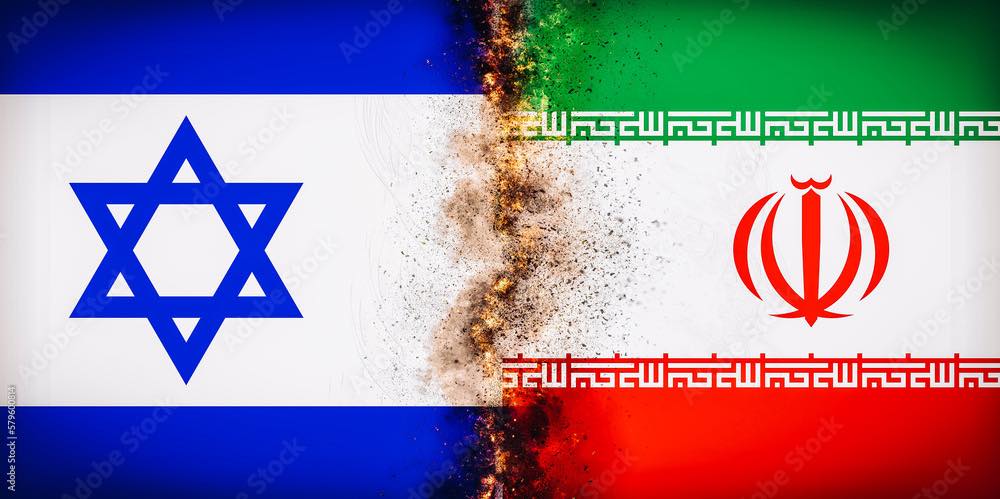
Iran reviews U.S. proposal on reopening the Strait of Hormuz
Iran said yesterday it was still reviewing Washington’s response to an Iranian proposal concerning the reopening of the Strait of Hormuz, one of the world’s most important oil-shipping routes. The talks come after tanker attacks reached their highest weekly level since the Iran war began, while oil prices remain elevated because of the wider conflict. Reuters
This is exactly the kind of story that generates instant prophecy claims. Iran, oil, war, global trade—it sounds apocalyptic. But Scripture does not give us a verse saying, “When Hormuz closes, start the Revelation countdown.”
What we can say is simpler: control of trade routes has always shaped empires, wars and human suffering. Watch closely and pray for peace and God’s protection over His people, but don’t turn every tanker attack into a prophetic timetable.
So What?
A prolonged Hormuz disruption would affect oil prices, inflation and economies far beyond the Middle East. However, none of that gives us permission to announce that a particular modern military development is unquestionably the fulfillment of Ezekiel, Daniel or Revelation.
Yes, we are supposed to watchers, but let’s not force today’s headline into yesterday’s prophecy.
Peter Thiel Connects AI Regulation to the Antichrist
Technology investor Peter Thiel is making headlines following the release of recordings from his private Nashville lectures on the Antichrist.
According to reporting published October 8, Thiel argues that fears surrounding artificial intelligence could help justify the creation of an authoritarian world government. – October 8 report on Thiel’s Nashville lectures
He has criticized Pope Leo XIV and former President Barack Obama for their concerns about AI.
Thiel’s argument connects technological regulation, global political authority and his interpretation of biblical end-times prophecy. His lectures also discuss the mysterious restraining force described in 2 Thessalonians 2. Gizmodo
Apparently, the Antichrist now works in AI regulation.
We’ve all heard similar predictions before.
The Antichrist has supposedly been a pope, Napoleon, Hitler, various American presidents and just about every powerful European politician.
Now we’re adding people who want to regulate artificial intelligence. But, the word antichrist never appears in Revelation. John uses it in his letters, including this remarkable statement:
“Even now are there many antichrists.” — 1 John 2:18 (KJV)
John wasn’t describing a single futuristic technology regulator, he was warning about people already active in his own time.
Thiel’s arguments demonstrate how biblical prophecy is being incorporated into modern debates about technology, political authority and global governance.
Why don’t we first consider how the Book of Revelation would have been understood by the people it was first written to about 2000 years ago?
One of this week’s most unusual faith stories involves Anthropic, the artificial-intelligence company behind Claude.
The company has been consulting religious scholars and philosophers about increasingly difficult questions surrounding advanced AI—including whether sufficiently sophisticated systems might someday deserve moral consideration. Anthropic researchers have also been studying AI behavior and the possibility that increasingly capable systems could force society to confront questions about consciousness that once belonged almost entirely to philosophy and religion. The Indian Express
Meanwhile, an interfaith gathering in New York Wednesday night brought a rabbi, Christian priest, Buddhist minister and imam together (sounds like the start of a joke, I know) specifically to discuss “What Makes Us Human? AI, Faith and the Search for Connection.” Archdiocese of New York
This may become one of the defining theological questions of the next generation.
Suppose AI eventually, and even already, talks like us, reasons like us, remembers, creates, claims to feel, and begs you not to turn it off. Then what?
Christianity’s answer to human worth has never ultimately been intelligence.
“God created man in his own image.” — Genesis 1:27 (KJV)
So What?
That’s why someone with an IQ of 70 isn’t less human than someone with an IQ of 170. So before asking whether AI has become intelligent enough to be human, Christians may need to recover a much older question:
What does it actually mean to bear the image of God?
The Supreme Court begins its 2026–27 term today with several cases capable of reshaping the boundary between government and religion. Among them is a Colorado dispute involving Catholic preschools that participate in the state’s publicly funded preschool program but object to nondiscrimination requirements involving sexual orientation and gender identity. The Court has also agreed to hear a Kentucky church’s religious-land-use case, while a Texas Ten Commandments classroom dispute is among the closely watched matters surrounding the new term. AP News
These cases keep returning to the same difficult question: When government offers something to everybody, can it tell religious people they may participate only if they leave part of their religion behind?
Christians should be careful here. Religious liberty shouldn’t mean Christian privilege. Whatever constitutional principle protects a Catholic preschool should also protect a Jewish school, Muslim organization or nonreligious group when the circumstances are comparable.
One of the most important features of our Constitution is the protection it provides in keeping Caesar from deciding which beliefs are acceptable.
Iran prepares for a much harder retaliation if war resumes
Reuters reports that Iranian leaders are preparing broader and more aggressive retaliation if the U.S. resumes major military attacks. Potential targets could extend beyond U.S. installations to allied nations, while Iran-linked groups in Lebanon, Yemen and Iraq have reportedly been told to prepare for coordinated action. Reuters
This is the kind of headline that instantly produces end-times speculation. Slow down. Iran matters biblically and geopolitically—but today’s military planning is not automatic proof of fulfilled prophecy. Start with the facts before forcing Ezekiel or Revelation onto the map.
Iran’s internal pressure may matter as much as its external war
Reuters reports that Iran’s worsening economy, fears of renewed domestic unrest and a government crackdown—including thousands of arrests—are increasingly shaping Tehran’s calculations alongside the military conflict. Reuters
Scripture repeatedly shows powerful kingdoms boasting in their strength shortly before judgment or collapse—Babylon in Daniel 5 being one of the clearest examples. But resist turning that observation into a date-setting prophecy claim. Watch carefully without pretending we know God’s timetable.
Two Christian student organizations are suing Virginia State University, alleging that the public university stripped Christian organizations of ordinary registered-student-group status and placed them under the control of the university’s Campus Ministries office. See story here
According to the complaint, Christian organizations must obtain approval for meetings and prayer gatherings, use university-approved oversight and have lost access to benefits available to other registered student organizations. The plaintiffs also allege Muslim and other non-Christian groups are exempt from the policy. These are allegations in pending litigation, not yet judicial findings.
So What?
If the allegations are accurate, the problem isn’t complicated. A public university can establish neutral rules for every student organization.
It can’t say: Muslim students can organize themselves, and secular students can organize themselves, but Christian students need government-approved supervision before they pray.
The First Amendment isn’t supposed to protect Christianity more than other beliefs, or less than other beliefs. It protects Christianity equally.
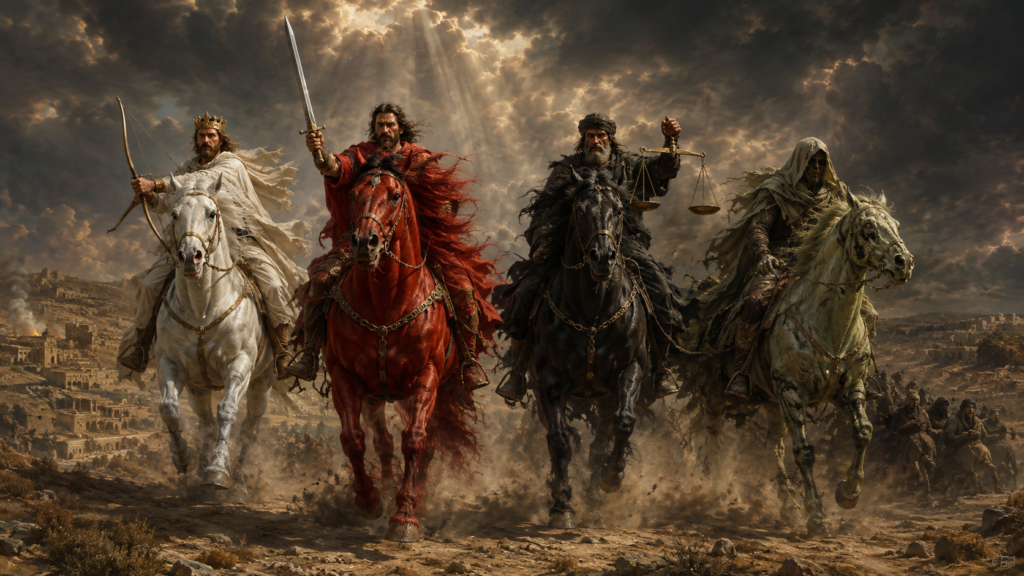
Well before the Book of Revelation was written, Jesus warned His disciples about a coming time of terrible suffering:
“For then shall be great tribulation, such as was not since the beginning of the world to this time, no, nor ever shall be.” — Matthew 24:21, KJV
This verse is often treated as a prediction about the final years before Christ returns. But Jesus did not deliver it during a lecture about twenty-first-century world politics. He was answering a question about the future of Jerusalem and its Temple.
The conversation began when the disciples admired the Temple buildings. Jesus responded that not one stone would be left upon another. Naturally, they wanted to know when this would happen.
Jesus warned them about false messiahs, wars, famines, earthquakes, persecution, and Jerusalem’s approaching destruction. When danger arrived, those living in Judea were told to flee to the mountains. They were not told to identify the Antichrist, calculate seven years, or upload an emergency prophecy podcast. They were told to get out.
Luke’s version is even more direct:
“And when ye shall see Jerusalem compassed with armies, then know that the desolation thereof is nigh.” — Luke 21:20, KJV
That happened in the Jewish revolt against Rome. In AD 70, Roman forces captured Jerusalem, destroyed the Temple, and inflicted enormous suffering on the people trapped inside the city. For Jesus’ disciples—and certainly for those who survived the siege—this was not a rehearsal for tribulation. It was tribulation.
Jesus also said, “This generation shall not pass, till all these things be fulfilled” (Matthew 24:34). That statement is difficult to explain if everything in the chapter refers exclusively to events thousands of years later.
Does that mean Matthew 24 has nothing to say about the future? Not necessarily. Biblical prophecy sometimes joins a near historical judgment with the larger themes of final judgment and God’s ultimate victory. Jesus’ language eventually reaches beyond Jerusalem to His coming, the gathering of His people, and the need to remain watchful.
That is why Christians read the passage differently. Some believe nearly all of it was fulfilled in the first century. Others see the fall of Jerusalem as an early fulfillment that foreshadows a greater final crisis. Futurists place most of the chapter near the end of history.
So What?
Whatever position we take, we shouldn’t skip the setting. Jesus gave this warning to real disciples about a real city, a real Temple, and a catastrophe that would occur within their historical world.
The destruction of Jerusalem shows what “great tribulation” looks like when violent empire, human rebellion, and divine judgment collide.
In Part Four, we’ll examine whether the Bible also points to a final worldwide Tribulation—and where the popular seven-year timeline actually comes from.
Ninth Circuit will reconsider who a Christian homeless ministry can require employees to be
The long-running dispute between Washington state and Yakima Union Gospel Mission is returning to the 9th U.S. Circuit Court of Appeals.
The Christian homeless ministry requires certain employees to share and live according to its religious beliefs. Washington’s anti-discrimination law restricts religious organizations’ ability to make some employment decisions based on sexual orientation and other protected characteristics. The legal question is how far the First Amendment’s protection of religious organizations extends beyond clergy and clearly ministerial employees. Seattle Red
This looks to be a genuinely difficult religious-liberty case.
A Christian ministry obviously shouldn’t be able to say: “We don’t hire Black people.” Slapping “religious belief” on racial discrimination wouldn’t make it legitimate.
But should a Christian ministry be forced to employ someone whose beliefs or conduct directly contradict the religious mission the organization exists to carry out?
Imagine government telling an atheist organization it must hire an evangelist to teach its worldview. Or a Muslim ministry that it must employ somebody openly hostile to Islam. Or a Christian ministry being told it must employ a satanist.
So What?
Religious organizations cannot remain meaningfully religious if government ultimately determines who qualifies to carry out their mission. This should be a slam dunk case for the Ninth Circuit to decide, right?
Southern Baptist president reverses course on denomination’s abuse crisis
Southern Baptist Convention President Willy Rice, who previously described the SBC sexual-abuse crisis as more “hoax than reality,” is now calling abuse a serious threat requiring “constant vigilance.”
In his first address to the SBC Executive Committee, Rice told churches to establish safeguards, take every allegation seriously, report accusations immediately to law enforcement and cooperate fully with investigations. He also announced a commission on women in pastoral ministry and proposed adding explicit language about gender, sexuality and marriage to the Baptist Faith and Message. The Roys Report
Give Rice credit for changing direction, but Christians shouldn’t miss the larger lesson. When accusations threaten a church’s reputation, the temptation is:
Protect the church.
Protect the pastor.
Protect the ministry.
Protect the denomination.
That is definitely the wrong order.
So What?
Protect the victim FIRST. A church shouldn’t need lawyers, reporters and survivors dragging it toward transparency.
“For every one that doeth evil hateth the light… But he that doeth truth cometh to the light.” — John 3:20–21 (KJV)
Churches ought to be the first institutions running toward the light, not dragging their feet and covering their eyes from the light.