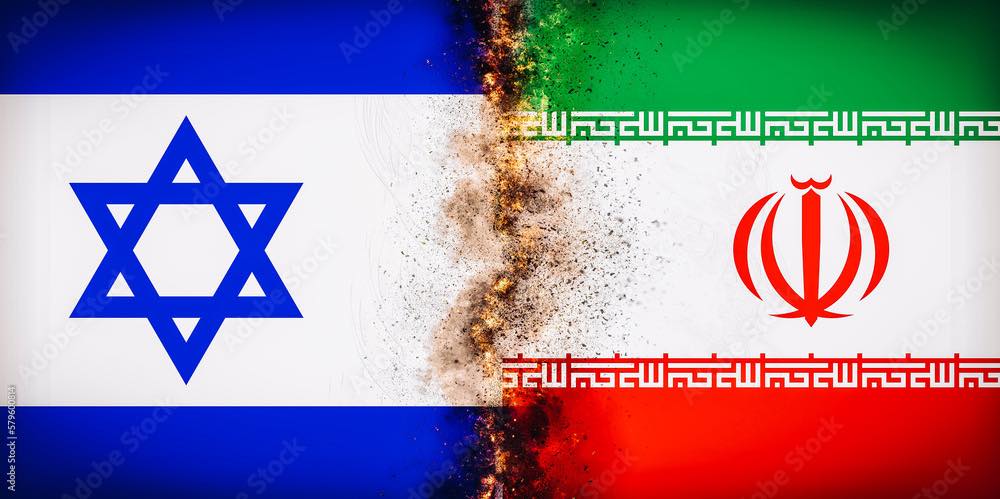
Thursday Watchdog Alert: Middle East Political Messiahs?

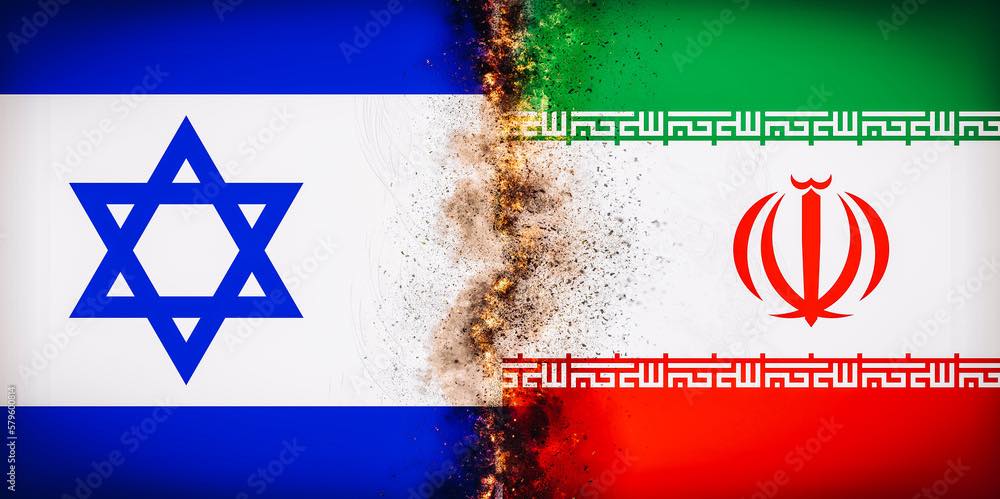
Iran says its attack on Kuwait was self-defense. Negotiations with the United States have now been suspended. Independent

Israeli strikes in Lebanon continue. Politicians blame politicians. Generals blame generals. Everybody promises a solution. Military.com

And yet the Middle East remains what it has been for thousands of years: a place searching for peace and rarely finding it.

Every generation believes the right leader, the right government, the right treaty, or the right movement will finally fix the world. We keep looking for a political messiah.

The Bible says that longing is real—but we’ve been looking in the wrong place.

Notice that Jesus is called the Prince of Peace, not the Negotiator of Peace. Real peace won’t be accomplished at a conference table. Real peace will only be realized when Jesus Christ returns in power and glory to establish God’s kingdom on earth.

That’s why every human peace plan eventually cracks. You can sign agreements on paper, but you can’t legislate away sin.

The headlines remind us that humanity’s deepest problem has never changed. Neither has God’s solution.

Thy kingdom come, Thy will be done on earth as it is in heaven.

Thursday Watchdog Alert: Prophecy Junkies

Iran. Israel. Hezbollah. Gaza. Houthi missiles. “Wars and rumors of wars.” Sound familiar?

This week alone, headlines focused on escalating Iran-Israel tensions, renewed Hezbollah activity, and political leaders openly using end-times language while discussing war in the Middle East. – The Guardian

And yes — many Christians immediately start flipping to Ezekiel, Daniel, and Revelation.

But the Bible never told believers to panic. It told us to pay attention.

Jesus said:

“See that ye be not troubled.” — Matthew 24:6

That’s the part many prophecy junkies conveniently skip while trying to turn every missile launch into a fulfillment of biblical prophecy.

Could current events connect to biblical prophecy? Maybe. The Middle East has always mattered in the biblical storyline, and nations like Persia (modern Iran) do appear in prophetic passages Christians have debated for centuries.

But prophecy isn’t meant to turn Christians into bunker-dwelling doom addicts. It’s supposed to wake us up spiritually.

The real issue is this: while nations rage, millions of ordinary people — including Christians trapped in conflict zones — are suffering, afraid, and searching for hope.

So instead of obsessing over timelines and hashtags, let’s try this:

Pray for persecuted believers. Open our Bibles instead of rage-scrolling. And shine light into a world addicted to darkness and chaos.

Because whether Christ returns tomorrow or 100 years from now, our mission today remains exactly the same.

Thursday Watchdog Alert: Headlines, Missiles, and the Search for Meaning

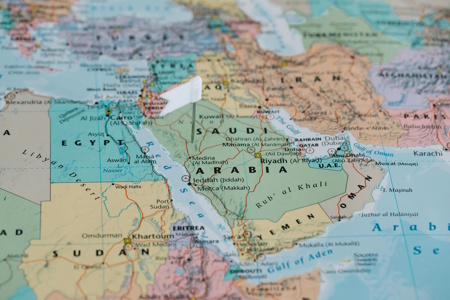
The Middle East is once again lighting up the world’s headlines. Iran is threatening “new fronts” of war, Israel remains on high alert, and global leaders are openly talking about prophecy, Armageddon, and end-times language. (The Guardian)

Meanwhile, Christians across the region are stuck in the middle — caught between radical Islam, political chaos, and global powers playing geopolitical chess with real human lives. Churches in conflict zones continue to face fear, instability, and persecution while much of the world scrolls past it between cat videos and coffee reels.

So… is this biblical prophecy?

Maybe parts of it point in that direction. Jesus did say:

But here’s the mistake many people make: they become obsessed with decoding headlines while ignoring the condition of their own life, their own household, their own community.

Bible prophecy was never meant to make Christians panic. It was meant to wake people up.

The world keeps promising peace through politics, power, and hashtags. The believer’s hope and purpose are something different: truth, real meaning, and a coming Kingdom in a restored creation that does not collapse every election cycle.

What Is Twelver Shi‘ism?

Twelver Shi‘ism (the dominant Shia branch in Iran, Iraq, Lebanon, and elsewhere) teaches that there are twelve divinely appointed Imams. The line ends with the Twelfth Imam, also called the Hidden Imam or al‑Mahdi, who is believed to be alive but concealed by God until the appointed time.

What Twelver Shi‘ism Actually Teaches

Twelver Shia Muslims believe that God appointed a line of twelve Imams, beginning with Ali and ending with Muhammad ibn al‑Hasan al‑Mahdi, born around 870 CE. According to this doctrine, the Twelfth Imam entered ghaybah (occultation) — a state of divine concealment — in the 9th century. He is considered still alive and will one day return as the Mahdi, a messianic figure who will establish global justice.

Watchdog Alert: The Difference Between Sunni And Shia Muslims

For many people, the difference between Sunni and Shia Muslims can feel confusing, but it actually begins with a very simple historical question: Who should have led the Muslim community after the Prophet Muhammad died in 632 CE?

Sunni Muslims believed leadership should be chosen by the community, and they supported Abu Bakr, a close companion of Muhammad. Shia Muslims believed leadership should stay within the Prophet’s family, beginning with Ali, his cousin and son‑in‑law. What started as a political disagreement eventually grew into two distinct traditions with their own practices, scholarship, and spiritual leadership structures.

Over time, Sunnis developed a system where no single leader holds divine authority. Instead, religious understanding comes from scholars and four major schools of interpretation. Shia Muslims, especially the Twelver branch, believe in a line of Imams—descendants of Ali—who carry spiritual guidance and authority. These differences shape how each community approaches religious leadership, law, and devotion, even though both share the same core beliefs about God, the Qur’an, and the Prophet Muhammad.

Today, Sunni Muslims make up the vast majority of the global Muslim population—about 85 to 90 percent. Shia Muslims represent roughly 10 to 15 percent worldwide, forming significant communities in places like Iraq, Lebanon, Bahrain, and Pakistan.

The most notable Shia‑majority nation is Iran, where about 90 percent of the population follows Twelver Shi’ism. This identity became central to Iran’s culture and religious life beginning in the 16th century under the Safavid dynasty.

Coming next: What is “Twelver Shi’ism”?

Operation Epic Fury Isn’t In The Bible

Operation Epic Fury isn’t a biblically prophesied event.

Debating whether modern Israel is the same as ancient, biblical Israel or whether modern Jews are from the same bloodline as the original Twelve Tribes muddies the issue and misses the point.

America is working in tandem with, and supporting, a long-time friend and strategic geopolitical ally, Israel, to neutralize a common existential threat. Doing so isn’t “serving our Zionist masters” or “sending our young people to die for Netanyahu.” It’s common sense and the right thing to do because it’s a national-security necessity.

Nor is it against God’s will to oppose the ongoing conflict with Iran. In fact, the current conflict with Iran shouldn’t be cast as a biblical issue at all.

Chanting “From the river to the sea, Palestine will be free” is effectively code for “Wipe Israel off the map and exterminate the Jews,” a goal the mullahs in Iran have openly stated. Therefore, Israel is fully justified in taking strong military action against that threat.

Chanting “Death to America,” regarding our country as the “Great Satan,” building nuclear weapons, and working tirelessly to find ways to continue to kill Americans and destroy our way of life—which the current Iranian regime has been doing for over four decades—are reason enough for America to declare, “Enough is enough.”

We don’t need biblical affirmation, prophetic permission, or a “standing with God’s chosen people” rationale in order to work with an ally to remove the malignant tumor that threatens our kids and grandkids. All we need is the wisdom and courage to see it through.

Watchdog Alert: Christianity In Iran

Christianity in Iran today is both difficult to measure and impossible to ignore. Estimates vary widely because many believers worship in secret, but most credible sources agree that the Christian population numbers in the hundreds of thousands, with some estimates reaching close to one million when including underground house churches. Iran officially recognizes certain historic Christian communities—primarily Armenian and Assyrian churches—but conversion from Islam to Christianity is not legally protected and can result in serious consequences. This makes accurate data challenging, as many converts do not publicly identify themselves.

Despite the risks, numerous observers describe Christianity in Iran as one of the fastest-growing expressions of the faith in the world. Much of this growth appears to be among Muslim-background converts, particularly younger Iranians who are searching spiritually or expressing quiet discontent with the religious-political establishment. Because registered churches are restricted and monitored, many believers gather in informal house churches, small groups, or private settings. These networks are decentralized and largely invisible, contributing to both their resilience and the uncertainty surrounding population estimates.

At the same time, the environment for Christian converts remains highly restrictive. International religious freedom reports and advocacy organizations document arrests, interrogations, church raids, and prison sentences under national security charges. While historic ethnic Christian communities are allowed limited public worship, converts often face harsher scrutiny. Reports in recent years indicate an increase in arrests and prison sentences tied to alleged “security” concerns related to religious activity. Pressure can come not only from authorities but also from families and local communities.

The overall picture is complex: Christianity in Iran exists in a space of both growth and hardship. Public recognition is limited, legal protections are narrow, and many believers practice their faith quietly. Yet multiple monitoring organizations note that the church continues to expand despite these constraints. Whether viewed through demographic surveys, ministry reports, or human rights documentation, the story of Christianity in Iran today is one of persistence—marked by both significant challenges and surprising resilience.