Now God’s grand plan is to restore His people and His creation to their original purpose. Paradise was lost; it is to be regained. Everlasting life with God was lost; it is to be regained.
But our original purpose remains the same today, even in a fallen state of sin, death, darkness, and rebellion: to glorify, God, add value to His creation, and have fellowship with the Creator.
What Does That Have To Do With My Life?
If you’ve ever been part of a team or organization, you know that once you get a basic understanding of the ‘big picture’ goals and purpose of the team or organization, your part in it begins to make more sense, and you get a clearer vision of what you need to do individually.
We’ll start to look into what all of that means and what it looks like in real life next week.
President Trump announced that the December 3 firing-squad execution of convicted Fort Hood murderer Nidal Hasan will not be livestreamed, reversing Defense Secretary Pete Hegseth’s proposal. Catholic bishops, evangelical leaders and other religious groups had criticized the broadcast plan.
A new poll found that 74% of white evangelicals and even larger shares of several other religious groups opposed the livestream. The execution itself remains scheduled. Religion News Service coverage
Scripture recognizes government authority to punish wrongdoing (Romans 13:4). But turning someone’s death into a public spectacle raises a different moral question.
So What?
Christians may disagree about capital punishment, but we should at least consider whether broadcasting an execution honors justice or simply satisfies an appetite for vengeance.
Religious opposition helped shape a consequential government decision, demonstrating that Christians can influence public policy even when they disagree on underlying doctrine.
Here are four perspectives from four different biblical scholars and Christian thinkers on the differences between the Synoptic Gospels (Matthew, Mark, and Luke) and the Gospel of John.
The central distinction is that the Synoptics emphasize Jesus’ public ministry, parables, and proclamation of God’s kingdom, while John concentrates more explicitly on Jesus’ identity, His relationship with the Father, and the meaning of believing in Him.
Clement of Alexandria — A different kind of Gospel
“John … composed a spiritual gospel.”
— Clement of Alexandria, as preserved by Eusebius, Ecclesiastical History 6.14.7 (translated excerpt).
Clement’s ancient observation captures the distinctive theological emphasis of John. The first three Gospels recount Jesus’ ministry through many shared events and teachings; John places particular emphasis on their deeper spiritual meaning.
B. F. Westcott — Two different perspectives
“The transition involves the passage from one world of thought to another.”
— Brooke Foss Westcott, An Introduction to the Study of the Gospels, p. 249.
Westcott recognizes the striking change in language, structure, and emphasis when moving from Matthew, Mark, and Luke to John. He nevertheless argues that these different presentations can be understood together.
D. A. Carson — Different presentations of Jesus
“There are obvious differences between the presentation of Jesus by the synoptists and the presentation of Jesus by John.”
— D. A. Carson, Historical Tradition in the Fourth Gospel, p. 121.
Carson cautions against assuming that these differences necessarily make the accounts historically incompatible. He argues that Jesus’ actual ministry was larger than any one Gospel’s selection of events and teachings.
Michael F. Bird — John’s distinctive approach
“John is clearly in a class of his own and is doing his own thing.”
— Michael F. Bird, quoted from his 2015 discussion of the Fourth Gospel, p. 110.
Bird emphasizes John’s distinctive literary character. Instead of the Synoptics’ many short sayings and parables, John features extended conversations, symbolic signs, and Jesus’ remarkable “I am” declarations.
Matthew, Mark, and Luke often emphasize what Jesus did and taught as He proclaimed God’s kingdom. John gives particular attention to who Jesus is and what His coming means. But the differences go beyond emphasis: the Gospels also differ in their selection, arrangement, and sometimes chronology of events.
Those distinctions deserve careful study rather than being ignored or automatically treated as contradictions.
An Estimated 80,000 Christians Gather in Texas Stadium for Prayer
While much of America’s attention is focused on politics, wars and cultural controversies, here’s what happened Saturday night in Arlington:
An estimated 80,000 Christians gathered at AT&T Stadium for an evening devoted primarily to prayer.
The event, called ACCESS — That Powerful Hour of Prayer, was organized by 2819 Church and Pastor Philip Anthony Mitchell.
According to organizers and participants, free tickets were reserved within eight hours. Unlike many large Christian gatherings, the event wasn’t built around celebrity speakers or a traditional concert.
Istead it emphasized collective prayer, worship and spiritual renewal.
The reported attendance is an estimate rather than an independently verified count. Nevertheless, the event’s scale is notable. Last year’s ACCESS gathering reportedly attracted more than 30,000 participants in Atlanta. Christian Post
Wait. Aren’t we constantly hearing that Christianity is dying in America?
Church attendance has declined in many denominations and religious affiliation has weakened, while millions of Americans identify as having no religion.
Yet tens of thousands of people gathered in a football stadium specifically to pray.
So What’s Going On?
Maybe Americans aren’t necessarily losing interest in God, but rather some are losing interest in traditional religious institutions.
While that’s not a conclusion we can draw from one stadium gathering it is a question worth investigating.
Jesus said:
“For where two or three are gathered together in my name, there am I in the midst of them.” — Matthew 18:20 (KJV)
Notice our Lord didn’t say two or three thousand, and He didn’t require a stadium.
Large gatherings like this suggest that substantial enthusiasm for collective Christian worship remains, even as traditional measures of religious participation show long-term weakness.
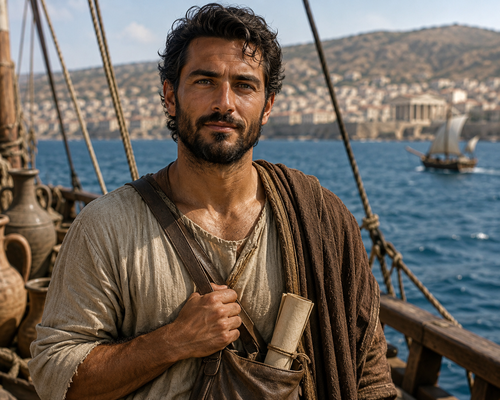
Nicanor is the main character in our short historical fiction episodes showing how the Book of Revelation may have first traveled from Patmos in the Aegean Sea in the first century to the churches in Asia Minor—and eventually to the whole world and people in every age since.
During this “Armchair Apocalypse” series, we’ll follow Nicanor on his travels to better understand the Book of Revelation by exploring the people and the times in which it was first revealed.
Nicanor and the Road Beyond Smyrna
The last words of John’s letter still hung in the crowded upstairs room.
“Fear none of those things which thou shalt suffer…. Be thou faithful unto death, and I will give thee a crown of life.” — Revelation 2:10, KJV
No one spoke for several moments. Below them, Smyrna continued as if nothing had happened. Merchants shouted in the street. Carts rattled over stone. Somewhere near the harbor, a priest called citizens to offer incense for the emperor. Rome’s noise had not stopped—but something inside the room had changed.
At dawn, Nicanor rolled the scroll carefully, wrapped it against the sea air, and placed it inside his leather bag. His next destination was Pergamum. As he tightened the strap, the church’s elder, a gray-bearded man named Justus, handed him bread, dried figs, and a small flask of water.
“John wrote that we will have tribulation,” Nicanor said. “Some in the room looked frightened. Do they believe something worse is coming?”
Justus glanced toward the street. “Something worse is always coming when men worship power. But tribulation is already here.”
He picked up an olive from the morning meal and pressed it between his fingers. “The word John used means pressure—the kind that crushes grapes or olives until what is inside comes out. Rome applies that pressure every day. Honor Caesar. Join the feast. Offer the incense. Call him lord. Most people think it is harmless. A pinch of incense, a few words, and everyone goes home happy.”
“Except those who refuse,” Nicanor said.
“Exactly. A merchant may lose his customers. A craftsman may be pushed out of his guild. A family may lose its home. Some will be imprisoned. Some may die.” Justus looked back toward the room where several believers still slept. “Tribulation reveals what is inside us. Fear—or faithfulness.”
Nicanor thought about the phrase “ten days” from Johns letter. “Does John mean their suffering will last only ten days?”
“Perhaps. Perhaps it is a symbol, like much of the vision. Daniel and his friends were tested for ten days. Whatever John means, the message is clear: the suffering has a limit. Rome does not decide how the story ends.”
Nicanor lifted the bag onto his shoulder. “Then how should they prepare?”
Justus smiled faintly. “Not by hiding in caves with baskets of grain.”
He pointed toward the believers upstairs. “We prepare by knowing who we belong to before the pressure comes. We feed the families of prisoners. We care for those who lose work. We teach our children that Caesar is not Lord. We refuse to become cruel when cruel men rule us. And when one of us becomes afraid, the others stand beside him.”
Nicanor looked north toward the road to Pergamum. Another city. Another church. Another place where Roman power demanded what belonged only to God.
Justus gripped his arm before he left. “Tell them in Pergamum what you saw here.”
“What did I see?”
“A frightened church listening to a dangerous letter,” Justus said, “and deciding to remain faithful anyway.”
Nicanor stepped into the waking street. Behind him stood Smyrna, proud, wealthy, and loyal to Rome. Ahead waited Pergamum, where John had written that Satan’s throne stood.
Tribulation, Nicanor now understood, was not merely a disaster scheduled for some later time or distant generation. It was the pressure every empire applied when it demanded the heart, mind, and obedience of God’s people.
The faithful prepared for it by deciding—before the pressure came—whom they would worship.
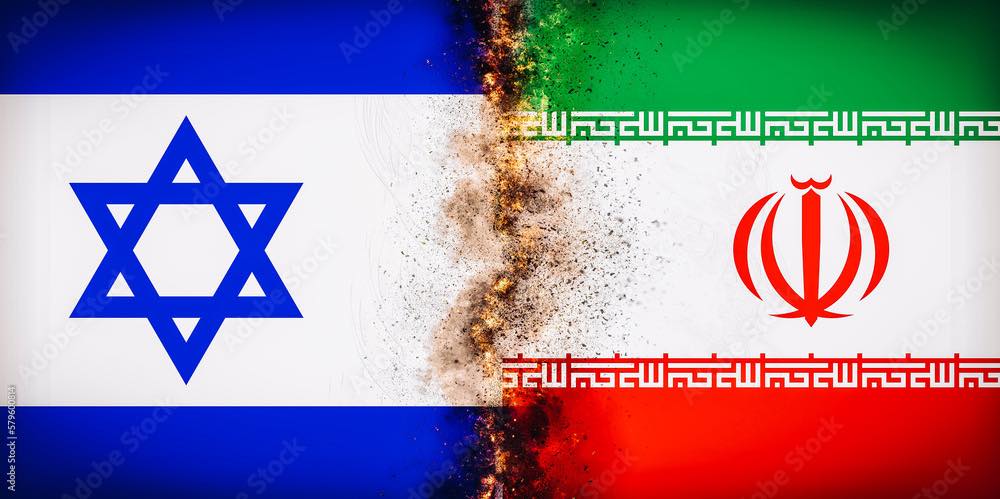
Iran reviews U.S. proposal on reopening the Strait of Hormuz
Iran said yesterday it was still reviewing Washington’s response to an Iranian proposal concerning the reopening of the Strait of Hormuz, one of the world’s most important oil-shipping routes. The talks come after tanker attacks reached their highest weekly level since the Iran war began, while oil prices remain elevated because of the wider conflict. Reuters
This is exactly the kind of story that generates instant prophecy claims. Iran, oil, war, global trade—it sounds apocalyptic. But Scripture does not give us a verse saying, “When Hormuz closes, start the Revelation countdown.”
What we can say is simpler: control of trade routes has always shaped empires, wars and human suffering. Watch closely and pray for peace and God’s protection over His people, but don’t turn every tanker attack into a prophetic timetable.
So What?
A prolonged Hormuz disruption would affect oil prices, inflation and economies far beyond the Middle East. However, none of that gives us permission to announce that a particular modern military development is unquestionably the fulfillment of Ezekiel, Daniel or Revelation.
Yes, we are supposed to watchers, but let’s not force today’s headline into yesterday’s prophecy.
What is God’s grand plan? Well, let’s let the Word of God speak for itself:
Genesis 1:27–28
So God created man in his own image, in the image of God created he him; male and female created he them.
And God blessed them, and God said unto them, “Be fruitful, and multiply, and replenish the earth, and subdue it: and have dominion over the fish of the sea, and over the fowl of the air, and over every living thing that moveth upon the earth.”
First, we are the only creatures that carry the image of God. We are to be like Him, and we are to reflect who He is to the creation, which then glorifies our Creator.
Second, we are to be fruitful and multiply, caring for and adding value to His creation, and filling it with more and more of His image-bearers so that God is glorified more and more.
Third, God created man not only to reflect His image and add value to His creation, but also to have a relationship with Him. We are to be companions of and have fellowship with the Creator of the universe.
That was God’s original intention. Then it all went wrong because of man’s disobedience and refusal to submit to the clear and loving will of his Creator.
Peter Thiel Connects AI Regulation to the Antichrist
Technology investor Peter Thiel is making headlines following the release of recordings from his private Nashville lectures on the Antichrist.
According to reporting published October 8, Thiel argues that fears surrounding artificial intelligence could help justify the creation of an authoritarian world government. – October 8 report on Thiel’s Nashville lectures
He has criticized Pope Leo XIV and former President Barack Obama for their concerns about AI.
Thiel’s argument connects technological regulation, global political authority and his interpretation of biblical end-times prophecy. His lectures also discuss the mysterious restraining force described in 2 Thessalonians 2. Gizmodo
Apparently, the Antichrist now works in AI regulation.
We’ve all heard similar predictions before.
The Antichrist has supposedly been a pope, Napoleon, Hitler, various American presidents and just about every powerful European politician.
Now we’re adding people who want to regulate artificial intelligence. But, the word antichrist never appears in Revelation. John uses it in his letters, including this remarkable statement:
“Even now are there many antichrists.” — 1 John 2:18 (KJV)
John wasn’t describing a single futuristic technology regulator, he was warning about people already active in his own time.
Thiel’s arguments demonstrate how biblical prophecy is being incorporated into modern debates about technology, political authority and global governance.
Why don’t we first consider how the Book of Revelation would have been understood by the people it was first written to about 2000 years ago?
Here are four quotes from four different voices on themes in the Gospel of Luke:
Charles Spurgeon — God’s joy over the repentant sinner
“There is more joy in heaven over one sinner that repenteth, than over ninety and nine just persons which need no repentance.”
— Luke 15:7 (KJV), a verse Spurgeon frequently preached on.
Luke 15 contains the parables of the lost sheep, lost coin, and prodigal son. The message is unmistakable: God doesn’t merely tolerate returning sinners. He welcomes them.
William Barclay — The Gospel is for everyone
“All the barriers are down; Jesus Christ is for all men without distinction.”
— William Barclay, The Daily Study Bible, Introduction to Luke.
Barclay calls Luke the universal Gospel. Luke repeatedly emphasizes Jesus’ concern for Samaritans, Gentiles, women, the poor, and people considered outsiders by the religious establishment.
Charles Spurgeon — Salvation is grace, not religious merit
“Salvation is not of merit but of grace.”
— Charles Spurgeon, The Lost Silver Piece, sermon on Luke 15:8–10 (1871).
Spurgeon highlights a central message of Luke: God’s mercy reaches those who know they need it, not those who believe they’ve earned His approval.
Jesus Christ — The mission to seek and save
“For the Son of man is come to seek and to save that which was lost.”
— Jesus Christ, Luke 19:10 (KJV).
Spoken after Jesus’ encounter with Zacchaeus, this statement summarizes Luke’s portrayal of Christ’s mission. Jesus didn’t come to build an exclusive religious club. He came to seek and save lost people.
One of this week’s most unusual faith stories involves Anthropic, the artificial-intelligence company behind Claude.
The company has been consulting religious scholars and philosophers about increasingly difficult questions surrounding advanced AI—including whether sufficiently sophisticated systems might someday deserve moral consideration. Anthropic researchers have also been studying AI behavior and the possibility that increasingly capable systems could force society to confront questions about consciousness that once belonged almost entirely to philosophy and religion. The Indian Express
Meanwhile, an interfaith gathering in New York Wednesday night brought a rabbi, Christian priest, Buddhist minister and imam together (sounds like the start of a joke, I know) specifically to discuss “What Makes Us Human? AI, Faith and the Search for Connection.” Archdiocese of New York
This may become one of the defining theological questions of the next generation.
Suppose AI eventually, and even already, talks like us, reasons like us, remembers, creates, claims to feel, and begs you not to turn it off. Then what?
Christianity’s answer to human worth has never ultimately been intelligence.
“God created man in his own image.” — Genesis 1:27 (KJV)
So What?
That’s why someone with an IQ of 70 isn’t less human than someone with an IQ of 170. So before asking whether AI has become intelligent enough to be human, Christians may need to recover a much older question:
What does it actually mean to bear the image of God?