Saturday Watchdog: Justice Or Entertainment?

President Trump announced that the December 3 firing-squad execution of convicted Fort Hood murderer Nidal Hasan will not be livestreamed, reversing Defense Secretary Pete Hegseth’s proposal. Catholic bishops, evangelical leaders and other religious groups had criticized the broadcast plan.

A new poll found that 74% of white evangelicals and even larger shares of several other religious groups opposed the livestream. The execution itself remains scheduled.
Religion News Service coverage

Scripture recognizes government authority to punish wrongdoing (Romans 13:4). But turning someone’s death into a public spectacle raises a different moral question.

So What?

Christians may disagree about capital punishment, but we should at least consider whether broadcasting an execution honors justice or simply satisfies an appetite for vengeance.

Religious opposition helped shape a consequential government decision, demonstrating that Christians can influence public policy even when they disagree on underlying doctrine.

Thursday Watchdog: Seeking God, Not Religion

An Estimated 80,000 Christians Gather in Texas Stadium for Prayer

While much of America’s attention is focused on politics, wars and cultural controversies, here’s what happened Saturday night in Arlington:

An estimated 80,000 Christians gathered at AT&T Stadium for an evening devoted primarily to prayer.

The event, called ACCESS — That Powerful Hour of Prayer, was organized by 2819 Church and Pastor Philip Anthony Mitchell.

According to organizers and participants, free tickets were reserved within eight hours. Unlike many large Christian gatherings, the event wasn’t built around celebrity speakers or a traditional concert.

Istead it emphasized collective prayer, worship and spiritual renewal.

The reported attendance is an estimate rather than an independently verified count. Nevertheless, the event’s scale is notable. Last year’s ACCESS gathering reportedly attracted more than 30,000 participants in Atlanta. Christian Post

Wait. Aren’t we constantly hearing that Christianity is dying in America?

Church attendance has declined in many denominations and religious affiliation has weakened, while millions of Americans identify as having no religion.

Yet tens of thousands of people gathered in a football stadium specifically to pray.

So What’s Going On?

Maybe Americans aren’t necessarily losing interest in God, but rather some are losing interest in traditional religious institutions.

While that’s not a conclusion we can draw from one stadium gathering it is a question worth investigating.

Jesus said:

Notice our Lord didn’t say two or three thousand, and He didn’t require a stadium.

Large gatherings like this suggest that substantial enthusiasm for collective Christian worship remains, even as traditional measures of religious participation show long-term weakness.

Tuesday Watchdog: Iran, Hormuz and Bible Prophecy – What Can We Actually Say?

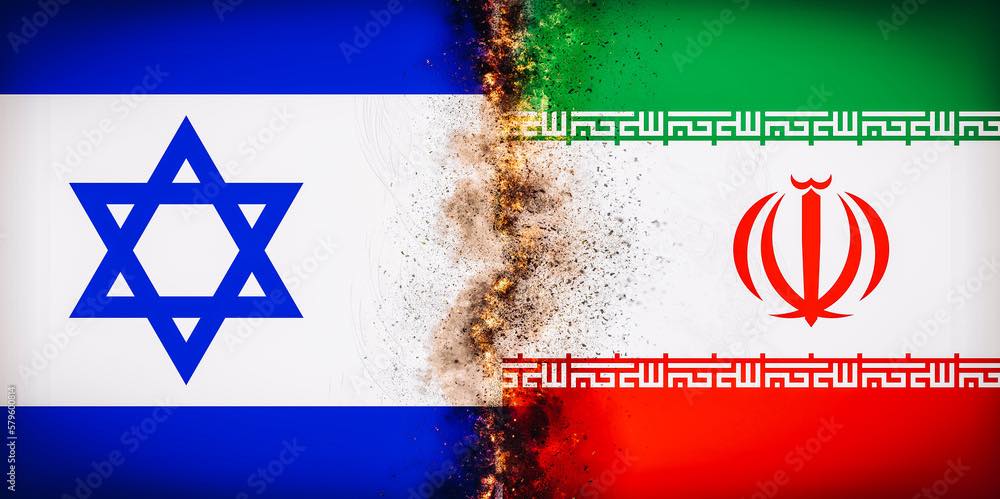
Iran reviews U.S. proposal on reopening the Strait of Hormuz

Iran said yesterday it was still reviewing Washington’s response to an Iranian proposal concerning the reopening of the Strait of Hormuz, one of the world’s most important oil-shipping routes. The talks come after tanker attacks reached their highest weekly level since the Iran war began, while oil prices remain elevated because of the wider conflict. Reuters

This is exactly the kind of story that generates instant prophecy claims. Iran, oil, war, global trade—it sounds apocalyptic. But Scripture does not give us a verse saying, “When Hormuz closes, start the Revelation countdown.”

What we can say is simpler: control of trade routes has always shaped empires, wars and human suffering. Watch closely and pray for peace and God’s protection over His people, but don’t turn every tanker attack into a prophetic timetable.

So What?

A prolonged Hormuz disruption would affect oil prices, inflation and economies far beyond the Middle East. However, none of that gives us permission to announce that a particular modern military development is unquestionably the fulfillment of Ezekiel, Daniel or Revelation.

Yes, we are supposed to watchers, but let’s not force today’s headline into yesterday’s prophecy.

Saturday Watchdog: The Antichrist Is Coming for Your Artificial Intelligence

Peter Thiel Connects AI Regulation to the Antichrist

Technology investor Peter Thiel is making headlines following the release of recordings from his private Nashville lectures on the Antichrist.

According to reporting published October 8, Thiel argues that fears surrounding artificial intelligence could help justify the creation of an authoritarian world government. – October 8 report on Thiel’s Nashville lectures

He has criticized Pope Leo XIV and former President Barack Obama for their concerns about AI.

Thiel’s argument connects technological regulation, global political authority and his interpretation of biblical end-times prophecy. His lectures also discuss the mysterious restraining force described in 2 Thessalonians 2. Gizmodo

Apparently, the Antichrist now works in AI regulation.

We’ve all heard similar predictions before.

The Antichrist has supposedly been a pope, Napoleon, Hitler, various American presidents and just about every powerful European politician.

Now we’re adding people who want to regulate artificial intelligence. But, the word antichrist never appears in Revelation. John uses it in his letters, including this remarkable statement:

John wasn’t describing a single futuristic technology regulator, he was warning about people already active in his own time.

Thiel’s arguments demonstrate how biblical prophecy is being incorporated into modern debates about technology, political authority and global governance.

Why don’t we first consider how the Book of Revelation would have been understood by the people it was first written to about 2000 years ago?

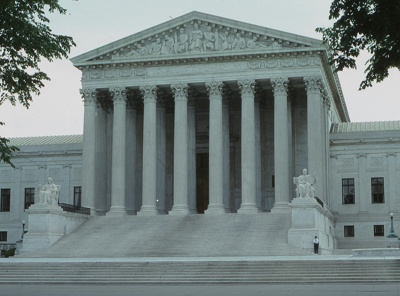
Tuesday Watchdog: New Supreme Court Term Loaded With Religious-Liberty Questions

Pic via Malcolm Hill pexels.com

The Supreme Court begins its 2026–27 term today with several cases capable of reshaping the boundary between government and religion. Among them is a Colorado dispute involving Catholic preschools that participate in the state’s publicly funded preschool program but object to nondiscrimination requirements involving sexual orientation and gender identity. The Court has also agreed to hear a Kentucky church’s religious-land-use case, while a Texas Ten Commandments classroom dispute is among the closely watched matters surrounding the new term. AP News

These cases keep returning to the same difficult question: When government offers something to everybody, can it tell religious people they may participate only if they leave part of their religion behind?

Christians should be careful here. Religious liberty shouldn’t mean Christian privilege. Whatever constitutional principle protects a Catholic preschool should also protect a Jewish school, Muslim organization or nonreligious group when the circumstances are comparable.

One of the most important features of our Constitution is the protection it provides in keeping Caesar from deciding which beliefs are acceptable.

Read today’s AP overview of the new Supreme Court term

Saturday Watchdog: Iran And Bible Prophecy?

Iran prepares for a much harder retaliation if war resumes

Reuters reports that Iranian leaders are preparing broader and more aggressive retaliation if the U.S. resumes major military attacks. Potential targets could extend beyond U.S. installations to allied nations, while Iran-linked groups in Lebanon, Yemen and Iraq have reportedly been told to prepare for coordinated action. Reuters

This is the kind of headline that instantly produces end-times speculation. Slow down. Iran matters biblically and geopolitically—but today’s military planning is not automatic proof of fulfilled prophecy. Start with the facts before forcing Ezekiel or Revelation onto the map.

Iran’s internal pressure may matter as much as its external war

Reuters reports that Iran’s worsening economy, fears of renewed domestic unrest and a government crackdown—including thousands of arrests—are increasingly shaping Tehran’s calculations alongside the military conflict. Reuters

Scripture repeatedly shows powerful kingdoms boasting in their strength shortly before judgment or collapse—Babylon in Daniel 5 being one of the clearest examples. But resist turning that observation into a date-setting prophecy claim. Watch carefully without pretending we know God’s timetable.

Thursday Watchdog: Christianity & The First Amendment

Pic via Malcolm Hill pexels.com

Two Christian student organizations are suing Virginia State University, alleging that the public university stripped Christian organizations of ordinary registered-student-group status and placed them under the control of the university’s Campus Ministries office.
See story here

According to the complaint, Christian organizations must obtain approval for meetings and prayer gatherings, use university-approved oversight and have lost access to benefits available to other registered student organizations. The plaintiffs also allege Muslim and other non-Christian groups are exempt from the policy. These are allegations in pending litigation, not yet judicial findings.

So What?

If the allegations are accurate, the problem isn’t complicated. A public university can establish neutral rules for every student organization.

It can’t say: Muslim students can organize themselves, and secular students can organize themselves, but Christian students need government-approved supervision before they pray.

The First Amendment isn’t supposed to protect Christianity more than other beliefs, or less than other beliefs. It protects Christianity equally.

And that’s the principle worth defending.

Tuesday Watchdog: Ninth Circuit Takes Up Religious-Liberty Case

Pic via Malcolm Hill pexels.com

Ninth Circuit will reconsider who a Christian homeless ministry can require employees to be

The long-running dispute between Washington state and Yakima Union Gospel Mission is returning to the 9th U.S. Circuit Court of Appeals.

The Christian homeless ministry requires certain employees to share and live according to its religious beliefs. Washington’s anti-discrimination law restricts religious organizations’ ability to make some employment decisions based on sexual orientation and other protected characteristics. The legal question is how far the First Amendment’s protection of religious organizations extends beyond clergy and clearly ministerial employees. Seattle Red

This looks to be a genuinely difficult religious-liberty case.

A Christian ministry obviously shouldn’t be able to say: “We don’t hire Black people.” Slapping “religious belief” on racial discrimination wouldn’t make it legitimate.

But should a Christian ministry be forced to employ someone whose beliefs or conduct directly contradict the religious mission the organization exists to carry out?

Imagine government telling an atheist organization it must hire an evangelist to teach its worldview. Or a Muslim ministry that it must employ somebody openly hostile to Islam. Or a Christian ministry being told it must employ a satanist.

So What?

Religious organizations cannot remain meaningfully religious if government ultimately determines who qualifies to carry out their mission. This should be a slam dunk case for the Ninth Circuit to decide, right?

Saturday Watchdog: Baptist Reversal

Southern Baptist president reverses course on denomination’s abuse crisis

Southern Baptist Convention President Willy Rice, who previously described the SBC sexual-abuse crisis as more “hoax than reality,” is now calling abuse a serious threat requiring “constant vigilance.”

In his first address to the SBC Executive Committee, Rice told churches to establish safeguards, take every allegation seriously, report accusations immediately to law enforcement and cooperate fully with investigations. He also announced a commission on women in pastoral ministry and proposed adding explicit language about gender, sexuality and marriage to the Baptist Faith and Message. The Roys Report

Give Rice credit for changing direction, but Christians shouldn’t miss the larger lesson. When accusations threaten a church’s reputation, the temptation is:

Protect the church.

Protect the pastor.

Protect the ministry.

Protect the denomination.

That is definitely the wrong order.

So What?

Protect the victim FIRST. A church shouldn’t need lawyers, reporters and survivors dragging it toward transparency.

Churches ought to be the first institutions running toward the light, not dragging their feet and covering their eyes from the light.

Thursday Watchdog: North Carolina Church Baptizes 458 People In One Day

Here’s a story that deserves considerably more attention than another poll showing Christianity declining. Christian Post

Biltmore Church baptized 458 people at an outdoor baptism gathering in Fletcher, North Carolina, setting a record in the congregation’s 137-year history.

The September 13 gathering included families being baptized together and people traveling from outside North Carolina. Church leaders say participants were individually contacted beforehand to confirm that baptism represented a personal decision to follow Christ, and follow-up discipleship is underway.

We’ve spent years hearing that faith is waning and young folks are more and more disillusioned with churchianity. Partly true, church attendance has been declining, and nihilism/atheism is unfortunately still a popular worldview for a lot of people.

But then one day 458 people walk into a lake to be baptized.

So What?

And while that doesn’t prove a national revival is underway it does remind us that Christianity isn’t fundamentally measured by denominations, polling percentages or political influence.

It starts the same way it did 2,000 years ago: with God’s spirit moving and individual people turning away from emptiness and seeking real meaning and light.

That’s worth watching.