Iran reviews U.S. proposal on reopening the Strait of Hormuz
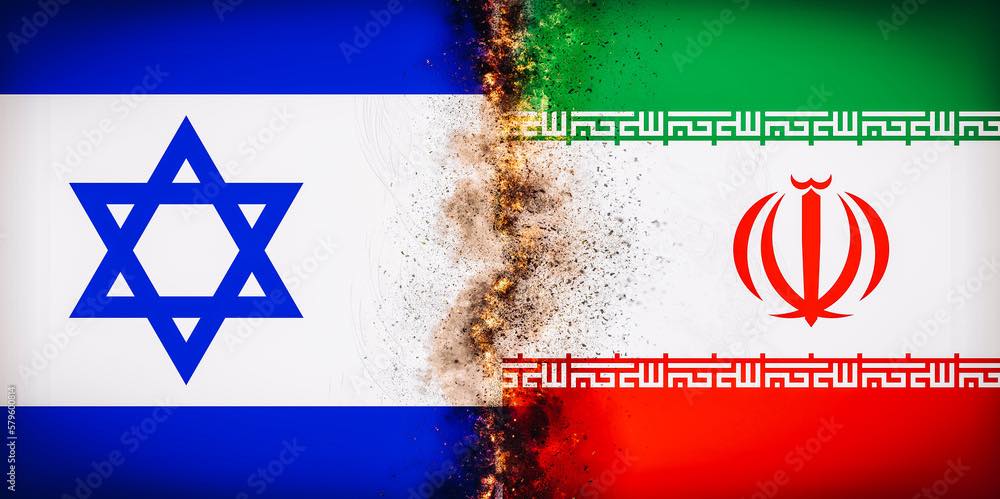
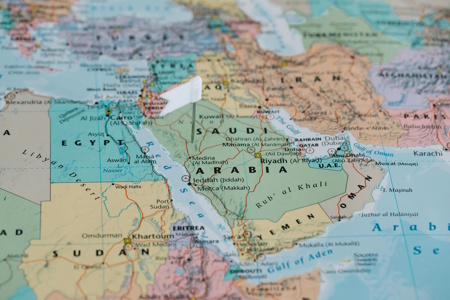
Iran said yesterday it was still reviewing Washington’s response to an Iranian proposal concerning the reopening of the Strait of Hormuz, one of the world’s most important oil-shipping routes. The talks come after tanker attacks reached their highest weekly level since the Iran war began, while oil prices remain elevated because of the wider conflict. Reuters
This is exactly the kind of story that generates instant prophecy claims. Iran, oil, war, global trade—it sounds apocalyptic. But Scripture does not give us a verse saying, “When Hormuz closes, start the Revelation countdown.”
What we can say is simpler: control of trade routes has always shaped empires, wars and human suffering. Watch closely and pray for peace and God’s protection over His people, but don’t turn every tanker attack into a prophetic timetable.
So What?
A prolonged Hormuz disruption would affect oil prices, inflation and economies far beyond the Middle East. However, none of that gives us permission to announce that a particular modern military development is unquestionably the fulfillment of Ezekiel, Daniel or Revelation.
Yes, we are supposed to watchers, but let’s not force today’s headline into yesterday’s prophecy.
Iran prepares for a much harder retaliation if war resumes
Reuters reports that Iranian leaders are preparing broader and more aggressive retaliation if the U.S. resumes major military attacks. Potential targets could extend beyond U.S. installations to allied nations, while Iran-linked groups in Lebanon, Yemen and Iraq have reportedly been told to prepare for coordinated action. Reuters
This is the kind of headline that instantly produces end-times speculation. Slow down. Iran matters biblically and geopolitically—but today’s military planning is not automatic proof of fulfilled prophecy. Start with the facts before forcing Ezekiel or Revelation onto the map.
Iran’s internal pressure may matter as much as its external war
Reuters reports that Iran’s worsening economy, fears of renewed domestic unrest and a government crackdown—including thousands of arrests—are increasingly shaping Tehran’s calculations alongside the military conflict. Reuters
Scripture repeatedly shows powerful kingdoms boasting in their strength shortly before judgment or collapse—Babylon in Daniel 5 being one of the clearest examples. But resist turning that observation into a date-setting prophecy claim. Watch carefully without pretending we know God’s timetable.
Well before the Book of Revelation was written, Jesus warned His disciples about a coming time of terrible suffering:
“For then shall be great tribulation, such as was not since the beginning of the world to this time, no, nor ever shall be.” — Matthew 24:21, KJV
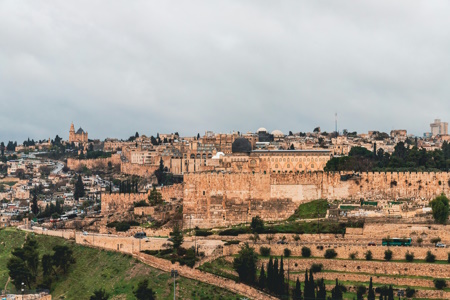
This verse is often treated as a prediction about the final years before Christ returns. But Jesus did not deliver it during a lecture about twenty-first-century world politics. He was answering a question about the future of Jerusalem and its Temple.
The conversation began when the disciples admired the Temple buildings. Jesus responded that not one stone would be left upon another. Naturally, they wanted to know when this would happen.
Jesus warned them about false messiahs, wars, famines, earthquakes, persecution, and Jerusalem’s approaching destruction. When danger arrived, those living in Judea were told to flee to the mountains. They were not told to identify the Antichrist, calculate seven years, or upload an emergency prophecy podcast. They were told to get out.
Luke’s version is even more direct:
“And when ye shall see Jerusalem compassed with armies, then know that the desolation thereof is nigh.” — Luke 21:20, KJV
That happened in the Jewish revolt against Rome. In AD 70, Roman forces captured Jerusalem, destroyed the Temple, and inflicted enormous suffering on the people trapped inside the city. For Jesus’ disciples—and certainly for those who survived the siege—this was not a rehearsal for tribulation. It was tribulation.
Jesus also said, “This generation shall not pass, till all these things be fulfilled” (Matthew 24:34). That statement is difficult to explain if everything in the chapter refers exclusively to events thousands of years later.
Does that mean Matthew 24 has nothing to say about the future? Not necessarily. Biblical prophecy sometimes joins a near historical judgment with the larger themes of final judgment and God’s ultimate victory. Jesus’ language eventually reaches beyond Jerusalem to His coming, the gathering of His people, and the need to remain watchful.
That is why Christians read the passage differently. Some believe nearly all of it was fulfilled in the first century. Others see the fall of Jerusalem as an early fulfillment that foreshadows a greater final crisis. Futurists place most of the chapter near the end of history.
So What?
Whatever position we take, we shouldn’t skip the setting. Jesus gave this warning to real disciples about a real city, a real Temple, and a catastrophe that would occur within their historical world.
The destruction of Jerusalem shows what “great tribulation” looks like when violent empire, human rebellion, and divine judgment collide.
In Part Four, we’ll examine whether the Bible also points to a final worldwide Tribulation—and where the popular seven-year timeline actually comes from.
Here are four quotes from four different voices on themes in the Book of Matthew:
Charles Spurgeon — on Matthew’s central theme:
“Matthew’s Gospel is the Gospel of the Kingdom, and of the King.” That captures Matthew remarkably well: Jesus is presented as the promised King, announcing and demonstrating the Kingdom of Heaven. (Christian Classics Ethereal Library)
D. A. Carson, describing R. T. France’s work on Matthew:
“Well written and judicious on both critical and theological issues.” Carson’s observation points to something important about Matthew itself: the Gospel rewards both historical study and theological reflection, particularly regarding Jesus as Messiah, Israel, and the Kingdom. (Biblical Studies)
Robert H. Smith — on the radical grace displayed in Jesus’ parables in Matthew:
“People regularly understand and appreciate God’s strange calculus of grace as applied to themselves but fear and resent seeing it applied to others.” That’s a particularly sharp summary of Matthew 20’s parable of the workers in the vineyard—and of Jesus’ repeated challenge to religious assumptions about who deserves God’s favor. (friarmusings)
R. T. France — on that same parable and the surprising nature of God’s Kingdom:
“No one has been cheated; the agreement has been scrupulously observed.” France points out that Matthew 20 deliberately makes God’s generosity seem unsettling. The issue isn’t whether God is unjust, but whether we’re willing to accept His generosity toward people we think deserve less. (friarmusings)
Matthew introduces Jesus not merely as a religious teacher offering some helpful life advice, but as the King announcing a Kingdom.
When John wrote about “great tribulation,” he wasn’t introducing a brand-new end-times idea. His Jewish readers already had centuries of history—and several biblical passages—shaping how they heard the word.
In the Hebrew Scriptures, tribulation usually means severe distress brought on by war, invasion, persecution, exile, or judgment. It wasn’t necessarily the official name of one future event. It was what happened when a nation or its people were squeezed to the breaking point.
Jeremiah described one such crisis:
“Alas! for that day is great, so that none is like it: it is even the time of Jacob’s trouble; but he shall be saved out of it.” — Jeremiah 30:7, KJV
“Jacob” means Israel. In context, Jeremiah is describing national disaster, captivity, and suffering—but also promising restoration. Some modern prophecy systems move “Jacob’s trouble” entirely into a future Tribulation. Others connect it primarily to Israel’s historical exile and oppression. Either way, the verse’s central movement is easy to miss: trouble is followed by rescue.
Daniel 12:1 uses similar language, predicting “a time of trouble, such as never was since there was a nation.” The passage grew out of a world in which God’s people knew exactly what violent empires could do. Jews had endured Babylon’s destruction of Jerusalem, forced exile, and later the brutal persecution associated with Antiochus IV, who outlawed Jewish practices and desecrated the Temple.
By John’s lifetime, Rome was adding another chapter. Roman armies destroyed Jerusalem and its Temple in AD 70 after a horrific siege. Ancient accounts describe starvation, bloodshed, and mass death. For Jewish families who lived through it—or lost relatives in it—that certainly qualified as great tribulation. No imagination or prophecy chart required.
Jewish teaching also came to speak of intense suffering before God’s deliverance as the “birth pains of the Messiah.” The image came from the prophets: war, fear, and upheaval were compared to a woman in labor. Labor is painful, but it moves toward something—the birth of a new reality.
So What?
That background helps us understand Revelation. John’s images of beasts, war, famine, persecution, and judgment were not random scenes from a supernatural disaster movie. They drew upon Israel’s long experience of suffering under kingdoms that acted as though they were untouchable. Yet those kingdoms always fell.
For John’s Jewish readers, tribulation meant real suffering, but it did not mean God had lost control. It was the darkness before deliverance, the labor before birth, and the pressure through which faithfulness was tested.
Next, we’ll look at what Jesus meant when He warned His disciples about “great tribulation” in Matthew 24.
For years, skeptics have dismissed parts of the Bible as legends written by ancient people who didn’t know any better. But that narrative keeps getting debunked because archaeologists keep digging stuff up.
Dinesh D’Souza told Fox News that a three-year investigation into biblical archaeology convinced him that discoveries coming out of Israel and the surrounding region provide remarkable support for the Bible’s historical reliability. His findings are the subject of his upcoming book, The Stones Cry Out: Biblical Archaeology, Prophecy, and the Last Days. (Fox News)
Consider Pontius Pilate. For centuries, skeptics questioned the historical evidence for the Roman official described in the Gospels. Then archaeologists discovered the famous Pilate Stone at Caesarea Maritima bearing his name and identifying him as prefect of Judea—the same title associated with his period of rule.
Then there’s Balaam, the mysterious diviner from Numbers who was hired to curse Israel. An ancient plaster inscription discovered in Jordan refers to “Balaam son of Beor”—a striking parallel to the biblical figure.
And how about Caiaphas, the high priest connected to the trial of Jesus?
Archaeologists discovered an ornate first-century ossuary—a stone box used to hold human remains—inscribed with a name commonly translated “Joseph son of Caiaphas.” Once again, somebody we meet in the pages of Scripture appears in the archaeological record.
Does archaeology prove every theological claim in the Bible? No. But it keeps reminding us that the Bible is rooted in real geography, real cultures, real rulers, and real people.
Jesus wasn’t introduced with “Once upon a time.” Christianity makes historical claims—and historical claims can be investigated.
Jesus once said:
“I tell you that, if these should hold their peace, the stones would immediately cry out.” — Luke 19:40 (KJV)
Two thousand years later, that’s a pretty interesting choice of words.
So What?
Don’t believe the Bible simply because somebody tells you to. But don’t dismiss it because somebody on TikTok tells you to either. Investigate it. Read it. Ask hard questions.
Here are three of the most significant current headlines from the Middle East.
Remember Matthew 24:6-7
And ye shall hear of wars and rumours of wars: see that ye be not troubled: for all these things must come to pass, but the end is not yet.
For nation shall rise against nation, and kingdom against kingdom: and there shall be famines, and pestilences, and earthquakes, in divers places.
Israel launches strikes in southern Lebanon after evacuation warning The Israeli military carried out targeted strikes in southern Lebanon after issuing evacuation orders for the village of Mansouri, saying Hezbollah had violated the existing ceasefire. The strikes came as Israeli and Lebanese officials resumed U.S.-mediated talks in Rome aimed at advancing an agreement involving Israeli withdrawal and Hezbollah’s disarmament. (Reuters)
Iran and Oman move closer to reopening the Strait of Hormuz Iran and Oman announced progress on an agreement to reopen shipping through the strategically vital Strait of Hormuz, one of the world’s most important oil transit routes. Negotiations remain tied to broader U.S.-Iran discussions, while regional tensions continue to affect global energy markets. (The Guardian)
Israel-Lebanon negotiations continue despite renewed fighting Israeli forces remain deployed in parts of southern Lebanon while negotiators prepare for another round of talks in Rome under a U.S.-brokered framework. The discussions seek to reduce border tensions and establish longer-term security arrangements even as sporadic military action continues. (AP News)
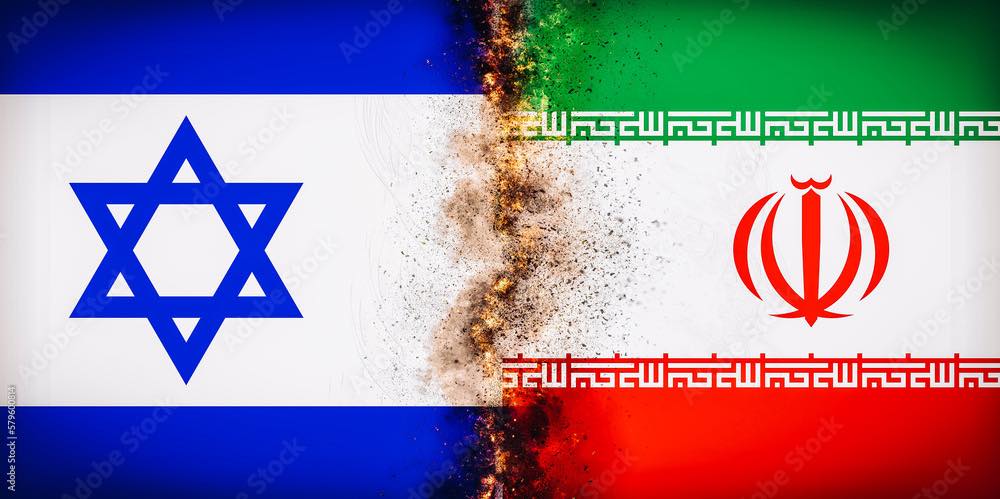
Today’s headlines are once again dominated by the White House and Tehran. The conflict between the United States and Iran continues to escalate, with new military strikes, retaliation, and fears of a wider regional war filling every news feed pretty much every day. CNN
Every generation obsesses over who sits in the palace, the parliament, or the Oval Office. People act like the next election, the next revolution, or the next regime change will finally fix humanity. It won’t
Governments rise and fall. Kings and Queens die, and Presidents leave office. Supreme Leaders get replaced by Regular Old Leaders pretending they are supreme. And all the while the human heart remains desperately wicked and filled with pride, greed, violence, and brokenness.
The Bible points us to a different King. One who is surely coming to set things right.
“For our conversation is in heaven; from whence also we look for the Saviour, the Lord Jesus Christ.” — Philippians 3:20 (KJV)
That doesn’t mean we ignore politics or world events. Christians should care about justice and pray for leaders. But our ultimate hope isn’t in whoever occupies the White House or the palace in Tehran. Our hope is in the return of the King of Kings, who won’t campaign for righteousness—He’ll establish it forever.
Until then, don’t let headlines rule your heart and mind. Do what you can within your sphere of influence to be God’s image bearer and add value to His creation.
Today’s headlines are full of escalating conflict. U.S. strikes on Iranian military targets, Iranian retaliation, threats to close the Strait of Hormuz, and fears of a wider regional war have the world wondering what happens next. (Reuters)
The Bible tells a battle story in 2 Chronicles 20 when King Jehoshaphat faced an overwhelming coalition of enemy armies. On paper, Judah had no chance, but instead of panicking or pretending the danger wasn’t real, the king prayed: “Neither know we what to do: but our eyes are upon thee.” (2 Chronicles 20:12, KJV)
God didn’t promise there would never be wars and battles. He reminded His people that He was still in charge. The biggest army wasn’t the one with the most soldiers—it was the one standing with God.
Our generation has unlimited access to war footage, hot takes, and doom-scrolling, but before you check the next breaking-news alert, spend five quiet minutes reading 2 Chronicles 20.
Ask God for wisdom and peace in your own life and heart. You can’t control what happens in Iran—but you can decide who you’re trusting when the world starts shaking. “Our eyes are upon thee”.
U.S. Launches New Strikes on Iranian Military Targets After Hormuz Shipping Attacks
Following Iranian-linked attacks on commercial vessels in the Strait of Hormuz, the United States carried out a broad wave of strikes against Iranian military infrastructure, while both sides accused each other of violating previous agreements. Oil prices jumped and fears of a wider regional war intensified. AP
Always keep in mind that Jeshua, our Messiah, warned us that “wars and rumours of wars” would characterize this age until He returns. By the way, we’ve been living in the last days since His resurrection and ascension.
Israel Continues Operations in Southern Lebanon Despite Diplomatic Pressure
Hezbollah attacks against Northern Israel and Israeli military operations against Hezbollah-linked targets have continued in southern Lebanon even amid renewed diplomatic efforts, keeping tensions high along Israel’s northern border. The Guardian
Every new ceasefire seems destined to fail sooner rather than later and humanity keeps proving the Bible right about the brokenness of the human heart. Come, Lord Jesus.
Iran Holds Funeral for Former Supreme Leader While New Leadership Signals Defiance
Millions participated in funeral events for Iran’s former Supreme Leader, while Iran’s new leadership used the occasion to emphasize resistance against the United States and Israel and project strength despite recent military losses. Reuters
Regimes rise, rulers fall, and history keeps moving—but God’s kingdom isn’t waiting for the next election or revolution. Let’s not overly concerns ourselves with who occupies the palace in Tehran or the White House; rather, lets make certain our hearts are turning toward the King of Kings and His return to establish righteousness—forever.