Saturday Watchdog: Socialism Isn’t Biblical

You know those folks who rarely, if ever, open a Bible and who openly mock Jesus, yet somehow feel qualified to lecture believers on how they should live? You know, the ones who couldn’t tell you the difference between the Mount of Olives and Mount Zion if their lives depended on it, but who know exactly what Jesus would do if he were walking the streets of twenty-first-century America.

The same ones who demand that you pay for everyone else’s problems. Tax the rich. Eat the rich. Blame the rich. And they’ll decide what “rich” means.

I call BS.

God never condemned people simply for owning property or building wealth. In fact, the commands, “Thou shalt not steal” and “Thou shalt not covet” (Exodus 20:15, 17 KJV), assume people legitimately own things. The issue isn’t ownership—it’s stewardship.

God also expects people to work. Before sin ever entered the world, even Adam had a job. Later, Paul wrote, “If any would not work, neither should he eat.” (2 Thessalonians 3:10 KJV). That’s not harsh—it’s a reminder that purpose and responsibility are woven into how God designed us.

And contrary to popular memes, the Bible doesn’t say money is evil. It says, “For the love of money is the root of all evil.” (1 Timothy 6:10 KJV). Money is a tool. It can build hospitals, feed families, fund missionaries… or become an idol. The heart determines the outcome.

When you actually read the Bible, instead of pretending you know all about what Jesus would do, you learn that biblical generosity is voluntary. When Peter confronted Ananias, he said, “Whiles it remained, was it not thine own?” (Acts 5:4 KJV). The property was his. God wants honesty and willing generosity—not compelled giving.

Socialism is the last rest stop on the road to Marxism. And “Seize the means of production” is just a clever invitation to tyranny.

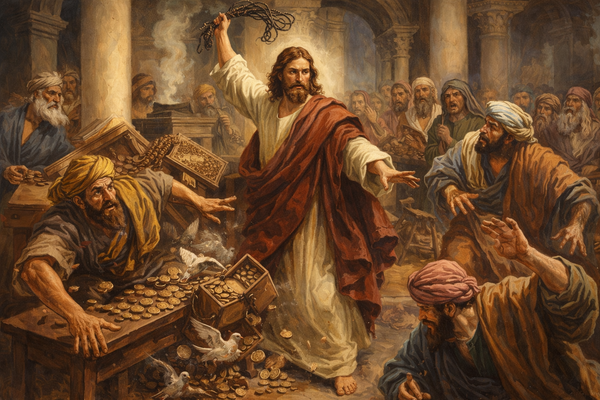
Jesus never called on the Roman government to redistribute wealth. Instead, He called individuals to radical, voluntary generosity. He didn’t command the Jewish leadership to confiscate money from the people and dole it out to the needy.

Jesus commanded individuals to give to and care for those in their spheres of influence and in their communities—especially widows, orphans, and strangers—willingly and generously.

So What?

The next time you’re tempted to ask, “Who should fix this?” instead, ask, “What am I willing to do about it?”

Your Life And What Comes After

My book, Your Life And What Comes After: Plugging Into God’s Forever Plan Now, is now available at amazon.com in paperback and e-book formats.

This book isn’t written for scholars or theologians. It’s written for ordinary people who are curious about life, about God, and about what the Bible actually says about the future.

You don’t need a religious background or special training to follow along. The goal here is simple: to walk through the Bible’s big story in clear, everyday language.

The book is divided into three parts.
Part One explains the big picture of God’s plan and how people throughout the Bible connected their lives to that plan.
Part Two explores what the Bible says about heaven, hell, the end of the world, and what comes after this life.
Part Three focuses on the most practical question of all: how do you and I plug into God’s forever plan right now in everyday life?

The paperback version is $10.99 and the e-book is $2.99.

Tuesday Watchdog: Stop Following Your Heart

One of the most popular pieces of advice in modern culture is: “Follow your heart.”

Yeah, it looks awesome on a coffee mug, sounds inspiring, and makes a great movie quote. In fact, last night I watched a kids’ movie with my grandkids in which “Just follow your heart” was a major theme.

The problem—and what prompted me to write this post—is that it’s terrible life advice, because your heart changes its mind every five minutes.

One day your heart wants to study. The next day it wants to binge‑watch videos until 2 a.m. One day it wants a healthy relationship. The next day it wants to text your ex. Your heart is a terrible GPS.

The Bible doesn’t teach us to follow our hearts. It warns us about them.

“The heart is deceitful above all things, and desperately wicked: who can know it?” — Jeremiah 17:9

Our emotions and feelings, while not always bad, are also not always reliable guides to truth. If you always follow your heart, you’ll end up wherever your latest desire takes you.

If you follow the objective truth that God sets forth in His Word, you’ll end up where you actually need to go, because God wants what’s best for each of us, and He’s been around a lot longer and knows a lot more than our fickle little hearts.

Adam and Eve followed their hearts right into a catastrophe. Rather than obeying God’s instruction not to eat from the tree of the knowledge of good and evil, they thought they knew better than God what was wrong and what was right. Big mistake.

God didn’t create you to be ruled by your impulses. He created you to know Him, walk in wisdom, and build a life on something stronger than feelings and more reliable than “Just follow your heart.”

Feelings make great passengers. They make terrible drivers.

So What?

The next time you’re making a decision, ask yourself: “Am I doing this because it’s true and right, or just because it’s what I feel right now?” Then choose truth over impulse.

Is That Thief In Heaven?

Most of us are familiar with this passage in Luke about the others crucified with Jesus:

Luke 23:40–43 (KJV)
But the other answering rebuked him, saying, Dost not thou fear God, seeing thou art in the same condemnation? And we indeed justly; for we receive the due reward of our deeds: but this man hath done nothing amiss. And he said unto Jesus, Lord, remember me when thou comest into thy kingdom. And Jesus said unto him, Verily I say unto thee, today shalt thou be with me in paradise.

Many use this as a proof text that believers go immediately to heaven—or somewhere—when they die.

But is that really what this passage is about? Or is there something else going on here?

Let’s start by asking what should be some obvious questions if we are to assume the traditional theological narrative about Luke 23:40–43.

Is saying a few words, sticking up for Jesus, and asking to be remembered by him all that is required for thieves and malefactors to get into “heaven”?

Is being in “paradise” the same thing as “going to heaven”?

Did Jesus come into his kingdom on the day of the crucifixion?

Did the malefactor go immediately to “heaven” with Jesus after they died?

Did the malefactor miss Jesus for the 40 days or so that Jesus was carrying out his post‑resurrection ministry on earth?

Is the malefactor in heaven right now with Jesus?

What was the point of Jesus being raised from the dead after three days if he and the malefactor crucified with him were already alive together in paradise or heaven on the very same day they died on crosses?

We should all be asking questions like this, and many of the other things we’ve been taught from religion and churchianity, to see if they make sense and if they are actually biblical.

Stay tuned as we start examining the questions raised here in detail.

They Said It: Four Quotes On The Book Of Isaiah

John Wesley

Charles Spurgeon

Abraham Joshua Heschel

N. T. Wright

Faith Requires Skepticism

Question everything. Faith requires a healthy dose of skepticism about everything we think we know.

Wait, faith requires skepticism?

Of course it does. Our Heavenly Father commands us to love Him with all of our hearts, souls, and minds. Did you get that last one? Minds.

God wants us to ask questions, examine His wonders, and search the Scriptures seeking truth. That requires an inquisitive mind.

The most dangerous aspect of the doctrines of men is that they are usually close enough to biblical truth that they fool even the most sincere and honest among the faithful.

Some of those doctrines of men are so convoluted and confusing that they present stumbling blocks to those outside the faith and sometimes cause the faithful to abandon the faith.

We should faithfully seek to understand God’s truths about His nature, His creation, and His will for His people, even if that means challenging long‑held doctrines and theologies that were devised and propagated by religious folks for their own benefit — or for the purposes of the principalities and powers behind them.

Remember who the enemies of our Lord were? The religious leaders of his time and culture who had perverted and changed the Word of God into the doctrines of men.

Remember the lesson of the Reformation? Churchianity was challenged, and the centuries‑old religious status quo was called to task — salvation by grace, not ceremonies and dead works.

Bible Rebel will be asking questions and challenging assumptions here. We believe it’s high time for a New Reformation, or at least a fresh look at the old wine in the old wineskins.

Every Wednesday we will be raising some important questions about commonly held doctrines and assumptions within modern Churchianity.

Stay tuned.

What Is Bible Rebel?

The Bible Rebel blog is a resource for those seeking original and curated content, including news and commentary, covering faith, biblical studies and interpretation, and the intersection of politics, culture, and the Bible.

Our Mission

  1. To monitor current news and events related to faith and culture.
  2. To provide an alternative viewpoint to the world’s pervasive climate of darkness, nihilism, and hopelessness for those seeking truth, light, and purpose.
  3. To examine and question the assumptions of religious tradition and provide a resource for information and inspiration for people of faith who have become dissatisfied with an increasingly lifeless and empty ‘churchianity’.
  4. To present the Biblical truths which reveal God’s nature and purposes and proclaim the lifechanging, world-altering, radical message of Yeshua the Messiah – Jesus Christ, our risen Lord and Savior. and to help regular, everyday folks understand the Bible and apply it in their lives.

Contact us at in**@********el.com

Subscribe to our free monthly newsletter

Biblical Literacy: Lions, Wolves, And Lambs

There will be a time when, in the restored creation, a beautiful new paradigm will be the reality for God’s people, creation, and all creatures. Peace and justice will reign under the mighty hand of God and the righteous King He has set to reign forever, Jesus Christ.

But nowhere does the Bible say, “The lion shall lie down with the lamb.”

That is an often‑used phrase that paints a nice picture—but it’s just not in Scripture.

The biblical text is Isaiah 11:6, which says: “The wolf also shall dwell with the lamb, and the leopard shall lie down with the kid; and the calf and the young lion and the fatling together; and a little child shall lead them.” (KJV)

Close, but no cigar.

Watchdog Alert: Pope Leo XIV Wrong Again

Photo via Julius Silvers, pexels.com

In a recent post, I pointed out that the current Pope was wrong about God not answering prayers from those engaged in war. Today we have another example of the Pontiff making erroneous claims.

On April 16, 2026, during his peace meeting at Saint Joseph’s Cathedral in Bamenda, Cameroon, Pope Leo XIV said the following:

“Jesus told us, ‘Blessed are the peacemakers, but woe to those who manipulate religion in the very name of God for their own military, economic, or political gain, dragging that which is sacred into darkness and filth.’”

Jesus didn’t say that.

The only part of what the Pope claimed — “Jesus told us…” — that Jesus actually told us is “Blessed are the peacemakers.” The other stuff about “political gain, dragging that which is sacred into darkness and filth”, was not something Jesus said.

In other words, the Pope is either lying about what our Lord said, intentionally trying to deceive people in order to make a political point, or he simply doesn’t know what Jesus actually said according to the Bible.

It may be a combination of all three.

Watchdog Alert: Pope Leo XIV Is Wrong

In his Palm Sunday homily, Pope Leo XIV explicitly that God “does not listen to the prayers of those who wage war,” quoting Isaiah 1:15: “Even though you make many prayers, I will not listen: your hands are full of blood.”

The Pope is counting on the biblical illiteracy of Christians when he isolates this verse from Isaiah without regard to its context and uses it as a universal proclamation against all war for all time.

Isaiah chapter one is specifically referring to the idolatrous and exceedingly sinful nation and people of Judah and Jerusalem.

Isaiah 1:4 (KJV) – Ah sinful nation, a people laden with iniquity, a seed of evildoers, children that are corrupters: they have forsaken the Lord, they have provoked the Holy One of Israel unto anger, they are gone away backward.

Of course God heard and answered the prayers of His prophets, kings and others during their wars and delivered victory into their hands. Just read the Bible.

Moses & Joshua — Israel defeated Amalek when Moses interceded (Exodus 17).

Joshua at Jericho — Victory came and God commanded the battle (Joshua 6).

David — Before fighting the Philistines, David repeatedly asked, “Shall I go up?” and God answered (2 Samuel 5:19).

Jehoshaphat — God delivered Judah miraculously when they prayed and worshiped (2 Chronicles 20).

The Pope is wrong. The Bible is clear.