Is That Thief In Heaven?

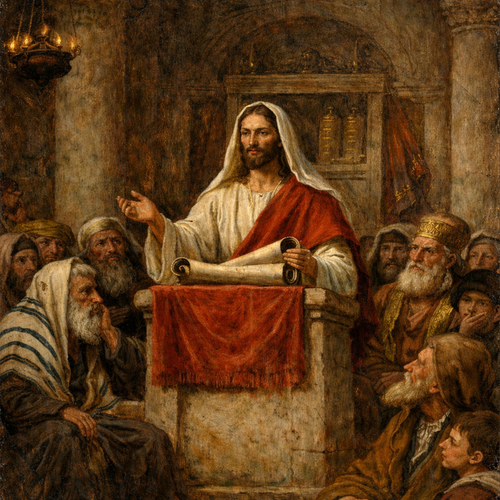
Most of us are familiar with this passage in Luke about the others crucified with Jesus:

Luke 23:40–43 (KJV)
But the other answering rebuked him, saying, Dost not thou fear God, seeing thou art in the same condemnation? And we indeed justly; for we receive the due reward of our deeds: but this man hath done nothing amiss. And he said unto Jesus, Lord, remember me when thou comest into thy kingdom. And Jesus said unto him, Verily I say unto thee, today shalt thou be with me in paradise.

Many use this as a proof text that believers go immediately to heaven—or somewhere—when they die.

But is that really what this passage is about? Or is there something else going on here?

Let’s start by asking what should be some obvious questions if we are to assume the traditional theological narrative about Luke 23:40–43.

Is saying a few words, sticking up for Jesus, and asking to be remembered by him all that is required for thieves and malefactors to get into “heaven”?

Is being in “paradise” the same thing as “going to heaven”?

Did Jesus come into his kingdom on the day of the crucifixion?

Did the malefactor go immediately to “heaven” with Jesus after they died?

Did the malefactor miss Jesus for the 40 days or so that Jesus was carrying out his post‑resurrection ministry on earth?

Is the malefactor in heaven right now with Jesus?

What was the point of Jesus being raised from the dead after three days if he and the malefactor crucified with him were already alive together in paradise or heaven on the very same day they died on crosses?

We should all be asking questions like this, and many of the other things we’ve been taught from religion and churchianity, to see if they make sense and if they are actually biblical.

Stay tuned as we start examining the questions raised here in detail.

Biblical Literacy: Lions, Wolves, And Lambs

There will be a time when, in the restored creation, a beautiful new paradigm will be the reality for God’s people, creation, and all creatures. Peace and justice will reign under the mighty hand of God and the righteous King He has set to reign forever, Jesus Christ.

But nowhere does the Bible say, “The lion shall lie down with the lamb.”

That is an often‑used phrase that paints a nice picture—but it’s just not in Scripture.

The biblical text is Isaiah 11:6, which says: “The wolf also shall dwell with the lamb, and the leopard shall lie down with the kid; and the calf and the young lion and the fatling together; and a little child shall lead them.” (KJV)

Close, but no cigar.

Your Life And What Comes After (53): Conclusion

So, what have we discovered from our look at Your Life and What Comes After: Plugging Into God’s Forever Plan Now?

God has a grand plan and purpose for His creation and you have an important part to play in it. You get to choose how you will live in light of God’s forever plan; it hasn’t been decided for you.

The road you walk in this world, in this life, comes to an end, but there’s an eternity of glorious life waiting for each of us, and all of us together. Each new day is important not only for this life but also for what comes next because the way you live now will echo into forever.

Jesus Said It Best

In the Book of Matthew, when Jesus taught His followers how to pray, He said this:

Remember that heaven isn’t in outer space or in the clouds somewhere, it’s the realm where God lives, invisible to our eyeballs now. His will is being done in heaven perfectly and His grand plan is working in us, through us, and around us so that one day it will be done perfectly on earth as well.

Until then we can also pray:

Thy will be done in my home, as it is in heaven.

Thy will be done in my heart, as it is in heaven.

Thy will be done at work and at school, as it is in heaven.

Thy will be done in my words, as it is in heaven.

Thy will be done in my relationships, as it is in heaven.

Thy will be done in my daily life, here and now, as it is in heaven.

That is how we plug into God’s forever plan now. When we walk with eternity in mind and keep our minds focused on God’s purposes, He will guide us into a life that is meaningful—though not always easy. A life that is fulfilling because we give and love as God gives and loves.

A life that will have challenges, victories, disappointments, and wonder—but that will always lead us to our Heavenly Father and the incredible and awesome things He has in store for us, now and forever.

Your Life And What Comes After (43): You Are In Training

Jesus often used stories, called parables, to teach His followers important lessons. One of those lessons is that if you’re faithful with small things now, God will trust you with bigger things later.

In the coming kingdom and the new heaven‑on‑earth, that means real responsibility—leadership, creativity, and purpose.

Your character—the kind of person you decide to be—takes work. You have to practice to develop good qualities like courage, patience, honesty, love, and wisdom. And sometimes facing hard things and going through hard times can be God’s way of helping you shape that good character.

Those good qualities you develop aren’t for this life only, they don’t disappear; they continue into eternity.

What Will Follow You?

Your works are the things you do and the words you speak.

Good works are the ones you do out of love for God and His people. Those works add value to the world around you and they glorify our heavenly Father.

Not-so-good works are the ones that are selfish and dishonest – they don’t glorify God and they aren’t helpful to others around you. In fact, sometimes they can even be harmful.

That means the good works you do now don’t vanish. They show up again in the world to come. What kind of works do you want following you into God’s new heaven-on-earth?

Practicing For Your Future Job

In the future kingdom, we will serve and reign with Him.

That means that the good character we build now prepares us to rule and serve forever in God’s restored creation.

This life is not a waiting room. It’s a training ground for the new life in the kingdom.

Your Life And What Comes After (35): Heaven On Earth Forever

Cincinnatus was an old Roman farmer who had promised his family he would take care of their small piece of land. One day, while he was out plowing his field, messengers arrived from Rome begging him to save the army that was trapped by an enemy. It was a huge, heroic request—but he wouldn’t leave until he first honored the simple promise he’d already made at home. He put his farm in order, made sure his family was provided for, and only then agreed to go.

Once he fulfilled that first commitment, he stepped into the greater one. He kept both promises: the quiet one to his family first, and then the great one to his country.

It’s like that in the endgame of God’s grand plan—after He keeps His promise of a kingdom to Israel at the return of Jesus, then comes heaven on earth forever.

The apostle Paul sums it up well in his first letter to the Corinthians.

This is God’s grand plan fulfilled. This is where all of history has been going and will finally end up—God’s original, perfect creation restored for His people, you and me, to live with Him forever.

So, what will that be like?

No More Death, Pain, or Sorrow

In the new heavens and the new earth, God brings an end to every kind of human suffering. Death, grief, pain, and tears are permanently removed.

No More Injustice, Tragedy, or Evil

Heaven on earth will mean total peace, and the full blessing of God. No more darkness, horrible events, or evil set loose in our lives.

What will you and I look like—and be like—in that heaven on earth? Let’s take a look at that next.

Your Life And What Comes After (34): The Kingdom Of Heaven Is Like A Treehouse

Callum’s dad promised to build him a treehouse, and even when he had to leave for a business trip to France, that promise didn’t drift across the ocean. Callum never pictured a treehouse rising somewhere in Paris; he knew exactly where it belonged.

He understood his dad would build it in their own backyard when he came home—right there in the tree he could see from his bedroom window. The promise wasn’t about Callum going to France to climb up in his treehouse; it was about his dad building it for him right where he had always lived, and that was enough for Callum to wait with confidence.

Kingdom Come

In the Gospel of Matthew, Jesus taught his followers how to pray.

See? The kingdom comes here; we don’t go to the kingdom.

Just like Callum’s dad promised a treehouse, God promised His people a kingdom of perfect goodness and justice—not far away somewhere in outer space with floating clouds and angels playing harps, but right here on earth.

The King

Jesus is God’s chosen King for the promised kingdom. After He returns and we are raised and given new bodies, Jesus will begin establishing that kingdom here on earth. And we will help Him.

A king and a kingdom had been promised to Israel for many years, and they waited for it to finally come. But when the King came with the offer of the kingdom to Israel, they refused to believe it and rejected both the King and the kingdom. In fact, they helped to crucify and kill their promised King, Jesus.

But that didn’t mean the promise of the kingdom would be set aside or forgotten. God will keep His promise to His people of a grand and glorious kingdom and a good, powerful, and perfect King when Jesus Christ returns.

When Jesus returns and we are brought to life and given new bodies, He will set up the kingdom on earth that God promised His people, Israel—then what? We’ll dig into that next.

Your Life And What Comes After (21): Jesus, The Golden Spike

The plan to connect the United States by rail began in 1862, but it took years of hard work and danger to build tracks across mountains and deserts. For a long time, it wasn’t clear when everything would finally come together and the Transcontinental Railroad would be completed.

Then, in 1869, the last rail was connected at Promontory Summit, Utah, with the driving of the Golden Spike. In that moment, the long plan was complete, and the country was finally linked from coast to coast.

Jesus is the Golden Spike in God’s Plan

After Adam and Eve messed up, God promised to rescue humanity, and Jesus came as the fulfillment of that plan. Through His life, death, and resurrection, Jesus completed God’s long-promised work and rescue plan, opening the way for everyone in all ages to be restored to God and receive everlasting life with Him.

God’s plan started with a promise (Genesis 3:15), was carried through history by people like Abraham and David, and was fully revealed in Jesus, who came to save the world.

Jesus Announces His Mission

Jesus wasn’t just teaching good ideas—He was the fulfillment of God’s long-promised plan, set in motion all the way back in the Old Testament.

God’s plan was accomplished, the Old Testament scripture was fulfilled, and Jesus said, “It is finished”.

How Did Jesus Do It?

How did Jesus carry out God’s plan?

  • By perfect obedience in His life, cancelling the disobedience of Adam and Eve.
  • By carrying out that obedience all the way to His death by crucifixion.
  • By His being raised by God from the dead to eternal life.

Did Jesus show us by example any of the four ways to plug into God’s grand plan that we looked at earlier? We’ll talk about that next.

What Is The ‘Seven Mountain Mandate’?

I’ve been hearing a lot about the Seven Mountain Mandate recently, and since I wasn’t 100% clear about exactly what the 7MM is I asked Mr. ChatGPT, and here’s some of what he/it told me:

The Seven Mountain Mandate is a teaching within some parts of modern charismatic and evangelical Christianity that claims Christians are called to take influence or leadership over seven key areas of society in order to bring about cultural transformation.

The idea was popularized in the 2000s by leaders such as Loren Cunningham (founder of Youth With A Mission, YWAM) and Bill Bright (founder of Campus Crusade for Christ, now Cru). They both described having received visions in the 1970s that emphasized Christians should impact seven “mountains” or “spheres” of culture:

  1. Religion – Faith, spirituality, and the church.
  2. Family – Marriage, parenting, and home life.
  3. Education – Schools, universities, and learning systems.
  4. Government – Politics, law, and public policy.
  5. Media – News, journalism, and information outlets.
  6. Arts & Entertainment – Music, film, sports, and culture.
  7. Business (or Economy) – Commerce, finance, and work.

Core Idea

Proponents believe that by gaining influence in these seven areas, Christians can help “bring the kingdom of God to earth,” prepare for revival, and resist moral decline in society. Some see it as a strategy for evangelism and discipleship at a societal level, not just individual.

Okay, count me as a reluctant skeptic about all of that because I’m not convinced it fits well with scripture.

My primary objection to the Seven Mountain Mandate theological system is the belief that “…Christians can help ‘bring the kingdom of God to earth’…”.

Yeshua, our Messiah and his Father, God, won’t require any help when the time comes to usher in the Kingdom and what follows.

They Said It: Alva McClain On The Kingdom Of Heaven

I’m finishing reading and studying The Greatness of the Kingdom by Alva McClain. Highly recommended as a master class on what Yeshua meant when he repeatedly said, “The kingdom of heaven is at hand.”

It’s not possible to understand the ministry of Yeshua, the plan of God, the role of Israel, or the overall theme of God’s Word and plan for His creation if you don’t understand what the phrase “the kingdom of heaven” means.

Here are some quotes from McClain on the topic:

The Universal Kingdom

“In the universal and providential sense, the kingdom of God has already come and the will of God is being done on earth. This rule of God, in fact, has always existed and has never been abrogated or interrupted. … On the basis of blood-redemption it will put down at last all rebellion with all its evil results, thus finally bringing the kingdom and will of God on earth as it is in heaven. When this purpose has been accomplished, the mediatorial phase of the kingdom will finally disappear as a separate entity, being merged with the universal kingdom of God.” From LifeCoach4God


Biblical Continuity with Prophecy

“In announcing the approaching advent of ‘the kingdom of heaven,’ Jesus had in view the very kingdom which the prophets had foretold.”
From LifeCoach4God


Present and Spiritual Expression

“Thus, as Christian believers, we actually enter the kingdom prior to its establishment on earth, something so remarkable that it is spoken of as a translation (Col 1:13).”
From LifeCoach4God


Restoration to Israel

“Therefore, until Israel is where he ought to be, both religiously and politically, there can be no thorough and permanent solution of the international problems.”
From Goodreads

Religious Wolves In Clerical Robes

The Episcopal Church has become little more than a platform for far left cultural and political ideologues to ‘preach’ their ‘woke’, anti-scriptural nonsense to a rapidly diminishing congregation.

Yes, that’s Washington Bishop Mariann Budde on the right in the picture below from the Episcopal News Service. She was the subject of much attention, and an opinion I wrote here last month, stemming from the the political lecture, disguised as a sermon, that she aimed at President Trump, Vice President Vance, and both of their families during the National Prayer Service at the Washington National Cathedral the day after Trump’s inauguration.

Read the article below outlining Presiding Bishop Sean Rowe’s (center in the picture) recent sermon, and I think you may end up with a few of the same conclusions and questions I did.

  • How can you speak “out against contemporary political divisions as ‘not of God’…” while at the same time in the same sermon introduce rhetoric that includes divisive political language, specifically against President Trump and his agenda?
  • Exactly where in the Bible does it say that “immigrants, transgender people, the poor and other marginalized communities” are “central to the kingdom Jesus envisioned…”? The King himself and God Almighty are at the center of the coming mediatorial and everlasting Kingdom of Heaven. The Bible says explicitly in Matthew 7:13-14 to, “Enter ye in at the strait gate: for wide is the gate, and broad is the way, that leadeth to destruction, and many there be which go in thereat: Because strait is the gate, and narrow is the way, which leadeth unto life, and few there be that find it.” All are welcome. Jesus Christ is the gate.
  • Furthermore, Bishop Rowe said, “Those who have been considered at the margins are at the center. They are the bearers of the salvation of the world. Their struggles reveal to us the kingdom of God.” Who is the bearer of the salvation of the world??? This isn’t just nonsense, it’s completely antithetical to everything the Bible explicitly teaches.

As I pointed out earlier, the Episcopal Church is bleeding membership and losing all spiritual credibility and standing.

The Episcopal Church has been experiencing a decline in membership over the past few years. According to the latest reports, the church saw a significant drop in membership, losing about 40,000 members in 2023 alone. This brings the total membership to approximately 1.547 million people.

Despite this decline, there has been a slight increase in average Sunday worship attendance, which reached nearly 411,000 in 2023, up from 373,000 in 2022. This increase is seen as a gradual recovery from the COVID-19 pandemic, when worship attendance had significantly dropped due to lockdowns and public health concerns.
https://www.christianpost.com/news/episcopal-church-loses-40k-members-but-worship-attendance-grows.html

The decline in membership and attendance has been attributed to various factors, including the church’s increasingly progressive theological direction and the challenges of maintaining older buildings and utility costs.
https://episcopalnewsservice.org/2023/09/21/episcopal-churchs-latest-parochial-reports-highlight-denominational-decline-hope-for-future/