Armchair Apocalypse: Nicanor And The Antichrists

Nicanor is the main character in our short historical fiction episodes showing how the Book of Revelation may have first traveled from Patmos in the Aegean Sea in the first century to the churches in Asia Minor—and eventually to the whole world and people in every age since.

During this “Armchair Apocalypse” series, we’ll follow Nicanor on his travels to better understand the Book of Revelation by exploring the people and the times in which it was first revealed.


The last words of John’s Revelation still hung in the cramped upstairs room in Ephesus. Oil lamps flickered against plaster walls as perhaps twenty believers sat shoulder to shoulder—Jews, Greeks, slaves, merchants, men and women. Jacob ben Ezra, the church elder, had read John’s letter aloud in Greek, and nobody had checked the time. They had heard about beasts, Babylon, persecution, judgment—and a slain Lamb who ultimately conquers.

They knew Rome’s power firsthand. When John wrote of an arrogant empire demanding allegiance and persecuting God’s people, they didn’t need a prophecy chart. They knew what oppressive power looked like. And when they heard Christ say, “Be thou faithful unto death, and I will give thee a crown of life,” they understood that following Jeshua the Messiah might actually cost them theirs.

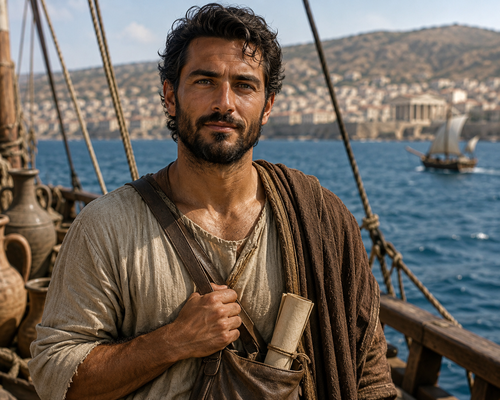
By sunrise, Nicanor was preparing to leave. He pulled a rough wool cloak over his knee-length tunic, tightened his leather sandals, and secured John’s precious scroll inside a leather wrapping beneath his cloak. Outside, Ephesus was waking up. Merchants shouted in Greek along its broad marble-paved streets. Carts rattled over stone. Sailors called from the harbor. Somewhere beyond the rooftops towered the magnificent Temple of Artemis—a constant reminder that Christianity was definitely not the hometown religion.

Jacob walked with Nicanor toward the road leading north. Before they separated, the elder lowered his voice. “John warned us that many antichrists have already come.” Nicanor knew the words from John’s teaching. An antichrist wasn’t merely some mysterious supervillain waiting thousands of years in the future. John had warned believers about deceivers already operating in their own world—people denying Christ and opposing the truth. “Even now are there many antichrists,” John had written (1 John 2:18 KJV). Jacob gripped Nicanor’s shoulder. “Watch whom you trust.”

Nicanor understood the danger. The scroll hidden beneath his cloak contained language about beasts, kings, Babylon, judgment, and a kingdom that would outlast every earthly empire. To believers, it was hope written in symbols they could recognize from the Hebrew Scriptures and their own world. To Roman authorities who understood its implications, it could sound dangerously subversive.

The Emperor demanded loyalty. John proclaimed Jesus Christ “King of kings, and Lord of lords.” If the letter were discovered and interpreted as defiance of imperial authority, Nicanor could find himself standing before a magistrate—and giving the authorities another excuse to investigate the churches receiving it.

Nicanor tightened his cloak and started north along the Roman road. Behind him, the noise of Ephesus slowly faded. Ahead lay miles of dusty road, roadside shrines, inns, merchants, soldiers, strangers—and plenty of opportunities for the wrong person to ask the wrong question. Beneath his cloak rested a message Rome could never completely suppress: Empires fall. In the end, every knee will bow, not to the Emperor, but to the resurrected and returning Jesus Christ. Evil loses. God wins. Somewhere farther up the road another small gathering of believers waited to hear the Revelation.

Smyrna.

Saturday Watchdog: El-Sayed And Hassan Piker

image from Korhan Erdol pexels.com

Abdul El-Sayed, who won Michigan’s Democratic U.S. Senate primary on August 4, 2026, says he opposes antisemitism, yet he repeatedly chooses to campaign with Hasan Piker, whose record goes well beyond ordinary criticism of Israel.

So why does El-Sayed keep campaigning with him?

Piker isn’t controversial because he once criticized Benjamin Netanyahu or questioned Israeli policy. Plenty of people do that.

We’re talking about a guy who has called Orthodox Jews “inbred,” called Zionism a “mental illness,” generated controversy over his comments about Hamas and October 7—and once famously declared:

“America deserved 9/11, dude.”

Piker later called his 9/11 wording “inappropriate” and said it was intended as satire and criticism of American foreign policy. I call BS. He only backtracked on his outrageous comment after it received massive public attention and condemnation. Trying to weasel out of an outrageous statement doesn’t magically erase it. In fact, it raises questions about the ugly and insidious thinking behind the original statement.

And this week—after winning Michigan’s Democratic Senate nomination—El-Sayed was again asked whether he would continue working with Piker. He didn’t give a straight answer, even as he continued celebrating with Piker.

El-Sayed has every right to criticize Israel. He has every right to oppose U.S. military aid to Israel. And criticism of Israel is not automatically antisemitism. But anti-Zionism can sometimes become a subtle and convenient hiding place for bigotry.

El-Sayed also has a choice about whom he puts beside him on a campaign stage, and if he continues to cozy up to Piker, that should be disqualifying to anyone with a lick of common sense and decency.

Jesus put it pretty simply:

“Wherefore by their fruits ye shall know them.” — Matthew 7:20 (KJV)

If a Republican Senate candidate repeatedly campaigned alongside someone with an ugly history of remarks about Jews, Muslims, or Black Americans, would the media reasonably ask why?

Of course they would, and of course they have. So why should the standard change here?

Antisemitism is wrong. Anti-Muslim hatred is wrong. Racism is wrong. And deliberately looking the other way because somebody can deliver votes is wrong too.

Your friends don’t automatically define you—but choosing to repeatedly give someone your stage tells us something about your judgment and may tell us something about the biases you’re willing to tolerate.

Because sometimes the biggest red flag isn’t what a politician says—it’s whom he’s unwilling to walk away from.

Thursday Watchdog: Eye On The Middle East

Here are three of the most significant current headlines from the Middle East.

Remember Matthew 24:6-7

Israel launches strikes in southern Lebanon after evacuation warning The Israeli military carried out targeted strikes in southern Lebanon after issuing evacuation orders for the village of Mansouri, saying Hezbollah had violated the existing ceasefire. The strikes came as Israeli and Lebanese officials resumed U.S.-mediated talks in Rome aimed at advancing an agreement involving Israeli withdrawal and Hezbollah’s disarmament. (Reuters)

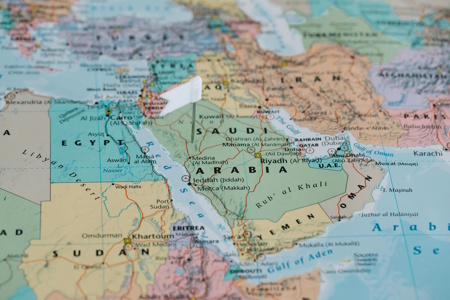
Iran and Oman move closer to reopening the Strait of Hormuz Iran and Oman announced progress on an agreement to reopen shipping through the strategically vital Strait of Hormuz, one of the world’s most important oil transit routes. Negotiations remain tied to broader U.S.-Iran discussions, while regional tensions continue to affect global energy markets. (The Guardian)

Israel-Lebanon negotiations continue despite renewed fighting Israeli forces remain deployed in parts of southern Lebanon while negotiators prepare for another round of talks in Rome under a U.S.-brokered framework. The discussions seek to reduce border tensions and establish longer-term security arrangements even as sporadic military action continues. (AP News)

    Saturday Watchdog: The Only Crown That Matters

    Today’s headlines are once again dominated by the White House and Tehran. The conflict between the United States and Iran continues to escalate, with new military strikes, retaliation, and fears of a wider regional war filling every news feed pretty much every day.
    CNN

    Every generation obsesses over who sits in the palace, the parliament, or the Oval Office. People act like the next election, the next revolution, or the next regime change will finally fix humanity. It won’t

    Governments rise and fall. Kings and Queens die, and Presidents leave office. Supreme Leaders get replaced by Regular Old Leaders pretending they are supreme. And all the while the human heart remains desperately wicked and filled with pride, greed, violence, and brokenness.

    The Bible points us to a different King. One who is surely coming to set things right.

    That doesn’t mean we ignore politics or world events. Christians should care about justice and pray for leaders. But our ultimate hope isn’t in whoever occupies the White House or the palace in Tehran. Our hope is in the return of the King of Kings, who won’t campaign for righteousness—He’ll establish it forever.

    Until then, don’t let headlines rule your heart and mind. Do what you can within your sphere of influence to be God’s image bearer and add value to His creation.

    Tuesday Watchdog: The Last Days Are Not What You Think

    Open your news feed for five seconds and you’ll find war, political chaos, AI anxiety, and another prediction that “the end is near.” Things are once again heating up in the Middle East, and U.S.-Iran tensions are at a fever pitch.

    It seems like every generation for centuries has had voices claiming that theirs is the generation living in “the last days.” And today, as in every age, there are those who come up with prophetic timetables and predictions that “prove” that they—or we—will be the ones upon whom the end of the world will come.

    But we have been in the Last Days since our Lord’s Ascension, and He will come again as a “thief in the night,” not as a Welcome Wagon representative with a 2:30 appointment on Friday so we can have the scones and tea laid out.

    The apostle Peter stood up on the Day of Pentecost about 2,000 years ago and declared that Joel’s prophecy about “the last days” was being fulfilled right then (Acts 2:16–17). The writer of Hebrews said that God “hath in these last days spoken unto us by his Son” (Hebrews 1:2 KJV). John even wrote, “Little children, it is the last time” (1 John 2:18 KJV). The New Testament wasn’t talking about some distant future—it described the era that began with Christ’s first coming.

    Here’s another Bible fact that surprises people: the Greek word often translated “world” is aion, which frequently means “age” rather than the physical planet. When Jesus promised, “I am with you always, even unto the end of the world” (Matthew 28:20 KJV), the phrase is more accurately understood as “the end of the age.” The Bible is focused on God’s unfolding plan through the ages—not merely the destruction of a globe.

    So, let’s not obsess over predicting the end. Instead, let’s spend today living like our Lord could return at any time to usher in the new age

    Thursday Watchdog: Be Like Jehoshaphat

    Today’s headlines are full of escalating conflict. U.S. strikes on Iranian military targets, Iranian retaliation, threats to close the Strait of Hormuz, and fears of a wider regional war have the world wondering what happens next. (Reuters)

    The Bible tells a battle story in 2 Chronicles 20 when King Jehoshaphat faced an overwhelming coalition of enemy armies. On paper, Judah had no chance, but instead of panicking or pretending the danger wasn’t real, the king prayed: “Neither know we what to do: but our eyes are upon thee.” (2 Chronicles 20:12, KJV)

    God didn’t promise there would never be wars and battles. He reminded His people that He was still in charge. The biggest army wasn’t the one with the most soldiers—it was the one standing with God.

    Our generation has unlimited access to war footage, hot takes, and doom-scrolling, but before you check the next breaking-news alert, spend five quiet minutes reading 2 Chronicles 20.

    Ask God for wisdom and peace in your own life and heart. You can’t control what happens in Iran—but you can decide who you’re trusting when the world starts shaking. “Our eyes are upon thee”.

    Thursday Watchdog: More Middle East Messiness

    Picture via Lara Jameson pexels.com

    U.S. Launches New Strikes on Iranian Military Targets After Hormuz Shipping Attacks

    Following Iranian-linked attacks on commercial vessels in the Strait of Hormuz, the United States carried out a broad wave of strikes against Iranian military infrastructure, while both sides accused each other of violating previous agreements. Oil prices jumped and fears of a wider regional war intensified.
    AP

    Always keep in mind that Jeshua, our Messiah, warned us that “wars and rumours of wars” would characterize this age until He returns. By the way, we’ve been living in the last days since His resurrection and ascension.

    Israel Continues Operations in Southern Lebanon Despite Diplomatic Pressure

    Hezbollah attacks against Northern Israel and Israeli military operations against Hezbollah-linked targets have continued in southern Lebanon even amid renewed diplomatic efforts, keeping tensions high along Israel’s northern border.
    The Guardian

    Every new ceasefire seems destined to fail sooner rather than later and humanity keeps proving the Bible right about the brokenness of the human heart. Come, Lord Jesus.

    Iran Holds Funeral for Former Supreme Leader While New Leadership Signals Defiance

    Millions participated in funeral events for Iran’s former Supreme Leader, while Iran’s new leadership used the occasion to emphasize resistance against the United States and Israel and project strength despite recent military losses.
    Reuters

    Regimes rise, rulers fall, and history keeps moving—but God’s kingdom isn’t waiting for the next election or revolution. Let’s not overly concerns ourselves with who occupies the palace in Tehran or the White House; rather, lets make certain our hearts are turning toward the King of Kings and His return to establish righteousness—forever.

    Saturday Watchdog Alert: Supporting Israel Doesn’t Need to Be Complicated

    Photo via cottonbro studio at pexels.com

    A wild idea: what if supporting Israel didn’t require a seminary degree, a prophecy chart, or a 12‑week Bible study on the End Times?

    What if it’s as simple as this: they’re a free, modern democracy in a rough neighborhood, and friends stick with friends when things get loud. You don’t need a burning bush to get behind that.

    The Bible actually backs up the idea of standing with friends and allies, especially when the world around them is chaos. You don’t have to be religious to get that. You just have to have common sense.

    Proverbs 17:17 – “A friend loves at all times, and a brother is born for adversity.”

    Sticking by long-time friends who need us isn’t “Zionist” or “anti-Islam”; it’s the right thing to do. And Israel isn’t just a long-time friend of the USA—Israel is a geopolitical and strategic partner in a violent, dark, and unpredictable world.

    Tuesday Watchdog: ‘Peace’ But Still Side‑Eying Each Other

    Today’s headlines dropped a geopolitical plot twist: the U.S. and Iran just signed a Memorandum of Understanding—a deal meant to stop months of fighting, reopen the Strait of Hormuz, and cool down a region that’s been running hotter than a Montana July. According to multiple reports, the agreement halts hostilities, lifts the naval blockade, and kicks off a 60‑day window for deeper talks on nukes, sanctions, and oil flows.

    But here’s the wild part: even with the ink drying, everyone’s still watching everyone. Israel’s still firing in Lebanon, Iran’s still suspicious, and the U.S. is basically saying, “Great job, everyone—don’t mess this up.”

    If global politics feels like a never‑ending group project where nobody trusts the guy holding the glue stick… you’re not wrong.

    And yet Scripture cuts through the noise: “Blessed are the peacemakers, for they shall be called children of God.” — Matthew 5:9

    Not the peace‑talkers. Not the peace‑posters. The peacemakers—people who build peace where chaos tries to live. But let’s also understand that any peace this side of the return of the Prince of Peace and his kingdom is temporary.

    So What?

    Be a mini peacemaker today. Reflect the nature of the kingdom to come. Do one small act that reduces conflict—online or IRL. Send a kind message. De‑escalate a dumb argument. Be the calm voice in a loud room. That’s rebellion the Bible actually endorses.

    Tuesday Watchdog Alert: Wars And Rumors Of Wars

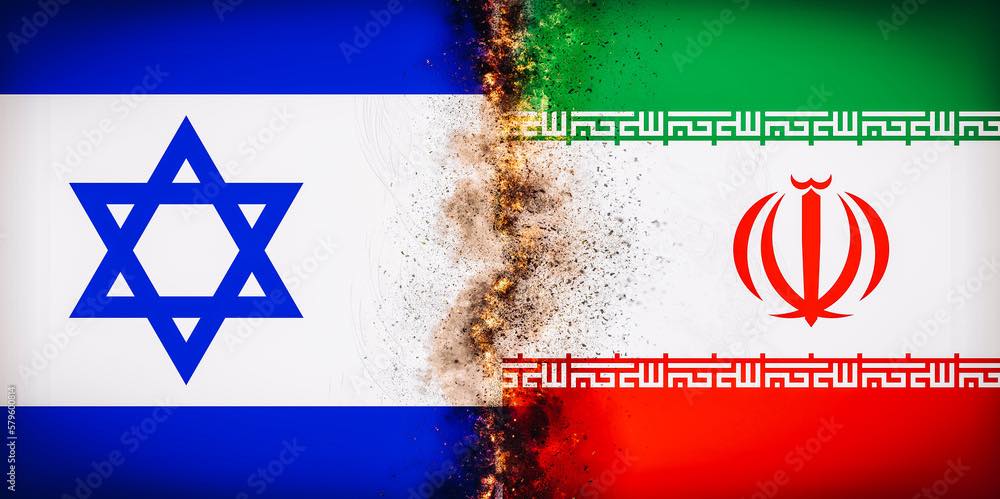
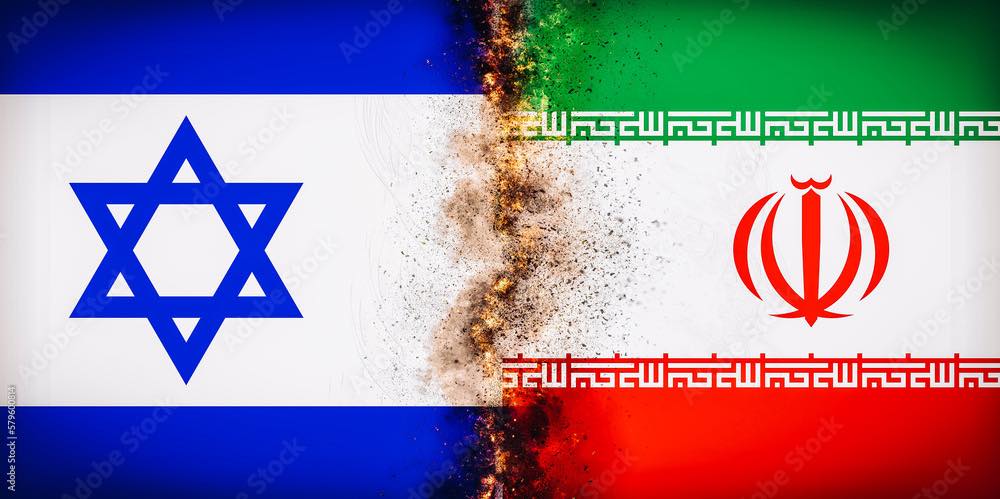
    Over the weekend, Israel and Iran exchanged direct military strikes once again, raising fears that the region could slide into a broader war. Reports indicate Iranian missile attacks were followed by Israeli strikes on military targets inside Iran before both sides signaled a temporary pause. The ceasefire remains fragile, and tensions continue across Lebanon and the wider Middle East.

    For Christians, moments like this create a temptation: either panic or obsession.

    Some people treat every missile launch like it came with a free copy of Revelation attached. Others ignore the situation completely. The Bible calls us to neither extreme.

    Jesus warned that there would be “wars and rumours of wars,” but He also said, “See that ye be not troubled” (Matthew 24:6). Notice that. He didn’t say the conflicts wouldn’t happen. He said His followers should not be ruled by fear.

    Whether today’s headlines are directly connected to end-times prophecy or simply another chapter in humanity’s long history of conflict, they remind us of one thing: this world is not our ultimate hope. Christ is.

    Spend five minutes today praying for peace in the Middle East, protection for civilians, and courage for Christians living in the region. Then turn off the doom-scrolling and spend ten minutes in God’s Word. One of those feeds your anxiety. The other feeds your soul.