Your Life And What Comes After (20): The Old Testament Road Leads To Jesus

Before moving on to the Gospels, the Good News of Jesus Christ and His kingdom, there are some other men and women in the Old Testament who plugged into God’s plan, that you can read about and see how they put themselves into the flow of God’s purposes.

Moses

Moses is an important leader in the Bible whom God chose to rescue the Israelites from slavery in Egypt and guide them toward the Promised Land. Moses’ story is found mainly in the books of Exodus, Leviticus, Numbers, and Deuteronomy.

Deborah

Deborah was a prophetess, judge, and leader of Israel. You can read her story in the Book of Judges, chapters 4 and 5.

King David

King David plays a big role in God’s grand plan because God chose him to lead Israel and promised that his family line would last forever. David’s story is found mainly in 1 Samuel (chapters 16–31) and 2 Samuel. Also, many of the Psalms were written by David.

Ruth

Ruth was a woman plugged into God’s purposes and in the family line of King David—and ultimately Jesus. Her story is found in The Book of Ruth (Ruth 1–4).

Here Comes Jesus

Next we’re going to look at the one who is the main player in God’s grand plan, the Promised One, Jesus of Nazareth.

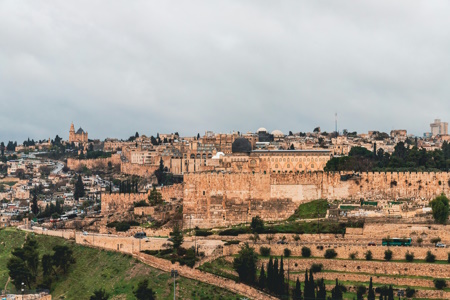
Watchdog Alert: Latest From Israel And The Middle East

Photo via cottonbro studio at pexels.com

Bible Rebel keeps a watchdog’s eye on events from the Middle East and around the world of interest to people of faith and brings that content to our readers. Here’s the latest.

New U.S.-Proposed Demilitarized Zone on Israel-Syria Border

Jan 6 2026
The U.S. put forward a proposal during Paris-hosted negotiations that would establish a demilitarized economic zone on the Israel-Syria border. The plan aims to reduce military tensions, involve joint security coordination, and potentially lead to partial Israeli troop withdrawals — a rare move in decades of conflict along that frontier. Axios

Israel Launches Airstrikes Against Hezbollah & Hamas in Lebanon

Jan 5 2026
The Israeli military carried out strikes targeting Hezbollah and Hamas “military infrastructure” in southern and eastern Lebanon. These actions mark a clear escalation in near-daily operations along the northern border, despite a ceasefire that ended the 2023–24 Israel-Hezbollah war. Civilians were evacuated from targeted villages beforehand, but the strikes have drawn international concern over stability in the region. Reuters

Wider Israeli Airstrikes in Lebanon Ahead of Disarmament Talks

Jan 5 2026
In addition to the above, additional airstrikes hit areas including Sidon, described by Israel as weapons storage sites used by militant groups. These strikes come just before crucial Lebanese government efforts to disarm Hezbollah — highlighting ongoing tensions between military pressure and political negotiation. AP News

U.S. & Allied Operations Kill or Capture IS Fighters in Syria

Late Dec 2025
The U.S. Central Command said about 25 Islamic State fighters were killed or captured in Syria during coordinated operations after an ambush that killed U.S. forces. These missions involved airstrikes and coordination with Syrian and regional partners — underscoring continued counter-ISIS activity even amid broader regional tensions. AP News

Why Shepherds?

Thomas Cole – The Angel Appearing to the Shepherds

While reading the account of the angel announcing the birth of Jesus in Luke chapter 2, one of my grandchildren asked a great question: “Why did God choose shepherds to hear about it first?”

Here are three well-known commentary perspectives.

God reveals Himself to the lowly, not the powerful

Leon Morris (Tyndale New Testament Commentary – Luke)
Morris notes that shepherds were among the humblest workers in Jewish society. Their selection fits Luke’s repeated theme that God exalts the lowly and bypasses the proud (Luke 1:52). By announcing Jesus’ birth to shepherds rather than kings or priests, God shows that the gospel begins with grace, not status.


Shepherds highlight the theme of Jesus as the true Shepherd

Darrell L. Bock (Baker Exegetical Commentary on the New Testament – Luke)
Bock points out the strong shepherd imagery throughout Scripture and Luke’s Gospel. The angelic announcement to shepherds subtly introduces Jesus’ future role as the one who will shepherd God’s people (cf. Micah 5:2–4). The messianic identity of Jesus is foreshadowed by the audience chosen to hear the news.


Shepherds serve as credible witnesses to God’s work

Joel B. Green (NICNT – The Gospel of Luke)
Green emphasizes that shepherds, though socially insignificant, become the first human witnesses to the Messiah’s birth. Luke consistently shows God using unexpected people to bear witness. Their testimony demonstrates that divine revelation creates trustworthy witnesses, not social rank.

They Said It: Four Quotes On The Book Of Judges

Here are four interesting and insightful quotes about the seventh book of the Bible, Judges.

G. Campbell Morgan

Judges 21:25 (KJV):


Barry G. Webb

Judges 2:10–11 (KJV):


Daniel I. Block

Judges 2:16 (KJV):


Tremper Longman III

Judges 17:6 (KJV):

Watchdog Alert: What Is The ‘West Bank’?

Israel Approves 19 New Settlements in the West Bank

Israel’s government officially approved 19 new Jewish settlements in the occupied West Bank, including 11 newly established ones and recognition of previously unauthorized outposts. This move significantly expands settlement territory and draws criticism from Palestinian advocates and international observers for further complicating peace efforts.
From France 24

But what is the ‘West Bank’ historically and why does it matter today?

Biblical History

The West Bank corresponds largely to the biblical regions of Judea and Samaria. It was inhabited by ancient Israelites and is central to the narratives of Abraham, David, Solomon, and the prophets. Jerusalem, Hebron, Bethlehem, Shiloh, and Shechem are all located in or adjacent to the area.

Control passed through many empires: Assyrian, Babylonian, Persian, Greek, and Roman. After Jewish revolts against Rome (66–73 AD, 132–135 AD), many Jews were exiled, though a continuous Jewish presence remained.

Modern History

  • During the 1948 Arab-Israeli War, Jordan captured and later annexed the West Bank.
  • The name “West Bank” comes from its location west of the Jordan River.
  • Jordan’s annexation was recognized by only a few countries.
  • Jews were expelled from areas such as East Jerusalem and Hebron, and Jewish holy sites were restricted.
  • Palestinians in the West Bank were granted Jordanian citizenship.

Israeli Control (1967–Present)

  • In the 1967 Six-Day War, Israel captured the West Bank from Jordan.
  • Israel has controlled the territory since then, though it did not formally annex most of it.
  • Jewish settlements were established, beginning in the late 1960s.
  • Palestinians sought self-determination, leading to uprisings (Intifadas) in 1987 and 2000.

Why it Matters

The West Bank is disputed territory under international law. Palestinians seek it as the heartland of a future Palestinian state. Israel cites historical ties, security needs, and unresolved borders.

The region remains fragmented politically and geographically. Tensions continue over settlements, security, governance, and final borders.

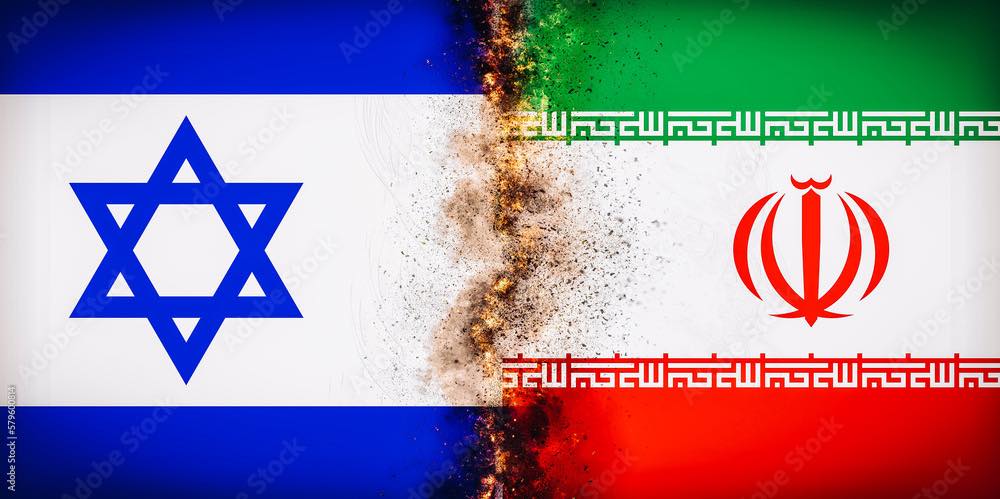
Watchdog Alert: Latest From Israel

Photo via cottonbro studio at pexels.com

Benjamin Netanyahu’s Pardon Request & Legal Turmoil

  • The Israeli Prime Minister has formally asked for a presidential pardon in his years-long corruption trial — an unprecedented move while charges (bribery, fraud, breach of trust) are still pending. Reuters
  • The request has sparked sharp criticism: political opponents and legal experts warn that granting a pardon before a verdict could undermine judicial integrity and set a dangerous precedent. AP News
  • Supporters argue a pardon could help unify a deeply divided country amid war and regional instability. Reuters

Hostage Remains Returned from Gaza; Continued Violence Despite Ceasefire

  • Militants in Gaza, according to Hamas, have handed over the body of one of the two remaining hostages from the October 7, 2023 attack — believed to be either an Israeli officer or a foreign national. Israel is preparing to receive the remains via the Red Cross and conduct forensic identification. Reuters
  • The handover comes even as violence persists: an Israeli airstrike in Gaza killed a Palestinian journalist, and Gaza authorities report continued casualties. Reuters
  • The return of remains underscores the fragile and incomplete nature of the ceasefire and hostage-return process, and highlights ongoing humanitarian and security risks. Reuters

Netanyahu Suggests Possible Deal with Syria — New Diplomatic Push

  • Netanyahu has signaled that a deal with Syria could be possible — conditional on Syria’s agreement to establish a demilitarized buffer zone stretching from Damascus to Mount Hermon. Reuters
  • The proposition comes amid ongoing tensions: Israel recently conducted a strike in southern Syria that killed 13 people, reportedly targeting a Lebanese militant group. Reuters
  • If Syria agrees, the deal could reshape regional alignments and constitute a major strategic shift, though deep mistrust remains on both sides. Reuters

One More Thing About David And Goliath

Here’s a follow-up to the author’s previous piece from this week, ‘About David And Goliath’.


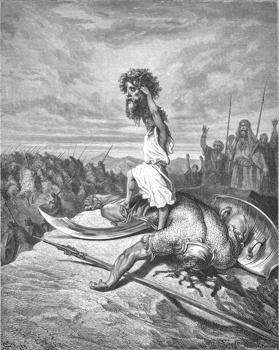
David killed Goliath. End of immediate story, right? We know David went on to become king of Israel (years later), but until recently mulling over this story, I overlooked the immediate end of the story of David and Goliath. It did not end with David and Goliath.

In fact, the beheading of Goliath was just the beginning of that story. Not only did David “get after it” by killing Goliath, the entire army of Israel had to then “get after it” by rallying to the battle and fighting the Philistines until the victory was won and the spoils of war were retrieved.

What if the army had failed to rally? Obviously the giant would have been dead but the battle would not have been won.

I don’t need to give the explanation of this lesson as a type for us. It’s enough to state the facts and allow ourselves to ponder the implications.

One final thought: King Saul offered David his armor and sword, which David refused because he had not “proved it”. The covering of men, even the king, was not going to win this fight. It was the covering of God’s goodness and grace upon David that he relied on, the strong arm of the Lord his God, rather than that of men.

Amen to that.

Digging Up The Past: Biblical Archaeological Discoveries

Bible Rebel keeps a watchdog’s eye on discoveries and news from the world of biblical archaeology and brings it to our readers.

Monumental Dam Wall in the City of David (Jerusalem)

Archaeologists in Jerusalem’s City of David uncovered a massive dam wall dating to around 805–795 BCE — the era of the kings of Judah, possibly King Joash or King Amaziah. The structure measures about 12 meters high, 8 meters wide, and over 20 meters long, making it the largest such dam ever found in ancient Israel.

This discovery supports Biblical references to Jerusalem’s advanced water systems during the First Temple period, including those mentioned in 2 Kings and 2 Chronicles relating to royal construction and fortification near the Gihon Spring and the Pool of Siloam.

Sources:


5,500-Year-Old Flint Blade Workshop at Nahal Qomem (near Kiryat Gat, Israel)

A large flint-blade manufacturing workshop dating to the Early Bronze Age (~3500 BCE) was discovered near Kiryat Gat in southern Israel. The site includes hundreds of underground pits, large flint cores, and finished blades — evidence of full-scale organized production.

Although the workshop predates Israelite settlement, it reflects the advanced culture of the early Canaanite inhabitants of the land. The Bible frequently references the Canaanites as the people living in the land before the Israelites (Genesis 10:15–19; Exodus 13:5), making this discovery relevant background to the Biblical setting.

Sources:


Excavations at Sebastia (Ancient Samaria)

In 2025, archaeologists resumed excavations at Sebastia — the ancient capital of the Northern Kingdom of Israel. They uncovered remains including a paved street leading to the main city gate, decorative columns, and a monumental base structure, marking the first major dig there in a century

Sebastia (Samaria) became the capital of the Northern Kingdom under King Omri (1 Kings 16:23–24) and is mentioned throughout the Old Testament in accounts involving later kings and prophets such as Elijah and Elisha.

Sources:

Watchdog Alert: Israel-Hamas War News

Bible Rebel keeps a watchdog’s eye on events from the Middle East and around the world of interest to people of faith and brings that content to our readers. Here’s the latest from the Israel-Hamas conflict.

Targeted Israeli strike in central Gaza

On 25 October 2025, the Israel Defense Forces (IDF) announced a strike in central Gaza targeting a member of Islamic Jihad Movement in Palestine who was allegedly planning an attack on Israeli troops. The strike took place despite the cease-fire in place since earlier this month. Eyewitnesses reported a drone attack on a car injuring four people, and shelling by Israeli tanks in eastern Gaza City.
Reuters


Nearly 100 Palestinians killed in Gaza since the cease-fire began

According to Gaza’s Health Ministry, at least 93 Palestinians have been killed in the Gaza Strip by Israeli attacks since the cease-fire went into effect on 10 October 2025. Reports also mention Israeli forces shot and wounded at least six Palestinians in various parts of Gaza.
Al Jazeera


U.S. and Qatar engage in Gaza peacekeeping / mediation roles

On 25 October 2025, during a meeting between U.S. President Donald Trump and Qatari Emir Tamim bin Hamad Al Thani, Qatar expressed willingness to contribute to a peacekeeping force in Gaza. This comes amid U.S. diplomatic efforts to shore up the cease-fire and define post-conflict governance in Gaza.
The Times of Israel


Unexploded ordnance injures children in Gaza as families return home

In Gaza City, six-year-old twins Yahya and Nabila Shorbasi were critically injured when they mistook unexploded bombs for a toy in rubble from their damaged home, following the cease-fire. Health officials say hundreds more children have been wounded in similar accidents. The United Nations Mine Action Service (UNMAS) reports over 560 unexploded items found during the cease-fire in Gaza, with many more likely hidden under debris.
AP News

Is Trump ‘Going To Heaven’?

President Trump made some interesting remarks recently on his way to the Middle East for events celebrating the historic peace deal he engineered.

He told reporters on Air Force One, “I don’t think there’s anything going to get me in heaven… I think I’m not, maybe, heaven-bound.” He made the remarks while traveling to Israel, reflecting on his peace efforts and faith. Trump added, “I’m not sure I’m going to be able to make heaven, but I’ve made life a lot better for a lot of people.” https://www.washingtonpost.com/politics/2025/10/13/trump-heaven-christian-faith

There are two big misconceptions that President Trump illustrates here in his remarks.

First, there’s absolutely nothing Trump or anyone else can do through their own works to obtain eternal life. Salvation is by grace alone through the redemptive work of Jesus Christ and is available to anyone and everyone who believes it and accepts it. I’m aware that Calvinists think that the act believing and accepting is the same as ‘works’ – but they are wrong.

Second, the Bible doesn’t teach that we ‘go to heaven’. It clearly and repeatedly teaches that heaven comes to a redeemed creation on earth and that our physical bodies are resurrected to everlasting life with God.

I hope to see Mr. Trump rejoicing with the saints on that day.