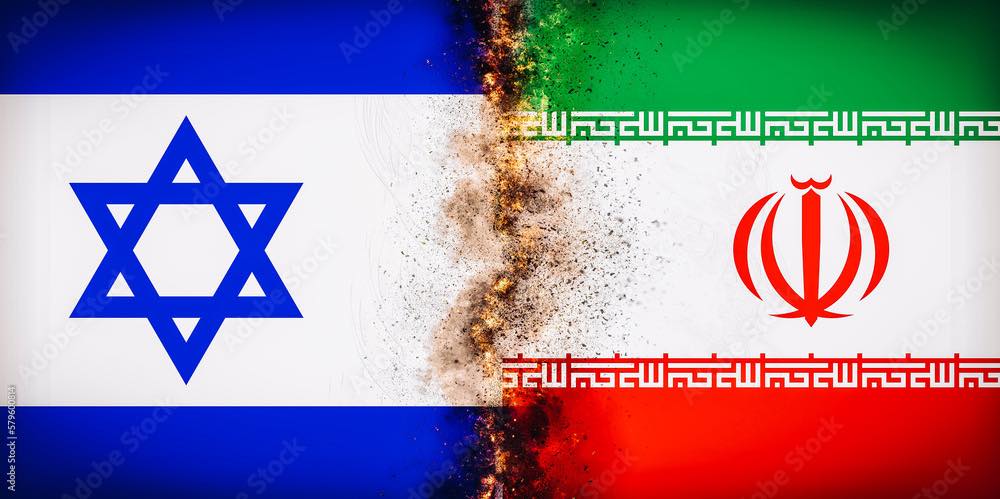
Thursday Watchdog Alert: Middle East Political Messiahs?

Iran says its attack on Kuwait was self-defense. Negotiations with the United States have now been suspended. Independent

Israeli strikes in Lebanon continue. Politicians blame politicians. Generals blame generals. Everybody promises a solution. Military.com

And yet the Middle East remains what it has been for thousands of years: a place searching for peace and rarely finding it.

Every generation believes the right leader, the right government, the right treaty, or the right movement will finally fix the world. We keep looking for a political messiah.

The Bible says that longing is real—but we’ve been looking in the wrong place.

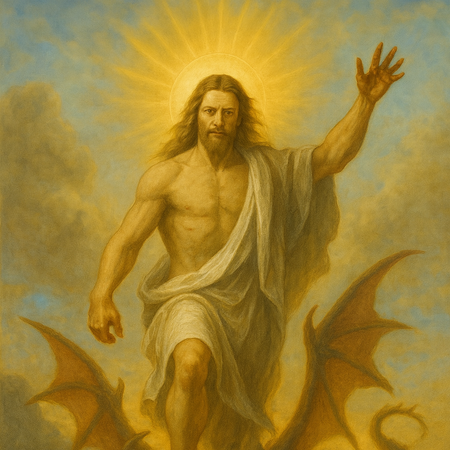
Notice that Jesus is called the Prince of Peace, not the Negotiator of Peace. Real peace won’t be accomplished at a conference table. Real peace will only be realized when Jesus Christ returns in power and glory to establish God’s kingdom on earth.

That’s why every human peace plan eventually cracks. You can sign agreements on paper, but you can’t legislate away sin.

The headlines remind us that humanity’s deepest problem has never changed. Neither has God’s solution.

Thy kingdom come, Thy will be done on earth as it is in heaven.

Thursday Watchdog Alert: Prophecy Junkies

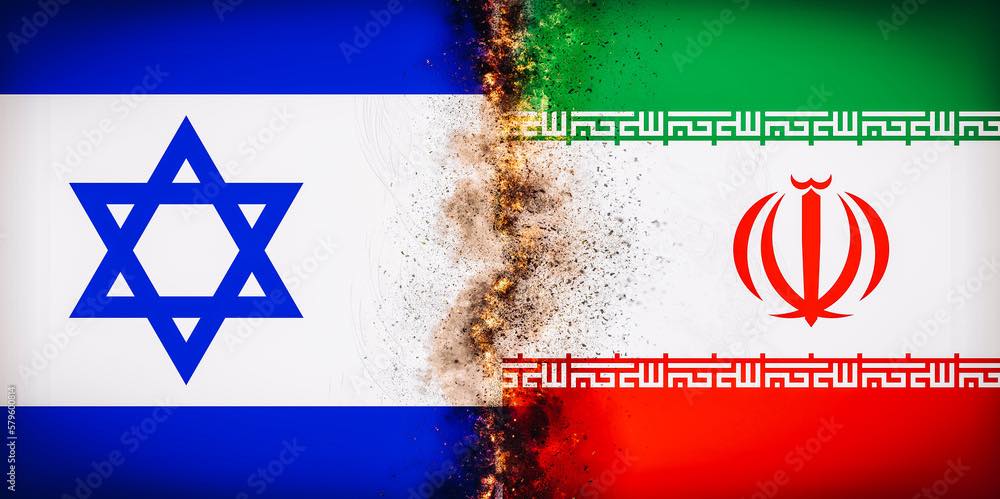
Iran. Israel. Hezbollah. Gaza. Houthi missiles. “Wars and rumors of wars.” Sound familiar?

This week alone, headlines focused on escalating Iran-Israel tensions, renewed Hezbollah activity, and political leaders openly using end-times language while discussing war in the Middle East. – The Guardian

And yes — many Christians immediately start flipping to Ezekiel, Daniel, and Revelation.

But the Bible never told believers to panic. It told us to pay attention.

Jesus said:

“See that ye be not troubled.” — Matthew 24:6

That’s the part many prophecy junkies conveniently skip while trying to turn every missile launch into a fulfillment of biblical prophecy.

Could current events connect to biblical prophecy? Maybe. The Middle East has always mattered in the biblical storyline, and nations like Persia (modern Iran) do appear in prophetic passages Christians have debated for centuries.

But prophecy isn’t meant to turn Christians into bunker-dwelling doom addicts. It’s supposed to wake us up spiritually.

The real issue is this: while nations rage, millions of ordinary people — including Christians trapped in conflict zones — are suffering, afraid, and searching for hope.

So instead of obsessing over timelines and hashtags, let’s try this:

Pray for persecuted believers. Open our Bibles instead of rage-scrolling. And shine light into a world addicted to darkness and chaos.

Because whether Christ returns tomorrow or 100 years from now, our mission today remains exactly the same.

Tuesday Watchdog Alert: When Politics Tries to Play Prophet

Iran’s ruling clerics don’t just talk politics — some openly talk apocalypse.

Recent reporting highlighted how hardline Iranian leaders and Revolutionary Guard figures continue using “Mahdist” language — the belief that chaos, war, and resistance against global powers can help prepare the way for the return of the Hidden Imam, or Mahdi. Analysts warn this ideology is becoming more central inside Iran’s leadership culture.

“Clerical figures aligned with the Guard have made their views explicit. As Hojatoleslam Ali Saeedi, formerly the Supreme Leader’s representative to the IRGC, said in a 2012 speech: ‘The IRGC is one of the tools for paving the way for the emergence of the Imam of the Age [Mahdi] in the field of a regional and international awakening.’ “- From the Hungarian Conservative

In plain English? Some leaders believe global conflict is not a problem to avoid — it’s a stage to set. That should wake people up.

The Bible warned long ago that rulers and nations would chase power through deception, fear, and spiritual blindness. Christians aren’t called to panic over every headline, but we are called to recognize when political movements start sounding like counterfeit salvation stories.

Our Lord already told us who wins history.

The world keeps looking for a warrior-politician, a system, or an ideology to save humanity. But broken people cannot build heaven on earth with missiles, propaganda, or “holy” revolutions. That usually just creates more graves.

And honestly, if your end-times plan requires nukes and chaos to “help God out,” maybe rethink the strategy.

The real Kingdom of God will come with great power and glory when Jesus Christ returns, but that won’t be according to man’s timetable — and it won’t be by any manufactured apocalypse.

So what?
Today, spend 10 minutes reading Matthew 24 and praying for discernment. Don’t let headlines shape your worldview more than Scripture does.

Thursday Watchdog Alert: Rumors Of Peace, Rumors Of War

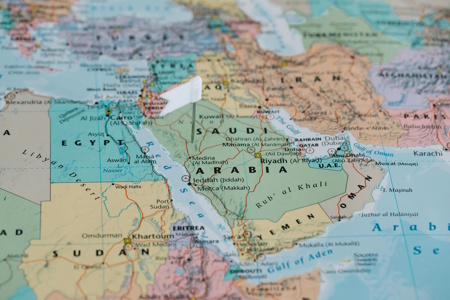
The Middle East is on fire again. Iran tensions are escalating, missile threats are growing, and global powers are scrambling to avoid a wider war. Meanwhile, Islamic extremism keeps dragging entire populations into cycles of fear and violence.

Rumors of a peace deal, then back to rumors of war the very next day.

So… is this biblical prophecy?

Maybe. Maybe not exactly the way YouTube prophecy gurus with blurry thumbnails claim every Tuesday night.

But Jesus did say: “You will hear of wars and rumors of wars… nation will rise against nation.” — Matthew 24:6-7

The point of prophecy was never “guess the date.” The point was: wake up. This world is fragile. Human governments cannot save us. And every missile launch reminds us we desperately need a King greater than Caesar, presidents, ayatollahs, or influencers with ring lights.

Here’s what should concern Christians most: global conflict always squeezes ordinary believers caught in the middle. Churches shrink underground. Fear rises. Hope fades. Yet historically, Christianity often grows strongest where comfort dies.

Funny how humans keep trying to build heaven without God… and accidentally create another dumpster fire instead.

Pray for Christians trapped in conflict zones. Read Matthew 24 slowly. Then do one bold thing this week that brings light instead of outrage—encourage someone, help someone, or share your faith without apology. The world has enough heat. Be light.

And remember this: There will be no peace absent the Prince of Peace.

Same Ground, Same Pressure, Same Plan

The headlines out of the Middle East keep tightening—escalation, retaliation, alliances shifting, pressure building from every side. It feels unstable.

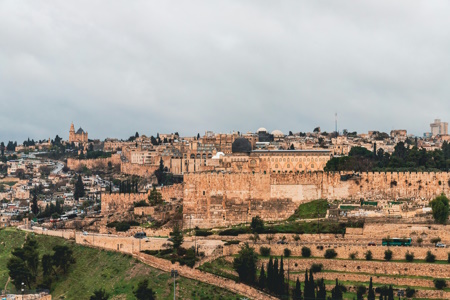
But that region has always been a pressure point—not just politically, but spiritually. Nations rise, fall, negotiate, and fight over the same land because it was never just about land. It’s about God’s plan for His creation.

Let’s go back to the beginning, where God tells Abraham in Genesis 17:7–8, “I will establish my covenant as an everlasting covenant between me and you and your descendants after you for the generations to come, to be your God and the God of your descendants after you. The whole land of Canaan, where you now reside as a foreigner, I will give as an everlasting possession to you and your descendants after you.”

Where? Not Ireland or Rome. Not America or France. It’s the land of Canaan—the place where both the modern and ancient state of Israel is and was located. The general area of what we now call the Middle East.

It’s called the Holy Land for a reason.

For how long? God established it by a holy covenant and gave it to Abraham and his seed forever—not just until the Church was born, not paused for a few thousand years, not waiting to restart when Jesus returns.

Forever means forever.

Who? Abraham and his, “…descendants after you for the generations to come, to be your God and the God of your descendants after you.”

The world keeps trying to solve something God already defined. Peace deals come and go. Ceasefires break. Tensions reset.

Everlasting peace doesn’t come from negotiation—it comes from the return of the King. Until then, pressure builds, and the Holy Land still matters. Israel still matters. A lot.

Let’s be vigilant and watch—but not through the eyes of fear. Through the lens God gave us.

Biblical Archaeology: Mass Children’s Grave Discovered

Mass Children’s Grave Discovered at Tel Azekah
April 13, 2026

Archaeologists uncovered a burial site containing the remains of numerous children at Tel Azekah, a strategic site mentioned in 1 Samuel 17 (the David and Goliath narrative).

From Associates for Biblical Research
“Archaeologists from Tel Azekah recently published an article in Palestine Exploration Quarterly in which they report the discovery of a mass grave of children that dates to the Persian era. The skeletal remains of between 68 and 89 children were discovered in a cistern that was dated to the fifth century BC based on the pottery and other small finds recovered nearby.”

Azekah was a fortified city in the Kingdom of Judah, and findings here help reconstruct life in the era of Saul and David.

The discovery may shed light on ancient warfare, disease, or ritual practices in Judah’s Shephelah region.

What Is Twelver Shi‘ism?

Twelver Shi‘ism (the dominant Shia branch in Iran, Iraq, Lebanon, and elsewhere) teaches that there are twelve divinely appointed Imams. The line ends with the Twelfth Imam, also called the Hidden Imam or al‑Mahdi, who is believed to be alive but concealed by God until the appointed time.

What Twelver Shi‘ism Actually Teaches

Twelver Shia Muslims believe that God appointed a line of twelve Imams, beginning with Ali and ending with Muhammad ibn al‑Hasan al‑Mahdi, born around 870 CE. According to this doctrine, the Twelfth Imam entered ghaybah (occultation) — a state of divine concealment — in the 9th century. He is considered still alive and will one day return as the Mahdi, a messianic figure who will establish global justice.

Lions Don’t Have Masters

Photo via cottonbro studio at pexels.com

So far this year, I’ve read two books on Israel’s history and military—The Lion’s Gate by Steven Pressfield and Six Days of War by Michael Oren. Anyone who thinks Israel and the IDF need the USA to do their work for them should read up on the modern history of Israel and the region.

Israel’s War of Independence in 1948, the Six-Day War in 1967, and their numerous subsequent fights for survival have proven time and time again that Israel can take care of itself quite ably in a very, very rough neighborhood.

Israel has been surrounded by hostile enemies who hate them with a perfect hatred and who have ceaselessly sought to annihilate them since their modern rebirth in 1948. They have prevailed against astonishingly superior forces every time.

And they have beaten impossible odds even without American help—just read the history.

Israel is definitely not America’s puppet, and America is definitely not Israel’s puppet. Israel is our friend and ally, as it should be, since they are the only Western‑style democracy and modern free society in the region.

Israel is not our master, and we are not Israel’s master, because lions don’t have masters—lions can handle the wolves and jackals together, or on their own if need be.

Replacement Theology? Nope

Replacement theology is just another one of the many doctrines of men. The “mystery” that Paul taught was that the Church—which includes Gentiles—would be partakers (Colossians 1:12) of the promise and inheritance, not replacers of the original heirs, Israel.

The Gentiles are grafted into the tree God already planted and nurtured—the Jewish people (Romans 11:24).

The Church is an awesome and marvelous realization of the eternal plan of God, but it is not a replacement for Israel, nor does its existence or purpose supersede God’s intention to fulfill His promise to His covenant people: a King and a Kingdom in their promised land.

Why Shepherds?

Thomas Cole – The Angel Appearing to the Shepherds

While reading the account of the angel announcing the birth of Jesus in Luke chapter 2, one of my grandchildren asked a great question: “Why did God choose shepherds to hear about it first?”

Here are three well-known commentary perspectives.

God reveals Himself to the lowly, not the powerful

Leon Morris (Tyndale New Testament Commentary – Luke)
Morris notes that shepherds were among the humblest workers in Jewish society. Their selection fits Luke’s repeated theme that God exalts the lowly and bypasses the proud (Luke 1:52). By announcing Jesus’ birth to shepherds rather than kings or priests, God shows that the gospel begins with grace, not status.


Shepherds highlight the theme of Jesus as the true Shepherd

Darrell L. Bock (Baker Exegetical Commentary on the New Testament – Luke)
Bock points out the strong shepherd imagery throughout Scripture and Luke’s Gospel. The angelic announcement to shepherds subtly introduces Jesus’ future role as the one who will shepherd God’s people (cf. Micah 5:2–4). The messianic identity of Jesus is foreshadowed by the audience chosen to hear the news.


Shepherds serve as credible witnesses to God’s work

Joel B. Green (NICNT – The Gospel of Luke)
Green emphasizes that shepherds, though socially insignificant, become the first human witnesses to the Messiah’s birth. Luke consistently shows God using unexpected people to bear witness. Their testimony demonstrates that divine revelation creates trustworthy witnesses, not social rank.