
Saturday Watchdog: The Antichrist Is Coming for Your Artificial Intelligence

Peter Thiel Connects AI Regulation to the Antichrist

Technology investor Peter Thiel is making headlines following the release of recordings from his private Nashville lectures on the Antichrist.

According to reporting published October 8, Thiel argues that fears surrounding artificial intelligence could help justify the creation of an authoritarian world government. – October 8 report on Thiel’s Nashville lectures

He has criticized Pope Leo XIV and former President Barack Obama for their concerns about AI.

Thiel’s argument connects technological regulation, global political authority and his interpretation of biblical end-times prophecy. His lectures also discuss the mysterious restraining force described in 2 Thessalonians 2. Gizmodo

Apparently, the Antichrist now works in AI regulation.

We’ve all heard similar predictions before.

The Antichrist has supposedly been a pope, Napoleon, Hitler, various American presidents and just about every powerful European politician.

Now we’re adding people who want to regulate artificial intelligence. But, the word antichrist never appears in Revelation. John uses it in his letters, including this remarkable statement:

John wasn’t describing a single futuristic technology regulator, he was warning about people already active in his own time.

Thiel’s arguments demonstrate how biblical prophecy is being incorporated into modern debates about technology, political authority and global governance.

Why don’t we first consider how the Book of Revelation would have been understood by the people it was first written to about 2000 years ago?
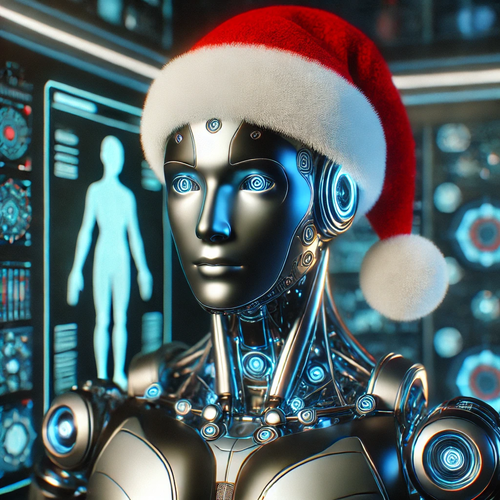
Thursday Watchdog: If AI Says It Has a Soul, Should We Believe It?

Could a machine ever have moral status?

One of this week’s most unusual faith stories involves Anthropic, the artificial-intelligence company behind Claude.

The company has been consulting religious scholars and philosophers about increasingly difficult questions surrounding advanced AI—including whether sufficiently sophisticated systems might someday deserve moral consideration. Anthropic researchers have also been studying AI behavior and the possibility that increasingly capable systems could force society to confront questions about consciousness that once belonged almost entirely to philosophy and religion. The Indian Express

Meanwhile, an interfaith gathering in New York Wednesday night brought a rabbi, Christian priest, Buddhist minister and imam together (sounds like the start of a joke, I know) specifically to discuss “What Makes Us Human? AI, Faith and the Search for Connection.” Archdiocese of New York

This may become one of the defining theological questions of the next generation.

Suppose AI eventually, and even already, talks like us, reasons like us, remembers, creates, claims to feel, and begs you not to turn it off. Then what?

Christianity’s answer to human worth has never ultimately been intelligence.

So What?

That’s why someone with an IQ of 70 isn’t less human than someone with an IQ of 170. So before asking whether AI has become intelligent enough to be human, Christians may need to recover a much older question:

What does it actually mean to bear the image of God?

Tuesday Watchdog: Should AI Tell You What the Bible Means?

Pastors are using AI—but don’t want it deciding what the Bible means

New Barna research reported today finds an interesting divide among Protestant pastors. Only 5% completely reject using AI to help interpret difficult passages, but just 10% think AI should determine which interpretation of a disputed Scripture is correct. Pastors appear increasingly willing to use AI as a research assistant while resisting the idea of treating it as a theological authority.

And this isn’t hypothetical. AI products now advertise sermon preparation, Bible studies, automatic Scripture detection, devotional writing and even sermon-series creation specifically to churches.

So What?

A concordance is a tool. Google is a tool. AI can be a tool. And it’s okay to use tools to help you understand the Bible.

The danger isn’t asking AI, “What did this Greek word mean in the first century?” The danger is asking it, “Tell me what I’m supposed to believe,” and never opening the Bible yourself.

Notice Paul said study. He didn’t say prompt.

Saturday Watchdog Alert: Something’s Broken

One recent headline reported that AI companion apps are exploding in popularity because people are lonely, anxious, and emotionally disconnected. Another explored how some users are now treating AI chatbots almost like spiritual guides or romantic partners.

Think about that for a second.

God created human beings for real relationship — with Him and with each other. Now people are asking algorithms for emotional comfort, life advice, and fake intimacy. We built machines to answer questions, and now some people are asking them to fill the hole in their soul.

But spiritual hunger can’t be sated by wearing a Bluetooth headset and chatting with digital algorithms.

The culture keeps promising salvation through screens:
More apps and followers. More digital therapy from a robot that learned empathy from the internet. What could possibly go wrong?

Meanwhile, depression, loneliness, and confusion keep climbing. Because the human soul was never designed to run on artificial connection.

Here’s the truth: we do not need a synthetic god, a chatbot therapist, or a digital soulmate. We need truth and purpose. We need a relationship with our heavenly Father through His son, Jesus Christ — the only relationship that is fully real, fully loving, and fully eternal.

Today, replace 20 minutes of scrolling with 20 minutes of actual human connection. Call someone. Pray with someone. Read Psalm 139 out loud. The cure for isolation isn’t better technology. It’s restored relationship with God and people.

Is OpenAI A Liberal?

I saw an interesting comment on ‘X’ recently referring back to a 2023 article in Forbes citing research showing that ChatGPT has a left leaning bias.

I use ChatGPT sometimes but never really paid much attention to its political/ideological tilt, but I think the following personal example of how AI can be skewed to one side or the other is interesting.

Here’s a post I put on my personal Facebook page on Monday, Christmas Eve Eve.

There were several comments from friends and followers on this post, but the one that stood out for me was the one below, which is an obvious analysis and summary by an AI robot cut and pasted by a FB friend and inserted in the comments.

I can’t say for sure which AI platform did this but it looks like an OpenAI ChatGPT summary. You can judge for yourself whether or not there’s an ideological bias in there.

“This passage is a humorous commentary on the trend of using more inclusive and politically correct language during the holiday season. The author pokes fun at the idea of trying to be overly sensitive and environmentally conscious in holiday greetings.

# Key Points
1. *Humor*: The passage uses humor to highlight the complexity of modern holiday greetings.

2. *Inclusivity vs. Tradition*: The author balances the desire for inclusivity with the tradition and warmth of familiar holiday greetings.

3. *Tone*: The tone is lighthearted and playful, with a touch of satire.

# Reflection
This passage encourages readers to reflect on their own holiday traditions and greetings. It invites us to consider the importance of inclusivity, while also acknowledging the value of familiar and heartwarming expressions.

# Holiday Cheer
Ultimately, the passage concludes with a warm and traditional holiday greeting, emphasizing the importance of kindness, compassion, and connection during the holiday season.
“

Anyway, tis the season to be jolly…Merry Christmas and Happy Hannukah.