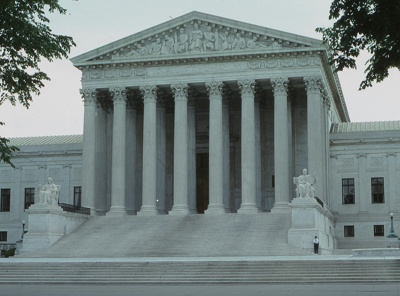
Tuesday Watchdog: New Supreme Court Term Loaded With Religious-Liberty Questions

Pic via Malcolm Hill pexels.com

The Supreme Court begins its 2026–27 term today with several cases capable of reshaping the boundary between government and religion. Among them is a Colorado dispute involving Catholic preschools that participate in the state’s publicly funded preschool program but object to nondiscrimination requirements involving sexual orientation and gender identity. The Court has also agreed to hear a Kentucky church’s religious-land-use case, while a Texas Ten Commandments classroom dispute is among the closely watched matters surrounding the new term. AP News

These cases keep returning to the same difficult question: When government offers something to everybody, can it tell religious people they may participate only if they leave part of their religion behind?

Christians should be careful here. Religious liberty shouldn’t mean Christian privilege. Whatever constitutional principle protects a Catholic preschool should also protect a Jewish school, Muslim organization or nonreligious group when the circumstances are comparable.

One of the most important features of our Constitution is the protection it provides in keeping Caesar from deciding which beliefs are acceptable.
Read today’s AP overview of the new Supreme Court term

Biblical Literacy: Setting The Record Straight

Here are three common misconceptions about what the Bible says – and doesn’t say.

Singular, Not Plural

The last book of the Bible is not called ‘Revelations.’ It should be referred to as the ‘Book of Revelation’, singular.


Fruit, Not Apple

The fruit of the tree of the knowledge of good and evil in the first book of the Bible, Genesis, is never called an apple.

Genesis 2:16–17 (KJV):
“And the Lord God commanded the man, saying, Of every tree of the garden thou mayest freely eat:
But of the tree of the knowledge of good and evil, thou shalt not eat of it: for in the day that thou eatest thereof thou shalt surely die.”


Store Cities, Not Pyramids

In Exodus 1:11, it says the Israelites built the “store cities” of Pithom and Raamses for Pharaoh. These were supply or storage centers, not pyramids. The pyramids of Egypt were constructed many centuries earlier, during the Old and Middle Kingdom periods (roughly 2600–1800 B.C.), long before most scholars date the events of the Exodus (often placed between 1500–1200 B.C., depending on interpretation).

So, while the Israelites were enslaved and forced into construction labor, the Bible and archaeology both indicate they built cities and other works, not the pyramids.

The idea that they were building pyramids most likely comes from the Cecil B. DeMille movie, ‘The Ten Commandments‘.