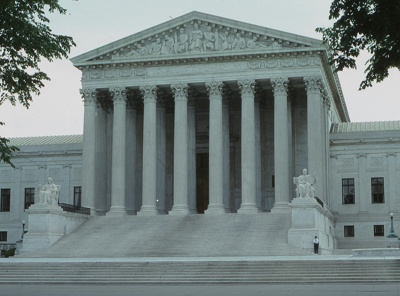
Tuesday Watchdog: New Supreme Court Term Loaded With Religious-Liberty Questions

Pic via Malcolm Hill pexels.com

The Supreme Court begins its 2026–27 term today with several cases capable of reshaping the boundary between government and religion. Among them is a Colorado dispute involving Catholic preschools that participate in the state’s publicly funded preschool program but object to nondiscrimination requirements involving sexual orientation and gender identity. The Court has also agreed to hear a Kentucky church’s religious-land-use case, while a Texas Ten Commandments classroom dispute is among the closely watched matters surrounding the new term. AP News

These cases keep returning to the same difficult question: When government offers something to everybody, can it tell religious people they may participate only if they leave part of their religion behind?

Christians should be careful here. Religious liberty shouldn’t mean Christian privilege. Whatever constitutional principle protects a Catholic preschool should also protect a Jewish school, Muslim organization or nonreligious group when the circumstances are comparable.

One of the most important features of our Constitution is the protection it provides in keeping Caesar from deciding which beliefs are acceptable.

Read today’s AP overview of the new Supreme Court term

Thursday Watchdog: Christianity & The First Amendment

Pic via Malcolm Hill pexels.com

Two Christian student organizations are suing Virginia State University, alleging that the public university stripped Christian organizations of ordinary registered-student-group status and placed them under the control of the university’s Campus Ministries office.
See story here

According to the complaint, Christian organizations must obtain approval for meetings and prayer gatherings, use university-approved oversight and have lost access to benefits available to other registered student organizations. The plaintiffs also allege Muslim and other non-Christian groups are exempt from the policy. These are allegations in pending litigation, not yet judicial findings.

So What?

If the allegations are accurate, the problem isn’t complicated. A public university can establish neutral rules for every student organization.

It can’t say: Muslim students can organize themselves, and secular students can organize themselves, but Christian students need government-approved supervision before they pray.

The First Amendment isn’t supposed to protect Christianity more than other beliefs, or less than other beliefs. It protects Christianity equally.

And that’s the principle worth defending.

Watchdog Alert: SCOTUS Unanimous Ruling On Catholic Charities Tax Exemption

Pic via Malcolm Hill pexels.com

Catholic Charities Bureau v. Wisconsin Labor & Industry Review Commission (Decided June 5, 2025)

In a unanimous 9–0 decision, the Supreme Court ruled that Wisconsin violated the First Amendment by denying Catholic Charities Bureau a tax exemption granted to other religious organizations.

The state had argued that the charity’s services were too secular to qualify, as they did not proselytize or serve only Catholics. Justice Sonia Sotomayor emphasized that the state’s actions showed favoritism to more overtly religious organizations, which is impermissible under the First Amendment.

The ruling allows Catholic Charities to opt out of state unemployment programs in favor of church-operated ones and may have broader implications for religious organizations across the U.S.

Watchdog Alert: Two SCOTUS Religious Liberty Cases

Pic via Malcolm Hill pexels.com

Bible Rebel keeps a watchdog’s eye on the U.S. Supreme Court and the impact it’s decisions make on our religious liberties so our readers can stay informed.

Oklahoma Religious Charter School Case

From ABC News – In a rare 4-4 deadlocked ruling, the Supreme Court blocked Oklahoma from creating the nation’s first taxpayer-funded religious charter school. The case revolved around whether public funds could be used to support a Catholic virtual school, St. Isidore of Seville. The court upheld the Oklahoma Supreme Court’s ruling, stating that such funding would violate the Establishment Clause of the First Amendment.

Catholic Charities Bureau v. Wisconsin LIRC

From Religious Liberty TV – This case examines whether a religious nonprofit can be denied a tax exemption if its activities are deemed not religious enough. The Wisconsin Supreme Court ruled that Catholic Charities Bureau’s work was primarily charitable and secular, rather than religious, and therefore not eligible for exemption. The Supreme Court is set to hear arguments on whether this violates the First Amendment’s Free Exercise Clause.