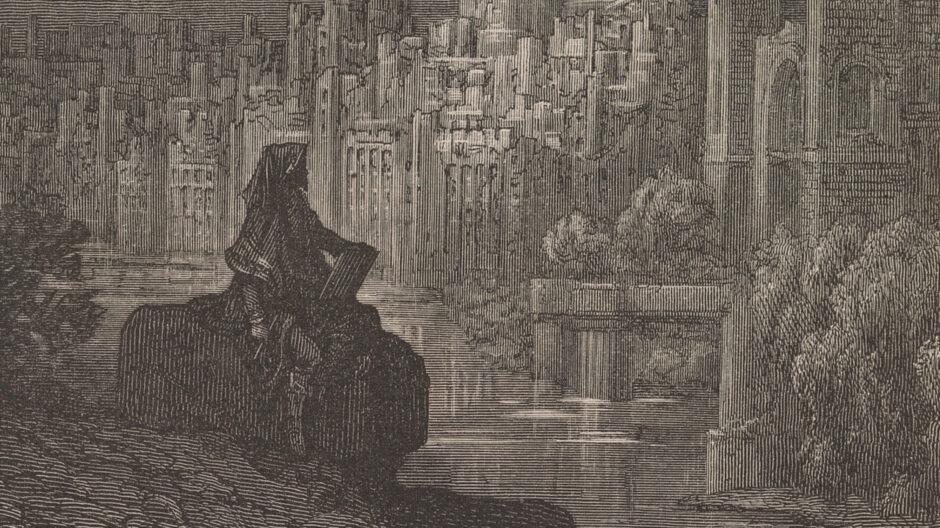
Before we imagine dragons, beasts, and mysterious numbers, picture something much more ordinary: a guy walking down a dusty Roman road carrying a scroll.
Most people picture Revelation as a mysterious book that somehow dropped out of heaven. It didn’t. It arrived by mail. Well… first-century Roman mail.
A Scroll Written in Greek
The Book of Revelation was almost certainly written in Koine Greek—the everyday language spoken across much of the Roman Empire. John didn’t type it on a laptop or print a paperback. It was carefully handwritten with ink on a long papyrus scroll.
The Original Delivery Guy
After John wrote Revelation while exiled on the island of Patmos, someone he trusted—possibly a Christian or recently converted Messianic Jewish messenger or elder—likely carried the scroll across the Aegean Sea to Ephesus, the first church listed.
From there, the scroll would have traveled in the order given in Revelation:
Ephesus → Smyrna → Pergamum → Thyatira → Sardis → Philadelphia → Laodicea.
That’s basically a giant postal route through western Asia Minor (modern-day Turkey).
At each church, the believers would gather in someone’s home, and one person would stand up and read the entire scroll out loud. Yes… the whole thing.
Imagine hearing Revelation for the very first time with no chapter numbers, no study Bible, and no YouTube prophecy channel telling you what every beast supposedly represents.
“Don’t Add or Take Away”—Why So Serious?
Revelation 22:18 says:
“For I testify unto every man that heareth the words of the prophecy of this book, If any man shall add unto these things, God shall add unto him the plagues that are written in this book.” (KJV)
John wasn’t warning people not to make notes in the margins. He was warning against changing God’s message.
Since churches depended on handwritten copies, someone could intentionally—or carelessly—alter the text while copying or reading it. John makes it crystal clear: Don’t edit God’s Word to fit your opinions. Don’t soften it. Don’t improve it. Don’t weaponize it. Just pass it on faithfully.
How Long Did It Take?
The entire journey probably took several weeks, perhaps one to two months, depending on weather, sea travel, road conditions, and how long the messenger stayed at each church to read the scroll and allow scribes to begin copying it.
Today we can read Revelation in seconds on our phones, but the first Christians had to wait patiently for a single handwritten scroll to arrive—and when it did, they listened as though God Himself were speaking.
So What?
We don’t have to wait for the letter to arrive. We already have it at our fingertips, 24/7/365.
So, lets take our time and first try to understand what Revelation was saying to the people it was originally written to. If we are patient enough to do that, then we can begin to understand what Revelation means to us today.