Biblical Archaeology: Early Christian Church Discovered

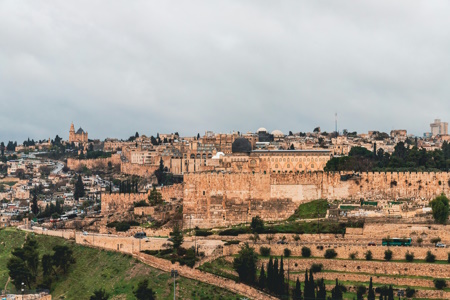
Photo via Виктор Соломоник at pexels.com

Here are three of the most recent biblical archaeology discoveries that have made news:

Rare Roman Mosaic Found Near the Biblical City of Perga (Turkey)

Archaeologists uncovered an exceptionally well-preserved third-century A.D. Roman mosaic in the ancient city of Aspendos, near Perga, where the Apostle Paul and Barnabas began their ministry in Asia Minor (Acts 13:13–14).

The mosaic, measuring roughly 20 × 25 feet, decorated what appears to have been a ceremonial pool and features a rare depiction of the river god Eurymedon. Although pagan in theme, the discovery provides valuable insight into the cultural environment encountered by the early Christian church during Paul’s missionary journeys. (New York Post)


Ancient Egyptian Settlement Discovered from the Period Often Associated with the Exodus

Excavations at Tell el-Koua in Egypt’s Wadi Tumilat uncovered a substantial settlement dating from the Second Intermediate Period through the early New Kingdom—the era many scholars investigate when discussing the historical context of the biblical Exodus.

The site includes:

  • Residential buildings
  • Mudbrick tombs
  • Storage silos
  • Ovens
  • Bronze tools
  • Scarab amulets

While the discovery does not prove the Exodus, it provides important archaeological evidence about life in Egypt’s eastern Nile Delta during the period often examined in Exodus research. (New York Post)


Earliest Christian Church Identified Beneath Ancient Italian City

Archaeologists excavating beneath a former fish market in Oderzo (ancient Opitergium), Italy, uncovered what is believed to be the city’s earliest known Christian church, dating to the 4th or 5th century A.D.

Among the discoveries were:

  • Intricate polychrome mosaic floors
  • A large basilica with a central nave and side aisles
  • Several Christian burials associated with the church

Although this find is post-New Testament, it offers significant evidence for the rapid spread of Christianity throughout the Roman Empire in the generations immediately following the apostolic era. (New York Post)

Armchair Apocalypse: Revelation Mail Call

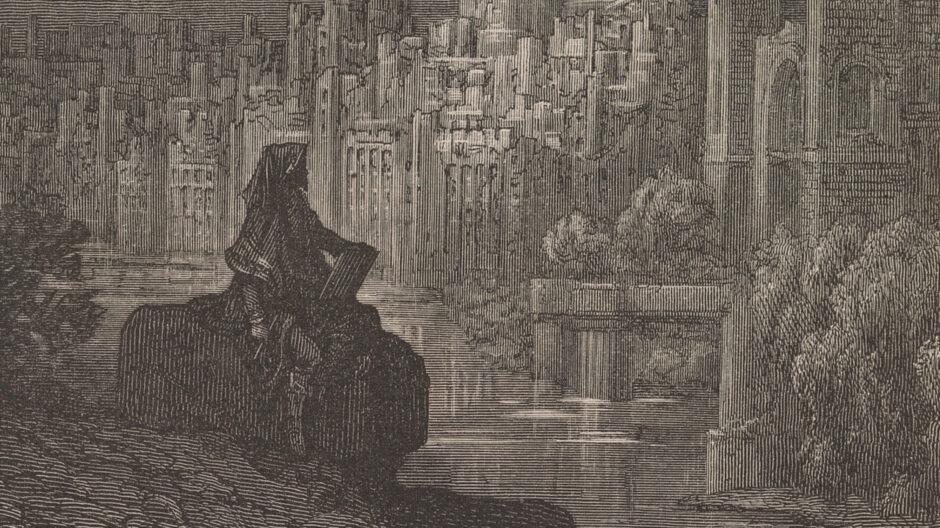
Before we imagine dragons, beasts, and mysterious numbers, picture something much more ordinary: a guy walking down a dusty Roman road carrying a scroll.

Most people picture Revelation as a mysterious book that somehow dropped out of heaven. It didn’t. It arrived by mail. Well… first-century Roman mail.

A Scroll Written in Greek

The Book of Revelation was almost certainly written in Koine Greek—the everyday language spoken across much of the Roman Empire. John didn’t type it on a laptop or print a paperback. It was carefully handwritten with ink on a long papyrus scroll.

The Original Delivery Guy

After John wrote Revelation while exiled on the island of Patmos, someone he trusted—possibly a Christian or recently converted Messianic Jewish messenger or elder—likely carried the scroll across the Aegean Sea to Ephesus, the first church listed.

From there, the scroll would have traveled in the order given in Revelation:

Ephesus → Smyrna → Pergamum → Thyatira → Sardis → Philadelphia → Laodicea.

That’s basically a giant postal route through western Asia Minor (modern-day Turkey).

At each church, the believers would gather in someone’s home, and one person would stand up and read the entire scroll out loud. Yes… the whole thing.

Imagine hearing Revelation for the very first time with no chapter numbers, no study Bible, and no YouTube prophecy channel telling you what every beast supposedly represents.

“Don’t Add or Take Away”—Why So Serious?

Revelation 22:18 says:

John wasn’t warning people not to make notes in the margins. He was warning against changing God’s message.

Since churches depended on handwritten copies, someone could intentionally—or carelessly—alter the text while copying or reading it. John makes it crystal clear: Don’t edit God’s Word to fit your opinions. Don’t soften it. Don’t improve it. Don’t weaponize it. Just pass it on faithfully.

How Long Did It Take?

The entire journey probably took several weeks, perhaps one to two months, depending on weather, sea travel, road conditions, and how long the messenger stayed at each church to read the scroll and allow scribes to begin copying it.

Today we can read Revelation in seconds on our phones, but the first Christians had to wait patiently for a single handwritten scroll to arrive—and when it did, they listened as though God Himself were speaking.

So What?

We don’t have to wait for the letter to arrive. We already have it at our fingertips, 24/7/365.

So, lets take our time and first try to understand what Revelation was saying to the people it was originally written to. If we are patient enough to do that, then we can begin to understand what Revelation means to us today.

Armchair Apocalypse: Why Revelation Feels So Jewish

If you’ve ever tried reading Revelation and thought, “Why does this sound like a bizarre mashup of dragons, beasts, and ancient symbolism?” — you’re not alone.

Well, Revelation wasn’t written primarily for modern Americans scrolling social media. It was written to people who knew the Jewish Scriptures inside and out.

Why Are There So Many Old Testament References?

Revelation contains hundreds of references and connections to the Old Testament, yet it never directly quotes it. Why? Because John assumes his readers already know the background story.

The beasts come from Daniel. The plagues echo Exodus. The heavenly throne room resembles Ezekiel and Isaiah. The New Jerusalem points back to God’s promises throughout the prophets.

Think of Revelation as the Bible’s season finale. If you skip the previous seasons, you’ll miss half the plot.

John the Revelator isn’t inventing new ideas. He’s connecting the dots from Genesis to Revelation and showing how God’s grand plan reaches its climax.

Why Does When It Was Written Matter?

Most scholars place Revelation around A.D. 95 during the reign of the Roman Emperor Domitian. Others believe it was written earlier than that, before A.D. 70 when Rome sacked Jerusalem and destroyed the Jewish Temple.

Either way, the important point to remember is that Revelation was written during a time when Christians were facing persecution and pressure to worship the emperor as a god.

So some of the symbols and imagery make more sense when you understand a little bit about the history and culture of the time.

The beast isn’t just a random monster. It represents oppressive political power. Babylon isn’t ancient Babylon. It’s a symbolic picture of a corrupt world system standing against God.

The original readers weren’t asking, “Who is the Antichrist in 2026?” They were asking, “How do we stay faithful when the empire wants our loyalty and may kill us if we don’t bend the knee?”

What Is the Cultural, Geographic, and Historical Context?

John received the vision while exiled on the island of Patmos, a small rocky island off the coast of modern-day Turkey and it was sent as a letter to be read to seven real groups of believers in Asia Minor.

These churches, fellowships of the faithful, many of whom were recently converted Jews, lived in wealthy Roman cities filled with emperor worship, pagan temples, trade guilds, and cultural pressure.

So, we must try to read and understand the Book of Revelation from their point of view. How would those people have understood the letter they received?

Revelation isn’t mainly about predicting tomorrow’s headlines, what 666 really means, or who the Anti-Christ may be among current famous folks. It’s about encouraging believers in all times and places to remain faithful and focused on the return of our Lord Jesus Christ and his coming kingdom, no matter what culture, government, or trend is demanding their allegiance.

So What?

The Book of Revelation is not a puzzle designed to confuse us. It’s a message of hope. The Jewish imagery tells us where the story came from. The historical setting tells us who first received it. The cultural context tells us why it mattered.

And the ending tells us who wins.

“Be thou faithful unto death, and I will give thee a crown of life.” — Revelation 2:10 (KJV)