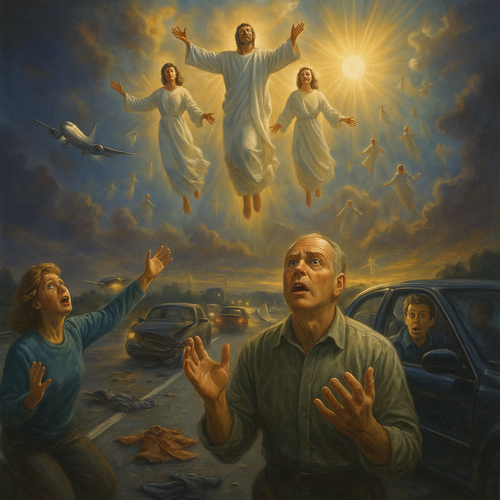
Hollywood’s Big Myth
Mention “the Antichrist,” and most people picture a slick global dictator, the son of Satan, running the United Nations while plotting world domination. Throw in a creepy kid named Damien, a barcode or implanted microchip, and dramatic background music, and you’ve basically got pop culture’s version of the end times.
But come on, that’s not actually what the Bible says.
Much of our modern picture comes from movies like The Omen (1976), Rosemary’s Baby (1968), Hal Lindsey’s Late Great Planet Earth, and later the Left Behind novels and films, where the charismatic politician Nicolae Carpathia became the Antichrist for an entire generation. These stories are entertaining, but they blend together different biblical characters and centuries of theological tradition into one supervillain. (Wikipedia)
As I outlined previously, though, the word “antichrist” never appears in the Book of Revelation. Not even once.
Instead, John uses the word only in his letters (1 John 2:18, 22; 4:3; 2 John 7), where he says that “many antichrists” were already present in his own day. He describes people who denied that Jesus is the Christ—not a future global emperor waiting for his movie trailer.
A Little History
So where did the famous end-times Antichrist come from?
Over the centuries, Christian writers gradually combined several different biblical figures into one character:
- John’s antichrists (false teachers).
- Paul’s “man of lawlessness” (2 Thessalonians 2).
- Daniel’s little horn (Daniel 7).
- Revelation’s Beast from the sea (Revelation 13).
By the Middle Ages, this blended figure had become a detailed legend. Modern prophecy books, novels, and films later turned that legend into the polished villain many people know today.
The Bible certainly speaks of wicked rulers. Pharaoh opposed God. Nebuchadnezzar exalted himself. Antiochus IV Epiphanes persecuted God’s people. Nero brutally attacked Christians.
Revelation also portrays the Beast as a blasphemous, persecuting political power, which many scholars understand primarily as an empire or imperial system rather than a single individual. But Scripture doesn’t simply hand us Hollywood’s single, all-in-one Antichrist character. It presents several different figures serving different purposes in different books.
So What?
The Bible’s main message isn’t, “Pin the tail on the Antichrist.” It’s, “Patiently wait for the King and the Kingdom.”
Remain faithful and watchful. Remain unafraid.
The Hollywood and pop-culture bogey man called the Antichrist is a manufactured, unbiblical creation that gets far too much attention. Don’t let it have yours.