Saturday Watchdog Alert: When You Are Your Own God

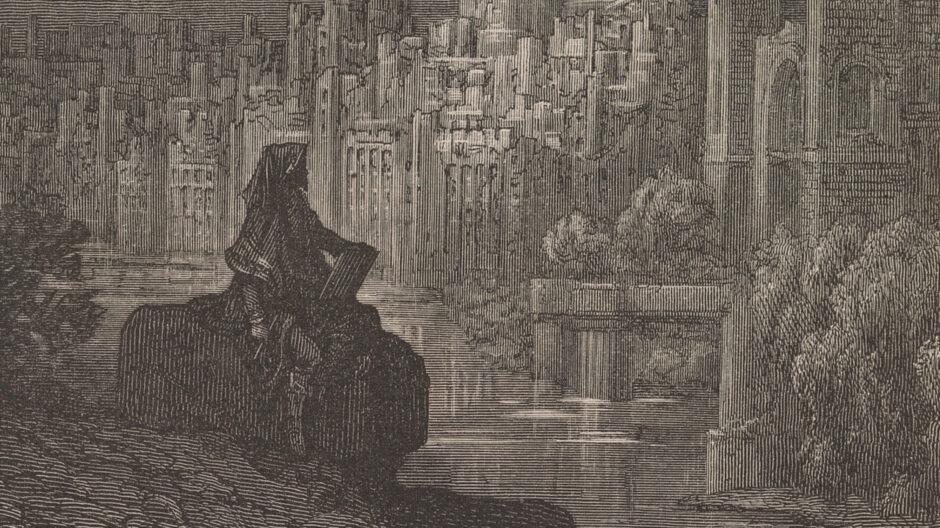
The modern world promised freedom without God.
How’s that working out?

A recent report from the University of Southern California Center for Religion and Civic Culture says America continues to wrestle with the rise of the “nones” — people with no religious affiliation — even while many are desperately searching for spirituality again. Meanwhile, a Washington Post report on “nihilistic violent extremism” described a growing trend of young people embracing meaninglessness, rage, and destruction as identity itself.

That’s the problem with a culture that worships self.
When “you are your own god” becomes the national religion, eventually people realize their god is anxious, lonely, angry, addicted, and scrolling TikTok at 2:00 a.m.

So people drift into New Age spirituality, aesthetic Satanism, crystals, chaos, online occultism, or just plain numbness — because the human soul was built to worship something.

The Bible already diagnosed this centuries ago:

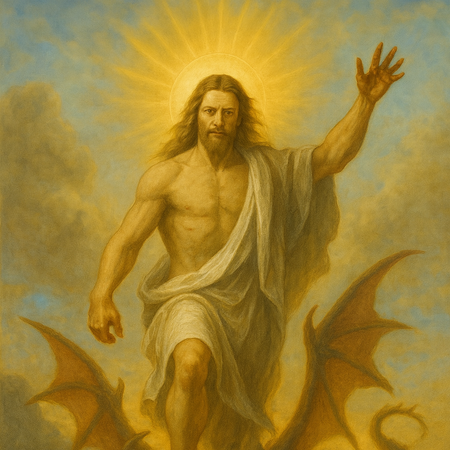
Here’s the good news: Jesus didn’t come to make you more religious. He came to rescue you from emptiness.

Turn off the noise for 15 minutes. No phone. No music. No doomscrolling. Think about your purpose in life and ask this:
“Are You really there?”

They Said It: Four Quotes On The Book Of Isaiah

John Wesley

Charles Spurgeon

Abraham Joshua Heschel

N. T. Wright

Thursday Watchdog Alert: Rumors Of Peace, Rumors Of War

The Middle East is on fire again. Iran tensions are escalating, missile threats are growing, and global powers are scrambling to avoid a wider war. Meanwhile, Islamic extremism keeps dragging entire populations into cycles of fear and violence.

Rumors of a peace deal, then back to rumors of war the very next day.

So… is this biblical prophecy?

Maybe. Maybe not exactly the way YouTube prophecy gurus with blurry thumbnails claim every Tuesday night.

But Jesus did say: “You will hear of wars and rumors of wars… nation will rise against nation.” — Matthew 24:6-7

The point of prophecy was never “guess the date.” The point was: wake up. This world is fragile. Human governments cannot save us. And every missile launch reminds us we desperately need a King greater than Caesar, presidents, ayatollahs, or influencers with ring lights.

Here’s what should concern Christians most: global conflict always squeezes ordinary believers caught in the middle. Churches shrink underground. Fear rises. Hope fades. Yet historically, Christianity often grows strongest where comfort dies.

Funny how humans keep trying to build heaven without God… and accidentally create another dumpster fire instead.

Pray for Christians trapped in conflict zones. Read Matthew 24 slowly. Then do one bold thing this week that brings light instead of outrage—encourage someone, help someone, or share your faith without apology. The world has enough heat. Be light.

And remember this: There will be no peace absent the Prince of Peace.

Faith Requires Skepticism

Question everything. Faith requires a healthy dose of skepticism about everything we think we know.

Wait, faith requires skepticism?

Of course it does. Our Heavenly Father commands us to love Him with all of our hearts, souls, and minds. Did you get that last one? Minds.

God wants us to ask questions, examine His wonders, and search the Scriptures seeking truth. That requires an inquisitive mind.

The most dangerous aspect of the doctrines of men is that they are usually close enough to biblical truth that they fool even the most sincere and honest among the faithful.

Some of those doctrines of men are so convoluted and confusing that they present stumbling blocks to those outside the faith and sometimes cause the faithful to abandon the faith.

We should faithfully seek to understand God’s truths about His nature, His creation, and His will for His people, even if that means challenging long‑held doctrines and theologies that were devised and propagated by religious folks for their own benefit — or for the purposes of the principalities and powers behind them.

Remember who the enemies of our Lord were? The religious leaders of his time and culture who had perverted and changed the Word of God into the doctrines of men.

Remember the lesson of the Reformation? Churchianity was challenged, and the centuries‑old religious status quo was called to task — salvation by grace, not ceremonies and dead works.

Bible Rebel will be asking questions and challenging assumptions here. We believe it’s high time for a New Reformation, or at least a fresh look at the old wine in the old wineskins.

Every Wednesday we will be raising some important questions about commonly held doctrines and assumptions within modern Churchianity.

Stay tuned.

Tuesday Watchdog Alert: Today’s Reality Check

Two headlines. Same story. Different continents.

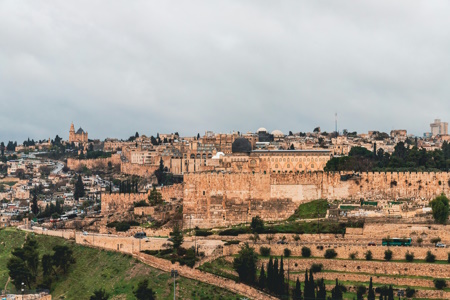
A nun was kicked and beaten near a holy site in Jerusalem amid a surge in anti-Christian hostility. From The Times

Meanwhile in China, underground Catholics face surveillance, detention, and pressure to submit to a state-controlled church. From The AP

Let’s be blunt: following Jesus is not trending—it’s costly. And yet… this is nothing new.

Here’s the twist: persecution doesn’t kill the Church—it exposes it. Comfortable Christianity fades fast. Real faith gets sharper under pressure.

Western culture may not be kicking down your door (yet), but it’s quietly asking you to soften truth, stay silent, and blend in. Same battle. Different strategy.

Jesus didn’t call fans. He called followers.

So what now?

Do Something.
Do one bold, visible act of faith today—pray out loud, share truth with someone, or stand firm on a conviction you’ve been avoiding. No theatrics. Just courage.

Because the line is being drawn—globally and personally.

Watchdog Alert: Faith That Doesn’t Bow

Leaders of a prominent underground church have been detained in south-west China, according to a church statement, the latest blow in what appears to be a sweeping crackdown on unregistered Christian groups in the country.
From The Guardian

“The Chinese government has ushered in the new year with new arrests of underground Protestant church members,” said Yalkun Uluyol, China researcher at Human Rights Watch. “The government should immediately free those detained and let them freely practice their religion.”
From Human Rights Watch

Two headlines. Same message.

In China, authorities have detained pastors and church leaders from underground congregations, part of a sweeping crackdown on independent Christianity.
At the same time, reports confirm dozens of Zion Church leaders arrested and facing prison, simply for preaching outside state control.

That’s not ancient persecution. That’s right now.

Different cities. Same demand: Submit—or suffer.

“Indeed, all who desire to live godly in Christ Jesus will be persecuted.” — 2 Timothy 3:12

This is where the gap becomes obvious. In parts of the world, following Jesus costs your freedom. In others, we’re still debating how to make Christianity more comfortable.

But the gospel was never designed for comfort—it was built for conviction. Those pastors didn’t get arrested for being extreme. They got arrested for being faithful.

They refused to let the government define their message. They refused to dilute truth to stay safe. And that’s the dividing line coming into focus globally.

Not Catholic vs Protestant.
Not denominational labels.

Faithful… or flexible. Because pressure doesn’t destroy real faith. It reveals it.

The underground church in China is growing, not shrinking—because when everything is stripped away, what’s left is real. No branding. No performance. Just belief.

And that raises the question for us: What happens to our faith when it actually costs something? If our faith depends on comfort, it won’t survive conviction—but real faith stands when everything else is taken away.

Biblical Archaeology: 2000 Year Old Scroll Fragments

Photo via Виктор Соломоник at pexels.com

A recent article from the Daily Mail with very interesting information and a personal story from a scholar about some of the oldest New Testament scroll fragments ever discovered:

Tucked away in Oxford University’s historic library are the oldest surviving New Testament fragments, papyrus texts nearly 2,000 years old that are among Christianity’s most treasured writings. 

For Dr Jeremiah Johnston, who has studied the Magdalen Papyrus P64 extensively, being one of the few people allowed to hold the pieces of historic scripture was ‘the single most awe-inspiring experience this side of heaven.’

‘I’m holding that fragment, and to know that it’s 2,000 years old, and to know that it’s true, and that the scales of truth tip in the favor of Christianity, was transformational for me.’
From the Daily Mail

What Is Bible Rebel?

The Bible Rebel blog is a resource for those seeking original and curated content, including news and commentary, covering faith, biblical studies and interpretation, and the intersection of politics, culture, and the Bible.

Our Mission

  1. To monitor current news and events related to faith and culture.
  2. To provide an alternative viewpoint to the world’s pervasive climate of darkness, nihilism, and hopelessness for those seeking truth, light, and purpose.
  3. To examine and question the assumptions of religious tradition and provide a resource for information and inspiration for people of faith who have become dissatisfied with an increasingly lifeless and empty ‘churchianity’.
  4. To present the Biblical truths which reveal God’s nature and purposes and proclaim the lifechanging, world-altering, radical message of Yeshua the Messiah – Jesus Christ, our risen Lord and Savior. and to help regular, everyday folks understand the Bible and apply it in their lives.

Contact us at in**@********el.com

Subscribe to our free monthly newsletter

They Said It: Four Quotes On The Book Song Of Solomon

Here are four rich, historically grounded quotes from respected spiritual leaders and influencers on the Book of Song of Solomon—a book that has stirred devotion, mystery, and deep reflection for centuries.

Charles Spurgeon

Watchman Nee

Bernard of Clairvaux

Rabbi Akiva (1st–2nd century)