Armchair Apocalypse: First Steps of Revelation

Meet Nicanor, a character in a short historical fiction story showing how the Book of Revelation may have first traveled from Patmos in the Aegean Sea in the first century to Ephesus—and eventually to the whole world and people in every age since.

During this “Armchair Apocalypse” series, we’ll follow Nicanor on his travels to better understand the Book of Revelation by exploring the people and the times in which it was first revealed.


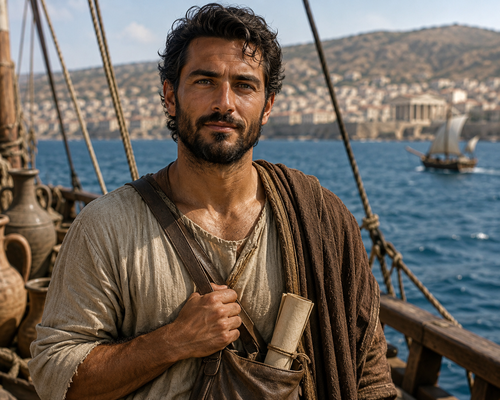
The old man carefully rolled the parchment and tied it with a simple cord. John—exiled on the rocky island of Patmos—looked across at Nicanor, a broad-shouldered Greek Christian in his early thirties whose weathered face and sun-darkened skin betrayed years spent working merchant ships across the Aegean. His short black beard was flecked with salt, and a coarse brown wool cloak hung over a simple linen tunic.

“This isn’t just a letter,” John said quietly in Greek. “It’s a revelation from Jesus Christ himself. The churches will be encouraged… and corrected. Rome won’t like either one.” Nicanor nodded, instinctively resting a hand on the leather satchel that concealed the scroll beneath spare clothing and food. If Roman officials searched him and discovered its contents, prison would be the best outcome. Execution wasn’t impossible. John placed a weathered hand on his shoulder. “Don’t rush. Don’t panic. Deliver it faithfully.” Then, with the kind of smile only someone who had seen such a vision of the glorified Christ could give, he added, “Besides… God has already handled bigger problems than bad weather and Roman soldiers.”

Nicanor boarded a small coastal merchant sailing vessel—a sturdy wooden cargo boat loaded with amphorae of olive oil, grain, and wine. Salt spray soaked his leather sandals as the ship crossed the blue waters toward Ephesus. Days later the city’s magnificent harbor appeared, crowded with fishing boats, cargo ships, and Roman patrol vessels. Merchants shouted prices in Greek while Roman soldiers barked commands in Latin. Citizens wearing bright linen tunics hurried along gleaming marble streets lined with columns, fountains, and towering temples dedicated to Artemis and the emperor. Every corner reminded people who Rome demanded they worship. Nicanor quietly smiled beneath his beard. He knew a greater King.

After sunset, he slipped through narrow stone alleys until an elderly man opened a plain wooden door. Jacob ben Ezra, one of the elders of the Ephesian church, stood slightly stooped with silver hair, deep lines around kind eyes, and a neatly trimmed white beard. Born and raised in the Jewish community of Ephesus, Jacob had spent decades studying the Law and the Prophets before becoming convinced only a few years earlier that Jesus of Nazareth was Israel’s promised Messiah. Some old friends now refused to speak to him. Others considered him a traitor. Yet his quiet joy never seemed to fade.

Inside, about thirty believers gathered in a modest courtyard lit by flickering oil lamps. Among them sat Eliab, a young Jewish craftsman who had only recently come to the same life-changing conclusion. Seeing another Jewish believer leading the gathering gave him courage.

Jacob carefully untied the scroll and began reading: “The Revelation of Jesus Christ…” The room became silent enough to hear the lamps crackle. As John’s words unfolded, the Jewish believers immediately recognized echoes of Daniel’s beasts, Ezekiel’s visions, Zechariah’s horses, and Isaiah’s promises, while the Gentile believers listened as those familiar Scriptures came alive in ways they had never imagined. This wasn’t a puzzle for clever people centuries later. It was a message for persecuted Christians living under Rome’s shadow: stay faithful, reject compromise, don’t worship Caesar, because Jesus—not the emperor—has already won and will reign. Some quietly wept. Others gripped each other’s hands. Eliab felt chills run down his spine. Following Jesus suddenly seemed both more dangerous… and more worth it than ever before.

As Nicanor carefully rolled the scroll back into its leather case, he glanced eastward. Six more churches were still waiting.

Tuesday Watchdog: You’re Not Promised Tomorrow

A legendary actor, Sam Neill, is here one day and gone the next. A prominent politician/U.S. Senator, Lindsey Graham, is taken from us overnight.

Deadly flash floods in Missouri have taken lives and forced hundreds of emergency rescues. Families woke up expecting an ordinary day… and by nightfall, everything had changed. (The Washington Post)

That’s the uncomfortable, unfortunate reality in this current dark and broken world.

Our culture acts like we’re guaranteed another summer, another birthday, another chance to text, “Sorry,” or finally start asking life’s biggest questions. The Bible says otherwise.

Life is incredibly fragile. Your next breath isn’t something you earned—it’s a gift. The question isn’t, “How long will I live?” The wake-up call is, “What am I living for?”

God is real—Jesus really conquered death—and the smartest thing you’ll ever do isn’t building the perfect career or chasing viral fame. It’s getting to know the One who holds your life in His hands.

So, seize the day. Seize every day, starting today.

Read Proverbs 27. You’ll be glad you did. And you’ll be better able to understand that today is all you have—and even that is a little iffy. Trust God.

They Said It: Four Quotes On The Book Of Joel

Here are four thoughtful quotes from respected spiritual leaders and influencers on the Book of Joel.

Matthew Henry

(Commentary on Joel 2)

Charles H. Spurgeon

(From a sermon on Joel 2:1)

John Calvin

(Commentary on Joel 2:12–13)

A. W. Tozer

(A theme Tozer frequently connected with Joel 2:12–17 and the biblical call to repentance.)

Thursday Watchdog: More Middle East Messiness

Picture via Lara Jameson pexels.com

U.S. Launches New Strikes on Iranian Military Targets After Hormuz Shipping Attacks

Following Iranian-linked attacks on commercial vessels in the Strait of Hormuz, the United States carried out a broad wave of strikes against Iranian military infrastructure, while both sides accused each other of violating previous agreements. Oil prices jumped and fears of a wider regional war intensified.
AP

Always keep in mind that Jeshua, our Messiah, warned us that “wars and rumours of wars” would characterize this age until He returns. By the way, we’ve been living in the last days since His resurrection and ascension.

Israel Continues Operations in Southern Lebanon Despite Diplomatic Pressure

Hezbollah attacks against Northern Israel and Israeli military operations against Hezbollah-linked targets have continued in southern Lebanon even amid renewed diplomatic efforts, keeping tensions high along Israel’s northern border.
The Guardian

Every new ceasefire seems destined to fail sooner rather than later and humanity keeps proving the Bible right about the brokenness of the human heart. Come, Lord Jesus.

Iran Holds Funeral for Former Supreme Leader While New Leadership Signals Defiance

Millions participated in funeral events for Iran’s former Supreme Leader, while Iran’s new leadership used the occasion to emphasize resistance against the United States and Israel and project strength despite recent military losses.
Reuters

Regimes rise, rulers fall, and history keeps moving—but God’s kingdom isn’t waiting for the next election or revolution. Let’s not overly concerns ourselves with who occupies the palace in Tehran or the White House; rather, lets make certain our hearts are turning toward the King of Kings and His return to establish righteousness—forever.

Saturday Watchdog: America At 250 – Celebration… Or Warning?

As America celebrates its 250 years, the headlines are filled with debates about our history, our identity, and what kind of nation we want to become. Some want to emphasize our achievements, and we should. Others insist we confront our failures, and we should do that too. It’s good and proper that America is asking hard questions about itself.

Where Does America Stand in God’s Eyes?

The Bible teaches that one day, after this age is over, every individual will stand before God for judgment. But throughout Scripture, God also judges nations within history. Egypt. Babylon. Assyria. Israel. Rome. No nation gets a permanent exemption, including the good old USA.

“Righteousness exalteth a nation: but sin is a reproach to any people.” — Proverbs 14:34 (KJV)

America has been incredibly blessed. Millions have flocked here over the generations to enjoy the freedom, opportunity, and generosity that this nation has provided through God’s grace, wisdom, and mercy.

But blessings aren’t a lifetime achievement award. They’re a stewardship, and America has not always managed that stewardship according to our Heavenly Father’s will and heart.

And America has been harshly judged within our own history for our national sins. The Civil War was the horrible consequence of the wickedness of slavery, for example.

What About Now?

The real issue isn’t whether America is the greatest nation on earth—we believe it is. The real question is whether we’re pursuing justice, truth, humility, and obedience to the God who ultimately rules over every nation.

At 250 years old, America doesn’t just need another birthday party. It needs honest self-examination and a return to acknowledging that the world is dark and broken, and that the light shining from the city on the hill is God’s light, not our own.

So What?

Before criticizing and damning our country—or worshipping it—ask God to examine your heart first. Nations are made up of people, and renewal and revival always begin one person at a time.

They Said It: Four Quotes On The Book Of Hosea

Here are four inspiring quotes from respected spiritual leaders and influencers on the Book of Hosea.

G. Campbell Morgan

This is the central theme Morgan developed throughout his book Hosea: The Heart and Holiness of God. He emphasized that Hosea reveals both God’s unwavering love and His uncompromising righteousness.

Charles Haddon Spurgeon

    Spurgeon frequently pointed to Hosea as one of Scripture’s clearest pictures of God’s redeeming love toward undeserving sinners.

    J. Vernon McGee

      McGee often summarized Hosea this way to emphasize that the book is not merely about Israel’s sin, but about God’s grief over His people’s unfaithfulness.

      Tim Keller

        Keller used Hosea repeatedly to show that God’s pursuit of His unfaithful people foreshadows the redeeming love of Christ for sinners, making Hosea one of the clearest Old Testament pictures of the gospel.

        Thursday Watchdog: Clear, Simple Eschatology

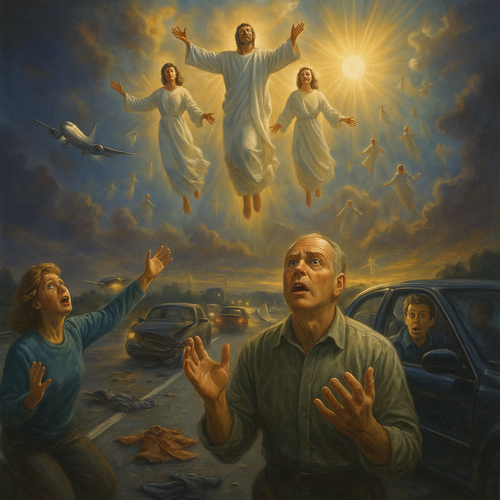
        Believing in an invisible return of Jesus, an invisible worldwide “scooping up” of believers to be taken away somewhere, followed by seven years of Hollywood apocalypse scenarios, then a third coming of Jesus, is a remarkable example of scriptural interpretive contortionism.

        Where exactly does the Bible clearly and explicitly teach:

        • an invisible return of Jesus,
        • an invisible worldwide “scooping up” of believers to be taken away somewhere,
        • seven years of apocalypse scenarios,
        • then a third coming of Jesus,

        as a comprehensive, clear eschatology?

        You have to take each of those elements and mash them together through private interpretation, connecting dots that Scripture does not connect, and using convoluted charts and timelines to arrive at the Hal Lindsey/John Nelson Darby/Left Behind version of dispensational theology known as the Secret Rapture.

        Fictional novels, ear-tickling, speculative end-time scenarios, and Hollywood treatments of Scripture shouldn’t influence our attempts to rightly divide and understand God’s Word when it comes to such important matters.

        The return of Jesus Christ is a singular event, followed by the establishment of the promised Kingdom, and ultimately the eternal Kingdom. It’s simple, clear, and doesn’t require fifteen different eschatological formulas or confusing doctrines of human tradition to understand or anticipate with great hope.

        Armchair Apocalypse: Revelation Was Written To Real People In Real Cities

        Imagine you’re 25 years old, living in Ephesus around A.D. 95—the same city that received one of the seven letters in Revelation.

        You’re living in one of the richest, busiest cities in the Roman Empire. Merchants from around the world crowd the streets. The harbor is packed with ships. Money flows. So does corruption and idolatry.

        The city is dominated by the massive Temple of Artemis—one of the Seven Wonders of the Ancient World. Religion isn’t just personal. It’s business. Priests, festivals, sacrifices, fortune tellers, and idol-makers all make a living from pagan worship.

        The Roman emperor isn’t just the government. He’s increasingly treated like a god. Public festivals include burning incense before the emperor’s image as a sign of loyalty to Rome. Most people don’t think much about it. It’s just part of life.

        Unless you’re a follower of Yeshua the Messiah .

        The Jewish population in Ephesus has an established synagogue and centuries of history. Greeks and Romans make up most of the city’s population, bringing their own gods, philosophies, and customs. The first Christians come from both groups. Some are Jews who believe Jesus is the Messiah. Others are former pagans who walked away from idol worship.

        These folks don’t meet for ‘church’ in giant church buildings. They gather in homes. Someone with a larger house hosts twenty, maybe forty people. They pray, sing, read the Hebrew Scriptures, listen to letters from the apostles, share meals, and encourage one another. Rich people sit beside slaves. Jews worship beside Gentiles. In a world divided by race, status, and wealth, that is revolutionary.

        Life Isn’t Easy

        Roman persecution isn’t always constant across the empire, but it’s very real. Refusing emperor worship can cost someone business opportunities, social standing, prison—or even death. Local officials and hostile crowds often become the first source of pressure long before imperial authorities get involved.

        Suddenly the Book of Revelation doesn’t sound like strange fantasy. It sounds like a message to ordinary people trying to stay faithful in an extraordinary world.

        Revelation wasn’t written to some faraway future generation living in an apocalyptic hellscape. It was written to real people in a real place.

        It was written to encourage and inspire the faithful in the midst of a corrupt and broken world and in the face of danger and persecution from a beastly world empire, and that’s still a message worth hearing.