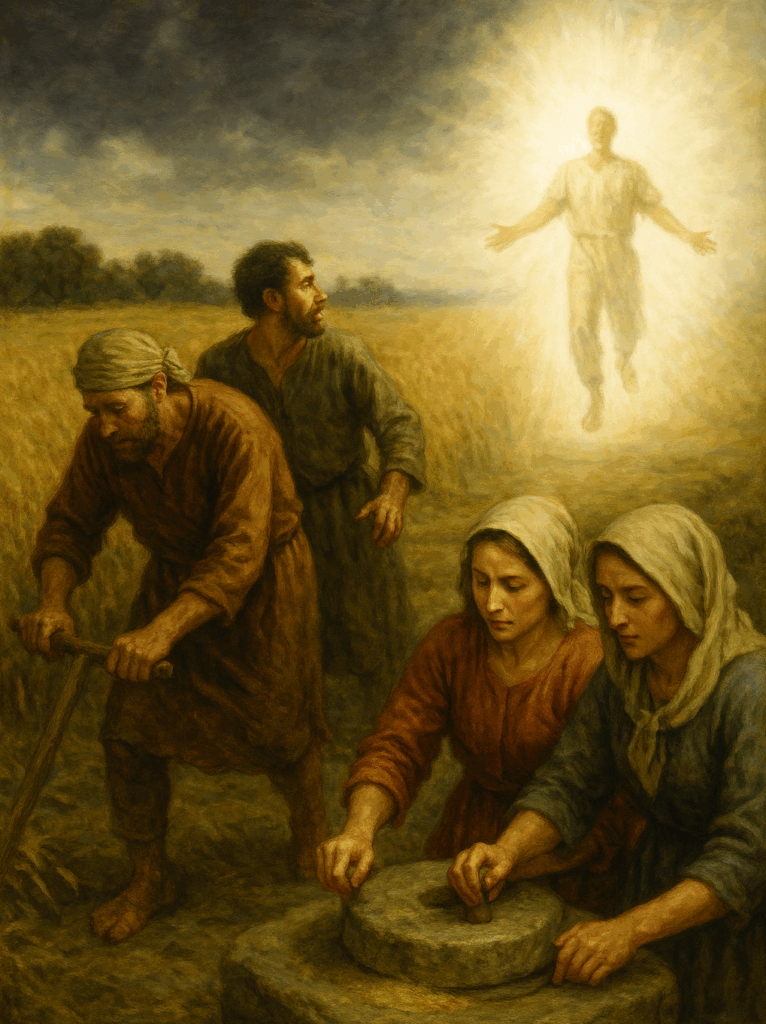
Where Did the Pre-Tribulation Rapture Come From?
Many Christians assume the pre-tribulation Rapture has been the Church’s standard belief since the apostles, but historically, it hasn’t.
Early Christians certainly expected Jesus to return, raise the dead, judge evil, and establish His kingdom. They also expected believers to face persecution and tribulation. What we do not find clearly taught in early Christianity is the modern sequence: Jesus secretly removes the Church, the world enters a seven-year Tribulation focused on Israel, and Christ returns publicly afterward.
That system took shape mainly through John Nelson Darby and the Plymouth Brethren movement during the nineteenth century. Darby did not invent every piece from nothing; historians have identified scattered earlier ideas about a two-stage return. But he brought those pieces together within dispensationalism, which treated Israel and the Church as separate peoples with separate prophetic programs.
The system spread widely in America through prophecy conferences, Bible institutes, charts, and especially the Scofield Reference Bible, first published in 1909. Because Scofield’s notes appeared beside the biblical text, generations of readers sometimes absorbed his interpretation almost as though it were part of Scripture itself.
Later, The Late Great Planet Earth and the Left Behind novels turned the theology into popular culture: vanished Christians, abandoned cars, a global Antichrist, and seven years of catastrophe. Great storytelling—but storytelling is not the same thing as exegesis.
Christians now hold several major positions:
Pre-tribulation: The Church is taken before the Tribulation begins.
Mid-tribulation: Believers are gathered around the midpoint of a seven-year period.
Pre-wrath: The Church experiences persecution under the Beast but is removed before God’s final wrath.
Post-tribulation: Believers remain through tribulation and are gathered when Christ visibly returns.
All four views attempt to connect passages from Daniel, Matthew, 1 Corinthians, 1 Thessalonians, and Revelation. None can point to one verse that lays out its entire timeline.
So What?
But Revelation repeatedly shows faithful believers present during conflict, resisting the Beast, suffering persecution, and waiting for Christ’s victory:
“Here is the patience of the saints: here are they that keep the commandments of God, and the faith of Jesus.” — Revelation 14:12, KJV
That does not prove every detail of the post-tribulation position. It does reveal Revelation’s emphasis. John was not preparing Christians to vanish before faith became costly. He was preparing them to endure when faith became costly.
The promise of the “Rapture” is real: Christ will come, the dead will rise, and His people will be gathered to Him. The disputed part is the escape timetable built around it. Our hope is in physical resurrection, the transformation of creation, and heaven coming to Earth with our returning King.