Watchdog Alert: Christianity In Iran

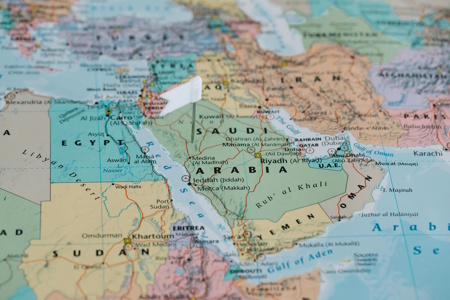
Christianity in Iran today is both difficult to measure and impossible to ignore. Estimates vary widely because many believers worship in secret, but most credible sources agree that the Christian population numbers in the hundreds of thousands, with some estimates reaching close to one million when including underground house churches. Iran officially recognizes certain historic Christian communities—primarily Armenian and Assyrian churches—but conversion from Islam to Christianity is not legally protected and can result in serious consequences. This makes accurate data challenging, as many converts do not publicly identify themselves.

Despite the risks, numerous observers describe Christianity in Iran as one of the fastest-growing expressions of the faith in the world. Much of this growth appears to be among Muslim-background converts, particularly younger Iranians who are searching spiritually or expressing quiet discontent with the religious-political establishment. Because registered churches are restricted and monitored, many believers gather in informal house churches, small groups, or private settings. These networks are decentralized and largely invisible, contributing to both their resilience and the uncertainty surrounding population estimates.

At the same time, the environment for Christian converts remains highly restrictive. International religious freedom reports and advocacy organizations document arrests, interrogations, church raids, and prison sentences under national security charges. While historic ethnic Christian communities are allowed limited public worship, converts often face harsher scrutiny. Reports in recent years indicate an increase in arrests and prison sentences tied to alleged “security” concerns related to religious activity. Pressure can come not only from authorities but also from families and local communities.

The overall picture is complex: Christianity in Iran exists in a space of both growth and hardship. Public recognition is limited, legal protections are narrow, and many believers practice their faith quietly. Yet multiple monitoring organizations note that the church continues to expand despite these constraints. Whether viewed through demographic surveys, ministry reports, or human rights documentation, the story of Christianity in Iran today is one of persistence—marked by both significant challenges and surprising resilience.
Watchdog Alert: Latest From The Holy Land

Photo via cottonbro studio at pexels.com

Bible Rebel keeps a watchdog’s eye on events from the Middle East and around the world of interest to people of faith and brings that content to our readers.

Israeli forces capture militant figure in Lebanon; drone strike kills 3

Israeli forces conducted a cross-border operation in southern Lebanon, capturing a local militant allied with Hamas. Separately, an Israeli drone strike in the region killed three people, including a child, amid continuing hostilities along the Israel-Lebanon border — highlighting ongoing tension with Hezbollah and allied groups following the 2023–24 conflicts. AP

U.S. issues new guidance for ships near the Strait of Hormuz

The U.S. government issued updated navigation guidance for vessels passing through the Strait of Hormuz, a strategic chokepoint for oil exports, urging caution amid rising tensions with Iran. The advisory follows several confrontational incidents between Iranian forces and commercial vessels, even as diplomatic talks continue with Tehran. Reuters

Iran arrests leading reformist politicians

Iranian authorities detained at least four senior reform-minded political figures, accusing them of plotting to undermine the government. The arrests occur amid internal unrest and growing pressure from international tensions — including negotiations with the United States and continued protests. Financial Times

U.S.–Iran tensions persist as Tehran downplays military buildup

Amid continued U.S. military deployments in the region, Iranian officials stated that additional American forces in the Middle East “do not scare us,” while reaffirming Tehran’s position on uranium enrichment — a key sticking point in tensions with Washington. Hindustan Times

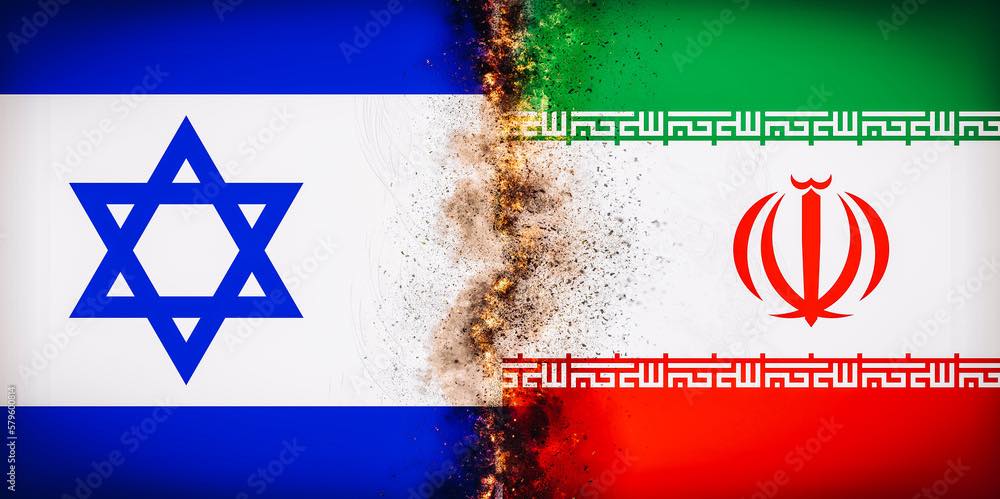
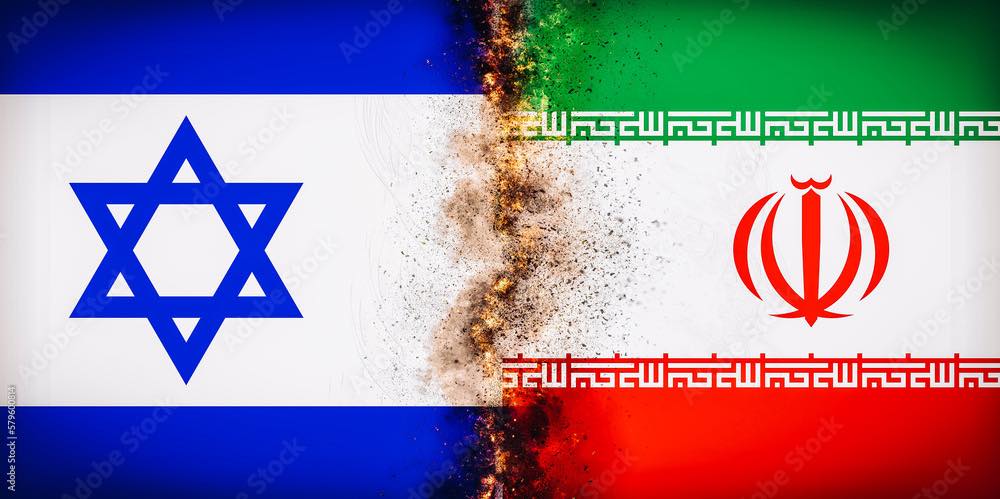
Watchdog Alert: Trouble In Iran As Israel Waits

After months of publicly threatening Iran, Israel has gone quiet, waiting to see how the protest movement develops and giving US President Donald Trump space to make his own decision on whether to take action.From CNN

Here’s a brief reminder on the importance of Iran (Persia) in the Bible in relation to Israel in the Old Testament.

In the Bible, the land and people of ancient Persia (roughly corresponding to modern-day Iran) play a significant role in the history of Israel, especially after the Babylonian Exile.

The Persian Empire rose to power in the 6th century BC when Cyrus the Great conquered Babylon and issued a decree allowing the Jewish exiles to return to Jerusalem and rebuild the temple, fulfilling earlier prophetic promises (Isaiah 45:1–2; Cyrus is even called God’s “anointed”) and recorded in Ezra 1:1–4.

Later Persian rulers such as Darius I and Artaxerxes continued to support the restoration of Jerusalem’s worship and governance (Ezra 6; Nehemiah 2). The Book of Esther is set in the Persian royal court at Susa and tells of Jewish deliverance under King Ahasuerus (often identified as Xerxes) and his queen Esther, illustrating Jewish life and providence under Persian rule (Esther 1:1–2).

Persian figures and encounters also appear in prophetic visions (e.g., Daniel 8’s ram symbolizing Media-Persia) and later biblical prophecy (Ezekiel 38:5), showing both its historical influence and ongoing theological significance.

Watchdog Alert: Middle East Update

Bible Rebel continues to keep a watchdog’s eye on events in the Middle East and around the globe, bringing the latest news summaries to our readers.

Iran Faces Existential Choice Between Diplomacy and Defiance

Following a brief but intense 12-day conflict in June 2025—marked by Israeli and U.S. airstrikes on Iranian military and nuclear sites—Iran’s leadership finds itself weighing a critical decision. Internal consensus appears to be shifting toward renewed nuclear diplomacy with the U.S., deemed essential for regime survival amid economic struggles, power blackouts, and public unrest. Hardline resistance remains strong, and external threats loom if Iran resumes uranium enrichment.
From Reuters.


Israeli Military Plans Major Gaza Operation Amid Intensifying Conflict

On August 13, 2025, Israel’s chief of staff approved the core strategy for a new Gaza offensive, intensifying tensions with Prime Minister Netanyahu. The conflict has escalated into Gaza City, with allegations of scorched-earth tactics and civilian casualties—at least 25 people were killed while seeking aid. Meanwhile, international debate unfolds over post-war governance: Hamas has hinted at relinquishing control to a technocratic body, while the Palestinian Authority insists on authority in Gaza conditional on Hamas’ disarmament.
From The Guardian.


Australia Endorses French–Saudi Peace Plan, Backs Palestinian State Recognition

Australia has publicly supported a French–Saudi peace initiative aimed at resolving the Gaza conflict and announced its intent to formally recognize a Palestinian state at the upcoming UN General Assembly. The plan, also backed by the UK and the Arab League, stresses disarmament of Hamas and the release of hostages. However, Saudi Arabia insists on significant Israeli concessions before normalizing relations, making implementation challenging.
From The Australian.


Middle East Crude Oil Benchmarks Spike Amid Russia Tensions

Spot premiums for major Middle Eastern crude benchmarks—Oman, Dubai, and Murban—have climbed, driven by growing U.S. threats toward Russia. Markets are responding to the heightened geopolitical instability and potential supply risks, with Arab Gulf oil alternatively gaining in global value amid rising uncertainty.
From TradingView.

Watchdog Alert: Latest From The Middle East

Picture via Lara Jameson pexels.com

Bible Rebel keeps a watchdog’s eye on events from around the world of interest to people of faith and brings that content to our readers.

Houthi rebels attack cargo ship in Red Sea, killing 3 sailors

Yemen’s Houthi rebels launched an assault on the Liberian-flagged, Greek-owned cargo ship Eternity C in the Red Sea. Using fast boats and bomb-laden drones, the attack killed three sailors and wounded two. It marks the first maritime strike by the Houthis since late 2024, raising concerns over renewed threats to vital global trade routes. From the AP


Israel bombs hijacked British ship Galaxy Leader and Houthi targets

On July 7, Israel carried out a major airstrike targeting the Galaxy Leader—a vessel hijacked by Houthi rebels since November 2023—as well as several ports in Yemen (Hodeidah, Ras Isa, Salif) and a coastal power plant. The strikes deployed ~50 munitions and were a direct response to sustained ballistic missile attacks from the Houthis. From The Scottish Sun


Iran receives Chinese surface‑to‑air missile batteries post–Israel cease‑fire

Following its recent cease-fire deal with Israel, Iran has reportedly imported Chinese-made surface-to-air missile systems in exchange for oil. This move is part of efforts to rebuild its air-defence capabilities that were compromised during the conflict. From the Middle East Eye


Iran reports ~1,100 killed in 12‑day conflict with Israel

Iran’s official bodies have confirmed approximately 1,100 deaths during the recent 12-day military confrontation with Israel. The toll, shared by the Foundation of Martyrs & Veterans Affairs, reflects the severity of the short yet intense engagement. From Shafaq

Watchdog Alert: Latest From The Middle East

Bible Rebel keeps a watchdog’s eye on events from around the world of interest to people of faith and brings that content to our readers.

Military briefing: Israel and Iran size up war damage

After 12 days of intense missile and drone exchanges, Israel’s precision airstrikes devastated Iran’s military and nuclear facilities — reportedly destroying over 120 buildings in Tehran, killing 627 Iranians and injuring nearly 4,900. Iran’s missile barrage (550 launches) mostly misfired, striking civilian zones in Israel, resulting in 28 deaths and 1,400 injuries. Analysts say Iran’s nuclear program is set back by months, though Israeli claims suggest delays could span years. From The Financial Times


Ceasefire holds — Khamenei claims “heavy slap” and warns further strikes

Iran’s Supreme Leader Ayatollah Khamenei declared the U.S.–led strikes “achieved nothing” while warning of future U.S. base attacks. He also framed the ceasefire as a regional victory, saying Iran “delivered a heavy slap to America’s face” and hinted at further military action if provoked. From Barron’s


Pope criticizes “diabolical intensity” and humanitarian plight

Pope Leo spoke out on the “diabolical intensity” of the region’s conflict, urging more humanitarian aid for Gaza and a return to international law. His remarks highlight the growing concern over civilian suffering in Gaza amid ongoing hostilities. From reuters.com


Israel halts northern Gaza aid amid theft allegations

Israel has paused humanitarian aid into northern Gaza after video surfaced of masked men on aid trucks. While Israeli officials allege Hamas diversion, clan leaders dispute this, stating they were providing security. From reuters.com

Watchdog Alert: Latest From Israel/Iran War

Here is Jesus, in Matthew 24:6-7, teaching his disciples about the times before end times. But also encouraging them to ‘see that ye be not troubled’.

And ye shall hear of wars and rumours of wars: see that ye be not troubled: for all these things must come to pass, but the end is not yet. For nation shall rise against nation, and kingdom against kingdom: and there shall be famines, and pestilences, and earthquakes, in divers places.” (KJV)

Here’s the latest from the Israel-Iran war as of 6/20/25:

Iran Refuses Nuclear Talks Amid Ongoing Israeli Attacks

Iran’s Foreign Minister Abbas Araqchi announced that Tehran will not enter discussions regarding its nuclear program as long as Israel continues its military strikes. The comments came during a Geneva meeting with European diplomats, which also ended without tangible diplomatic progress. Iran insisted diplomacy must wait until Israeli “aggression stops”.


Bloody Exchanges Continue as War Enters Second Week

A week into the conflict, both sides have carried out substantial airstrikes—Israel targeted missile and nuclear sites in Iran, while Iran responded with missile attacks inside Israel. One notable Iranian strike hit Haifa, injuring at least 19 people, and another hit Beersheba. Civilian casualties continue to rise amid escalating hostilities .


Soroka Hospital Struck by Iranian Missile

On June 19, Iran fired a Sejjil missile that directly hit the Soroka Medical Center in Beersheba. Although the facility had been partially evacuated, the strike resulted in numerous injuries and structural damage, prompting Israeli officials and hospital workers to condemn it as a war crime .


Europe’s Diplomatic Push Yields No Breakthrough

European foreign ministers from the UK, France, Germany, and the EU met with Iran’s FM in Geneva to press for nuclear restrictions and de-escalation. While Iran expressed openness to diplomacy conditional on an end to Israeli attacks, talks concluded without resolution. The U.S. issued a two-week window for Iran to respond before potential involvement .

U.S. Involvement In Israel/Iran War? Simple

Limited U.S. airstrikes with bunker-busters to take out Iran’s Natanz or the Fordow underground nuclear facility? – YES.

Defending American troops overseas and responding with devastating lethal force if even one of our people is attacked or killed over there? – YES! YES! YES!

U.S. boots on the ground in Iran? – NO! NO! NO!

U.S. led push for regime change in Iran? – NO! NO! NO!

Nation building after the war between Israel and Iran? – NO! NO! NO!

ISRAEL vs IRAN — What Should Christians Think?

Editors note: the following was noticed on a FB page and we received permission to copy and paste it for publication here.


The conflict between Israel and Iran is all over the news right now—and a lot of people are wondering what to make of it, especially from a Christian perspective.

Some say it’s part of Bible prophecy unfolding. Others feel Jesus would never support this war.

What do you think?

Here are a few questions to get the conversation going:

• Do you think this conflict has anything to do with end-times prophecy?

• Is modern-day Israel the same “Israel” we read about in the Bible?

• Could this be setting the stage for Christ’s return—or are we overanalyzing?

• Should churches talk about stuff like this on Sundays?

• Can you support Israel as a nation but still disagree with some of its actions?

Let’s talk. Be respectful and share what you believe.

Is Modern Israel The ‘Apple Of God’s Eye”?

Photo via cottonbro studio at pexels.com

The conflict between Israel and Iran is definitely heating up, and many observers in the faith community believe that the modern Jewish state of Israel is the subject of much Old Testament prophecy. Some even believe that current events in the Middle East are a precursor—perhaps even an immediate precursor—to the biblical Armageddon.

On the other hand, there are many sincere Christians with deep knowledge of the Bible who argue that today’s modern Israel, as constituted since 1948, is not the “apple of God’s eye” as it was in ancient times. They contend that, since the destruction of the Temple and the razing of Jerusalem in 70 AD—and the resulting Jewish diaspora—Jews today are not the same bloodline as the children of God’s covenant with Abraham.

It’s an interesting argument and one worth considering, but here’s where the rubber meets the road: Does America (and the rest of Western Christendom) have an obligation to spend our blood and treasure defending Israel simply because they are considered by some to be “God’s chosen people”?

In my opinion, the answer is no.

But here’s the big “but”: America should be ready to defend and support Israel with weapons and intelligence because she is our greatest friend and ally in the Middle East. Our obligation to Israel stems from modern geopolitical realities, not verses from the Old Testament.

Furthermore, our involvement in the current conflict should be limited to intelligence and material support—not boots on the ground. Israel is fully capable of handling the military personnel side of the equation, and there is no reason for American young people to fight and die in another Middle East killing ground.