Your Life And What Comes After (21): Jesus, The Golden Spike

The plan to connect the United States by rail began in 1862, but it took years of hard work and danger to build tracks across mountains and deserts. For a long time, it wasn’t clear when everything would finally come together and the Transcontinental Railroad would be completed.

Then, in 1869, the last rail was connected at Promontory Summit, Utah, with the driving of the Golden Spike. In that moment, the long plan was complete, and the country was finally linked from coast to coast.

Jesus is the Golden Spike in God’s Plan

After Adam and Eve messed up, God promised to rescue humanity, and Jesus came as the fulfillment of that plan. Through His life, death, and resurrection, Jesus completed God’s long-promised work and rescue plan, opening the way for everyone in all ages to be restored to God and receive everlasting life with Him.

God’s plan started with a promise (Genesis 3:15), was carried through history by people like Abraham and David, and was fully revealed in Jesus, who came to save the world.

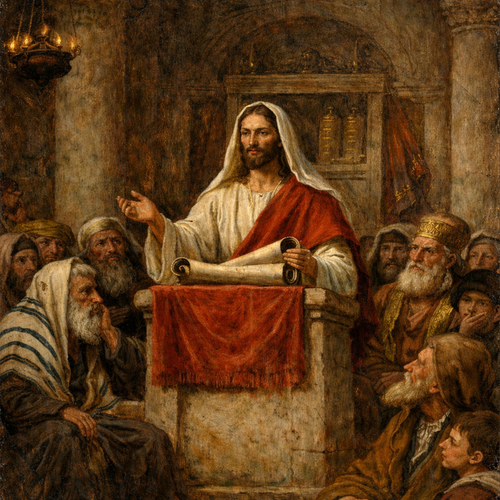
Jesus Announces His Mission

Jesus wasn’t just teaching good ideas—He was the fulfillment of God’s long-promised plan, set in motion all the way back in the Old Testament.

God’s plan was accomplished, the Old Testament scripture was fulfilled, and Jesus said, “It is finished”.

How Did Jesus Do It?

How did Jesus carry out God’s plan?

  • By perfect obedience in His life, cancelling the disobedience of Adam and Eve.
  • By carrying out that obedience all the way to His death by crucifixion.
  • By His being raised by God from the dead to eternal life.

Did Jesus show us by example any of the four ways to plug into God’s grand plan that we looked at earlier? We’ll talk about that next.


Watchdog Alert: Trouble In Iran As Israel Waits

After months of publicly threatening Iran, Israel has gone quiet, waiting to see how the protest movement develops and giving US President Donald Trump space to make his own decision on whether to take action.From CNN

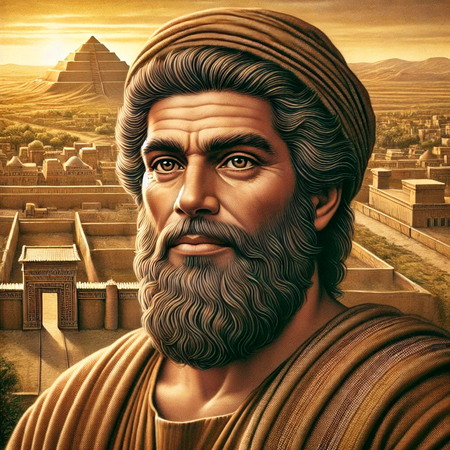
Here’s a brief reminder on the importance of Iran (Persia) in the Bible in relation to Israel in the Old Testament.

In the Bible, the land and people of ancient Persia (roughly corresponding to modern-day Iran) play a significant role in the history of Israel, especially after the Babylonian Exile.

The Persian Empire rose to power in the 6th century BC when Cyrus the Great conquered Babylon and issued a decree allowing the Jewish exiles to return to Jerusalem and rebuild the temple, fulfilling earlier prophetic promises (Isaiah 45:1–2; Cyrus is even called God’s “anointed”) and recorded in Ezra 1:1–4.

Later Persian rulers such as Darius I and Artaxerxes continued to support the restoration of Jerusalem’s worship and governance (Ezra 6; Nehemiah 2). The Book of Esther is set in the Persian royal court at Susa and tells of Jewish deliverance under King Ahasuerus (often identified as Xerxes) and his queen Esther, illustrating Jewish life and providence under Persian rule (Esther 1:1–2).

Persian figures and encounters also appear in prophetic visions (e.g., Daniel 8’s ram symbolizing Media-Persia) and later biblical prophecy (Ezekiel 38:5), showing both its historical influence and ongoing theological significance.

Your Life And What Comes After (20): The Old Testament Road Leads To Jesus

Before moving on to the Gospels, the Good News of Jesus Christ and His kingdom, there are some other men and women in the Old Testament who plugged into God’s plan, that you can read about and see how they put themselves into the flow of God’s purposes.

Moses

Moses is an important leader in the Bible whom God chose to rescue the Israelites from slavery in Egypt and guide them toward the Promised Land. Moses’ story is found mainly in the books of Exodus, Leviticus, Numbers, and Deuteronomy.

Deborah

Deborah was a prophetess, judge, and leader of Israel. You can read her story in the Book of Judges, chapters 4 and 5.

King David

King David plays a big role in God’s grand plan because God chose him to lead Israel and promised that his family line would last forever. David’s story is found mainly in 1 Samuel (chapters 16–31) and 2 Samuel. Also, many of the Psalms were written by David.

Ruth

Ruth was a woman plugged into God’s purposes and in the family line of King David—and ultimately Jesus. Her story is found in The Book of Ruth (Ruth 1–4).

Here Comes Jesus

Next we’re going to look at the one who is the main player in God’s grand plan, the Promised One, Jesus of Nazareth.

Your Life And What Comes After (19): 4 Ways To Plug Into God’s Grand Plan

God’s plan worked through Israel and through key people in the Old Testament, like Abraham, Moses, and King David. But what did these people do that put them right in the middle of God’s plan? And how can we do the same in our own lives?

Here are four ways we can plug into God’s grand plan.

Seek God first.
Learn what He wants through prayer and study. Pay attention to how He speaks—through Scripture, wise people, and everyday moments. Then follow where He leads.

Add value to the world around you.
Grow your knowledge, skills, and talents, and use them for the right purposes and to do good in God’s creation.

Do hard things without fear.
Don’t always choose what’s easy or comfortable. Be willing to challenge bad habits and wrong thinking, starting with yourself.

Fight darkness with light.
Don’t just ignore what’s wrong. Stand against it by helping people in your family, faith, and community find hope, care, encouragement, and challenge.

Abraham

Abraham is known as the father of the Jewish people. God chose Abraham and promised to give him many descendants, land for his people, and that through his family all nations of the world would be blessed.

Read this passage from Genesis 12:1-5 (he was called Abram before God named him Abraham) and see if you can find the ways Abraham plugged into God’s plan and if they line up with the four ways we just looked at:

Here’s some of what I see in these verses:

Seek God first
God spoke directly to Abram and told him to go to a new land. Abram was listening for God and he responded in faith. Genesis 12:1

Add value to the world
Notice in verse 5, “all their substance that they had gathered…”. Abram was a successful livestock owner who moved with his flocks and herds and used his “substance” to feed, clothe, and add value to the world around him, and to have the means to go where God led him. Genesis 12:5

Do hard things without fear
Abram left his country, relatives, and father’s household—everything familiar—to follow God into the unknown. Genesis 12:1, 4

Fight darkness with light
By obeying God, Abram became part of God’s plan to bring blessing, hope, and goodness to the world along with his wife, nephew, and community of, “souls that they had gotten in Haran”, knowing that we are to shine light first among those closest to us. Genesis 12:3-5

More of Abraham’s (Abram’s) life and story are found in the book of Genesis, chapters 12–25.

They Said It: Four Quotes On The Book Of Ruth

Here are four poignant quotes about the relevance of the eighth book of the Bible, the Book of Ruth.

Rabbi Jonathan Sacks
“The Book of Ruth is the supreme example in Tanakh of hesed—loving-kindness—shown not by miracles or power, but by ordinary people in everyday life.”

Martin Luther
“This is a lovely and comforting book, for it teaches that God works through the simplest and most ordinary events to bring about His greatest purposes.”

Augustine of Hippo
“In Ruth we see the Gentile brought into the people of God, prefiguring the calling of the nations through Christ.”

John Piper
“The Book of Ruth shows us how God is always doing ten thousand things in our lives, and we may be aware of only three of them.”

Your Life And What Comes After (18): How God Carries Out His Plan

How does God carry out His big plan?
He does it through people.

Which people?

First, His chosen people—Israel—as we see in the Old Testament.

Then, the promised Seed from Genesis 3:15—Jesus Christ—revealed in the New Testament Gospels.

And now, in our time, it’s you and me—the Church—as we read in the rest of the New Testament.


Israel

From the Old Testament up until the birth of Jesus, Israel played a special role in God’s plan. But God’s plan was never just about one nation—it was always about rescuing the whole world (Genesis 12:3; Isaiah 49:6).

Israel was like a delivery vehicle God drove through history to bring the Messiah, Jesus, into the world as Savior.

Along the way, Abraham got on board by trusting God’s promise, even when it didn’t make sense.

Moses rode along by leading Israel out of slavery, showing God’s power and faithfulness.

King David became a passenger too, pointing ahead to the true King who would come from his family line. All of them played their part as God moved His plan forward.

But what we really want to get to is how those guys and gals in the Old Testament discovered their own purpose and best lives by plugging into God’s bigger plan, so that we can learn how to do the same in our own lives.

Stay tuned.

Watchdog Alert: Latest From Israel And The Middle East

Photo via cottonbro studio at pexels.com

Bible Rebel keeps a watchdog’s eye on events from the Middle East and around the world of interest to people of faith and brings that content to our readers. Here’s the latest.

New U.S.-Proposed Demilitarized Zone on Israel-Syria Border

Jan 6 2026
The U.S. put forward a proposal during Paris-hosted negotiations that would establish a demilitarized economic zone on the Israel-Syria border. The plan aims to reduce military tensions, involve joint security coordination, and potentially lead to partial Israeli troop withdrawals — a rare move in decades of conflict along that frontier. Axios

Israel Launches Airstrikes Against Hezbollah & Hamas in Lebanon

Jan 5 2026
The Israeli military carried out strikes targeting Hezbollah and Hamas “military infrastructure” in southern and eastern Lebanon. These actions mark a clear escalation in near-daily operations along the northern border, despite a ceasefire that ended the 2023–24 Israel-Hezbollah war. Civilians were evacuated from targeted villages beforehand, but the strikes have drawn international concern over stability in the region. Reuters

Wider Israeli Airstrikes in Lebanon Ahead of Disarmament Talks

Jan 5 2026
In addition to the above, additional airstrikes hit areas including Sidon, described by Israel as weapons storage sites used by militant groups. These strikes come just before crucial Lebanese government efforts to disarm Hezbollah — highlighting ongoing tensions between military pressure and political negotiation. AP News

U.S. & Allied Operations Kill or Capture IS Fighters in Syria

Late Dec 2025
The U.S. Central Command said about 25 Islamic State fighters were killed or captured in Syria during coordinated operations after an ambush that killed U.S. forces. These missions involved airstrikes and coordination with Syrian and regional partners — underscoring continued counter-ISIS activity even amid broader regional tensions. AP News

Why Shepherds?

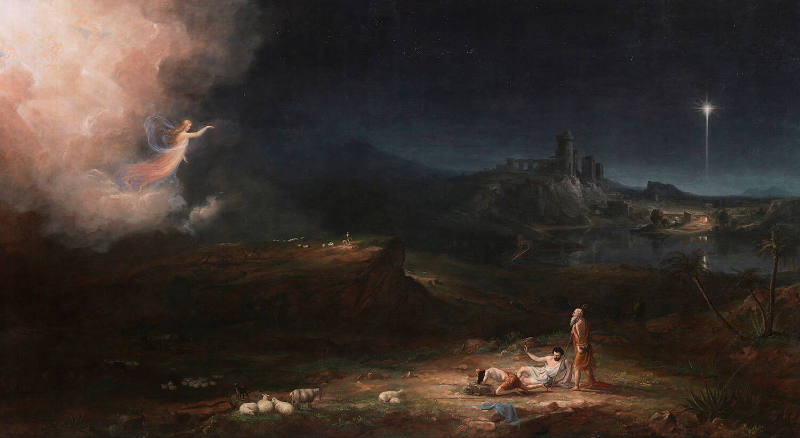
Thomas Cole – The Angel Appearing to the Shepherds

While reading the account of the angel announcing the birth of Jesus in Luke chapter 2, one of my grandchildren asked a great question: “Why did God choose shepherds to hear about it first?”

Here are three well-known commentary perspectives.

God reveals Himself to the lowly, not the powerful

Leon Morris (Tyndale New Testament Commentary – Luke)
Morris notes that shepherds were among the humblest workers in Jewish society. Their selection fits Luke’s repeated theme that God exalts the lowly and bypasses the proud (Luke 1:52). By announcing Jesus’ birth to shepherds rather than kings or priests, God shows that the gospel begins with grace, not status.


Shepherds highlight the theme of Jesus as the true Shepherd

Darrell L. Bock (Baker Exegetical Commentary on the New Testament – Luke)
Bock points out the strong shepherd imagery throughout Scripture and Luke’s Gospel. The angelic announcement to shepherds subtly introduces Jesus’ future role as the one who will shepherd God’s people (cf. Micah 5:2–4). The messianic identity of Jesus is foreshadowed by the audience chosen to hear the news.


Shepherds serve as credible witnesses to God’s work

Joel B. Green (NICNT – The Gospel of Luke)
Green emphasizes that shepherds, though socially insignificant, become the first human witnesses to the Messiah’s birth. Luke consistently shows God using unexpected people to bear witness. Their testimony demonstrates that divine revelation creates trustworthy witnesses, not social rank.

Your Life And What Comes After (17): The Grand Plan

Two boys showed up for the soapbox derby with the same goal: win the race. Tim slapped his car together the night before. Boards didn’t quite line up, the wheels wobbled, and the steering was more hope than design. He figured speed would take care of itself once he got rolling.

When Wells showed up he was ready. He had a plan. He measured twice, tightened every bolt, tested the wheels, and adjusted the steering until it tracked straight. When the race started, Tim flew fast—for about five seconds—before drifting off course. Wells rolled steady, straight, and true all the way to the finish.

The Plan Begins

A goal is where you want to go. A plan is how you actually get there.

After Adam and Eve messed up, God didn’t just give up on His original plan to have a family to share His awesome creation with forever.

Genesis 3:15 is the first promise of God’s rescue plan.

Right after Adam and Eve chose to disobey God, everything seemed broken—the relationship between people and God was damaged.

In Genesis 3:15, God promised that one day a descendant of the woman would defeat the one that hates God and deceived Adam and Eve, even though that serpent would strike back. This verse shows the starting point of God’s plan to overcome evil and restore what was lost. Long before Jesus was born, God was pointing forward to His plan to save and heal the world through a promised Savior.

The Bible is the story of how that grand plan is unfolding in history, how different people plugged into it, and what your part in it is.

Your Life And What Comes After (16): Looking Back, Moving On

As we walk together down this road called “Your Life And What Comes After” we’ve seen a lot of interesting scenery. Now we’re moving on to the next part of the journey with some new sights to see.

Where We’ve Been

So far we’ve talked about some pretty questions, right?

Why did God create the universe and people?

Why is there something instead of nothing?

How do you find your own purpose within God’s grand plan and purpose?

Here’s a brief recap of some of the main things we’ve talked about so far:

We are God’s family, and we are the reason He created this beautiful blue gem called Earth and the universe that surrounds it. His love and attention are centered on us, and our eternal destiny with Him is His grand plan—and our purpose.

If you believe your life is the result of chance alone, with no purpose, and that you are only slightly luckier and a little smarter than a chimpanzee, then you will begin to see others that way too. Don’t sell yourself or others short.

But if you come to know and believe that you are the magnificent handiwork of God—fearfully and wonderfully made (Psalm 139:14), created intentionally and for a purpose—then you will live differently. You will love boldly. You will stand firmly. And you will shine like the stars forever, just as Scripture promises.

Where We’re Going

So how does God actually carry out His plan and purpose for creation? That’s where we’re headed next. Heads up—we’re going to have to open the Bible to get there.

Because Scripture is where God reveals His plan—and shows us how He’s been carrying it out all along. And once you see it, you won’t look at your life the same way again.

Stay tuned.