Why Did Paul Speak In Tongues So Much?-Part 6

Editors note: the guest article appearing here does not necessarily reflect the views of Bible Rebel editors or other guest authors and contributors. Bible Rebel seeks to present a wide range of ideas and viewpoints in order to fulfill our mission to provide resources for “Curious Fearless Faith”. This is the sixth and final installment in this series on prayer by Steve Sann.

Read Part 1 here
Read Part 2 here
Read Part 3 here
Read Part 4 here
Read Part 5 here


Ephesians 6:18:
Praying always with all prayer and supplication in the Spirit, being watchful to this end with all perseverance and supplication for all the saints. 

In this verse, God isn’t trying to decree a minimum prayer requirement, or else He would say: “…pray 3.5 hours per day. Increase as needed.” Rather, He is emphasizing to us that we should pray to the greatest degree possible—at every available opportunity. 

So, this is a commandment that each of us can live up to. God’s desire for us, then, is really more of an adjustment of attitude and priority than it is an edict. You are the one who determines your potential, the “greatest degree possible” for your lifestyle. And, probably that “greatest degree possible” will increase as you regularly exercise your ability. Paul disciplined himself until he spoke in tongues more that all the Corinthian church. 

As we see, these figures breathe life into our understanding of God’s heart toward prayer. Particularly in this verse this is evident, as Ephesians 6:18 contains not just one, but four absolutes: one “always” and three “all’s”. Each emphasizes a different direction to us regarding prayer. Each gives force to a specific aspect of prayer, each worthy of our focus. For ease, all four are broken-out below. Each figure of speech is used to answer these ques*ons regarding our prayer responsibility: whenwhathow and for whom prayer should be made. 

When? “Praying always
What? …with all prayer and supplication in the Spirit,
How? …being watchful to this end with all perseverance and supplication For whom? …for all the saints.” 

Or, to restate this in everyday understanding: 

We are to be…
• Always praying’ at every available opportunity;
• Offering ‘all prayer’ that’s needed for each specific situation;
• With all endurance’ while vigilantly being on watch and guarding by your prayer;
• For ‘all the saints’. 

Woven into this one verse are all the exhortations needed for us to move prayer up to the top of our daily “To Do” list. The priority of prayer has clearly and squarely been placed upon our shoulders. 

In passing, please note that the believers of the first century commonly referred to speaking in tongues as praying in the spirit. As a matter of fact, every reference in the New Testament to praying, speaking, singing, praising, worshipping or crying in, with or by the spirit, when directed from man to God, we find is related to speaking in tongues! This is why, in Ephesians 6:18, we are encouraged to pray in tongues always…in the spirit.” 

Watchdog Alerts: Iran Nuke Talks And More

Picture via Lara Jameson pexels.com

More A‑10 Warthogs Deploy to the Middle East

From Task & Purpose – The U.S. Air National Guard’s 124th Fighter Wing is sending several A‑10 Thunderbolt II aircraft—and more than 300 airmen—into the CENTCOM area of responsibility. This deployment, set for a 180‑day period, underscores the U.S. military’s intensified buildup in the region as it responds not only to renewed hostilities with Houthi forces in Yemen but also to ongoing counter‑ISIS operations in Iraq and Syria. The surge is viewed as part of broader efforts to maintain readiness amid escalating tensions and frequent missile threats toward U.S. Navy assets.

Iran and the U.S. to Hold Nuclear Talks via Oman

From Al Jazeera – In a noteworthy diplomatic development, Iranian officials have confirmed that indirect negotiations with the United States will take place in Oman focusing on Iran’s contentious nuclear program. Though the talks are set against a backdrop of long‑standing mistrust—with U.S. leadership at times casting doubt on Iran’s motives—this move is being seen as an opening for dialogue and possibly a fresh start to addressing nuclear non‑proliferation concerns. The arrangement highlights the complex interplay of diplomacy and strategic interests in the region.

Arrests in Lebanon Following Rocket Attacks on Israel

From The Independent – Lebanese security forces have detained three individuals—two Lebanese nationals and one Syrian—over their alleged involvement in rocket attacks launched from southern Lebanon into Israeli territory. While militant groups such as Hezbollah have denied direct involvement, the arrests underscore the volatile environment along the Lebanese border and the persistent threat of cross‑border attacks that continue to heighten regional insecurity.

Read Our 3-Part ‘Prosperity Gospel’ Series

I saw this meme on X and thought it was definitely worth a share here.

Although the ‘Prosperity Gospel’ series linked here doesn’t go into the book of Job, this meme illustrates the Job message very succinctly and aptly.

Our three-part series is a nutshell look at what Jesus and Paul taught regarding the ‘Prosperity Gospel’.

Read Part 1 Here
Read Part 2 Here
Read Part 3 Here

Why Did Paul Speak In Tongues So Much?-Part 5

Editors note: the guest article appearing here does not necessarily reflect the views of Bible Rebel editors or other guest authors and contributors. Bible Rebel seeks to present a wide range of ideas and viewpoints in order to fulfill our mission to provide resources for “Curious Fearless Faith”. This is the fifth installment in an ongoing series on prayer by Steve Sann.

Read Part 1 here
Read Part 2 here
Read Part 3 here
Read Part 4 here


Paul encouraged his people to speak in tongues much. So, how much is much? 

Ephesians 6:18:
Praying always with all prayer and supplication in the Spirit, being watchful to this end with all perseverance and supplication for all the saints. Not one lent to underachievement, Paul instructs us to pray “always…in the spirit.” So, how much should we pray? Always! 

“Always” is literally: “at every opportunity.” We are to seize every available opportunity to pray in the spirit! Like the needle of a compass swinging north, we can coach ourselves to routinely resume praying in the spirit at each available pause throughout our day. 

“Always” describes an absolute amount. One cannot pray more than “always”— which is what characterizes it as an “absolute”. Also, since we physically are unable to literally pray “always” without pausing, this usage then must be a figure of speech. 

To appreciate the force of God’s encouragement here, it is helpful to understand this figure of speech. Absolutes, like alwaysallnever and ever are often used in language as figures of speech, adding greater emphasis and more intense feeling than a literal description possibly could. 

For example, “She’s always smiling,” emphasizes that Susan is exceptionally cheerful—one of the sunniest people we know. Now, we all know that Susan isn’t literally always smiling (which might otherwise warn of a medical condition!), yet somehow this figurative description rings more true to fact than should one state the dry facts themselves; e.g., “Of her waking hours, Susan appears to smile, on average, over 46% of the time.” 

Instead, this figure brings to light the deeper truth, conveying, with feelings, God’s true heart on the matter. In this verse, God isn’t trying to decree a minimum prayer requirement, or else He would say: “…pray 3.5 hours per day. Increase as needed.” Rather, He is emphasizing to us that we should pray to the greatest degree possible—at every available opportunity. 

The Prosperity Gospel, Part 3

Read Part 1 Here
Read Part 2 Here


In Part 2 of this series we discussed some of what Jesus taught concerning the ‘Prosperity Gospel’, I and concluded with this:

Does he teach that you can’t or shouldn’t have more than the necessities? No, but our Lord’s message is clear that the desire for God’s righteousness is muddied and distorted when we focus on the riches of this age instead of His kingdom.

It’s impossible to have total reliance on God when one has lots of cash and cars and jets and Swiss bank accounts to fall back on, right?

Now, in Part 3, the final part in this series, we’ll look at Paul’s message in the epistles regarding how we are to view real wealth and success.

What did the Apostle Paul teach?

Paul’s teaching is an unambiguous refutation of the prosperity gospel. The Apostle Paul’s message was contentment in all circumstances, not a focus on seeking material wealth as a sign of divine favor.

Philippians 4:11-13
11 Not that I speak in respect of want: for I have learned, in whatsoever state I am, therewith to be content. 12 I know both how to be abased, and I know how to abound: every where and in all things I am instructed both to be full and to be hungry, both to abound and to suffer need. 13 I can do all things through Christ which strengtheneth me.

Christ’s strength is sufficient, whether we are wealthy or poor, and contentment in that strength alone is the true mark of godliness, not health and wealth.

Paul also warned us about false teachers who equated godliness and divine favor with worldly wealth.

1 Timothy 6:5-10
5 Perverse disputings of men of corrupt minds, and destitute of the truth, supposing that gain is godliness: from such withdraw thyself. But godliness with contentment is great gain. For we brought nothing into this world, and it is certain we can carry nothing out. And having food and raiment let us be therewith content. But they that will be rich fall into temptation and a snare, and into many foolish and hurtful lusts, which drown men in destruction and perdition. 10 For the love of money is the root of all evil: which while some coveted after, they have erred from the faith, and pierced themselves through with many sorrows

It’s very clear that Paul taught that equating faith with worldly success, fame, and wealth is spiritual error. And when ministers of the gospel choose personal gain over obedience, which may result in sacrifice, it is spiritual error doubled.

The bottom line, as I see it, regarding the prosperity gospel is simply this – faith and godliness cannot be measured by outward appearances like worldly wealth. A rich person is often spiritually poor, and a poor person is often spiritually rich.

Both Jesus and Paul taught that our focus is to be on the Kingdom of God and the restoration of all things in the coming age, regardless of our current status in this age. Period.

Middle East Watchdog Alert

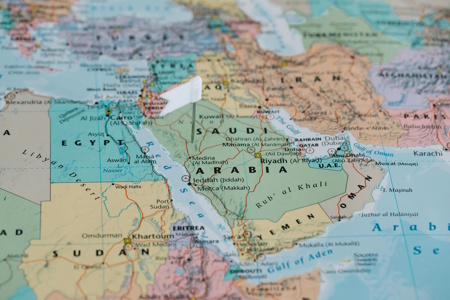
Picture via Lara Jameson pexels.com

Bible Rebel continues to keep a watchdog’s eye on world events, here’s the latest from the Middle East.

Top US general in Israel for talks amid massive American military buildup in region
United States Gen. Michael Erik Kurilla, head of the US Central Command (CENTCOM), who arrived in Israel earlier this week for an official visit, held an assessment with IDF Chief of Staff Lt. Gen. Eyal Zamir, the Israeli military said Thursday
. The IDF says the meeting focused on “strategic security issues across the region.”
From the Times of Israel

Israel launches air attacks on Syria’s Damascus and Hama
Israeli military aircraft have carried out attacks in Syria’s capital Damascus and in the central province of Hama, Israel’s army and local media have said, in the latest string of strikes on the war-torn country.
The state-run Syrian Arab News Agency (SANA) said the attacks on Wednesday targeted the vicinity of the scientific research centre in the Barzeh neighbourhood of the capital, as well as the airport in the Syrian city of Hama.
From Al Jazeera

Turkiye detains over 1,100 as Erdogan blames ‘evil’ opposition for protests
Turkish police have detained 1,113 people across the country over five days of protests as President Recep Tayyip Erdogan blames the main opposition party for the unrest sparked by the detention of his main political rival.
From Al Jazeera

Netanyahu says IDF carving new corridor across Gaza to cut off Rafah, pressure Hamas
Prime Minister Benjamin Netanyahu said Wednesday that advancing IDF forces were carving out a new security corridor across southern Gaza that would likely cut off the city of Rafah from the rest of the Strip, as Israel seeks to pile pressure on Hamas to free the hostages.
From the Times of Israel

Why Did Paul Speak In Tongues So Much?-Part 4

Editors note: the guest article appearing here does not necessarily reflect the views of Bible Rebel editors or other guest authors and contributors. Bible Rebel seeks to present a wide range of ideas and viewpoints in order to fulfill our mission to provide resources for “Curious Fearless Faith”. This is the fourth installment in an ongoing series on prayer by Steve Sann.

Read Part 1 here
Read Part 2 here
Read Part 3 here


So, the morning of the Day of Pentecost, when the gift of holy spirit was first received, what did the apostles do? They spoke in tongues as the Lord had commanded. 

And yet, as we look around today, it’s not uncommon to see those seeking tongues becoming discouraged, waiting endlessly in disappointment to “feel” something. Some even have reasoned that God certainly has not granted them this “special gift”. 

Even others have been taught it is exclusively for ministering in foreign languages as a missionary. But in reality, that phenomenon occurred only once in all of scripture (Acts 2): there is no promise offered nor reason suggested that it would be often repeated. Quite the opposite: we speak in tongues because the scriptures stipulate it, not because we expect sensations, or are planning some sort of religious pilgrimage! 

Every one of us has the ability to speak in tongues at the time of the new birth. Physical sensations and other such phenomena are never guaranteed by the Word, and, frankly, are most uncommon. Why should God have to use five senses incentives (emotions, feelings, and the like) to motivate a mature Christian to do what is clearly commanded in His Word? 

No—rather, the scriptures plainly encourage all believers to speak in tongues: “I would that ye all spake with tongues…” (I Corinthians14:5a). God would have all of us manifest, showing forth this ability which is already inherent in each of us. But why, then, should we strive to speak in tongues frequently? Didn’t we fulfill Christ’s directive by merely speaking in tongues the first time? On the contrary. Paul emphasized, when it comes to tongues, more is definitely better. As an example of this most healthy lifestyle, Paul pointed to himself: I thank my God I speak with tongues more than you all. – I Corinthians 14:18 

Paul’s daily habit? He spoke in tongues—much. In fact, he spoke in tongues so much that he surpassed everyone in the entire first-century Corinthian church: “…I speak with tongues more than you all.” Perhaps, as some translate, he actually spoke in tongues more than the entire Corinthian church combined. Whatever the case, by this one declaration in I Corinthians 14:18, Paul commended his own example as the standard for the church of the first century. 

Royal Seal Of King Hezekiah Found

As reported in Bible History Daily from the Biblical Archaeology Society, a recent discovery has unearthed, literally, a stamped clay bulla bearing the seal of King Hezekiah.

From the article:
The royal seal of King Hezekiah in the Bible was found in an archaeological excavation. The stamped clay seal, also known as a bulla, was discovered in the Ophel excavations led by Dr. Eilat Mazar at the foot of the southern wall of the Temple Mount in Jerusalem. The discovery was announced in a press release by the Hebrew University of Jerusalem’s Institute of Archaeology, under whose auspices the excavations were conducted...


Who Was King Hezekiah in the Bible?

King Hezekiah in the Bible, son and successor of Ahaz and the 13th king of Judah (reigning c. 715–686 B.C.E.), was known for his religious reforms and attempts to gain independence from the Assyrians.

As always, Bible Rebel keeps a watchdog’s eye on the latest news from the world of biblical archaeology and brings it to our readers. Stay tuned.