What are you doing now that will last into eternity?
Biblical Literacy: 3 Kings For Baby Jesus?

Kings or Magi?
The Bible does not actually say that three kings brought gifts to baby Jesus.
In Matthew 2:1–12, the Bible tells us that “wise men from the east” (Greek: magoi, meaning “magi” or scholars/astrologers) came to visit Jesus after His birth. It mentions that they brought three gifts — gold, frankincense, and myrrh — but it never specifies how many magi there were, nor that they were kings.
Here’s the key verse (Matthew 2:11, KJV):
“And when they were come into the house, they saw the young child with Mary his mother, and fell down, and worshipped him: and when they had opened their treasures, they presented unto him gifts; gold, and frankincense, and myrrh.”
The Bible mentions magi (wise men), not kings.
It mentions three gifts, but not the number of visitors.
The idea of “three kings” likely came later from tradition and song (like “We Three Kings”), probably because there were three types of gifts.
Also, according to the Bible, the wise men (Magi) did not arrive at the same time as the shepherds. The shepherds came the night Jesus was born, but the Magi came later, possibly months — or even up to two years — afterward.
The Shepherds
Found in Luke 2:8–20.
The shepherds were in the fields nearby when the angel announced Jesus’ birth.
They immediately went to Bethlehem and found “the babe lying in a manger.”
This clearly happened the night of Jesus’ birth.
The Wise Men (Magi)
Found in Matthew 2:1–12.
They came “from the east” after seeing a special star that signified a new king.
When they arrived, they entered a house (not a stable) and saw “the young child with Mary his mother” (Matthew 2:11).
King Herod asked when the star appeared and later ordered the killing of boys two years old and under (Matthew 2:16), suggesting Jesus could have been as much as two years old by the time the Magi visited.
Summary
| Group | When They Arrived | Where They Found Jesus | Biblical Source |
|---|---|---|---|
| Shepherds | The night of His birth | In a manger | Luke 2:8–20 |
| Wise Men | Weeks or months later | In a house | Matthew 2:1–12 |
So, while Christmas pageants often combine the two groups for simplicity, the Bible clearly describes two separate visits — first by shepherds, then later by the Magi.
Your Life And What Comes After (3): Called To Someone

We are called as God’s people, and we are each called individually.
But what is it that we are called to?
I always come back to something I read in the Os Guinness book, ‘The Call’ – “…we are not called to something or somewhere, we are called to Someone.“
When I think on that profound truth I picture a child playing in the backyard on a sunny day, and a father coming outside through the back screen door of the house into the yard, opening his arms and calling to his child by name.
The child stops playing, turns his head to his fathers voice, and runs joyously across the yard straight into his fathers arms.
And I see my whole life as running across the yard into my Fathers arms. That’s what we’re called to.
As continue in this series, ‘Your Life And What Comes After’, I will always keep that picture, that truth, as the basic starting and ending point of it all.
Your Life And What Comes After: God’s Grand Plan
Your Life And What Comes After: God’s Grand Plan Part 2
They Said It: Famous Quotes About The Book Of Romans

Here are some famous quotes from influential religious leaders about Paul’s Epistle to the Romans.
Martin Luther
“The Epistle to the Romans is the true masterpiece of the New Testament and the very purest Gospel. It is worthy not only that every Christian should know it word for word, by heart, but occupy himself with it every day, as the daily bread of the soul.”
— Martin Luther, Preface to the Epistle to the Romans (1522)
John Calvin
“When anyone understands this Epistle, he has a passage opened to him to the understanding of the whole Scripture.”
— John Calvin, Commentary on Romans (1540)
Frederic Godet
“Every great spiritual revival in the Church will be connected as effect and cause with a deeper understanding of this book.”
— Frederic Godet, Commentary on St. Paul’s Epistle to the Romans (1869)
John Stott
“Romans is the fullest, plainest, and grandest statement of the Gospel in the New Testament. Its message is still as relevant and revolutionary as when it was first written.”
— John R. W. Stott, The Message of Romans: God’s Good News for the World (1994)
Greater Works Than These – Part 2
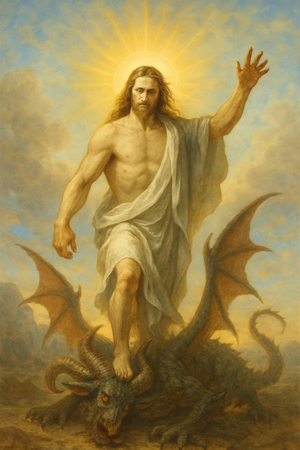
Editors note: the guest article appearing here does not necessarily reflect the views of Bible Rebel editors or other guest authors and contributors. Bible Rebel seeks to present a wide range of ideas and viewpoints in order to fulfill our mission to provide resources for “Curious Fearless Faith”. This is the Part 2 in a new series on prayer called ‘Greater Works Than These’ by Steve Sann.
Greater Works Than These – Part 1
John 14:12: Most assuredly, I say to you, he who believes in Me, the works that I do he will do also; and greater works than these he will do, because I go to My Father. Can’t you just hear the squawking when you begin broadcasting you can do greater works? “What—you think you can do greater works than Jesus Christ?!” Yet, that is exactly what the Word of God declares.
So, every Christian in modern times must ask himself this question: “What are these greater works that God would have me to perform?” The evidence is found in Mark 16. Here, Jesus Christ foretold specifically of tongues: it was to be a sign of the future believers. It would be a sign simply because it would be a uniquely new work—one not yet available until after Christ’s ascension:
Mark 16:12: And these signs will follow those who believe: In My name…they will speak with new tongues. So, what then qualifies tongues as truly a greater work? Because when we speak, we bring to pass multiple accomplishments simultaneously. By means of tongues, God was able to incorporate into one work nearly all of the greatest works a man can do for God—and perform them perfectly, and simultaneously! For example:
- praying perfectly,
- making intercession for others,
- receiving the mysteries of God,
- praising and worshipping Him,
- bonding with Him,
- acquiring confirmation that you are a son of God…
…and this summarizes only some of the benefits. These are the greatest works believers perform before God. A single work of this magnitude was previously unachievable.
If Jesus Christ called it a “greater work”, wouldn’t that infer that he wished speaking in tongues were available in his day? And why wouldn’t he? Yet, it could not become available until he himself made the ultimate sacrifice.
Take a moment to recall some of what we would think are the super-cinematic “20th Century Fox” greatest works of Jesus Christ: raising the dead, giving sight to the blind, commanding devils out. Water into wine. Walking on water. Yet, above all these, Jesus Christ prized speaking in tongues as a “greater work.” Either we have not yet risen up to realize the raw power of tongues, or just perhaps our value scale of “greatness” is skewed.
But this we know to be certain—looking ahead to the coming of speaking in tongues, Jesus Christ foresaw its impact to be of such enormity that it was to be a “game changer” for the Church. Does it not seem astonishing to you how that which Jesus Christ so highly esteemed, his ministers today have made least significant?
But now, God has preserved this for our time, your tool to rely on throughout life’s travels. Analogous to the revolutionary cellular and internet technologies of recent decades, tongues is a convenience and a time-saver, which as you familiarize yourself with it, becomes easier and more dependable. It is truly a spiritual technological advancement. And like all newer and greater technologies, its purpose is to carry out a greater work.
Is Trump ‘Going To Heaven’?

President Trump made some interesting remarks recently on his way to the Middle East for events celebrating the historic peace deal he engineered.
He told reporters on Air Force One, “I don’t think there’s anything going to get me in heaven… I think I’m not, maybe, heaven-bound.” He made the remarks while traveling to Israel, reflecting on his peace efforts and faith. Trump added, “I’m not sure I’m going to be able to make heaven, but I’ve made life a lot better for a lot of people.” https://www.washingtonpost.com/politics/2025/10/13/trump-heaven-christian-faith
There are two big misconceptions that President Trump illustrates here in his remarks.
First, there’s absolutely nothing Trump or anyone else can do through their own works to obtain eternal life. Salvation is by grace alone through the redemptive work of Jesus Christ and is available to anyone and everyone who believes it and accepts it. I’m aware that Calvinists think that the act believing and accepting is the same as ‘works’ – but they are wrong.
Second, the Bible doesn’t teach that we ‘go to heaven’. It clearly and repeatedly teaches that heaven comes to a redeemed creation on earth and that our physical bodies are resurrected to everlasting life with God.
I hope to see Mr. Trump rejoicing with the saints on that day.
Watchdog Alert: Faith Leaders’ Reaction To Hostage Release

Bible Rebel keeps a watchdog’s eye on news and events in the areas of religion and faith from around the world and brings the information to our readers in bite sized chunks. Here are some reactions from various faith leaders about the recent ceasefire and hostage release in Israel and Gaza.
Christian Leaders / Institutions
- Bishop Robert Stearns (Eagles’ Wings Ministries) spoke of “hope amid historic ceasefire,” saying that God works in the midst of our pain as families reunite. The Jerusalem Post
- Latin Patriarchate of Jerusalem welcomed the hostage release “with joy,” calling it “a first step” and hoping it would mark “the beginning of the end of this terrible war.” They emphasized urgency of humanitarian relief and the path toward healing and reconciliation. Religion Media Centre
- The Anglican bishops in parts of England (Southwark, Chelmsford, Gloucester, Norwich) issued statements welcoming the Gaza peace deal, praying for immediate relief and comfort, and calling for a “fundamental shift in attitudes and behaviour” to avoid a return to violence. Religion Media Centre
Faith / Aid Organizations
- Tearfund (Christian relief agency) welcomed the agreement but stressed that unless the ceasefire holds and humanitarian aid flows without obstruction, lives will continue to be lost. Religion Media Centre
- Islamic Relief similarly urged that the announcement alone is not enough — there must be enforcement, unrestricted aid, and accountability. Religion Media Centre
- Christian Aid cautioned that a return to “the old status quo” is not an option; peace must include justice, dignity, and equality for Palestinians and Israelis. Religion Media Centre
Jewish Religious Voices
- Jewish community and organizational leaders broadly praised the hostage release deal and saw it as a fulfillment of prayers and moral hope. eJewishPhilanthropy
- Federations and Jewish organizations issued statements calling for conversion of this moment into lasting peace and security for all. eJewishPhilanthropy
Watchdog Alert: Who Are The Palestinians?
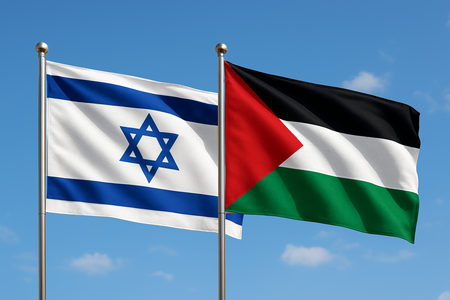
In light of the most recent events in the Middle East surrounding a ceasefire and potential long-term peace deal between Israel and Gaza, I wanted to revisit a blog post I did in March of this year which highlights a very interesting and informative article published recently on the Jewish Press website by Dr. Harold Rhode titled “Most Palestinian Families Come from Immigrants from the Past Two Centuries“.
Here are a few excerpts from his piece.
“Prior to 1948, the date when the Jewish state was re-established, practically the only people who referred to themselves as Palestinians were the Jews who lived there. The others there, mainly Muslim Arabs, referred to themselves as Muslims.”
“…The modern Palestinian identity was largely invented in 1964, when the Palestinian Liberation Organization (PLO) was created.”
“…By the 19th century, much of what is now the West Bank and Gaza was sparsely populated and underdeveloped. Travelers such as Mark Twain and former U.S. President Ulysses S. Grant described the region as barren and largely uninhabited. These accounts, written without political bias, provide insight into the state of the land before the demographic shifts that followed.”
And in his conclusion to the article, Dr. Rhode states: “The historical connections between the people of Gaza, the West Bank and British Mandate Palestine are complex—shaped by centuries of migration, trade and political shifts. They are not one people, but a hodge-podge of peoples with no prior connection to pre-1948 Palestine, who settled there during the past two centuries.”
The biblical history of the region is clear – the land and the blessing were given to Abraham and his seed through Isaac by God’s covenant.
Genesis 17:18-21 (KJV) – 18 And Abraham said unto God, O that Ishmael might live before thee!
19 And God said, Sarah thy wife shall bear thee a son indeed; and thou shalt call his name Isaac: and I will establish my covenant with him for an everlasting covenant, and with his seed after him.
20 And as for Ishmael, I have heard thee: Behold, I have blessed him, and will make him fruitful, and will multiply him exceedingly; twelve princes shall he beget, and I will make him a great nation.
21 But my covenant will I establish with Isaac, which Sarah shall bear unto thee at this set time in the next year.