Limited U.S. airstrikes with bunker-busters to take out Iran’s Natanz or the Fordow underground nuclear facility? – YES.
Defending American troops overseas and responding with devastating lethal force if even one of our people is attacked or killed over there? – YES! YES! YES!
U.S. boots on the ground in Iran? – NO! NO! NO!
U.S. led push for regime change in Iran? – NO! NO! NO!
Nation building after the war between Israel and Iran? – NO! NO! NO!
Editors note: the following was noticed on a FB page and we received permission to copy and paste it for publication here.
The conflict between Israel and Iran is all over the news right now—and a lot of people are wondering what to make of it, especially from a Christian perspective.
Some say it’s part of Bible prophecy unfolding. Others feel Jesus would never support this war.
What do you think?
Here are a few questions to get the conversation going:
• Do you think this conflict has anything to do with end-times prophecy?
• Is modern-day Israel the same “Israel” we read about in the Bible?
• Could this be setting the stage for Christ’s return—or are we overanalyzing?
• Should churches talk about stuff like this on Sundays?
• Can you support Israel as a nation but still disagree with some of its actions?
Let’s talk. Be respectful and share what you believe.
Editors note: the guest article appearing here does not necessarily reflect the views of Bible Rebel editors or other guest authors and contributors. Bible Rebel seeks to present a wide range of ideas and viewpoints in order to fulfill our mission to provide resources for “Curious Fearless Faith”.This is Part 3 in a new series on prayer called ‘Why Must We Pray, Anyway’ by Steve Sann.
The newborn baby is but an heir of man’s disaster. At the moment of birth, without the freedom to choose or even to comprehend his circumstance, each child is launched headlong into a world of hurt. As good a person as he or she may try to be or should ever possibly become, at best they will remain citizens of the kingdom of darkness. Literally, each of us is conceived and born in sin, far apart from the spiritual entrée needed to walk and talk with God.
But now, as a result of Christ, mankind regains the authority to bring God back on the scene wherever we are present! We still reside within the borders of Satan’s kingdom, true, but we are no longer citizens. Sure, within his own kingdom, Satan has every legal right to rule his own subjects. However, we now, being the citizens of heaven (Philippians 3:20), as God’s people, we are released from Satan’s authority (Colossians 1:13), even while still dwelling within his kingdom. “No one is a firmer believer in the power of prayer than the devil; not that he practices it, but he suffers from it!”
Right here, while still in the Devil’s empire, we have new legal rights! But it is up to each of us to claim them. At any time, we have every right to call upon God, who then may enter into Satan’s kingdom to protect and prosper us! We are His now. God is limited only by our willingness to petition Him on our behalf.
When you call upon God in the name of Jesus Christ, you are literally delegating to Him the authority to enter into this world behind these enemy lines to fight for you. God loves it! At that very moment, God has legal authority to utilize whatever resources are at His disposal to respond to that specific need. The insight of Martin Luther in the 16th century still rings true today: “Prayer is not overcoming God’s reluctance, but laying hold of His willingness.”
God’s people are all the time making excuses for the “sovereign” God as to why He did not act, save, or bless when really it is they who did not pray. By their many excuses for God, they are, in effect, blaming God for their own lack of prayer. Those who do pray see His results, tempered only by the weakness to believe. This, then, is why we must pray. And much. The responsibility for God’s good in this troubled world falls back upon us.
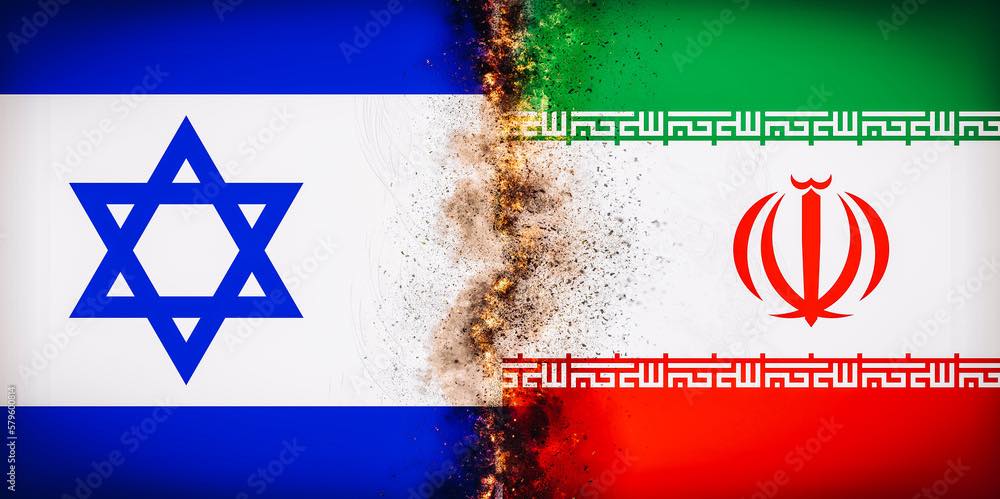
The conflict between Israel and Iran is definitely heating up, and many observers in the faith community believe that the modern Jewish state of Israel is the subject of much Old Testament prophecy. Some even believe that current events in the Middle East are a precursor—perhaps even an immediate precursor—to the biblical Armageddon.
On the other hand, there are many sincere Christians with deep knowledge of the Bible who argue that today’s modern Israel, as constituted since 1948, is not the “apple of God’s eye” as it was in ancient times. They contend that, since the destruction of the Temple and the razing of Jerusalem in 70 AD—and the resulting Jewish diaspora—Jews today are not the same bloodline as the children of God’s covenant with Abraham.
It’s an interesting argument and one worth considering, but here’s where the rubber meets the road: Does America (and the rest of Western Christendom) have an obligation to spend our blood and treasure defending Israel simply because they are considered by some to be “God’s chosen people”?
In my opinion, the answer is no.
But here’s the big “but”: America should be ready to defend and support Israel with weapons and intelligence because she is our greatest friend and ally in the Middle East. Our obligation to Israel stems from modern geopolitical realities, not verses from the Old Testament.
Furthermore, our involvement in the current conflict should be limited to intelligence and material support—not boots on the ground. Israel is fully capable of handling the military personnel side of the equation, and there is no reason for American young people to fight and die in another Middle East killing ground.
Recent U.S. intelligence and media reports indicate that Israel is preparing for a possible unilateral strike on Iran’s nuclear facilities in the coming days. Although no formal decision has been made, Israel appears fully prepared to act—even without direct U.S. military involvement, though Washington may still play a supporting logistical or intelligence role. In response, the U.S. has evacuated nonessential personnel from its embassies in Iraq, Bahrain, and Kuwait, tightened travel restrictions in Israel, and repositioned troops across the region to mitigate potential retaliatory threats.
Iran’s posture and potential retaliation
Iran has responded with stern warnings, pledging “forceful and destructive” retaliation—including possible strikes on U.S. bases and interests—should Israel move forward. The IAEA recently censured Iran for breaching nuclear obligations, revealing that Tehran is enriching uranium at 60% purity and planning to open a third, concealed facility. Iran has escalated military exercises and advanced air- and missile-defense drills to prepare for a potential imminent attack.
Diplomatic brinkmanship and strategic constraints
This crisis unfolds against the backdrop of renewed negotiations in Oman between U.S. envoy Steve Witkoff and Iranian officials, yet disagreements over uranium enrichment persist—dramatically raising the stakes. Analysts caution that Israel’s air campaign would be both technically demanding and risky; Iran’s facilities are deeply fortified and geographically dispersed, meaning even a well‑executed strike could fail to incapacitate the program completely—while risking a broader regional conflict. Historically, such Israeli threats often serve as leverage, pressuring Tehran ahead of critical diplomatic rounds, and may still function primarily as strategic messaging—unless American support or internal Israeli pressure tips the balance toward action
Bible Rebel continues to keep a watchdog’s eye on national and world news and events. Here’s the latest recap from the Middle East.
UN accuses Israel of “extermination” in Gaza schools and religious sites
U.N. experts reported today that Israel has committed the crime against humanity of “extermination” by targeting civilians sheltering in schools and religious venues in Gaza. The latest findings, which will be presented to the U.N. Human Rights Council on June 17, 2025, highlight that over 90% of Gaza’s schools and universities have been destroyed. U.N. Chair Navi Pillay warned this campaign could devastate Palestinians’ cultural and educational future. – From reuters.com
U.S. military weighs options to prevent a nuclear-armed Iran
On June 10, 2025, General Erik Kurilla, leader of U.S. Central Command (CENTCOM), told Congress the U.S. military is actively reviewing “a range of options” to prevent Iran from acquiring nuclear weapons. He emphasized the readiness to use overwhelming force if necessary. The remarks came amid stalled diplomatic efforts and Iran preparing a counteroffer to a U.S. proposal. – From reuters.com.
Swedish activist Greta Thunberg deported after Gaza-bound aid mission seized
Israel deported climate activist Greta Thunberg after its navy intercepted her charity boat—the “Madleen”—en route to Gaza with humanitarian aid. This occurred following her detention aboard the vessel, as Israeli forces continued detaining other activists on the boat. – From Middle East Eye
Hamas shifts stance amid Qatari pressure on Gaza ceasefire
Under pressure from Qatar, Hamas is reconsidering a response to the current ceasefire proposal, which is reportedly based on U.S. envoy Steve Witkoff’s framework. The proposed agreement would exchange the release of 10 hostages for a 60-day ceasefire in Gaza. From The Jerusalem Post
One of the arguments for a Rapture of believers is that God will not allow Christians to go through the ‘wrath to come’, as described in the book of Revelation, but will rescue them out of the world before those purportedly horrific, literal events occur.
But wait a minute, what about all of the other believers who have suffered torture, persecution, burnings, beheadings, skinning and worse throughout the history of the world since the resurrection and ascension of our Lord?
Here’s a brief and general review that barely scratches the surface:
Roman Persecutions (1st–4th centuries) – Early Christians faced brutal persecution under Roman emperors like Nero and Diocletian. Nero blamed Christians for the Great Fire of Rome in AD 64, leading to mass executions, including crucifixions and being burned alive. Diocletian’s persecution (AD 303–311) was one of the most systematic, involving the destruction of churches, scriptures, and widespread martyrdom.
Ottoman Empire Genocides (1910s–1920s) – During World War I, the Ottoman Empire carried out genocides against Christian minorities, including Armenians, Greeks, and Assyrians. These events led to the deaths of millions through massacres, forced deportations, and starvation.
Modern-Day Persecution (21st century) – In various parts of the world, Christians continue to face persecution, particularly in regions with strict religious laws. Countries in Africa and Asia have seen imprisonment, violence, and even executions of Christians.
So why are the comparatively very, very few Christians who happen to be of the generation alive at the time of the so-called Rapture the lucky ones?
Well, they say, “Nothing like the coming tribulation has ever happened before and it will be unparalleled in its awfulness for people living on the earth at that time, so God has to rescue His people out of it.”
Come on now, that is absurd, and would be especially so to those Christians who have experienced, and still do, suffering and death in various places at various times. Death and suffering are death and suffering whether it’s in a so-called tribulation period, a 10th Century Caliphate, or a 21st Century gulag.
So what is the meaning of verses like 1 Thessalonians 1:10? “And to wait for his Son from heaven, whom he raised from the dead, even Jesus, which delivered us from the wrath to come.“
We’ll take a closer look in our next “Rethinking The Rapture” post.
Editors note: the guest article appearing here does not necessarily reflect the views of Bible Rebel editors or other guest authors and contributors. Bible Rebel seeks to present a wide range of ideas and viewpoints in order to fulfill our mission to provide resources for “Curious Fearless Faith”.This is Part 2 in a new series on prayer called ‘Why Must We Pray, Anyway’ by Steve Sann.
E.M. Bounds further correlated: “If prayer puts God to work on earth, then, by the same token, prayerlessness rules God out of the world’s affairs, and prevents him from working.” Truth be told, God is regulated by the same laws of justice that He incorporated in all His creation. He cannot just interrupt the continuum, violate personal property rights, suppress dissent, and generally force His will on the lives of others. In contrast, Satan and the governments of men overstep these boundaries with reckless abandon. Nonetheless, God is constrained by the rule of law: to God, what is His property is His, and that which is Satan’s is Satan’s.
John Wesley, the founder of the Methodist Church, observed in his day: “It seems God is limited by our prayer life – that He can do nothing for humanity unless someone asks Him.” He went on to say: “God does nothing but in answer to prayer.”
But how could that be?
The ugly facts are these: Adam legally transferred to Satan the authority and rulership of this world by heeding Satan’s words and rejecting God’s command in the garden. With that transaction, God’s liberty to direct the affairs of this world became restricted. At that time, the day-to-day administration of the material realm passed from man to Satan, limiting the scope of God’s involvement. Satan was instated as “the god of this world” (2 Corinthians 4:4), with mankind subjected unto him.
Satan is now the god of this world! Clearly, ”The earth is the Lord’s, and the fullness thereof” (Psalms 24:1), but God leased out the property management to man—who summarily legally transferred that lease to Satan. Christ terminated that lease for we who believe, and the eviction notice has been sent. The sheriff will soon be arriving (1 Corinthians 15:24). Yet, now, with God’s sovereignty temporarily impaired and man ensnared in Satan’s world, man became alienated from God.
Because many do not understand this, they are forever making excuses for why God does not save the suffering children, stop the hate and war, cure the world’s diseases, and generally make all of us wealthy! These matters are now left up to the faith and labor of the individual person.
Catholic Charities Bureau v. Wisconsin Labor & Industry Review Commission (Decided June 5, 2025)
In a unanimous 9–0 decision, the Supreme Court ruled that Wisconsin violated the First Amendment by denying Catholic Charities Bureau a tax exemption granted to other religious organizations.
The state had argued that the charity’s services were too secular to qualify, as they did not proselytize or serve only Catholics. Justice Sonia Sotomayor emphasized that the state’s actions showed favoritism to more overtly religious organizations, which is impermissible under the First Amendment.
The ruling allows Catholic Charities to opt out of state unemployment programs in favor of church-operated ones and may have broader implications for religious organizations across the U.S.