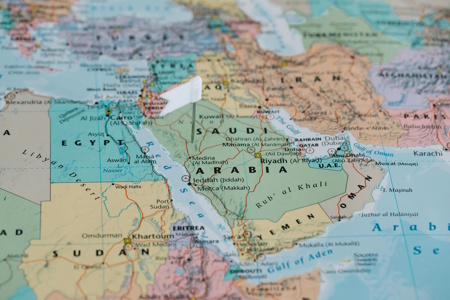
Bible Rebel continues to keep a watchdog’s eye on events in the Middle East. That is not to say that we are watching for any fulfillment of biblical prophecy there, we keep our eyes and ears open to news that affects people of faith from every region around the world.
The Holy Land is of particular interest for three reasons:
- It is a geographical crossroads, referred to by some the “Center of the Earth”.
- It is also the historical birthplace of the two largest religions of the world; Christianity and Islam, as well as the ‘Father’ of both those religions – Judaism.
- It is of major military and strategic importance because of oil production and logistics.
Are the biblical prophecies focusing on geographical locations in the Middle East, especially in and around current-day Israel, relevant to the Church in our times today?
Or will those prophecies only come to pass and be revealed in some future time after the destiny of the Church has been realized? This is a subject Bible Rebel will be exploring in some depth going forward. Stay tuned.
For now, here’s the latest from the Middle East.
Provocation at Al‑Aqsa & Deepening Gaza Crisis
Date: August 3, 2025
Israel’s National Security Minister Itamar Ben‑Gvir visited and prayed at the al‑Aqsa Mosque in Jerusalem, flouting long‑standing religious protocols. His actions were condemned by Palestinian authorities, Jordan, and Saudi Arabia as a serious provocation. Meanwhile, Gaza’s humanitarian crisis is intensifying: 119 Palestinians were reported killed in the past 24 hours, raising the overall death toll in the Israel‑Gaza war to over 60,800—including 175 hunger-related deaths (93 were children). Israeli forces reportedly killed 27 Palestinians at food‑aid sites, and a Palestine Red Crescent staff member was among those killed.
From The Guardian
U.S. Envoy Inspects Aid Sites Amid Accusations of ‘Bloodbaths’
Date: August 1–2, 2025
U.S. envoy Steve Witkoff—on his first visit to Gaza since the war began—inspected aid operations run by the Gaza Humanitarian Foundation (GHF) in Rafah. The United Nations had rejected collaborating with GHF, warning that distribution sites had become unsafe and were linked to over 1,000 deaths—many due to Israeli military action. Witkoff aimed to develop a new aid strategy, calling the situation a severe humanitarian crisis.
From Reuters
Hamas Denies Readiness to Disarm Amid Diplomatic Tensions
Date: August 2, 2025
Hamas has rejected U.S. envoy Witkoff’s statements suggesting they were willing to disarm. The group criticized his visit as a “staged show,” aimed at misleading the international community. Since May, over 1,300 Palestinians have died near GHF-run aid sites due to violence, prompting concerns about the organization’s operations. Parallel to these developments, France and the UK have indicated possible recognition of a Palestinian state in September if Israel does not meet conditions including a ceasefire, as supported by EU and Arab League resolutions.
From Al Jazeera
Hostage Footage Sparks Outcry and Urgency for Ceasefire
Date: August 3, 2025
Hamas released new footage showing Israeli hostages in visibly emaciated condition, triggering widespread outrage and renewed calls for urgent action. U.S. envoy Steve Witkoff traveled to Tel Aviv and publicly expressed support for hostage families, advocating for a ceasefire.
From Deutsche Welle