Your Life And What Comes After (38): Why Does God Let People Do Evil Things?

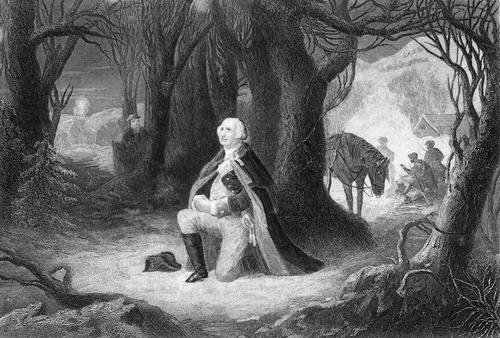
George Washington at Valley Forge

During the brutal winter of 1777–1778, George Washington and the Continental Army were encamped at Valley Forge. His troops were freezing, starving, and discouraged. The American fight for freedom itself seemed close to failure. Washington faced a tough choice: continue the struggle despite the hardship, or quit and give up the fight.

Washington privately prayed, asking God for wisdom, strength, and guidance in the decision before him. He chose to stay and fight—trusting that God would sustain their efforts. The army endured the winter, came out stronger, and eventually won the victory in the American Revolutionary War.

No Robots, Please

God doesn’t want robots who are forced to obey Him – He wants a family, individuals who love Him freely. God doesn’t make us do the right thing or the wrong thing, He gives us the free will to choose

Washington freely chose a course of action, asked for God’s help, and acted in faith. His decision—made with God’s help—shaped history and shows how our choices and God’s guidance can work together.

But along with the freedom to make good choices comes the freedom to make terrible choices. It’s not really freedom if you don’t have the freedom to make the wrong choice.

And sometimes when people make terrible choices, other people get hurt and valuable things get destroyed. God allows people to do bad things, and that means sometimes those bad things happen to good people.

Three Things to Remember

First, you can’t blame God for the bad things people do—that’s on them, not God. The good will be rewarded and the bad will have to face consequences, now and/or in the time to come.

Second, God can and does shield His people, those who seek His divine protection from harm as they ask in faith. Everyone else is on their own, and if they live outside God’s promise of protection, it’s because they choose to be on their own.

There are times when people of faith will voluntarily go against human evil knowing that they may be harmed or even killed. Their reasons for doing that are between God and them.

There are also times when people of faith wander outside the King’s protection through disobedience, ignoring warnings, or plain old rebellion. Bad things can happen when that occurs.

Third, all suffering and evil will be redeemed by God in the future, so trust in the ultimate purpose and plan of God to make things right.

While it’s sometimes hard to understand why bad things happen and why good people suffer—whether by the evil things other people do or by natural disaster or disease—the things suffered now, no matter how long they last, will seem like a tiny mosquito bite compared to the marvelous eternity God has planned for us.

More Than Conquerors

God doesn’t force anyone to do the right thing any more than he forces anyone to believe on Jesus Christ as Savior. We each have complete free-will and we all live with the benefits, and the consequences of that amazing freedom, now and forever.

Let’s use our free will to do some good—to do some conquering—through our Lord, Jesus Christ.
Your Life And What Comes After (37): Why Does God Let Bad Things Happen?

So everything will be hunky dory after Jesus returns and we live together in heaven on earth forever. Great. But what about now?

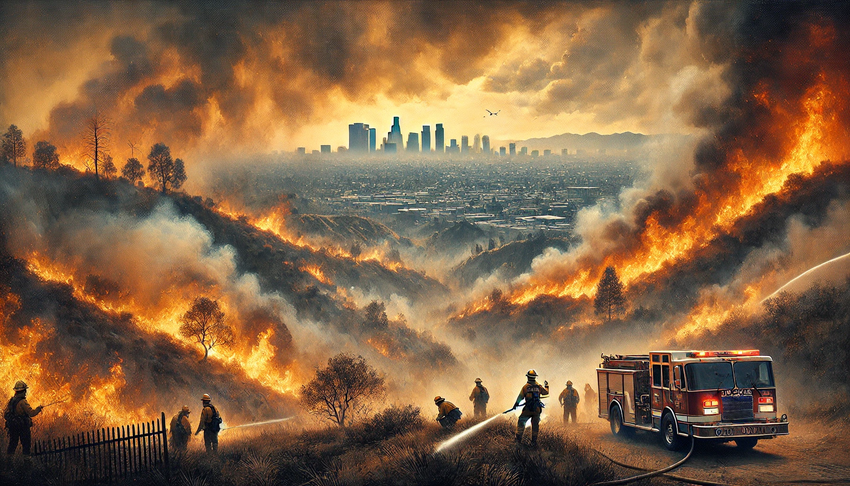
Why does God allow death and disease, earthquakes, fires, and floods, and horrible things to happen?

Special Connection

When God first set up His creation He gave Adam and Eve the job of taking care of it and of ruling “over all the earth.” God gave them power and wisdom, through their special connection with Him by way of His Spirit, to have control over the world and nature.

But there was one condition God set:

Well, they disobeyed God and broke the condition He set. Although they didn’t die physically, the special connection with God that gave them the wisdom and power to be good rulers over creation died and was broken.

And so the world was broken as well, and still is. Without the special connection of God’s Spirit to give people the wisdom and power to take authority over the forces of nature, nature can and will cause harm and death, by everything from earthquakes to microscopic diseases.

God put the fate of His creation into human hands, and because humans broke it would take human hands to repair it. That’s where Jesus comes in, but we’ll get to that a bit later.

Authority

When Adam and Eve gave up their special connection with the Creator by their own choice they also gave up their rulership of the world. So the one who talked them into disobeying God was the one who took over that rulership—the “serpent,” the Devil.

The Devil is the ruler of this world. He is the one who causes evil, death, and bad things to happen. To put it in legal terms, God is perfectly fair, He gave Adam and Eve rulership over the world, it was theirs to do with as they wished and God honored that. In turn, Adam and Eve gave their rulership to the Serpent and because it was theirs to give, God must honor that as well.

But God has also planned a way to get the rulership of the world back into the right hands, and that is through Jesus Christ.

For believers in Christ, the Spirit, power, and wisdom of God have been given back to us and we can once again overcome the powers of evil through the name of Jesus Christ and by His work, because He has reclaimed what Adam lost.

The Devil’s authority over the world is only for a short time, and soon it will be completely gone forever. For now, we claim what Jesus has won back for us and wait patiently for the final victory.

Next, we’ll talk about how human free will works and why that’s important in understanding why sometimes bad things happen to good people.

Your Life And What Comes After (36): Our New Bodies

God promises that when Jesus returns, we will receive new, changed physical bodies. What will they be like? Scripture gives us some hints and clues.

First, our new bodies will be like Jesus in some ways.

Here are some examples of what Jesus’ new body was like after God raised him from the dead:

Jesus’ resurrected body was real, solid, and touchable—not a ghost or spirit‑form.

Jesus could enter locked rooms, appear and disappear, and move effortlessly—yet still remain fully physical.

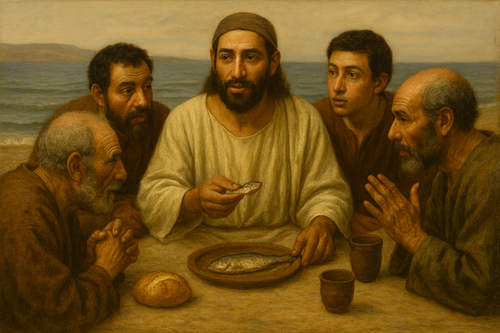
In his resurrected body Jesus joined some of his followers and enjoyed a meal of real food with them.

What About Us?

Our new bodies will be like Jesus’ new body in other ways as well.

We will be raised in a glorious new condition that can never break down, die, get tired or sick again. The frailty of our present bodies will be gone forever.

Our new bodies will reflect, like a mirror, the brightness and radiance of Christ in His glory—“like unto his glorious body”—which is described in part in Revelation.

Our new spiritual bodies will be powerful and strong, full of energy and able to do many, many things we can’t do in our current physical bodies. And remember, “Spiritual” does not mean non‑physical; it means fully Spirit‑powered, perfectly suited for the wonders God has in store for us in eternity because the life God promises us in the resurrection will never end.

Faith Isn’t Blind

Curious Fearless Faith

Faith isn’t blind. Faith is curious and goes searching with eyes wide open.

Faith doesn’t just meekly accept whatever doctrines of men the bishops, evangelists, or street preachers claim to be the gospel truth. Faith examines each bit, turns it over and over again, and measures it against an informed understanding of Scripture, common sense, and reason.

Faith understands that the whole being we are to love our God with includes our minds as well as our hearts and souls. Faith recognizes that the human mind is designed to be skeptical and to question everything — even long‑held church traditions being spoon‑fed to Sunday congregations and Wednesday Bible study groups by pastors, lay ministers, and priests.

Faith never fears being outside the denominational doctrinal box if that is where the truth is. Faith cares little for titles or academic credentials in the pursuit of understanding God’s grand plan for His creation.

Faith continues, never satisfied with what people say about the Word of God, only with what the Word says about itself and the purposes of our Creator.

Faith is curious. Faith is fearless. The confidence of faith is not in blind acceptance, but in full assurance that there is One who holds all the answers and that our calling is to Him, seeking as we go.

Your Life And What Comes After (33): The Return Of Jesus Christ

The new beginning for the world begins with the return of Jesus Christ—the literal, physical return of Jesus to the earth.

After God raised Him from the dead and He walked out of the tomb, Jesus spent many days in His new resurrected body, teaching His followers and being with them. When the day and hour came for Jesus to ascend into heaven, as they watched, two angelic messengers appeared and made a promise to His followers:

Acts 1:11
Which also said, Ye men of Galilee, why stand ye gazing up into heaven? this same Jesus, which is taken up from you into heaven, shall so come in like manner as ye have seen him go into heaven.

This isn’t a symbol with a hidden meaning; it will be an actual event. Jesus has been in the spiritual realm where God dwells for over two thousand years, as we count time, since He ascended into heaven. But He is coming back to the earthly realm for us—for you and me—one day.

There are believers who will be alive at the moment this happens, and all believers of the Church Age who have died will rise from their sleep in the dust and ashes and from their graves, and we will all be changed and given new, immortal, glorified bodies in the “twinkling of an eye.”

This is God’s promise to us, and it will happen as surely as the sun comes up in the morning. But that’s only the “opening ceremonies,” so to speak.

The completion of God’s grand plan begins when Jesus returns for us, but it doesn’t end there. God has more to do after that, and we will be a part of what He has in store. We will be His helpers and managers in the amazing, everlasting age to come.

So, what comes next in this new beginning is what the Bible calls “the Kingdom.” We’ll look at that next.

Your Life And What Comes After (32): The New Beginning

Lucas was walking home from school when he spotted a man on the corner holding a cardboard sign that read “THE END IS NEAR.” People hurried past without looking, but Lucas stopped. The man’s shoulders sagged, his eyes heavy with worry, as if he’d been standing there a long time.

Lucas studied the sign, then looked up at him with a small smile. “I think you’ve got it backwards,” he said. “Actually, the beginning is near.” The man blinked, startled. Lucas added, “My mom says every ending starts something new. Maybe things aren’t ending—maybe they’re about to get better.” He waved and continued down the sidewalk, leaving the man staring at his sign, wondering if the boy might be right.

This world and this life are not all there is. The way things are now is not the way they will always be, because God is taking the world to someplace new and very exciting.

What comes after the end of the world? What will it look like as God completes His grand plan to bring His family into a new creation and into everlasting life with Him?

We’ll explore the three most important events, according to God’s promises, that are coming our way as the grand plan unfolds and comes to its completion.

  1. The Return of Jesus Christ
  2. The Kingdom of Heaven
  3. Heaven on Earth Forever

Remember, “In the end, everything will be all right. And if it’s not all right, it’s not the end.”

Let’s look at the “everything will be all right” part together, up next.

Ye Shall Be As Gods

The theory of religious relativism is gaining ground in our culture. Simply stated, this type of relativism promotes the idea that there is no Truth, but that every person perceives their own truth as derived from their own experiences and perceptions.

While it is true that we all filter our experiences through our own unique personality and understanding, and that we can change and improve our lives by adjusting our thoughts and words, the basic tenet of relativism – namely, there is no Truth – proposes serious problems for the Bible believing Christian.

Let’s begin with the theory of relativism itself. If truly there is no truth, then that itself becomes Truth, which is counter-intuitive to the foundation of the theory!

Truth be told, the heart of relativism is a useful tool in the arsenal of tools used by our spiritual adversary, the devil, to delude mankind. Relativism must deny not only the existence of a One True God, who is Truth, it must also deny the need for a savior to get us back to God, whom we know to be Jesus Christ. Finally, it must deny the existence of the devil.

Voilé! The deceiver has achieved his ultimate goal: if we do not believe he exists, then evil can be counted for good and good for evil. Nothing we do is “wrong.” No need for repentance or salvation.

Not only that, but “Ye shall be as gods,” becomes cultural truth. The first lie of the devil to mankind is still his greatest promotional tool today. What I find fascinating is that the second part of the devil’s comment to Eve, that not only would they be as gods, but they also would “know good and evil,” fades away into nothingness. There is no good and evil as one embraces relativism and becomes as a god. What a trickster the devil truly is!

In addition, how could we know God anyway, when there is no Truth from which to discern his will, his ways, and his very nature?

The Bible becomes a nice, historical fairy tale about man’s moral condition, with no answers as to how man should conduct himself or how God might be trying to connect with His creation. Creation is not, after all, something God did.

It all begins with the devil effectively negating the reality of Truth. Welcome to Relativism! I once heard the statement concerning the devil, “The secret of his success is in the secrecy of his moves.” I found that to be true then, and I find it to be true now. If we fail to recognize there is Good and there is Evil, then everything can be called good. After all, one cannot judge another man’s truth. Then the worst crimes and the worst criminals must be embraced as part of a positive human experience.

Somehow, I just can’t buy it.

Your Life And What Comes After (31): Ending The End Of The World?

So what is the Book of Revelation all about?

It’s about the victory of God over evil by way of His grand plan through Jesus Christ.

It’s about God winning even when it looks like Satan and the wicked kingdoms of this world have all the power.

It’s about God’s people staying faithful and trusting in Him – no matter how long it takes until He sets things right.

Revelation is meant to encourage and bless God’s people – not scare them or cause them to freak out over 666 and the Antichrist.

The End is Really a Beginning

After Jesus was raised from the dead, he spent many days with his followers, being with them and teaching them about things to come. They asked him about the end of the world as they knew it.

And the same is true for us today, over 2,000 years later — no one knows when the end times will come. So, if you hear someone say they know the date that Jesus will return, you can be sure that they really don’t know. Only God knows.

But don’t think of it as the end of the world, because it will actually be the beginning of forever — with God and each other in a glorious new creation.

I’m not sure who first said this, but it’s worth saying again here: “In the end, everything will be all right. And if it’s not all right, it’s not the end.”

Next, we’ll start digging into what that glorious new forever looks like.

Your Life And What Comes After (30): What’s Going On In Revelation?

There are lots of fiction novels and movies about the end of the world, and some of those stories use the images and words from the Bible’s Book of Revelation.

Let’s not get all worked up and frightened by novels and movies, though. Let’s look at what Revelation actually says and doesn’t say, rather than what others say about it.

It helps to get an idea of the “who” and “what” of Revelation. It is a short book written around 2,000 years ago by a man named John, describing a vision from God, and then sent out in a scroll to be read to groups of believers.

Our goal here is not to do a deep study of it, but it’s important to understand that Revelation is a vision with deeper meanings beneath what many of the words seem to be saying at first.

At times in the Bible God gave visions and dreams to people, using mysterious pictures and symbols that aren’t meant to be taken literally.

Years Not Ears

Here’s an example from the Old Testament Book of Genesis where Pharaoh tells Joseph about a dream he had and Joseph tells him what it meant:

See? The ears of corn weren’t meant to be understood as actual ears of corn, they were dream symbols that actually meant years.

Most of Revelation is just like that – you have to understand the symbols and how the people back in that time and place would have understood those symbols. By the way, the time was about 2,000 years ago and the place was Asia Minor, which is the modern-day country of Turkey, under the rule of the ancient Roman Empire.

Symbols in Revelation

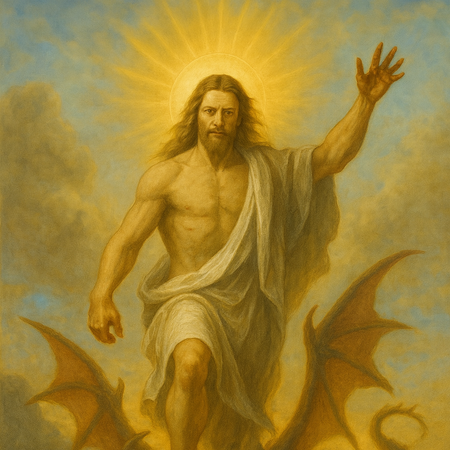
Here’s what Jesus looked like in John’s vision in the first chapter of Revelation:

Does Jesus actually look like this? Does he have a sword coming out of his mouth and feet made of brass? No, these are symbols and images to tell us something deeper. And if we want to understand what those symbols mean we first have to understand how the people who first heard and read those words understood them.

That makes for an interesting, but much longer study. For now, let’s take a peek at the overall subject and point of the Book of Revelation. That’s coming next.