Supplication In The Spirit: Part 2

Editors note: the guest article appearing here does not necessarily reflect the views of Bible Rebel editors or other guest authors and contributors. Bible Rebel seeks to present a wide range of ideas and viewpoints in order to fulfill our mission to provide resources for “Curious Fearless Faith”. This is the second part in a new series on prayer called ‘Supplication In The Spirit’ by Steve Sann.

Supplication in the Spirit: Part 1


1 Timothy 2:1: Therefore I exhort first of all that supplications, prayers, intercessions, and giving of thanks be made for all men.

This commandment is clear. And, notably, supplication heads the list of the first of four critically needed types of prayer. Why are four different types of prayer listed in this exhortation? Because all four are different, all four must be practiced.

Generally, when a person speaks to God, we call that “prayer.” However, prayer comes in a variety of forms. Prayer that centers on the needs rather than on God Himself is called a supplication. In contrast, when we emphasize God, glorifying Him as the giver, that is prayer. Intercession is to stand before God in prayer in place of another. And, giving of thanks returns to the Father much deserved gratitude and recognition. All four of these forms of prayer are to be practiced in our private prayer life.

“Supplications,” as used in the Old Testament scriptures and even in the secular literature of that day, are literally this: the written requests and petitions— humbly, yet earnestly—brought before one of higher authority, as one would when making a plea before a ruler, a court or a judge. When the word “supplication” is used, it is to emphasize the person’s need for help, rather than accentuating God’s great ability to provide. When the scripture orders us to pray with supplications, it is telling us to call attention to our needs before God. God wants this. It enables Him to provide for us. So, supplications are those specific requests we claim before God to supply, whether for ourselves or for others.

God wants us to offer these supplications “in the spirit”—aka: tongues. How is this to be accomplished? By focusing individually on the people and the needs from our prayer list, we simultaneously pray with the spirit. While speaking in tongues, we center our mind’s attention on each issue of prayer at hand. Like we do when we “pray with our understanding,” we mentally picture the subject or issue of prayer; only now we speak in tongues simultaneously. The spirit then prays to God the details for each of the issues, the specifics of which we are usually unaware.

For example, I know to pray for my family. Nonetheless, I have little idea of the needed details. So, I make supplication via the spirit. In this way, specific prayer is offered for specific people. Supplication in the spirit is truly a blend of praying with your understanding and praying in the spirit—simultaneously: “I will pray with the spirit, and I will also pray with the understanding.” As Ephesians 6 emphasizes, we are to be, “watchful to this end with all perseverance”—not only for ourselves, but for “all the saints.” But, most importantly, He wants us to do this “always”—and He desires it via “in the spirit”; that is, praying in tongues. Day after day, He wants us passing the needs of the saints before Him via tongues.

For those “watching”, so becoming spiritually sensitive, often God will stir our hearts with an “awareness” to pray. Some call this a “burden of prayer.” At the time, the details are often not known, only that a certain someone or something somewhere requires prayer. Directing our thoughts to the subject of alert, we pray in the spirit covering the details, allowing God to intervene.

To develop this sensitivity, when praying with others, occasionally pray as God directs your hearts by revelation. Each can call out and describe the need as God guides. You will find that God graciously gives revelation to those who are willing to serve Him in prayer. Often God will make known only the topic, expecting that your prayer by the spirit will handle the details.

When God calls on us unexpectedly to make supplication, it is our responsibility to focus with faith. If you need to, pull your car over or excuse yourself from the room. Just like Jesus requested the urgent prayers of his disciples in his last hours at Gethsemane, we likewise are to “be watchful” and “persevere” during these critical moments, Matthew 26:40-41.
They Said It: Four Famous Quotes On The Founding Of Modern Israel

Photo via cottonbro studio at pexels.com

Regardless of what one my think about the purity of the Jewish bloodline today, the founding of the modern state of Israel in 1948 was a remarkable historic event.

Here are some quotes from some of the leaders of the time who witnessed and were part of that history.

David Ben-Gurion, May 14, 1948 (Declaration of Independence):
“The State of Israel will be open for Jewish immigration and for the Ingathering of the Exiles; it will foster the development of the country for the benefit of all its inhabitants; it will be based on freedom, justice and peace as envisaged by the prophets of Israel.”


    Chaim Weizmann, 1948 (first President of Israel):
    “Miraculously, the Jewish people have survived through the centuries, and now, with the establishment of the State of Israel, we have returned to our rightful home.”


      Harry S. Truman, May 14, 1948 (U.S. recognition of Israel):
      “I had faith in Israel before it was established; I have faith in it now. I believe it has a glorious future before it—not just another sovereign nation, but as an embodiment of the great ideals of our civilization.”


        Golda Meir (reflecting on 1948):
        “When peace comes, we will perhaps in time be able to forgive the Arabs for killing our sons, but it will be harder for us to forgive them for having forced us to kill their sons.”

        Watchdog Alert: The Latest Biblical Archaeology News

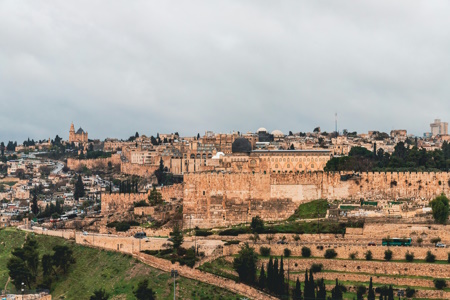
        Photo via Виктор Соломоник at pexels.com

        Bible Rebel keeps a watchdog’s eye on discoveries and news from the world of biblical archaeology and brings it to our readers.

        Rare gold coin of Queen Berenice II found in Jerusalem (Aug 20, 2025)
        Archaeologists in the City of David uncovered a ~2,200-year-old pure-gold quarter-drachma depicting the Ptolemaic queen Berenice II (3rd c. BCE). It’s the first of its type found in a controlled excavation in Jerusalem and sheds light on Hellenistic-period Jerusalem’s economy and connections with Egypt.
        The Times of Israelעיר דוד

        “For the Redemption of Zion” revolt coin near the Temple Mount (Jul 31, 2025)
        A rare bronze coin minted in Year Four of the Great Jewish Revolt (69–70 CE) was discovered by the Israel Antiquities Authority at the Jerusalem Archaeological Garden–Davidson Center. The coin’s paleo-Hebrew inscription shifts from earlier “Freedom of Zion” issues to “Redemption of Zion,” reflecting besieged Jerusalem’s mood shortly before the Temple’s destruction.
        The Times of Israelעיר דוד

        Temple Mount bulla with biblical-era personal names (Jul 30, 2025)
        The Temple Mount Sifting Project announced a 2,600-year-old clay sealing (bulla) reading “Belonging to Yed[a]yah son of Asayahu,” names that appear in the Hebrew Bible. Though found in sifted soil (not an in-situ context), it adds to epigraphic evidence for First Temple–period Jerusalem’s administrative activity. OmnesArchaeology

        Dead Sea Scrolls redated using radiocarbon + AI (Jun 4, 2025)
        A peer-reviewed PLOS ONE study combined new radiocarbon testing (after removing 1950s castor-oil contamination) with an AI handwriting model (“Enoch”). Results suggest many scrolls—some biblical—are older than previously thought, with two fragments potentially contemporary with their presumed authors. This recalibrates timelines for script development and Second Temple-era texts.
        Live Science

        Watchdog Alert: Wars

        Here is Jesus, in Matthew 24:6-7, teaching his disciples about the end times. But also encouraging them to ‘see that ye be not troubled’.

        And ye shall hear of wars and rumours of wars: see that ye be not troubled: for all these things must come to pass, but the end is not yet. For nation shall rise against nation, and kingdom against kingdom: and there shall be famines, and pestilences, and earthquakes, in divers places.” (KJV)

        Russia–Ukraine Conflict

        “Ukraine hit by multiple Russian strikes amid US-led push for end to war”
        Multiple Russian strikes — the largest this month — struck Ukraine amid ongoing diplomatic efforts spearheaded by the U.S. following meetings between President Trump, Zelenskyy, and European leaders.
        From Al Jazeera

        “Russia-Ukraine exchange fire after Trump-Zelenskyy meet: Moscow launches biggest attack on Kyiv in August; Volgograd governor says oil refinery on fire”
        After a Washington summit between Trump and Zelenskyy, intense exchanges of fire ensued. Moscow launched its most significant August assault on Kyiv, and an oil refinery in Volgograd reportedly caught fire amid the clashes.
        From The Times of India

        “In Donbas, Ukrainians hold out as Russia besieges, bargains for their land”
        Despite relentless Russian pressure in eastern Donbas, Ukrainian defenders and civilians remain fiercely resistant to ceding territory. Even after setbacks, such as the fall of Chasiv Yar, key strongholds like Kramatorsk and Slovyansk hold firm, underscoring both tactical resilience and deep national resolve.
        From The Washington Post


        Israel–Hamas Conflict

        “Israel is evaluating a Hamas proposal for a 60-day ceasefire and partial hostage release”
        Israel is reviewing a deal from Hamas offering a 60-day truce and the release of 28 hostages (10 alive, 18 deceased) in exchange for 200 Palestinian prisoners, including women and minors. Egypt and Qatar are mediating, but Israel continues demanding full hostage release and is advancing plans for a ground offensive in Gaza City amid escalating violence.
        From Reuters

        “Qatar urges a Gaza ceasefire after ‘positive response’ from Hamas”
        Hamas has positively responded to a ceasefire proposal that includes a 60-day truce, phased hostage releases, and steps toward peace negotiations. Israel, however, has not yet replied. Humanitarian conditions in Gaza remain dire, with high death tolls and limited aid access.
        From AP News

        Prince Phillip’s ‘Haunting Desolation’

        In an excerpt from The Crown, Season 3 Episode 7 (“Moondust”) – a monologue delivered in the show by Prince Phillip the during his moment of mid-life crisis, speaking to a gathering of priests at St. George’s House, the writer and actor capture the essence of a meaningless existence as opposed to the wonder and ecstasy of knowing God.

        “My mother died recently. She saw something was amiss. She saw that something was missing in her youngest child, her only son. Faith. ‘How’s your faith’, she asked me.

        I am here to admit to you that I’ve lost it. And without it, what is there? The loneliness and emptiness and anticlimax of going all the way to the moon and finding nothing but haunting desolation, ghostly silence, gloom. That is what faithlessness is.

        As opposed to finding wonder, ecstasy, the miracle of divine creation, God’s design and purpose.”

        They Said It: Os Guinness

        I’ve recently read ‘The Call’ by Os Guinness, and I highly recommend it. Guinness has a remarkable ability to communicate profound truths in a very understandable and beautiful way.

        Here are some of my favorite Guinness quotes.

        “Calling is a ‘yes’ to God that carries a ‘no’ to the chaos of modern demands. Calling is the key to tracing the story line of our lives and unriddling the meaning of our existence in a chaotic world.”

        Emphasizing the transformative power of responding to God’s call over worldly distractions, this quote captures Guinness’s central theme of purpose amid chaos.

        “We are not primarily called to do something or go somewhere; we are called to Someone. We are not called first to special work but to God. The key to answering the call is to be devoted to no one and to nothing above God himself.”

        This profound line shifts the focus from vocation or activity to relationship—underscoring devotion to God as the ultimate calling.

        “Freedom is not the permission to do what you like. It’s the power to do what you ought.”

        Guinness masterfully reframes freedom—not as license, but as responsible empowerment to do what’s right.

        “I live before the audience of One—before others I have nothing to gain, nothing to lose, nothing to prove.”

        A succinct, soulful declaration of living for divine approval alone. It reflects deep humility and singular devotion.


        Watchdog Alert: Middle East Update

        Bible Rebel continues to keep a watchdog’s eye on events in the Middle East and around the globe, bringing the latest news summaries to our readers.

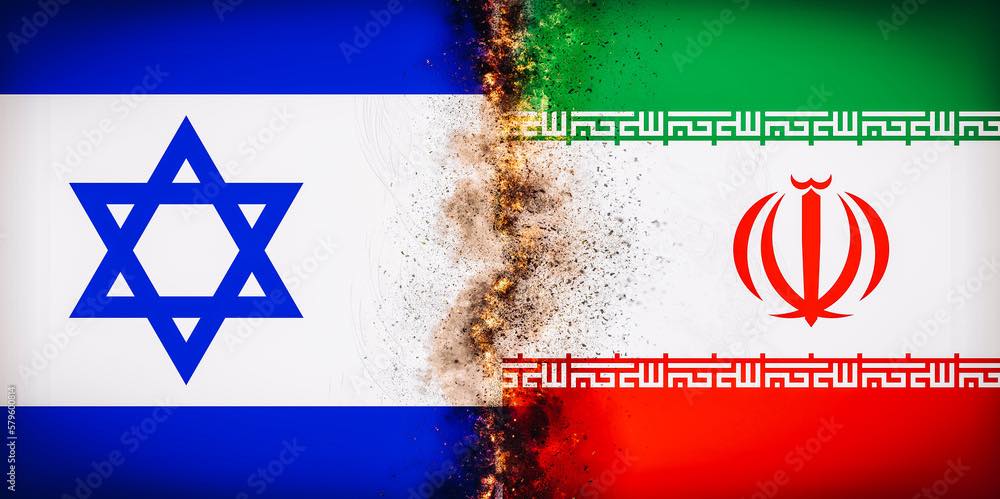
        Iran Faces Existential Choice Between Diplomacy and Defiance

        Following a brief but intense 12-day conflict in June 2025—marked by Israeli and U.S. airstrikes on Iranian military and nuclear sites—Iran’s leadership finds itself weighing a critical decision. Internal consensus appears to be shifting toward renewed nuclear diplomacy with the U.S., deemed essential for regime survival amid economic struggles, power blackouts, and public unrest. Hardline resistance remains strong, and external threats loom if Iran resumes uranium enrichment.
        From Reuters.


        Israeli Military Plans Major Gaza Operation Amid Intensifying Conflict

        On August 13, 2025, Israel’s chief of staff approved the core strategy for a new Gaza offensive, intensifying tensions with Prime Minister Netanyahu. The conflict has escalated into Gaza City, with allegations of scorched-earth tactics and civilian casualties—at least 25 people were killed while seeking aid. Meanwhile, international debate unfolds over post-war governance: Hamas has hinted at relinquishing control to a technocratic body, while the Palestinian Authority insists on authority in Gaza conditional on Hamas’ disarmament.
        From The Guardian.


        Australia Endorses French–Saudi Peace Plan, Backs Palestinian State Recognition

        Australia has publicly supported a French–Saudi peace initiative aimed at resolving the Gaza conflict and announced its intent to formally recognize a Palestinian state at the upcoming UN General Assembly. The plan, also backed by the UK and the Arab League, stresses disarmament of Hamas and the release of hostages. However, Saudi Arabia insists on significant Israeli concessions before normalizing relations, making implementation challenging.
        From The Australian.


        Middle East Crude Oil Benchmarks Spike Amid Russia Tensions

        Spot premiums for major Middle Eastern crude benchmarks—Oman, Dubai, and Murban—have climbed, driven by growing U.S. threats toward Russia. Markets are responding to the heightened geopolitical instability and potential supply risks, with Arab Gulf oil alternatively gaining in global value amid rising uncertainty.
        From TradingView.