They Said It: Four Famous Quotes On The Founding Of Modern Israel

Photo via cottonbro studio at pexels.com

Regardless of what one my think about the purity of the Jewish bloodline today, the founding of the modern state of Israel in 1948 was a remarkable historic event.

Here are some quotes from some of the leaders of the time who witnessed and were part of that history.

David Ben-Gurion, May 14, 1948 (Declaration of Independence):
“The State of Israel will be open for Jewish immigration and for the Ingathering of the Exiles; it will foster the development of the country for the benefit of all its inhabitants; it will be based on freedom, justice and peace as envisaged by the prophets of Israel.”


    Chaim Weizmann, 1948 (first President of Israel):
    “Miraculously, the Jewish people have survived through the centuries, and now, with the establishment of the State of Israel, we have returned to our rightful home.”


      Harry S. Truman, May 14, 1948 (U.S. recognition of Israel):
      “I had faith in Israel before it was established; I have faith in it now. I believe it has a glorious future before it—not just another sovereign nation, but as an embodiment of the great ideals of our civilization.”


        Golda Meir (reflecting on 1948):
        “When peace comes, we will perhaps in time be able to forgive the Arabs for killing our sons, but it will be harder for us to forgive them for having forced us to kill their sons.”

        Prince Phillip’s ‘Haunting Desolation’

        In an excerpt from The Crown, Season 3 Episode 7 (“Moondust”) – a monologue delivered in the show by Prince Phillip the during his moment of mid-life crisis, speaking to a gathering of priests at St. George’s House, the writer and actor capture the essence of a meaningless existence as opposed to the wonder and ecstasy of knowing God.

        “My mother died recently. She saw something was amiss. She saw that something was missing in her youngest child, her only son. Faith. ‘How’s your faith’, she asked me.

        I am here to admit to you that I’ve lost it. And without it, what is there? The loneliness and emptiness and anticlimax of going all the way to the moon and finding nothing but haunting desolation, ghostly silence, gloom. That is what faithlessness is.

        As opposed to finding wonder, ecstasy, the miracle of divine creation, God’s design and purpose.”

        They Said It: Os Guinness

        I’ve recently read ‘The Call’ by Os Guinness, and I highly recommend it. Guinness has a remarkable ability to communicate profound truths in a very understandable and beautiful way.

        Here are some of my favorite Guinness quotes.

        “Calling is a ‘yes’ to God that carries a ‘no’ to the chaos of modern demands. Calling is the key to tracing the story line of our lives and unriddling the meaning of our existence in a chaotic world.”

        Emphasizing the transformative power of responding to God’s call over worldly distractions, this quote captures Guinness’s central theme of purpose amid chaos.

        “We are not primarily called to do something or go somewhere; we are called to Someone. We are not called first to special work but to God. The key to answering the call is to be devoted to no one and to nothing above God himself.”

        This profound line shifts the focus from vocation or activity to relationship—underscoring devotion to God as the ultimate calling.

        “Freedom is not the permission to do what you like. It’s the power to do what you ought.”

        Guinness masterfully reframes freedom—not as license, but as responsible empowerment to do what’s right.

        “I live before the audience of One—before others I have nothing to gain, nothing to lose, nothing to prove.”

        A succinct, soulful declaration of living for divine approval alone. It reflects deep humility and singular devotion.


        They Said It: Edmund Burke

        They Said It is a regular feature from Bible Rebel, highlighting quotes from various folks on various topics of interest and relevance to our readers. 

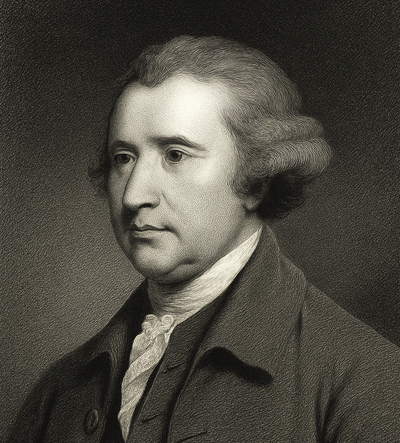
        My favorite quote from Edmund Burke is, “Nobody made a greater mistake than he who did nothing because he could do only a little.”

        Here are some more gems from the 18th Century Anglo-Irish philosopher, politician, and deep thinker.

        “Man is by his constitution a religious animal. Atheism is against not only our reason, but our instincts.”

        Quoted in various writings and speeches

        Burke argues that belief in God is a natural and essential part of human nature.


        “Christianity is the most refined and exalted religion that ever enlightened the world.”

        Burke praises Christianity as the highest expression of religious truth and moral guidance.


        “People will not look forward to posterity, who never look backward to their ancestors. Besides, the science of jurisprudence… and the principles of a Christian religion, form together the education of a gentleman.”

        From “Reflections on the Revolution in France” (1790)

        He connects Christianity with tradition, virtue, and civic education.


        “All that is necessary for evil to triumph is for good men to do nothing.”

        While this quote is often attributed to Burke and does not explicitly mention God, it reflects his Christian worldview, especially the idea of moral duty and divine accountability in the face of evil.

        They Said It: Quotes About The Apostle Paul

        They Said It is a regular feature from Bible Rebel, highlighting quotes from various folks on various topics of interest and relevance to our readers. Here are some memorable quotes about the Apostle Paul – the one from Thomas Jefferson is especially interesting.

        Martin Luther (German Reformer):
        “The epistles of Paul are the clearest gospel of all. He deals with the true essentials of Christian doctrine with such simplicity, clarity, and depth that they must be treasured above all other writings.”


          John Chrysostom (4th-century Church Father):
          “Put the whole world on one side of the scale, and you will see that the soul of Paul outweighs it.”


            David Hume (Scottish Enlightenment philosopher, skeptic of religion):
            “The conversion of Paul… is a strong proof of the truth of Christianity.”
            (Paraphrased from his Essay on Miracles, where he acknowledges Paul’s radical transformation as a historical argument worth serious consideration.)


              Thomas Jefferson (3rd U.S. President):
              “Paul was the first corrupter of the doctrines of Jesus.”
              (From a letter to William Short, 1820. Jefferson admired Jesus’ moral teachings but believed Paul distorted them with dogma.)

                They Said It: Satanists Convert

                ‘They Said It’ is a regular feature highlighting quotes from various folks on various topics of interest and relevance to our readers. 

                John Ramirez (Former Satanist, now Christian evangelist):

                “I was a general in the kingdom of darkness, but God had a better plan for me. The devil is a counterfeit — he gives you temporary power, but Jesus gives you eternal life.”
                From his book, “Out of the Devil’s Cauldron”


                Doreen Virtue (Former New Age teacher and occult practitioner):

                “I used to give angel readings and write about psychics and tarot, but when I read the Bible, especially Deuteronomy 18, I realized I had been doing what God detests. I gave my life to Jesus, and everything changed.”
                Interview with “Faithwire,” 2019


                Zachary King (Former high wizard in Satanism):

                “I saw real demons. I summoned them. I did spells that worked. But none of it gave me peace. Only Jesus had the power to free me.”
                In his testimony featured in “All That Remains: The Story of a High Wizard Who Found Christ”


                Alice Bailey (Former witch, converted to Christianity):

                “I was deep into the occult, believing I had control. But I was deceived. When I encountered Jesus, the darkness fled, and I finally knew truth and love.”
                (Note: This quote is attributed to a woman with the same name, not the theosophist Alice A. Bailey. Sources are from modern deliverance ministry testimonies.)

                They Said It: Quotes About Luther And The Reformation

                Introducing a new regular feature from Bible Rebel – They Said It, highlighting quotes from various folks on various topics of interest and relevance to our readers.

                Johann Wolfgang von Goethe (German writer and statesman):

                “The Reformation was a great act of emancipation by which man was restored to himself. Luther’s discovery of the Bible opened the door to the modern age.”


                Thomas Carlyle (Scottish historian and essayist):

                “Luther was the great Reformer, the man who alone could challenge the power of Rome and shatter the spiritual bondage of the age. His words were half-battles.”


                Will Durant (American historian, The Story of Civilization):

                “Martin Luther was the most powerful man of his century. He freed half of Europe from papal rule and gave birth to Protestantism, which would reshape the Western world.”

                Faith And The Founders

                The overwhelming majority of the signers of the Declaration of Independence in 1776 were Christians. About half (roughly 32 to 34 signers) were affiliated with the Anglican Church, including George Washington.

                A few key signers—most notably Thomas Jefferson, Benjamin Franklin, and John Adams—are often associated with Deism or Enlightenment rationalism. However, they still operated within a broadly Christian cultural framework. For instance:

                • Jefferson believed in God and moral teachings of Jesus but rejected the Trinity and miracles.
                • Franklin described himself as a Deist but often spoke positively about religion’s role in public virtue.
                • Adams was a devout Christian, though critical of Calvinist doctrines.

                Providence in the Revolutionary War

                “The hand of Providence has been so conspicuous in all this, that he must be worse than an infidel that lacks faith.”
                — George Washington in a letter to Thomas Nelson, August 20, 1778

                General Washington frequently spoke of “Providence” in his writings, referring to seemingly miraculous events which benefitted the American cause and led to the extremely improbable result of thirteen little colonies defeating the world’s most powerful empire.

                A few examples:

                The Fog at Brooklyn Heights (1776)

                After the Battle of Long Island, Washington’s army was trapped by British forces. A thick fog descended unexpectedly, allowing his troops to retreat safely across the East River without British interference.

                • Many viewed this fog as a miraculous act of divine intervention.
                • Even British officers later admitted they were baffled by the escape.

                The Storm That Saved Washington at Dorchester Heights (1776)

                Washington fortified Dorchester Heights to threaten British-held Boston. A storm delayed British attacks long enough for the Americans to finish fortifications.

                • The British decided against assaulting the position.
                • Many patriots saw this as an act of God protecting the Continental Army.

                The Victory at Saratoga (1777)

                The American victory at Saratoga convinced France to join the war on the American side.

                • Clergy and political leaders interpreted this as a sign that God was guiding the cause of liberty.
                • Congress declared national days of thanksgiving in response.

                Happy Independence Day, America!

                They Said It: C.S. Lewis On Atheism

                Please consider this profound gem from C.S. Lewis

                “Supposing there was no intelligence behind the universe, no creative mind. In that case, nobody designed my brain for the purpose of thinking. It is merely that when the atoms inside my skull happen, for physical or chemical reasons, to arrange themselves in a certain way, this gives me, as a by-product, the sensation I call thought. But, if so, how can I trust my own thinking to be true?

                It’s like upsetting a milk jug and hoping that the way it splashes itself will give you a map of London. But if I can’t trust my own thinking, of course I can’t trust the arguments leading to Atheism, and therefore have no reason to be an Atheist, or anything else. 

                Unless I believe in God, I cannot believe in thought: so I can never use thought to disbelieve in God.”

                C.S. Lewis