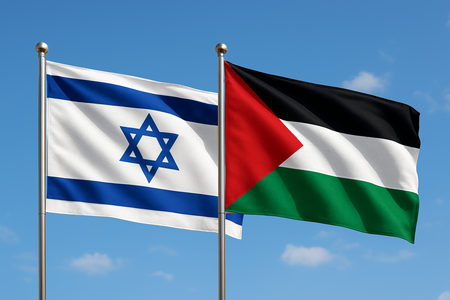
The Abraham Accords are a series of agreements that normalized diplomatic relations between Israel and several Arab nations, starting in 2020 refer to formal peace and normalization agreements between Israel and the following countries:
United Arab Emirates (UAE) – signed August 13, 2020
Bahrain – joined September 15, 2020
Sudan – announced October 23, 2020
Morocco – announced December 10, 2020
The accords were brokered by the United States under the Trump administration, led by Jared Kushner and Secretary of State Mike Pompeo, and now Kazakhstan has been added to the list of participating countries as of this week.
They marked the first major Arab-Israeli peace agreements in over 25 years, following Egypt’s (1979) and Jordan’s (1994) treaties with Israel.
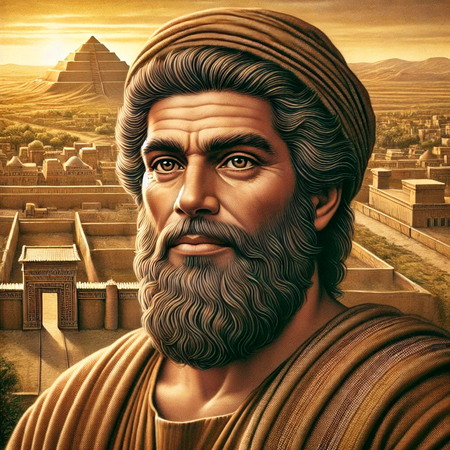
The name “Abraham Accords” was chosen because Abraham (known as Ibrahim in Arabic) is a biblical patriarchal figure shared by Judaism, Christianity, and Islam. So, the name highlights religious and cultural unity as the foundation for political cooperation and coexistence.
Bible Rebel keeps a watchdog’s eye on events from the Middle East and around the world of interest to people of faith and brings that content to our readers. Here’s the latest from the Israel-Hamas conflict.
Targeted Israeli strike in central Gaza
On 25 October 2025, the Israel Defense Forces (IDF) announced a strike in central Gaza targeting a member of Islamic Jihad Movement in Palestine who was allegedly planning an attack on Israeli troops. The strike took place despite the cease-fire in place since earlier this month. Eyewitnesses reported a drone attack on a car injuring four people, and shelling by Israeli tanks in eastern Gaza City. Reuters
Nearly 100 Palestinians killed in Gaza since the cease-fire began
According to Gaza’s Health Ministry, at least 93 Palestinians have been killed in the Gaza Strip by Israeli attacks since the cease-fire went into effect on 10 October 2025. Reports also mention Israeli forces shot and wounded at least six Palestinians in various parts of Gaza. Al Jazeera
U.S. and Qatar engage in Gaza peacekeeping / mediation roles
On 25 October 2025, during a meeting between U.S. President Donald Trump and Qatari Emir Tamim bin Hamad Al Thani, Qatar expressed willingness to contribute to a peacekeeping force in Gaza. This comes amid U.S. diplomatic efforts to shore up the cease-fire and define post-conflict governance in Gaza. The Times of Israel
Unexploded ordnance injures children in Gaza as families return home
In Gaza City, six-year-old twins Yahya and Nabila Shorbasi were critically injured when they mistook unexploded bombs for a toy in rubble from their damaged home, following the cease-fire. Health officials say hundreds more children have been wounded in similar accidents. The United Nations Mine Action Service (UNMAS) reports over 560 unexploded items found during the cease-fire in Gaza, with many more likely hidden under debris. AP News
To monitor current news and events related to faith and culture.
To provide an alternative viewpoint to the world’s pervasive climate of darkness, nihilism, and hopelessness for those seeking truth, light, and purpose.
To examine and question the assumptions of religious tradition and provide a resource for information and inspiration for people of faith who have become dissatisfied with an increasingly lifeless and empty ‘churchianity’.
To present the Biblical truths which reveal God’s nature and purposes and proclaim the lifechanging, world-altering, radical message of Yeshua the Messiah – Jesus Christ, our risen Lord and Savior.
At Bible Rebel, this is our one and only creed: Our living God is a loving God and the Bible is His revealed word and will. Our hope and eternal salvation relies entirely on the work of God’s only begotten son, Jesus Christ, who is the way, the truth, and the life.
So, expect some controversial viewpoints and uncomfortable ideas in some of the coming content from Bible Rebel.
Coming in October/November
More in our “Your Life and What Comes After” series.
More in-depth content on deeper biblical studies and theological issues.
We’ll also be continuing our regular features, guest articles, and series:
Biblical Literacy: What the Bible does and doesn’t say
They Said It: Poignant quotes on a variety of topics
Guest articles
And more…
Watchdogs
As always, we’ll be keeping a watchdogs eye on all of the latest political, religious, biblical archaeology, and cultural news and events from around the world and bringing to you in bite-size chunks to keep you informed.
Finally, are you interested in contributing content to Bible Rebel?
Bible Rebel is always looking for interesting, compatible content for our biblerebel.com website/blog. We are accepting writing and video submissions for review and possible publication on our platform.
If you have a teaching series, opinion piece, research piece or other content that fits with the Bible Rebel mission we’d like to see it!
If your content fits our mission and creed, included below, then email it to us at in**@********el.com. Written pieces should be no more than 500 words and video content no longer than 7 minutes – either can be submitted as part of a longer series for consideration.
In light of the most recent events in the Middle East surrounding a ceasefire and potential long-term peace deal between Israel and Gaza, I wanted to revisit a blog post I did in March of this year which highlights a very interesting and informative article published recently on the Jewish Press website by Dr. Harold Rhode titled “Most Palestinian Families Come from Immigrants from the Past Two Centuries“.
Here are a few excerpts from his piece.
“Prior to 1948, the date when the Jewish state was re-established, practically the only people who referred to themselves as Palestinians were the Jews who lived there. The others there, mainly Muslim Arabs, referred to themselves as Muslims.”
“…The modern Palestinian identity was largely invented in 1964, when the Palestinian Liberation Organization (PLO) was created.”
“…By the 19th century, much of what is now the West Bank and Gaza was sparsely populated and underdeveloped. Travelers such as Mark Twain and former U.S. President Ulysses S. Grant described the region as barren and largely uninhabited. These accounts, written without political bias, provide insight into the state of the land before the demographic shifts that followed.”
And in his conclusion to the article, Dr. Rhode states: “The historical connections between the people of Gaza, the West Bank and British Mandate Palestine are complex—shaped by centuries of migration, trade and political shifts. They are not one people, but a hodge-podge of peoples with no prior connection to pre-1948 Palestine, who settled there during the past two centuries.”
The biblical history of the region is clear – the land and the blessing were given to Abraham and his seed through Isaac by God’s covenant.
Genesis 17:18-21 (KJV) – 18 And Abraham said unto God, O that Ishmael might live before thee!
19 And God said, Sarah thy wife shall bear thee a son indeed; and thou shalt call his name Isaac: and I will establish my covenant with him for an everlasting covenant, and with his seed after him.
20 And as for Ishmael, I have heard thee: Behold, I have blessed him, and will make him fruitful, and will multiply him exceedingly; twelve princes shall he beget, and I will make him a great nation.
21 But my covenant will I establish with Isaac, which Sarah shall bear unto thee at this set time in the next year.
Bible Rebel keeps a watchdog’s eye on discoveries in biblical archaeology and brings the information to our readers. Here are some key discoveries and why they support the biblical record.
Dam Wall from the Time of King Joash at the Pool of Siloam (~805-795 BCE)
A large dam wall in the City of David, near the Pool of Siloam, has been excavated and dated via carbon-14 to about 805-795 BCE. The walls are substantial: ~21 meters long, ~12 meters high, ~8 meters thick. Bible Archaeology Report
Why it supports biblical history:
The Bible describes several construction/repair projects by Judahite kings; a major water-infrastructure project fits in with what one might expect of a centralized Judah in that era.
The dam would have helped manage water supply in times of dryness and flooding, which matches other environmental/climate evidence from the region showing arid conditions with occasional flash floods. Bible Archaeology Report
It gives physical confirmation of large scale civic/royal activity in Jerusalem in the early 8th century BCE.
Clay Seal (“Bulla”) Inscribed with “Yeda‘yah son of Asayahu” (7th-6th century BCE)
A clay seal impression, or bulla, reading “Belonging to Yed[a‛]yah, son of Asayahu”, from the late 7th / early 6th century BCE. Found via the Temple Mount Sifting Project in soil removed from the Temple Mount area. Bible Archaeology Report
Why it supports biblical history:
The names “Asayahu” (and variations) appear in the Hebrew Bible, particularly in connection with King Josiah: 2 Kings 22:12; 2 Chronicles 34:20. Bible Archaeology Report
The bulla confirms that these names (and presumably persons with these names or offices) were in use in Judah at the appropriate period.
The preservation of writing/sealing activity supports the idea that Judah had administrative bureaucracies with literacy in the late monarchic period.
Olive and Grape Traces Beneath the Church of the Holy Sepulchre / Mount Calvary (1st Century AD Garden Context)
Under the floor of the Church of the Holy Sepulchre, archaeologists found about 2,000-year-old olive pits (stones), grape pips, pollen evidence, and remains of stone walls or features consistent with cultivation. These lie beneath a basilica, in an area associated with Golgotha / Mount Calvary, part of Jerusalem’s ancient quarter. The Times+1
Why it supports biblical history:
The Gospel of John (and other Gospels) mention that Jesus was crucified at a place called Golgotha, “place of a skull,” outside / near a garden and tomb. The presence of a garden (olive and grape cultivation) at that location in the 1st century AD gives archaeological plausibility to that Gospel description. The Times
It shows that agricultural use was present in that area just before or around the time of Jesus, rather than all being occupied by other structures.
Identification of Widespread Literacy / Use of Seals in Jerusalem ca. 2,700 Years Ago
An ancient seal discovered in the City of David area (Jerusalem), dating to the First Temple period (approx 700-600 BCE), evidences artistic craftsmanship and inscription. It is taken as evidence that reading, writing, and use of official seals were more widespread than some earlier models of Judahite society assumed. GB News
Why it supports biblical history:
The Hebrew Bible presumes certain levels of bureaucratic administration — e.g. prophets, kings, scribes, royal decrees, temple officials, etc. Widespread literacy or at least administrative writing (seals) is a necessary component for those functions.
It helps move faceless administrative structures from being purely literary imagination to part of the archaeological record.
Bible Rebel keeps a watchdog’s eye on news and events in the areas of religion and faith from around the world and brings the information to our readers in bite sized chunks.
Here’s the latest from the Mormon Church.
Death of President Russell M. Nelson
Russell M. Nelson, the president of the church and the oldest person to have held that office in its history, died at age 101.
Nelson became president in 2018 and led numerous institutional and doctrinal shifts, such as discouraging use of the nickname “Mormon,” reemphasizing the church’s full name, making some policy changes regarding LGBTQ+ families, and overseeing expansion of global leadership.
The church announced a memorial and tributes, and Dallin H. Oaks (senior apostle) issued a statement mourning his passing and calling his teachings a guide for comfort amid recent tragedies. newsroom.churchofjesuschrist.org
Shooting and Arson Attack at Michigan LDS Church
On September 28, 2025, a gunman rammed a pickup truck into a meetinghouse of the LDS Church in Grand Blanc Township, Michigan, set it on fire, and opened fire. Four people were killed and eight others injured.
The attacker was shot by police and died at the scene. Investigators are probing motive; preliminary reports suggest anti-Mormon sentiment may have played a role.
In response, members of the church raised funds not only for the victims, but also for the shooter’s surviving family, citing principles of forgiveness. Over $200,000 was reportedly raised. Church leaders expressed sorrow and rallied support; local LDS officials said the congregation would support survivors and mourn the senseless violence. FOX 17 West Michigan News
Fundraising by LDS Members for Shooter’s Family
In the wake of the Michigan church attack, LDS members initiated a crowdfunding campaign (via GiveSendGo) to support the widow and child of the shooter, Thomas Jacob Sanford. The campaign quickly surpassed its goal, reaching more than $200,000 (and in some reports over $300,000) in donations. The Washington Post
The donors framed the effort as an expression of Christian values: caring even for the families of perpetrators, showing compassion, and embodying forgiveness.
This fundraising garnered broad attention as an example of how some religious communities respond to tragedy by extending grace even in difficult circumstances.
Dismissal of Lawsuit over Use of Tithing Donations
A federal judge dismissed a lawsuit accusing the Mormon Church of misusing tithing donations. The plaintiffs alleged the church improperly invested donations through its affiliate, Ensign Peak Advisors, rather than using them directly for charitable works.
The dismissal largely rested on statute-of-limitations grounds: the fraud claims were deemed untimely under Utah law. The judge also found the plaintiffs failed to adequately prove intent to commit fraud.
The case renews scrutiny of the church’s financial practices and transparency, especially given past controversies (e.g. the church’s fine by the SEC over disclosure practices). AP News
Matthew 24:6-7 – “And ye shall hear of wars and rumours of wars: see that ye be not troubled: for all these things must come to pass, but the end is not yet. For nation shall rise against nation, and kingdom against kingdom: and there shall be famines, and pestilences, and earthquakes, in divers places.” (KJV)
And now, rumors of peace.
Here is a brief summary and analysis of President Trumps 20-point Middle East peace plan, which would go into effect immediately once all parties, including Hamas, agree to it.
Donald Trump’s recently unveiled 20-point Middle East peace plan aims to end the war in Gaza, secure the release of hostages, and establish a transitional governance structure for the territory.
The plan calls for an immediate ceasefire, the release of all hostages, and the dismantling of Hamas’s military capabilities. It envisions a phased Israeli withdrawal paired with Hamas disarmament, with amnesty or safe passage abroad offered to members who renounce violence.
During the transition, Gaza would be overseen by a technocratic authority under international supervision, supported by a multinational security force and eventually leading to Palestinian self-governance under a reformed Palestinian Authority. Importantly, the plan rules out forced displacement of Gazans or Israeli annexation of the territory.
While the framework opens the door to a future Palestinian state, it makes such progress heavily conditional on security guarantees and governance reforms. Critics note that many details remain vague, especially regarding timelines, the composition of the transitional authority, and enforcement mechanisms. Supporters argue the plan represents a pragmatic path to both immediate stability and a long-term settlement, balancing Israeli security needs with Palestinian political aspirations.
Ultimately, the plan’s viability depends on Hamas’s acceptance—something far from guaranteed—as well as the willingness of regional and international actors to fund and enforce the transition. Like Trump’s 2020 “Vision for Peace,” this plan risks being seen as skewed toward Israel’s priorities, but its emphasis on halting the war, preventing annexation, and laying groundwork for Palestinian governance makes it a significant new attempt to reset the diplomatic agenda.
Friday, 9/26/25, Israeli Prime Minister Benjamin Netanyahu addressed the United Nations General Assembly. Several UN members staged a walk-out as Netanyahu began his speech.
Here are some other reactions from world figures after the speech.
The Anti-Bibi
Taher al-Nunu (Hamas media adviser): “Boycotting Netanyahu’s speech is one manifestation of Israel’s isolation and the consequences of the war of extermination.” The Times of Israel
Adel Atieh (PA, European affairs dept.): “This speech showed neither vision nor perspective: it only reflected growing isolation, a headlong rush forward, and the anxiety of a power that knows it stands on the wrong side of history.” The Times of Israel
Yair Lapid (Israeli opposition): “Instead of stopping the diplomatic tsunami — Netanyahu today worsened Israel’s situation.” Reuters
Izzat al-Rishq (Hamas political bureau): “He had been left with ‘nothing but a chorus of cheerleaders who entered the UN hall only to clap in support of genocide.’” The Times of Israel
The Pro-Bibi
Bezalel Smotrich (Israeli Finance Minister, coalition ally) “He laid down once again necessary and clear principles, both morally and practically: We will not stop until Hamas is defeated and the hostages are returned. And we will never agree to a Palestinian state.” The Times of Israel
Donald Trump (former U.S. President) “I think we have a deal on Gaza … It’s going to be a deal that will get the hostages back. It’s going to be peace.” Fox News
Netanyahu (referring to critics in his U.N. speech, used in reactions) “We will not commit national suicide because you don’t have the guts to face down a hostile media and antisemitic mobs demanding Israel’s blood.” ABC
Opposition reaction summarizing pro-Netanyahu praise “Great speech by PM Netanyahu, shattering these blood libels and false accusations against Israel.” The Times of Israel
I’ve been hearing a lot about the Seven Mountain Mandate recently, and since I wasn’t 100% clear about exactly what the 7MM is I asked Mr. ChatGPT, and here’s some of what he/it told me:
The Seven Mountain Mandate is a teaching within some parts of modern charismatic and evangelical Christianity that claims Christians are called to take influence or leadership over seven key areas of society in order to bring about cultural transformation.
The idea was popularized in the 2000s by leaders such as Loren Cunningham (founder of Youth With A Mission, YWAM) and Bill Bright (founder of Campus Crusade for Christ, now Cru). They both described having received visions in the 1970s that emphasized Christians should impact seven “mountains” or “spheres” of culture:
Religion – Faith, spirituality, and the church.
Family – Marriage, parenting, and home life.
Education – Schools, universities, and learning systems.
Government – Politics, law, and public policy.
Media – News, journalism, and information outlets.
Arts & Entertainment – Music, film, sports, and culture.
Business (or Economy) – Commerce, finance, and work.
Core Idea
Proponents believe that by gaining influence in these seven areas, Christians can help “bring the kingdom of God to earth,” prepare for revival, and resist moral decline in society. Some see it as a strategy for evangelism and discipleship at a societal level, not just individual.
Okay, count me as a reluctant skeptic about all of that because I’m not convinced it fits well with scripture.
My primary objection to the Seven Mountain Mandate theological system is the beliefthat “…Christians can help ‘bring the kingdom of God to earth’…”.
Yeshua, our Messiah and his Father, God, won’t require any help when the time comes to usher in the Kingdom and what follows.
“And ye shall hear of wars and rumours of wars: see that ye be not troubled: for all these things must come to pass, but the end is not yet. For nation shall rise against nation, and kingdom against kingdom: and there shall be famines, and pestilences, and earthquakes, in divers places.” (KJV)
Much of what our Lord was prophesying here had to do with the coming destruction of Jerusalem and the Jewish Temple, which would happen within 40 years or so of this prophesy and his imminent death and resurrection.
However there is no reason not to consider that he was also making a double prophecy, which is fairly common in the Bible, extending the meaning here to also warn of the time immediately preceding the Final Judgement.
As watchdogs living in this time and place we should always keep our ears tuned to ‘rumors of wars’ and be aware of the seasons of God’s plans and purposes.
Here’s the latest from the conflict in Gaza between Hamas and Israel.
Ground offensive launched in Gaza City Israel has initiated a major ground operation into Gaza City, stepping up its military campaign. The assault includes air, sea, and ground strikes targeting what Israel describes as Hamas infrastructure. Thousands of Palestinian civilians are fleeing the area despite severe constraints. AP News
Evacuations and displacement Israel has ordered mass evacuations of civilians from parts of Gaza City. Given warnings and fighting, many civilians are moving south or west, often under dire conditions. However, large numbers remain, limited by lack of resources, safe routes, or housing. AP News
Human toll and humanitarian crisis
Significant civilian casualties are reported, notably among children and women. AP News
Famine or severe food insecurity continues, with deaths attributed to hunger rising. Reuters
Infrastructure damage is substantial: residential buildings, roads, mosques, and other civilian structures have been destroyed or heavily damaged. Reuters
UN commission report – genocide accusation A U.N. independent commission of inquiry has concluded that Israel is committing genocide in Gaza, citing evidence such as killings, displacement, blockade of aid, and destruction of infrastructure (including a fertility clinic) as consistent with attempts to “destroy, in whole or in part, Palestinians in Gaza.” Israel firmly rejects these findings. The Guardian
International response and pressure
UN Secretary-General António Guterres has described the situation as “horrendous” and “morally, politically and legally intolerable.” The Guardian
The European Union is discussing or preparing new sanctions or trade restrictions on Israel, citing the worsening humanitarian situation. Reuters
United Nations and human rights bodies are calling for cessation or serious pause in hostilities. There is also mounting global concern over violations of international humanitarian law. The Guardian
Timeline given for Gaza City control Israeli military officials have indicated the Gaza City offensive is expected to take several months to conquer fully. They say that the city’s entrenched infrastructure makes operations slower and more complex. The Guardian