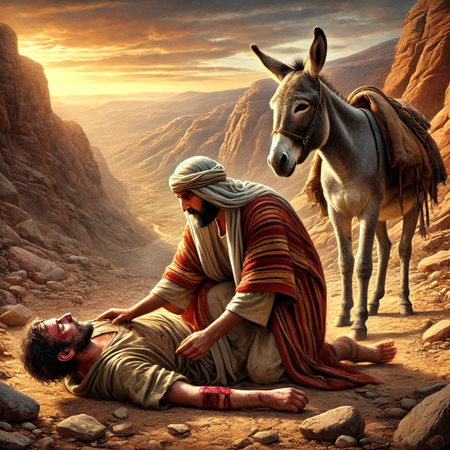
Jesus taught that the distribution system for aid to the poor and hungry consists of the intentional, voluntary acts of individual believers and private communities of faith (churches, synagogues, etc.) giving their time and resources.
He did not teach that government bureaucracies or political entities are God’s conduit for providing charity. Instead, Jesus taught that you are to give your money and time to the less fortunate—it is your personal responsibility to do so.
God does not intend for the government or politicians to use tax revenue as a proxy or substitute for Christian giving.
The current gimmick of saying, “You’re not very Christian,” that some are using to smear their fellow citizens for supporting or voting for politicians who seek to rein in profligate, bloated welfare spending is dishonest and shameful.
Government programs aren’t Christians—individuals are. Government tax revenues are not for the same purposes as the contents of a church collection plate, so labeling government spending priorities as non-Christian is a non sequitur.
In my previous letter I asked the question a lot folks have: If God is real why doesn’t He just do a bunch of magic tricks for everyone all the time so that they will see Him, believe in Him, and love Him?
Well, lets take a bit of a deep dive into the answer.
Maybe God seems ‘hidden’ to our five senses so that folks can choose faith freely, rather than being forced by undeniable proof.
God isn’t some old dude up in the clouds or some alien in outer space – God is spirit, imperceptible to our limited senses.
“God is spirit, and those who worship Him must worship in spirit and truth.” John 4:24
God wants a genuine, personal relationship with us, and He wants us to know him as He is. That requires some effort on our part, as in any human relationship. God doesn’t seek robots or slaves who have no choice but to obey and believe in Him.
God’s hiddenness requires us to seek deeper understanding, to doubt, to wrestle with Him, and to develop faith and patience. It requires us to work on our own character.
But make no mistake, God reveals Himself everywhere and at every moment through the complexity, precise workings, and order of His creation.
Churchianity and the theological status quo should be scrutinized by all people of faith regularly. That is exactly how we got the Reformation.
Is there a New Reformation brewing? It seems so. There is a difference between truth and tradition.
Man-made Christian creeds and doctrines are no longer being blindly accepted as biblical truth just because the Protestant clergy or the Catholic Papacy say so.
The nature of God, heaven, hell, sin, the apocalypse, predestination or free-will, the Rapture, the origins of the universe – all of these ideas and more need solid reexamination to see if the commonly accepted doctrines of men used to explain them measure up to the message of scripture.
The Bible Rebel blog is a resource for those seeking original and curated content, including news and commentary, covering faith, biblical studies and interpretation, and the intersection of politics, culture, and the Bible.
Our Mission
To monitor current news and events related to faith and culture.
To provide an alternative viewpoint to the world’s pervasive climate of darkness, nihilism, and hopelessness for those seeking truth, light, and purpose.
To examine and question the assumptions of religious tradition and provide a resource for information and inspiration for people of faith who have become dissatisfied with an increasingly lifeless and empty ‘churchianity’.
To present the Biblical truths which reveal God’s nature and purposes and proclaim the lifechanging, world-altering, radical message of Yeshua the Messiah – Jesus Christ, our risen Lord and Savior.
At Bible Rebel, this is our one and only creed: Our living God is a loving God and the Bible is His revealed word and will. Our hope and eternal salvation relies entirely on the work of God’s only begotten son, Jesus Christ, who is the way, the truth, and the life.
So, expect some controversial viewpoints and uncomfortable ideas in some of the coming content from Bible Rebel.
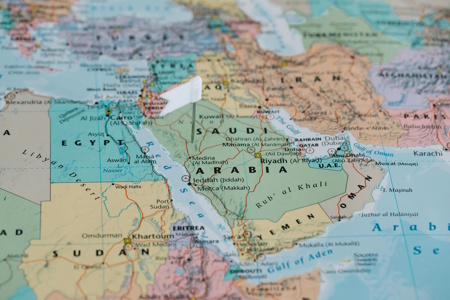
Bible Rebel continues to keep a watchdog’s eye on events in the Middle East. That is not to say that we are watching for any fulfillment of biblical prophecy there, we keep our eyes and ears open to news that affects people of faith from every region around the world.
The Holy Land is of particular interest for three reasons:
It is a geographical crossroads, referred to by some the “Center of the Earth”.
It is also the historical birthplace of the two largest religions of the world; Christianity and Islam, as well as the ‘Father’ of both those religions – Judaism.
It is of major military and strategic importance because of oil production and logistics.
Are the biblical prophecies focusing on geographical locations in the Middle East, especially in and around current-day Israel, relevant to the Church in our times today?
Or will those prophecies only come to pass and be revealed in some future time after the destiny of the Church has been realized? This is a subject Bible Rebel will be exploring in some depth going forward. Stay tuned.
For now, here’s the latest from the Middle East.
Israel Strikes Near Syrian Presidential Palace
Israel conducted an airstrike near Syria’s presidential palace in Damascus, targeting the new Islamist-led government under interim President Ahmed al-Sharaa. The strike aimed to signal Israel’s commitment to defending the Druze minority amid escalating sectarian violence in Syria. From Reuters
US attacks Yemen port again; Houthis launch missiles at Israel
The Houthi-affiliated Al Masirah TV media outlet has reported that seven US strikes hit the Ras Isa oil port in al-Salif district in Hodeidah in the last few hours, where a US strike at the same port last month killed at least 80 people and wounded 150 in one of the deadliest attacks on the country by US forces.
Earlier Friday, the Houthis claimed responsibility for launching two missiles towards northern Israel, targeting the Ramat David military airbase and the Tel Aviv area, as the group continues its military pressure in solidarity with Palestinians under Israeli fire. From Al Jazeera
U.S.-Iran Talks Postponed
A fourth round of talks between the United States and Iran, scheduled to take place in Rome, has been postponed. An Iranian official stated that the new date depends on the U.S. approach, citing contradictory behavior and provocative statements from Washington. From Reuters
Netanyahu calls defeating Israel’s enemies the ‘supreme objective,’ not freeing hostages
Israeli Prime Minister Benjamin Netanyahu said Thursday that defeating Israel’s enemies is more important than securing the release of the remaining hostages in Gaza.
While the prime minister acknowledged that freeing the 59 remaining hostages is a “very important goal,” he described Israel’s fight against its enemies as the “supreme objective” of the war.
“We have many objectives, many goals in this war. We want to bring back all of our hostages,” Netanyahu said. “That is a very important goal. In war, there is a supreme objective. And that supreme objective is victory over our enemies. And that is what we will achieve.” From CNN
Bible Rebel continues to keep a watchdog’s eye on events around the world.
But don’t be overly troubled, remember the words of our Lord in Matthew 24:6-8.
And ye shall hear of wars and rumours of wars: see that ye be not troubled: for all these things must come to pass, but the end is not yet. For nation shall rise against nation, and kingdom against kingdom: and there shall be famines, and pestilences, and earthquakes, in divers places. All these are the beginning of sorrows.
Here’s the latest:
Pakistan Claims It Downed Indian Drone
Pakistan’s army reported shooting down an Indian quadcopter in the Manawar sector of Bhimber, Kashmir, along the Line of Control (LoC). This follows escalating tensions after an April 22 attack in Pahalgam, Kashmir, which killed 26 civilians. India has accused Pakistan of supporting the attackers, leading to retaliatory measures such as suspending the Indus Waters Treaty and closing the Wagah-Attari border. Pakistan responded by shutting its airspace to Indian flights and halting trade. Both nations have increased military posturing, with Pakistan upgrading airbases and India testing anti-ship missiles. From The Times of India
India and Pakistan on War Footing
A terror attack in Kashmir has pushed India and Pakistan closer to conflict. India claims the attack was cross-border terrorism supported by Pakistan and has vowed to retaliate. In response, India suspended the Indus Waters Treaty, depriving Pakistan of crucial water resources. Pakistan condemned this as an “act of war.” Both sides have put their forces on high alert, with low-level clashes occurring along the LoC. The historical dispute over Kashmir continues to fuel tensions, with India revoking Article 370 in 2019 to bring the region under its control, further straining relations. From The Conversation
India-Pakistan Conflict Escalates
Following the Pahalgam attack, India and Pakistan have engaged in tit-for-tat measures, including diplomatic downgrades, trade restrictions, and border closures. India has accused Pakistan of supporting cross-border terrorism, while Pakistan denies involvement and calls for a neutral investigation. Military skirmishes have intensified along the LoC, with both sides exchanging gunfire. The situation remains volatile, with fears of further escalation as both nations bolster their military presence. From Radio Free Europe/Radio Liberty
Atlanta Pastor Apologizes for Remarks on Police Killings
A pastor in Atlanta issued an apology after controversial remarks blaming police killings on disobedience sparked backlash within his congregation and the broader Christian community. From Christianity Today
Aaron Renn’s ‘Three Worlds’ Theory Sparks Debate
Conservative commentator Aaron Renn’s framework for understanding Christianity’s transition from a socially desirable faith to one facing cultural opposition has ignited discussions among evangelicals and critics alike. From Baptist News
Islamic State claims pope’s burial is ‘marketing tool in theological war’ as it gains renewed strength
“The Islamic State has declared Pope Francis’ burial a “marketing tool in a theological war,” asserting that tributes paid to the late pope undermine Islamic beliefs. The terror group is concurrently experiencing a resurgence, raising concerns about its growing strength and influence in the Middle East.” From The Christian Post
Religious ‘nones’ outnumber Catholics and Protestants in Germany
For the first time in modern German history, more Germans identify as religiously unaffiliated than as Roman Catholics or Protestants, according to a new survey. From the Christian Post
India has accused Pakistan of being involved, though Pakistan denies any connection. In response, India has downgraded diplomatic ties, revoked visas for Pakistani nationals, and suspended a crucial water-sharing treaty.
Pakistan has retaliated by canceling visas for Indian nationals, suspending trade, and closing its airspace to Indian aircraft. The situation remains volatile, with both nations exchanging strong statements.
This is very concerning because both India and Pakistan have nuclear weapons.
From the AP article linked above: “India and Pakistan have built up their armies and nuclear arsenals over the years. India was the first to conduct a nuclear test in 1974, followed by another in 1998. Pakistan followed with its own nuclear tests just a few weeks later. The sides have since armed themselves with hundreds of nuclear warheads, missile delivery systems, advanced fighter jets and modern weapons to take on each other.“
This situation is certainly worth putting on your radar. We will keep our readers alerted to ongoing developments.
Bible Rebel continues to keep a watchdog’s eye on news and events from the world of churchianity. In this article, we take a look at the process of choosing a new Pope, which is based on Roman Catholic ceremony and tradition – not scripture.
Papal Ceremonies and Biblical Doctrine
While the Catholic Church bases its teachings on scripture, many papal ceremonies are rooted in tradition rather than biblical doctrine. The conclave, the papal coronation, and the rituals surrounding the election are not explicitly found in the Bible. Instead, they evolved over centuries as part of the Church’s governance structure.
Critics argue that certain practices—such as the vesting of the Pope in elaborate robes and the use of Latin in official ceremonies—reflect historical customs rather than biblical mandates. However, the Church maintains that these traditions uphold continuity and reverence within Catholicism.
The selection of a new Pope is a momentous event, steeped in history and ritual. While the process is not biblically mandated, it remains a defining aspect of Catholic tradition.
The Conclave Process
The election of a new Pope follows a centuries-old tradition rooted in secrecy and ritual. When a Pope passes away or resigns, the College of Cardinals—a body of senior Catholic officials—gathers in Vatican City to elect his successor in a process known as a conclave.
The conclave typically begins 15 to 20 days after the Pope’s death. Cardinals under the age of 80 are eligible to vote, with the number of electors capped at 120. The process takes place in the Sistine Chapel, where the cardinals swear an oath of secrecy before casting their votes.
Each cardinal writes the name of their chosen candidate on a ballot, which is then placed in a ceremonial urn. The votes are counted, and if no candidate secures a two-thirds majority, the process repeats until a consensus is reached. After each round, the ballots are burned, producing either black smoke (indicating no decision) or white smoke (signaling the election of a new Pope).
Once elected, the new Pope is introduced to the world from the balcony of St. Peter’s Basilica, where he delivers his first blessing.