Greater Works Than These – Part 2

Editors note: the guest article appearing here does not necessarily reflect the views of Bible Rebel editors or other guest authors and contributors. Bible Rebel seeks to present a wide range of ideas and viewpoints in order to fulfill our mission to provide resources for “Curious Fearless Faith”. This is the Part 2 in a new series on prayer called ‘Greater Works Than These’ by Steve Sann.

Greater Works Than These – Part 1


John 14:12: Most assuredly, I say to you, he who believes in Me, the works that I do he will do also; and greater works than these he will do, because I go to My Father. Can’t you just hear the squawking when you begin broadcasting you can do greater works? “What—you think you can do greater works than Jesus Christ?!” Yet, that is exactly what the Word of God declares.

So, every Christian in modern times must ask himself this question: “What are these greater works that God would have me to perform?” The evidence is found in Mark 16. Here, Jesus Christ foretold specifically of tongues: it was to be a sign of the future believers. It would be a sign simply because it would be a uniquely new work—one not yet available until after Christ’s ascension:

Mark 16:12: And these signs will follow those who believe: In My name…they will speak with new tongues. So, what then qualifies tongues as truly a greater work? Because when we speak, we bring to pass multiple accomplishments simultaneously. By means of tongues, God was able to incorporate into one work nearly all of the greatest works a man can do for God—and perform them perfectly, and simultaneously! For example:

  • praying perfectly,
  • making intercession for others,
  • receiving the mysteries of God,
  • praising and worshipping Him,
  • bonding with Him,
  • acquiring confirmation that you are a son of God…

…and this summarizes only some of the benefits. These are the greatest works believers perform before God. A single work of this magnitude was previously unachievable.

If Jesus Christ called it a “greater work”, wouldn’t that infer that he wished speaking in tongues were available in his day? And why wouldn’t he? Yet, it could not become available until he himself made the ultimate sacrifice.

Take a moment to recall some of what we would think are the super-cinematic “20th Century Fox” greatest works of Jesus Christ: raising the dead, giving sight to the blind, commanding devils out. Water into wine. Walking on water. Yet, above all these, Jesus Christ prized speaking in tongues as a “greater work.” Either we have not yet risen up to realize the raw power of tongues, or just perhaps our value scale of “greatness” is skewed.

But this we know to be certain—looking ahead to the coming of speaking in tongues, Jesus Christ foresaw its impact to be of such enormity that it was to be a “game changer” for the Church. Does it not seem astonishing to you how that which Jesus Christ so highly esteemed, his ministers today have made least significant?

But now, God has preserved this for our time, your tool to rely on throughout life’s travels. Analogous to the revolutionary cellular and internet technologies of recent decades, tongues is a convenience and a time-saver, which as you familiarize yourself with it, becomes easier and more dependable. It is truly a spiritual technological advancement. And like all newer and greater technologies, its purpose is to carry out a greater work.
Watchdog Alert: The Bible As History

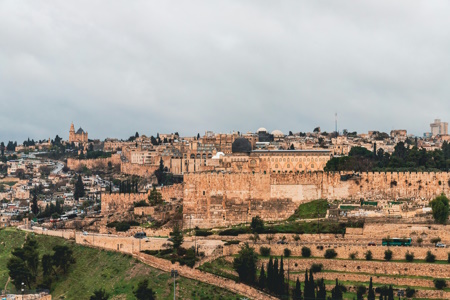
Photo via Виктор Соломоник at pexels.com

Bible Rebel keeps a watchdog’s eye on discoveries in biblical archaeology and brings the information to our readers. Here are some key discoveries and why they support the biblical record.

Dam Wall from the Time of King Joash at the Pool of Siloam (~805-795 BCE)

A large dam wall in the City of David, near the Pool of Siloam, has been excavated and dated via carbon-14 to about 805-795 BCE. The walls are substantial: ~21 meters long, ~12 meters high, ~8 meters thick. Bible Archaeology Report

Why it supports biblical history:

  • The Bible describes several construction/repair projects by Judahite kings; a major water-infrastructure project fits in with what one might expect of a centralized Judah in that era.
  • The dam would have helped manage water supply in times of dryness and flooding, which matches other environmental/climate evidence from the region showing arid conditions with occasional flash floods. Bible Archaeology Report
  • It gives physical confirmation of large scale civic/royal activity in Jerusalem in the early 8th century BCE.

Clay Seal (“Bulla”) Inscribed with “Yeda‘yah son of Asayahu” (7th-6th century BCE)

A clay seal impression, or bulla, reading “Belonging to Yed[a‛]yah, son of Asayahu”, from the late 7th / early 6th century BCE. Found via the Temple Mount Sifting Project in soil removed from the Temple Mount area. Bible Archaeology Report

Why it supports biblical history:

  • The names “Asayahu” (and variations) appear in the Hebrew Bible, particularly in connection with King Josiah: 2 Kings 22:12; 2 Chronicles 34:20. Bible Archaeology Report
  • The bulla confirms that these names (and presumably persons with these names or offices) were in use in Judah at the appropriate period.
  • The preservation of writing/sealing activity supports the idea that Judah had administrative bureaucracies with literacy in the late monarchic period.

Olive and Grape Traces Beneath the Church of the Holy Sepulchre / Mount Calvary (1st Century AD Garden Context)

Under the floor of the Church of the Holy Sepulchre, archaeologists found about 2,000-year-old olive pits (stones), grape pips, pollen evidence, and remains of stone walls or features consistent with cultivation. These lie beneath a basilica, in an area associated with Golgotha / Mount Calvary, part of Jerusalem’s ancient quarter. The Times+1

Why it supports biblical history:

  • The Gospel of John (and other Gospels) mention that Jesus was crucified at a place called Golgotha, “place of a skull,” outside / near a garden and tomb. The presence of a garden (olive and grape cultivation) at that location in the 1st century AD gives archaeological plausibility to that Gospel description. The Times
  • It shows that agricultural use was present in that area just before or around the time of Jesus, rather than all being occupied by other structures.

Identification of Widespread Literacy / Use of Seals in Jerusalem ca. 2,700 Years Ago

An ancient seal discovered in the City of David area (Jerusalem), dating to the First Temple period (approx 700-600 BCE), evidences artistic craftsmanship and inscription. It is taken as evidence that reading, writing, and use of official seals were more widespread than some earlier models of Judahite society assumed. GB News

Why it supports biblical history:

  • The Hebrew Bible presumes certain levels of bureaucratic administration — e.g. prophets, kings, scribes, royal decrees, temple officials, etc. Widespread literacy or at least administrative writing (seals) is a necessary component for those functions.
  • It helps move faceless administrative structures from being purely literary imagination to part of the archaeological record.

Greater Works Than These – Part 1

Editors note: the guest article appearing here does not necessarily reflect the views of Bible Rebel editors or other guest authors and contributors. Bible Rebel seeks to present a wide range of ideas and viewpoints in order to fulfill our mission to provide resources for “Curious Fearless Faith”. This is the first part in a new series on prayer called ‘Greater Works Than These’ by Steve Sann.


The Prayer of the Prophets

“Greater works than these he will do…”

Now, here is a challenging subject to ponder: Today we have tongues as a tool to pray for unforeseeable matters in advance.

But, how did Jesus Christ and the prophets before him make intercession for future events that were beyond their sense knowledge to know anything about? The answer is apparent: they had to rely on revelation, as speaking in tongues became available only after Christ’s ascension. Until that time, when God requested prayer for matters beyond a believer’s senses perception, He had to reveal it with word of knowledge and word of wisdom.

Once details were made known to the believer, prayers could be offered via the understanding. So, before Pentecost, prayer for the unknown was limited by the recipients’ ability to first believe to receive the revelation.

Not so today. Praying by the spirit makes prayer as easy as prayer can be, and yet still be called “prayer!” Now we can pray with the same accuracy and precision that Christ and the prophets were able to achieve by revelation, yet accomplish it “passively” in tongues. This is because the “Christ in you” is actively originating the prayer, and is aware of all needs. As accurate as Christ’s revelation is, so is your prayer in tongues. Likewise, unless your revelation receptivity rivals that of the prophets, speaking in tongues might be the choice for you! Let the spirit obtain the guidance—we need only to speak in tongues with faith for perfect intercession to be successfully made!

Why couldn’t Jesus Christ nor the greatest of Old Testament prophets ever speak in tongues? Because it was simply not available. Only after Jesus Christ was seated at God’s right hand—and we with him—did speaking in tongues become available to the church. Foreseeing this, Jesus Christ declared specifically that we today would do even greater works than he himself was able to perform—a claim that would be censured as blasphemous today, if Christ had not said it himself!

Your Life And What Comes After (2): God’s Grand Plan Part 2

We have a function to perform and a part to play, each one of us individually and all of us together as God’s people, in God’s Grand Plan.

God’s Desire

God’s desire is to dwell together with his children forever in His perfect creation.

Our job in that relationship is to love and glorify our Heavenly Father and to take care of and add value to the creation He has given us.

The original creation and state of mankind was in perfect harmony and fellowship with the Creator and all was well with the universe.

The Rebellion

Then disobedience, rebellion, and sin cut mankind (Adam and Eve) off from their relationship with God.

Adam and Eve hid from God in shame. God’s perfect garden of delight was ruined, brought forth thorns and weeds, and was no longer the joyous place for Adam and Eve to tend and enjoy.

So Along Came Jesus

Then, after the fall and ruin, the whole purpose and plan of God is to restore that original relationship with His people and redeem the creation from the wreck of death and decay brought about by the rebellion.

The way he has done and is doing that is through His only begotten son, Jesus Christ, who through his love and obedience has made it possible for us to once again live God’s original purpose.

So What About Us?

What is our part in all of this today? Where do you fit in?

Let’s consider this idea: Our purpose is to help God in bringing about the redemption of His people and the final restoration of His creation.

Let me say that again with a slight variation: YOUR purpose is to help God in bringing about the redemption of His people and the final restoration of His creation.

So, we can either believe we are just tiny specks of dust with no purpose or meaning floating around aimlessly in a cold and dark universe – or we can believe that we are actually workers together with the Creator of the universe to accomplish a Grand Plan with an everlasting purpose.

I choose the latter. The challenge is to understand and believe it to the point of action. How do we do that? We’ll dig deeper in the next post.

Your Life And What Comes After: God’s Grand Plan Part 1

Your Life And What Comes After (1): God’s Grand Plan

Too many times, folks seeking purpose in their lives come up short in finding the answers they’re looking for. Why?

I think most of the time it’s because you can’t really understand the purpose of your individual life unless and until you gain some understanding of, and appreciation for, what I call God’s Grand Plan.

What is God’s Grand Plan?

Well, let’s let the Word of God speak for itself:

Genesis 1:27-28 – So God created man in His own image; in the image of God He created him; male and female He created them. God blessed them and said to them, “Be fruitful and multiply, and fill the earth and subdue it; rule over the fish of the sea and the birds of the air and every creature that crawls upon the earth.” (Berean Standard Bible)

First, we are the only creatures that carry the image of God. We are to be like Him, and we are to reflect who He is to the creation—which is to glorify our Creator.

Second, we are to be fruitful and multiply, caring for and adding value to His creation, and filling it with more and more of His image-bearers so that God is glorified more and more.

God created man not only to reflect His image and add value to His creation, but also to have a relationship with Him. We are to be companions of and have fellowship with the Creator of the universe.

That was God’s original intention. Then it all went wrong because of man’s disobedience and refusal to submit to the clear and loving will of his Creator.

Now What?

Now God’s Grand Plan is to restore His people and His creation to their original purpose. Paradise was lost; it is to be regained. Everlasting life with God was lost; it is to be regained.

But our original purpose remains the same today, even in a fallen state of sin, death, darkness, and rebellion: to glorify God and add value to His creation.

What Does That Have To Do With My Life?

If you’ve ever been part of a team or organization, you know that once you get a basic understanding of the ‘big picture’ goals and purpose of the team or organization, your part in it begins to make more sense, and you get a clearer vision of what you need to do individually.

We’ll start to look into what all of that means—and what it looks like in real life—in the next part of this series.

What Is The ‘Seven Mountain Mandate’?

I’ve been hearing a lot about the Seven Mountain Mandate recently, and since I wasn’t 100% clear about exactly what the 7MM is I asked Mr. ChatGPT, and here’s some of what he/it told me:

The Seven Mountain Mandate is a teaching within some parts of modern charismatic and evangelical Christianity that claims Christians are called to take influence or leadership over seven key areas of society in order to bring about cultural transformation.

The idea was popularized in the 2000s by leaders such as Loren Cunningham (founder of Youth With A Mission, YWAM) and Bill Bright (founder of Campus Crusade for Christ, now Cru). They both described having received visions in the 1970s that emphasized Christians should impact seven “mountains” or “spheres” of culture:

  1. Religion – Faith, spirituality, and the church.
  2. Family – Marriage, parenting, and home life.
  3. Education – Schools, universities, and learning systems.
  4. Government – Politics, law, and public policy.
  5. Media – News, journalism, and information outlets.
  6. Arts & Entertainment – Music, film, sports, and culture.
  7. Business (or Economy) – Commerce, finance, and work.

Core Idea

Proponents believe that by gaining influence in these seven areas, Christians can help “bring the kingdom of God to earth,” prepare for revival, and resist moral decline in society. Some see it as a strategy for evangelism and discipleship at a societal level, not just individual.

Okay, count me as a reluctant skeptic about all of that because I’m not convinced it fits well with scripture.

My primary objection to the Seven Mountain Mandate theological system is the belief that “…Christians can help ‘bring the kingdom of God to earth’…”.

Yeshua, our Messiah and his Father, God, won’t require any help when the time comes to usher in the Kingdom and what follows.

Subscribe To Our Free Monthly Newsletter – What’s Coming In September/October

Please take a minute to subscribe to the Bible Rebel monthly newsletter – it’s free and will keep you up to date on all our articles, videos, and features.

Our Mission at Bible Rebel

  1. To monitor current news and events related to faith and culture.
  2. To provide an alternative viewpoint to the world’s pervasive climate of darkness, nihilism, and hopelessness for those seeking truth, light, and purpose.
  3. To examine and question the assumptions of religious tradition and provide a resource for information and inspiration for people of faith who have become dissatisfied with an increasingly lifeless and empty ‘churchianity’.
  4. To present the Biblical truths which reveal God’s nature and purposes and proclaim the lifechanging, world-altering, radical message of Yeshua the Messiah – Jesus Christ, our risen Lord and Savior.

At Bible Rebel, this is our one and only creed:
Our living God is a loving God and the Bible is His revealed word and will.
Our hope and eternal salvation relies entirely on the work of God’s only begotten son, Jesus Christ, who is the way, the truth, and the life.

So, expect some controversial viewpoints and uncomfortable ideas in some of the coming content from Bible Rebel.

Coming in September and October

Starting a new series called the “Your Life and What Comes After” series.

More in-depth content on deeper biblical studies and theological issues.

You can find all of the current Bible 101 episodes and One-Minute Mini Messages here on our YouTube Channel, and you can subscribe to our YouTube channel here.

We’ll also be continuing our regular features, guest articles, and series:

  • Rethinking The Rapture
  • They Said It
  • Guest articles
  • And more…

Watchdogs

As always, we’ll be keeping a watchdogs eye on all of the latest political, religious, biblical archaeology, and cultural news and events from around the world and bringing to you in bite-size chunks to keep you informed.

Subscribe to the Bible Rebel monthly newsletter here 

Is Charlie Kirk In Heaven Right Now?

I understand how comforting it is to believe that our love ones who have passed away are alive and well in heaven right now. But is that what the scriptures teach and tell us?

After the brutal public assassination of Charlie Kirk last week, I saw several of his well-intentioned friends and colleagues on TV reassure their viewers that Charlie wasn’t really dead at all, but that he was watching over us from heaven.

But is that what the Bible teaches us about our assurance of everlasting life – that we don’t really die, but rather just immediately transition from this world to the next at the moment of death.

Recall the account in the Garden of Eden and the words of the serpent in Genesis after God’s warning about eating the forbidden fruit:

Genesis 2:17 (KJV):
“But of the tree of the knowledge of good and evil, thou shalt not eat of it: for in the day that thou eatest thereof thou shalt surely die.”

The meaning here wasn’t just that Adam and Eve would die spiritually on that day, but that there was a judgement of actual death and that their lives would one day end rather than going on indefinitely.

Death was a curse then, and it is now. One of the first lies of the serpent was this:

Genesis 3:4-5 (KJV):
“And the serpent said unto the woman, Ye shall not surely die:  For God doth know that in the day ye eat thereof, then your eyes shall be opened, and ye shall be as gods, knowing good and evil.”

Is the truth “Ye shall not surely die…”, or is it that death is a curse and and enemy to be despised?

Is the Christian hope that each believer will gain immediate entrance into ‘heaven’ at the moment of death – or is it that we will all be resurrected from death and decay, or changed if still living at the time, together in God’s determined time, and enjoy eternal life as the family of God in a redeemed creation?

I believe that the scriptures plainly teach the latter, not the former, and that rightly dividing the Word of God on this important truth makes a difference in how we live today.

Stay tuned to Bible Rebel as we dig deeper (no pun intended). 🙂

They Said It: In Support Of Premillennialism

Here are four famous quotes that express or support Premillennialism (the belief that Christ will return before a literal 1,000-year reign on earth, as described in Revelation 20):

Justin Martyr (100–165 AD) – Early Church Father

“But I and every other completely orthodox Christian feel certain that there will be a resurrection of the flesh, followed by a thousand years in the rebuilt, embellished, and enlarged city of Jerusalem, as was announced by the prophets Ezekiel, Isaiah, and others.”
Dialogue with Trypho, Chapter 80


Irenaeus of Lyons (130–202 AD) – Early Church Father

“For in as many days as this world was made, in so many thousand years shall it be concluded. And for this reason the Scripture says: ‘Thus the heaven and the earth were finished, and all their adornment. And God brought to a conclusion upon the sixth day the works that He had made; and God rested upon the seventh day from all His works.’ This is a history of the things formerly created, and a prophecy of what is to come. For the day of the Lord is as a thousand years; and in six days created things were completed: it is evident, therefore, that they will come to an end at the six thousandth year.”
Against Heresies, Book V, Chapter 28


George Eldon Ladd (1911–1982) – Evangelical Theologian

“Premillennialism is based on the exegesis of Revelation 20:1–6, which, if interpreted literally, teaches that Christ will come again before the millennium and will reign on earth with His saints for a thousand years.”
The Meaning of the Millennium: Four Views


John F. Walvoord (1910–2002) – Dispensational Premillennialist

“The premillennial interpretation is the only view that does justice to the plain statements of Scripture. When taken in their ordinary meaning, the promises of the Old Testament to Israel and the prophecies of the kingdom of God find their fulfillment only in a future literal reign of Christ on earth.”
The Millennial Kingdom

Rethinking The Rapture: Historical Origins Of Rapture Theology

Just a reminder – John Nelson Darby was not an author of scripture, and Hal Lindsey’s The Late Great Planet Earth (1970) and Tim LaHaye’s Left Behind series are not books of scripture.

The doctrine of the Rapture—the belief that Christians will be suddenly “caught up” to meet Christ in the air before a time of tribulation on earth—has a complex history. Its origins are more recent than many assume. Here’s the breakdown:


Biblical Roots (1st Century)

  • The idea comes mainly from 1 Thessalonians 4:16–17, where Paul says believers will be “caught up” (harpazō in Greek, later translated in Latin as rapiemur, “we shall be snatched up”).
  • Early Christians saw this as part of the Second Coming of Christ, not as a separate secret event. The expectation was one climactic return of Christ, not two stages.

Early Church & Medieval Period

  • Church Fathers like Irenaeus, Augustine, and Chrysostom interpreted these passages within the framework of a general resurrection and final judgment, not a pre-tribulation rapture.
  • The dominant view for centuries (Catholic, Orthodox, and later Protestant Reformers) was amillennial (symbolic millennium) or postmillennial (Christ returns after a golden age), with no idea of a sudden, secret removal of believers.

Rise of Premillennialism (17th–18th Century)

  • In the wake of wars, plagues, and upheavals, some Protestant groups revisited literal interpretations of Revelation and Daniel.
  • Joseph Mede (1627) was influential in reviving premillennialism in England, but still didn’t propose a two-phase coming.
  • Some fringe sects speculated about believers escaping tribulation, but it wasn’t mainstream.

John Nelson Darby & Dispensationalism (1830s)

  • The modern Rapture doctrine, especially the pre-tribulation Rapture, is most closely tied to John Nelson Darby (1800–1882), leader of the Plymouth Brethren movement in Britain.
  • Darby developed dispensationalism, which divided biblical history into ages (dispensations). He taught that the church would be secretly taken before the Great Tribulation, leaving Israel and the world to face judgment.
  • His views spread widely in Britain and North America.

Popularization in America (Late 19th–20th Century)

  • The Scofield Reference Bible (1909) systematized Darby’s dispensational teaching, embedding the Rapture into evangelical theology in the U.S.
  • Bible conferences, prophecy seminars, and later mass media (books, radio, film) spread the idea.
  • The Cold War era (1940s–80s) fueled Rapture expectations amid fears of nuclear war and global unrest.

Modern Influence

  • Best-selling books like Hal Lindsey’s The Late Great Planet Earth (1970) and Tim LaHaye’s Left Behind series (1995–2007) brought the Rapture into popular culture.
  • Today, it remains central in many evangelical and Pentecostal traditions, though Catholic, Orthodox, Anglican, and Reformed traditions largely reject it as unbiblical or a modern innovation.

In summary:
The concept of believers being “caught up” comes from Paul’s letters, but the specific doctrine of a pre-tribulation Rapture as a distinct, secret coming of Christ originates with John Nelson Darby in the 1830s. It spread through dispensationalism, the Scofield Bible, and American evangelical culture.


Rethinking The Rapture: Introduction

Rethinking The Rapture: Questions

Rethinking The Rapture: More Questions

Rethinking The Rapture: N.T. Wright’s ‘Farewell to the Rapture’

Rethinking The Rapture: What 1 Thessalonians 4:16-17 Doesn’t Say

Rethinking The Rapture: Millions Of Christians Were Not Delivered From Wrath

Rethinking The Rapture: What Does ‘Delivered From Wrath’ Mean?

Rethinking The Rapture: What Does ‘Delivered From Wrath’ Mean? Part 2

Rethinking The Rapture: In The Twinkling Of An Eye

Rethinking The Rapture: Matthew 24:40-42

Rethinking The Rapture: N.T. Wright’s ‘Farewell to the Rapture’ Redux

Rethinking The Rapture: Send In The Clouds?

Rethinking The Rapture: Another Look At N.T. Wright