Below is a great quote from Dan Kent that summarizes how we can plug into God’s plan and how each of us can discover our individual purpose and talents in the process.
“Don’t stand around waiting for God to act, or for God to win your battles for you: don’t stand around watching for what God might do: rather, show God what you can do. Gain wisdom, gather knowledge, develop skills, give the Lord something to use as he rumbles through the earth unfolding his glorious will.” Dan Kent – thatdankent.com
The Next Leg of Our Journey
As we go forward in this journey and you look to better understand ‘Your Life and What Comes After’ we’re going to be discussing three exciting topics:
The Existence Miracle
The Human Miracle
The You Miracle
Before we dive in, ask yourself this question: Do you need to see the person who built the beautiful grandfather clock in order to know that someone built it?
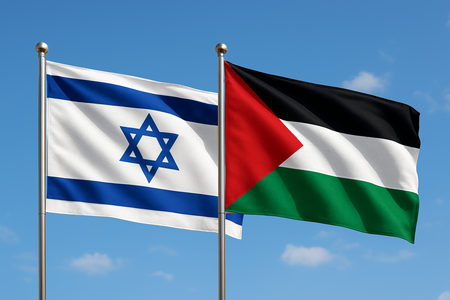
Israel Approves 19 New Settlements in the West Bank
Israel’s government officially approved 19 new Jewish settlements in the occupied West Bank, including 11 newly established ones and recognition of previously unauthorized outposts. This move significantly expands settlement territory and draws criticism from Palestinian advocates and international observers for further complicating peace efforts. From France 24
But what is the ‘West Bank’ historically and why does it matter today?
Biblical History
The West Bank corresponds largely to the biblical regions of Judea and Samaria. It was inhabited by ancient Israelites and is central to the narratives of Abraham, David, Solomon, and the prophets. Jerusalem, Hebron, Bethlehem, Shiloh, and Shechem are all located in or adjacent to the area.
Control passed through many empires: Assyrian, Babylonian, Persian, Greek, and Roman. After Jewish revolts against Rome (66–73 AD, 132–135 AD), many Jews were exiled, though a continuous Jewish presence remained.
Modern History
During the 1948 Arab-Israeli War, Jordan captured and later annexed the West Bank.
The name “West Bank” comes from its location west of the Jordan River.
Jordan’s annexation was recognized by only a few countries.
Jews were expelled from areas such as East Jerusalem and Hebron, and Jewish holy sites were restricted.
Palestinians in the West Bank were granted Jordanian citizenship.
Israeli Control (1967–Present)
In the 1967 Six-Day War, Israel captured the West Bank from Jordan.
Israel has controlled the territory since then, though it did not formally annex most of it.
Jewish settlements were established, beginning in the late 1960s.
Palestinians sought self-determination, leading to uprisings (Intifadas) in 1987 and 2000.
Why it Matters
The West Bank is disputed territory under international law. Palestinians seek it as the heartland of a future Palestinian state. Israel cites historical ties, security needs, and unresolved borders.
The region remains fragmented politically and geographically. Tensions continue over settlements, security, governance, and final borders.
There’s a story about a guy named Lucas who worked for a big company that had a plan, a way to help folks in towns and villages all over the world.
At first, Lucas followed the plan simply because it was there. The path was marked, the steps were clear, and the purpose was larger than any one person—build, serve, and move forward together. He didn’t question it much; there was comfort in knowing where to place his feet and confidence in being part of something that mattered beyond his own small concerns. Each day, he worked alongside others who shared the same direction, all moving toward a common goal.
Over time, however, Lucas began to notice where his hands naturally lingered and where his heart felt most engaged. While everyone followed the same general plan, his attention kept returning to certain tasks—listening when others struggled, solving problems no one else wanted to touch, encouraging those who had fallen behind. None of this pulled him away from the shared purpose; instead, it deepened his place within it. He realized that the plan wasn’t meant to erase individuality but to give it room to emerge.
In the end, Lucas understood that his personal purpose had not been something separate waiting to be discovered somewhere else. It had been revealed to him through faithful participation in the larger mission. By committing himself fully to the shared direction, he found the unique role he was meant to play—distinct, meaningful, and perfectly aligned with the purpose that had guided him all along.
Lucas discovered the secret to finding one’s personal purpose in life: plug into Gods grand plan and purpose and you will find your special destiny – the life that you are meant to live, and the life that makes you the best you.
Here are five things you can do daily to plug in to God’s grand plan:
Seek God first in prayer Matthew 6:33 (KJV):
“But seek ye first the kingdom of God, and his righteousness; and all these things shall be added unto you.”
Beginning each day in prayer is a direct connection with God and His purposes.
Anchor yourself in Scripture Psalm 119:105 (KJV):
“Thy word is a lamp unto my feet, and a light unto my path.”
The Bible gives us daily guidance, helping us to better understand and walk in His purposes.
Practice obedience in small things Luke 16:10 (KJV):
“He that is faithful in that which is least is faithful also in much: and he that is unjust in the least is unjust also in much.”
Faithfulness in everyday choices is how God shapes you for greater responsibility and purpose.
Love those around you John 13:34–35 (KJV):
“A new commandment I give unto you, That ye love one another; as I have loved you, that ye also love one another. By this shall all men know that ye are my disciples, if ye have love one to another.”
Loving others is one of the clearest ways God’s purpose is made visible through your life.
Examine your life with gratitude, and make changes if you need to Psalm 139:23–24 (KJV):
“Search me, O God, and know my heart: try me, and know my thoughts: And see if there be any wicked way in me, and lead me in the way everlasting.”
Daily reflection keeps your heart humble, your conscience clear, and your walk in line with God’s will.
As you live plugged in to God’s grand plan, you’ll be amazed and delighted at the doors He opens for you and the wonders He reveals to you!
I had a friend named Adriana back in the day. One day at school, Adriana announced that she had a new goal: she wanted to learn how to ski. That Saturday morning, she went to a sporting goods store, bought skis, boots, and poles, and signed up for lessons.
The very next day, Adriana slipped on the sidewalk, fell, and broke her ankle.
The next time I saw her, she had a cast up to her shin and was walking on crutches. I asked her if skiing was still part of the plan.
“Of course it is,” she said. “But now my goal is for my foot to heal—then I’ll learn how to ski.”
That’s a pretty good picture of how God’s grand plan works.
The Plan Didn’t Change—The Path Did
When Adam and Eve rebelled, they shattered their perfect relationship with God and threw His good creation into chaos.
Scripture puts it this way:
Genesis 3:17b–19
Cursed is the ground because of you; through painful toil you will eat food from it all the days of your life.
It will produce thorns and thistles for you, and you will eat the plants of the field.
By the sweat of your brow you will eat your food until you return to the ground, since from it you were taken; for dust you are and to dust you will return.
But here’s the key: humanity’s rebellion didn’t cancel God’s purpose. It didn’t force Him to scrap the plan. It only changed the route.
What Now?
The original purpose still stands—but first, the “broken ankle” has to be healed.
Everything in the Bible after the big rebellion is the story of God fixing what was broken. He does that by sending His Son, Jesus Christ, to restore the relationship humanity destroyed and to bring creation back on track.
Our purpose hasn’t disappeared. We were still made to reflect God’s image, take care of His creation, and live in real relationship with Him—to walk with Him, talk with Him, and know Him as a loving Father.
But now, there’s more.
A New Layer of Purpose
If you follow Jesus, you don’t just benefit from restoration—you’re recruited into it.
We now share in God’s mission of bringing people back to Himself.
2 Corinthians 6:1
We then, as workers together with him, beseech you also that ye receive not the grace of God in vain.
Let that sink in. God invites ordinary people—people like you and me—to participate in His rescue plan. He lets us play a role in restoring His family and preparing us all for our true home: a renewed heaven and earth.
2 Corinthians 5:18–20
And all things are of God, who hath reconciled us to himself by Jesus Christ, and hath given to us the ministry of reconciliation;
To wit, that God was in Christ, reconciling the world unto himself, not imputing their trespasses unto them; and hath committed unto us the word of reconciliation.
Now then we are ambassadors for Christ, as though God did beseech you by us: we pray you in Christ’s stead, be ye reconciled to God.
That’s not passive faith. That’s purpose with skin on it.
So what does that actually look like in everyday life? How do we live as God’s mirrors in the real world?
The Bible teaches that God created people on purpose and for a purpose: to know Him, reflect His image, take care of His creation, live in real relationship, and bring Him glory. Not because He needed us—but because He chose to share His life, love, and purposes with us.
Let’s break this down.
God Made Us for Relationship
Does God enjoy relationships—connection, conversation, presence—like we do? Absolutely. We’re wired that way because we’re made in His image.
God wants people to spend time with Him. That means talking to Him, listening to Him, and bringing Him into everyday life—not just showing up once in awhile, but walking with Him daily.
God Made Us to Reflect Him
Genesis 1:27 “So God created mankind in his own image.”
1 John 4:8 “God is love.” (And love requires people, not objects.)
Matthew 22:37–39 “Love the Lord your God… and love your neighbor as yourself…”
People were created to reflect who God is and what He’s like in the world. That reflection shows up through our ability to love, reason, create, choose, and care. When we live this out, we act as living mirrors of the Creator.
God Made Us Stewards of Creation
People weren’t created to exploit the world, but to rule responsibly under God’s authority.
Genesis 1:28 “Fill the earth and subdue it… rule over every living creature…”
We take care of God’s creation by protecting it, cultivating it, and adding value—starting with our homes and families, and also moving outward to our communities and the world.
God Made Us for His Glory
Our lives are meant to point beyond ourselves and toward the greatness of God. His glory isn’t about ego—it’s about truth being seen clearly.
Isaiah 43:7 “Everyone who is called by my name, whom I created for my glory.”
1 Corinthians 10:31 “Whether you eat or drink… do all to the glory of God.”
Genesis 1:27–28 “So God created man in his own image, in the image of God created he him; male and female created he them. And God blessed them, and God said unto them, Be fruitful, and multiply, and replenish the earth, and subdue it: and have dominion…”
The Before and the After
Here’s the hard truth: there’s a before and an after to God’s design for humanity.
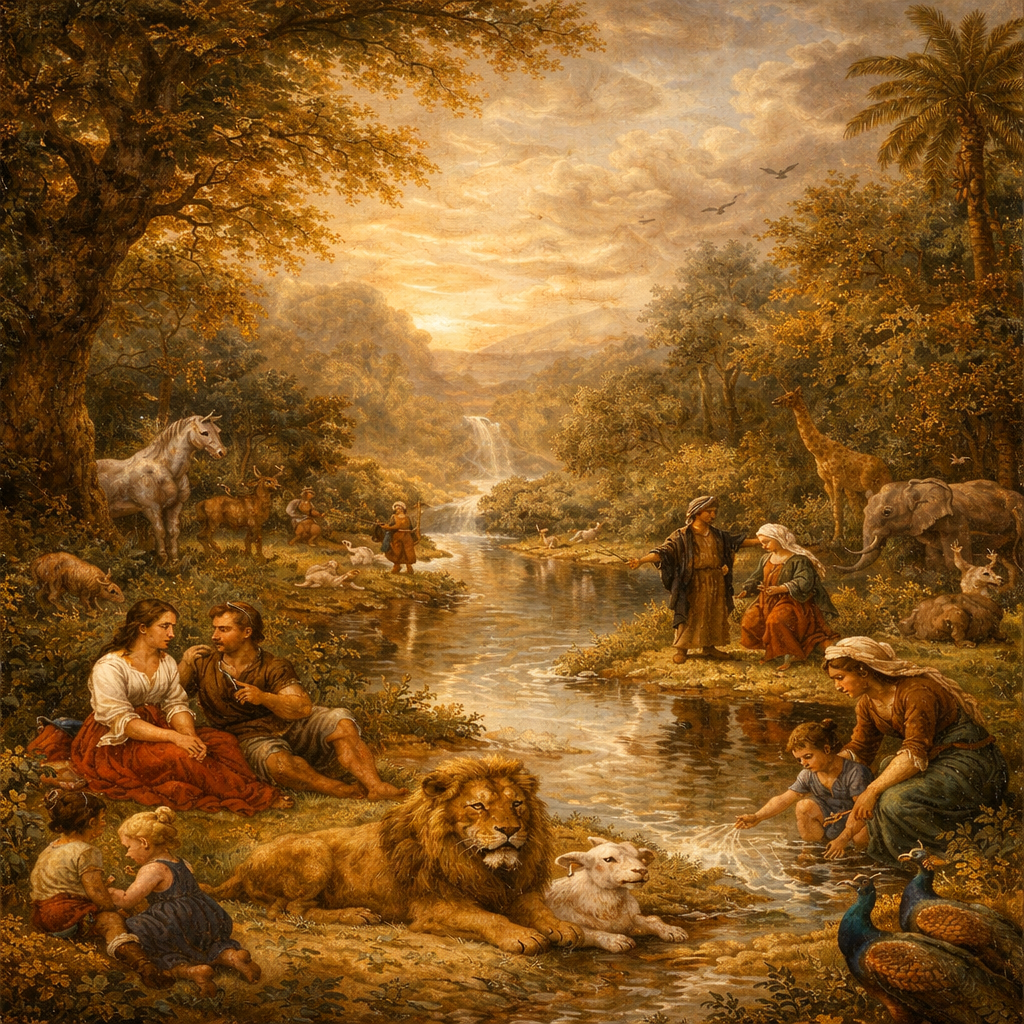
The before shows Adam and Eve living in perfect harmony—with God, with each other, and with creation.
The after shows rebellion. Disobedience. Separation. Everything breaks—and that broken reality is the world we now live in.
So what happens to God’s original purpose? Is it abandoned? Different somehow?
That’s the next question we have to face—and that’s exactly where we’re headed next.
Why did the man in our story build a house? Because he wanted to use his carpentry skills, show his ability at house-building, and—most importantly—create a place to share with his family, a place they could call their own.
He built a home where they could live in and enjoy life together. His children could arrange their own rooms and paint the walls their favorite colors. His wife could plant and care for a garden. They could put up a swing set or play volleyball with friends out in the big backyard.
They could add rooms and other spaces as needed, build a treehouse in the big oak tree out front, plant more trees and shrubs around the property, and watch them grow over time. They could add value to the home that was already built.
The man’s home was a workspace, a playground, and a wonderful place for him and his family to live together.
That is why the man built his house—to be a home.
And that is why God created the universe—to be a home for His family.
What Does God Want?
God desires a family to love—and to love Him in return. The world is the home God built for His family. We are the family with whom our Heavenly Father seeks to share His love, life, and goodness.
Ephesians 1:4–5 (KJV) According as he hath chosen us in him before the foundation of the world, that we should be holy and without blame before him in love: Having predestinated us unto the adoption of children by Jesus Christ to himself, according to the good pleasure of his will…
There it is again: “the good pleasure of his will.” God created the universe because it pleased Him to build a home for the family He desires.
And that family is us—you and me. We are the objects of the Creator’s endless, limitless love.
So What?
Now we know what God’s purpose in creating everything was—and still is. But what about us? What about you and me?
How do we fit into God’s grand plan and purposes? What is our purpose, and how is it connected to God’s purpose?
We will dig into the answers to those questions—so stay tuned.
Here are four awesome quotes about the sixth book of the Bible, Joshua.
Origen of Alexandria (3rd century)
“Joshua, the son of Nun, is a figure of Jesus Christ; for he leads the people into the promised land, as Jesus leads believers into the kingdom of heaven.” — Homilies on Joshua
Augustine of Hippo (4th–5th century)
“It was not Moses, but Joshua, who led the people into the land of promise—showing that the Law brings us to the border, but grace brings us in.” — Sermons on the Old Testament
John Calvin (16th century)
“In the victories of Joshua, God displayed that the land was given not by human strength, but by His own hand and promise.” — Commentary on the Book of Joshua
Matthew Henry (17th–18th century)
“Joshua’s book is a record of God’s faithfulness in the performance of His promises, and of Israel’s duty in the enjoyment of them.” — Matthew Henry’s Commentary on Joshua
There was a man several years ago who moved with his family to an area of the country where he had never lived before. He was a total stranger in the new town.
The man was a skilled carpenter by trade, but no one in the entire county knew that—or anything else about him.
After living in a small rented cottage with his wife and children for a few months, the man set about building a new house in which to live.
He took his time and worked hard and carefully on the house because he wanted the final result to reflect his great skill and workmanship. He used quality woods, such as cedar and fir, because only the very best materials would do for his new home.
After a year or so, he finished building the house, with his family name in magnificent carved oak set above the front door as a finishing touch. It was beautiful. In fact, it was the most beautiful house in the entire area. People would stop as they passed by to look at it, and they were amazed at the man’s skill and wisdom in house-building.
Now everyone for miles around in that county knows who the man is, and his name has become famous there.
God Builds a House
So, why did God create the universe and everything in it, including you and me?
To answer that question, we should look at what God Himself says. One of the main ways God speaks to us is through the Bible, so let’s look there.
Psalm 19:1 (KJV) The heavens declare the glory of God; and the firmament sheweth his handywork.
God made the whole universe and everything in it to show who He is—to display His glory, power, wisdom, and love. Why? Because it pleased Him to do so.
And because He wanted to share His creation with someone. More on that to come.