Two things you can do today to make your life a little better.
Watchdog Alert: What’s Happening With The Catholics

Bible Rebel keeps a watchdog’s eye on news and events from the world of faith and religion and brings that content to our readers.
Vatican green-lights closure of historic Wisconsin parish
The Vatican has authorized the Diocese of Green Bay to close St. Boniface, a parish founded in the 1850s, despite parishioners’ efforts—including raising $2 million and launching a GoFundMe—to save it. The building dates to 1886. From National Catholic Register
First Jubilee for Catholic “influencers” announced
Rome will host a “Jubilee” pilgrimage on July 28–29 specifically for digital missionaries and Catholic influencers, aiming to foster prayer, formation, and community among online faith leaders. From Vatican News
Solidarity visit by Christian patriarchs in the West Bank
On July 14, the Council of Patriarchs and Heads of Churches visited Taybeh, West Bank, to support Christian farmers whose lands and holy sites are being attacked by extremist settlers, urging Israeli authorities to act. From Detroit Catholic
Chicago-area parishes get closure reprieve—murky future
Several Chicago‑area parishes slated for closing or merging on July 1—including Oakbrook Terrace and Wilton Center—have been unexpectedly kept open. Reasons and timelines remain unclear. From Chicago Sun Times
Cease Not To Pray: Part 1
Editors note: the guest article appearing here does not necessarily reflect the views of Bible Rebel editors or other guest authors and contributors. Bible Rebel seeks to present a wide range of ideas and viewpoints in order to fulfill our mission to provide resources for “Curious Fearless Faith”. This is Part 1 in a new series on prayer called ‘Cease Not To Pray’ by Steve Sann.
The spiritual leadership of old understood: that the intercession for God’s people was a God-appointed responsibility. We need to see that today. As Samuel clearly referenced: I Samuel 12:23: Moreover as for me, God forbid that I should sin against the LORD in ceasing to pray for you: but I will teach you the good and the right way.
Where and when the people of God did not rise up to believe, it fell upon the shoulders of the spirit-filled men of God to “stand in the gap,” intervening for the people. To fail to do so was sin on the part of the leadership. We also bear this same responsibility for those we lead, not only the church but our own children and loved ones.
We see this responsibility in the lives of those we revere: Moses interceded for Israel; Abraham for Lot; Joseph for his brothers; Jesus for the apostles; the apostles for the saints. It was in this area of prayer the apostles failed Jesus Christ, having requested they intercede with and for him in the Garden of Gethsemane. We see later, though, they had amended their priorities: in the Book of Acts (6:3-4), they placed prayer at the top of their ministry responsibilities, in alignment with Samuel’s decree. Ezekiel 22:30: So I sought for a man among them who would make a wall, and stand in the gap before Me on behalf of the land, that I should not destroy it; but I found no one.
God searches for those who will man the post of the intercessor, but He often finds none. In Numbers 14:19, Moses prayed: “Pardon the iniquity of this people, I pray, according to the greatness of Your mercy, just as You have forgiven this people, from Egypt even until now.”Then the Lord said: “I have pardoned, according to your word.”(vs. 20)
If Moses had not taken the time to pray, the people then being destroyed for their iniquity, would that have been sin unto Him? Often, what we have assumed were the autonomous workings of God throughout Old Testament history or in our world today, has actually been the result of the “faceless intercessor”—unrecognizable to the recipients of their prayer, but forever engraved by God upon the walls of the intercessor’s hall of fame.
So then, ironically, it is justice itself that limits God’s involvement in this world’s affairs. However, it is the prayers of spirit-filled men and women of God that provide Him the latitude to remain activated for the people of God. These “facts of life” made Charles Spurgeon quip: “Whether we like it or not, asking is the rule of the kingdom.” Only as we intercede, can God act! It is left to us to pray with inexhaustible persistence for ourselves, our families, others, and situations throughout the world.
Watchdog Alert: Recent Discoveries In Biblical Archaeology
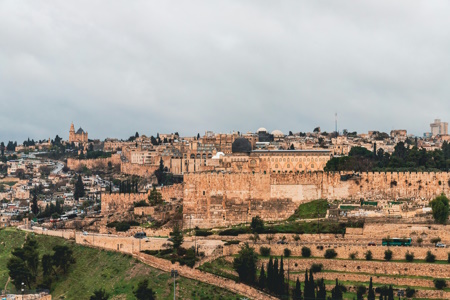
Rediscovery of Byzantine Christian settlement in Jordan
Archaeologists from Mu’tah University led by Musallam R. Al‑Rawahneh uncovered what is believed to be the lost Byzantine town of Tharais, near the Dead Sea. Finds include pottery shards, glass fragments, fossils, and architectural remains of a basilica‑style church with mosaic flooring and an olive‑oil press. Ancient inscriptions—possibly linked to Christian funerary rites—were also found. The site was likely abandoned in the 7th century due to shifting trade routes, environmental changes, and the region’s transition from Byzantine to Islamic rule. From the New York Post
Evidence for Jesus’s first miracle site in Galilee
Historian‑archaeologist Tom McCollough proposes that the real location of Jesus’s first miracle—turning water into wine—may be Khirbet Qana, not the traditional Kafr Kanna. Excavations revealed a 1,500‑year‑old complex of Christian veneration caves marked with crosses and inscriptions like “Kyrie Iesou”, as well as a stone altar and space for six ceremonial jars—matching the Gospel of John. McCollough’s findings align with early historical texts describing the area as a Jewish village. From the New York Post
Cave once thought to be Salome’s burial may belong to Herodian royalty
A cave southwest of Jerusalem, long believed to be the burial site of “Salome the midwife of Jesus,” may instead belong to a member of the Herodian royal family, possibly Herod the Great’s sister. The cave’s monumental architecture and ornate features typical of elite Herodian tombs support this claim. Hundreds of clay lamps—likely sold to Christian pilgrims—were also found, attesting to the site’s Byzantine-era veneration. Experts caution more evidence is needed to confirm identity. From Live Science
Ancient grape and olive traces at Golgotha support Gospel narratives
Italian archaeologists from Sapienza University uncovered 2,000‑year‑old grape pips and olive stones beneath the floor of the Church of the Holy Sepulchre, traditionally regarded as Mount Calvary. Soil and pollen analysis suggest that vineyards and olive cultivation existed on the site before Emperor Hadrian’s time—consistent with Gospel descriptions of a garden at Jesus’s crucifixion locale. This restoration-linked discovery has support from both Israeli authorities and major Christian denominations. From The Times
They Said It: Quotes About Luther And The Reformation
Introducing a new regular feature from Bible Rebel – They Said It, highlighting quotes from various folks on various topics of interest and relevance to our readers.
Johann Wolfgang von Goethe (German writer and statesman):
“The Reformation was a great act of emancipation by which man was restored to himself. Luther’s discovery of the Bible opened the door to the modern age.”
Thomas Carlyle (Scottish historian and essayist):
“Luther was the great Reformer, the man who alone could challenge the power of Rome and shatter the spiritual bondage of the age. His words were half-battles.”
Will Durant (American historian, The Story of Civilization):
“Martin Luther was the most powerful man of his century. He freed half of Europe from papal rule and gave birth to Protestantism, which would reshape the Western world.”
Rethinking The Rapture: N.T. Wright’s ‘Farewell to the Rapture’ Redux

In a previous piece in this ‘Rethinking The Rapture’ series I referenced New Testament scholar N.T. Wright’s 2001 essay, Farewell to the Rapture in the context of the Left Behind books and the pop theology of a secret Rapture.
Here, I’d like to return to Wright’s essay and offer a couple of more quotes from it in order to illustrate some of the thinking behind the views held by those who reject the evangelical, Left Behind, invisible Rapture interpretation of eschatology.
“It is Paul who should be credited with creating this scenario. Jesus himself, as I have argued in various books, never predicted such an event. The gospel passages about “the Son of Man coming on the clouds” (Mark 13:26, 14:62, for example) are about Jesus’ vindication, his “coming” to heaven from earth. The parables about a returning king or master (for example, Luke 19:11-27) were originally about God returning to Jerusalem, not about Jesus returning to earth. This, Jesus seemed to believe, was an event within space-time history, not one that would end it forever.”
You’ll need to open your Bible and put on your thinking cap for some serious, critical biblical exegesis as you consider what Wright is saying here.
And here:
“The Ascension of Jesus and the Second Coming are nevertheless vital Christian doctrines, and I don’t deny that I believe some future event will result in the personal presence of Jesus within God’s new creation. This is taught throughout the New Testament outside the Gospels. But this event won’t in any way resemble the Left Behind account. Understanding what will happen requires a far more sophisticated cosmology than the one in which “heaven” is somewhere up there in our universe, rather than in a different dimension, a different space-time, altogether.
The New Testament, building on ancient biblical prophecy, envisages that the creator God will remake heaven and earth entirely, affirming the goodness of the old Creation but overcoming its mortality and corruptibility (e.g., Romans 8:18-27; Revelation 21:1; Isaiah 65:17, 66:22). When that happens, Jesus will appear within the resulting new world (e.g., Colossians 3:4; 1 John 3:2).”
We’ll dive deeper into these ideas in coming ‘Rethinking The Rapture’ posts – for now, I hope you will take a hard look at what Wright is conveying here.
Watchdog Alert: Latest From The Middle East

Bible Rebel keeps a watchdog’s eye on events from around the world of interest to people of faith and brings that content to our readers.
Houthi rebels attack cargo ship in Red Sea, killing 3 sailors
Yemen’s Houthi rebels launched an assault on the Liberian-flagged, Greek-owned cargo ship Eternity C in the Red Sea. Using fast boats and bomb-laden drones, the attack killed three sailors and wounded two. It marks the first maritime strike by the Houthis since late 2024, raising concerns over renewed threats to vital global trade routes. From the AP
Israel bombs hijacked British ship Galaxy Leader and Houthi targets
On July 7, Israel carried out a major airstrike targeting the Galaxy Leader—a vessel hijacked by Houthi rebels since November 2023—as well as several ports in Yemen (Hodeidah, Ras Isa, Salif) and a coastal power plant. The strikes deployed ~50 munitions and were a direct response to sustained ballistic missile attacks from the Houthis. From The Scottish Sun
Iran receives Chinese surface‑to‑air missile batteries post–Israel cease‑fire
Following its recent cease-fire deal with Israel, Iran has reportedly imported Chinese-made surface-to-air missile systems in exchange for oil. This move is part of efforts to rebuild its air-defence capabilities that were compromised during the conflict. From the Middle East Eye
Iran reports ~1,100 killed in 12‑day conflict with Israel
Iran’s official bodies have confirmed approximately 1,100 deaths during the recent 12-day military confrontation with Israel. The toll, shared by the Foundation of Martyrs & Veterans Affairs, reflects the severity of the short yet intense engagement. From Shafaq
Texas Flood Response And How To Help

Catholic Church Response
- The Archdiocese of San Antonio called on Catholics to pray “for all those affected,” especially for victims, the missing, and their families. Archbishop Gustavo García‑Siller and Auxiliary Bishop Boulette visited Kerrville, while Notre Dame Church in Kerrville opened its gym as an emergency shelter, with Catholic Charities providing food, clothing, hygiene kits, and water.
- Special Masses were held on July 6, and priests from the Diocese of Beaumont and Austin encouraged prayers, invoked Our Lady of Prompt Succor, and launched additional fundraising efforts across the region aleteia.org.
Southern Baptist & Texas Baptist Relief
- Southern Baptists of Texas Disaster Relief (SBTC DR) mobilized immediately:
- A Quick Response Unit arrived July 4–5 in Kerrville and San Saba, offering meals, chaplaincy services, damage assessment, cleaning crews, shower and laundry facilities.
- They partnered with First Baptist Kerrville, coordinating with pastor Joey Tombrella, and plan extended ‘mud-out’ and recovery efforts as waters recede.
- Texas Baptists’ “Texans On Mission” deployed chaplains and assessors as early as July 7, preparing feeding, shower/laundry, recovery crews, and infrastructure teams. Local pastors are actively registering volunteers to support flood relief.
Evangelical Christian Leaders & Organizations
- Franklin Graham of Samaritan’s Purse and BGEA led prayers with DHS Secretary Kristi Noem inside a Kerrville church. His teams are hosting volunteers beginning July 8 for mud-out and cleanup; a second relief site is being set up in San Angelo.
- Samaritan’s Purse has deployed North American Ministries and BGEA Rapid Response Teams, coordinating with local churches like Kerrville Bible Church, with on-site cleanup and spiritual support still underway.
- An article in Crosswalk compiled statements from six Christian leaders urging prayer, trusting in God’s hope, emphasizing both immediate comfort and long-term salvation amid tragedy crosswalk.com.
Other Denominations & Churches
- Episcopal Church leaders called for prayers and donations to support flood-stricken communities. Episcopal News Service quoted leaders asking congregations to “please pray” and contribute toward relief episcopalnewsservice.org.
- Many local Protestant churches joined long-term recovery efforts, working alongside Baptist and evangelical groups to support victims beyond initial rescue .
Summary
There has been a broad, ecumenical response across Christian communities:
- Prayer & spiritual care: daily Masses, prayers in churches, visits by bishops, and pastoral support for grieving families.
- Physical aid & logistics: emergency shelters, feeding, hygiene services, cleanup and “mud-out” crews, volunteer coordination, chaplains, and equipment.
- Samaritan’s Purse and Southern Baptist/Texas Baptist ministries are leading the operational efforts, working through local church partnerships.
- Ongoing recovery: after immediate rescue, longer-term rebuilding and spiritual care will continue as floodwaters recede.
Why Does God Allow Children To Drown?
The latest from CNN as of Sunday afternoon: At least 80 people have died in connection with the flash floods that struck central Texas early Friday, according to officials. The toll includes at least 21 children in Kerr County, where 11 girls and one counselor are still missing from Camp Mystic, authorities said.
An often-asked question: “How could anyone believe in an all-powerful, loving God who would allow so much evil and suffering in the world?“
That’s a very difficult question, and there are countless books, articles, sermons, doctoral theses, movies, songs, and philosophical/theological debates on that subject (often referred to as theodicy or the problem of suffering), dating back centuries, that attempt to answer it.
The typical and extremely simplistic reasoning offered by some Christians as to why God would allow children at a Christian camp to drown goes something like this: “Well, God needed more angels in heaven.”
I believe that explanation is light-years away from the truth—and could even be considered inappropriately cavalier.
For me, beginning to understand the “why” of it all starts with this simple proposition: in order for there to be a level playing field where human beings are able to exercise actual free will, the conditions that create the possibility for failure, tragedy, and death must exist. Free agency is meaningless if there are no possible negative consequences resulting from human choices.
Matthew 5:45 – “For He maketh His sun to rise on the evil and on the good, and sendeth rain on the just and on the unjust.”
God is entirely just, and He has committed Himself to abiding by the conditions that allow free agency—and the processes of nature in a now fallen creation—to operate.
God doesn’t break His own rules, and He absolutely has a grand purpose in mind, which He will bring to pass by His own power and in His own time.
For now, we live in a broken and fallen world, and sometimes it’s nearly impossible for us to see light through all the darkness, given our very limited understanding—but a day certain is coming when we will know, even as we are known.