Watchdog Alert: Recent Discoveries In Biblical Archaeology

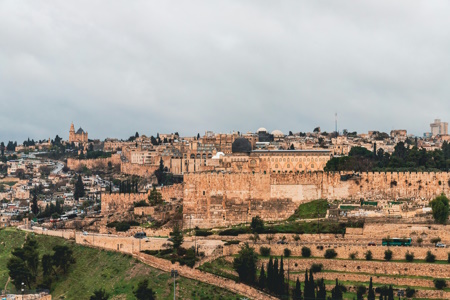
Photo via Виктор Соломоник at pexels.com

Rediscovery of Byzantine Christian settlement in Jordan

Archaeologists from Mu’tah University led by Musallam R. Al‑Rawahneh uncovered what is believed to be the lost Byzantine town of Tharais, near the Dead Sea. Finds include pottery shards, glass fragments, fossils, and architectural remains of a basilica‑style church with mosaic flooring and an olive‑oil press. Ancient inscriptions—possibly linked to Christian funerary rites—were also found. The site was likely abandoned in the 7th century due to shifting trade routes, environmental changes, and the region’s transition from Byzantine to Islamic rule. From the New York Post


Evidence for Jesus’s first miracle site in Galilee

Historian‑archaeologist Tom McCollough proposes that the real location of Jesus’s first miracle—turning water into wine—may be Khirbet Qana, not the traditional Kafr Kanna. Excavations revealed a 1,500‑year‑old complex of Christian veneration caves marked with crosses and inscriptions like “Kyrie Iesou”, as well as a stone altar and space for six ceremonial jars—matching the Gospel of John. McCollough’s findings align with early historical texts describing the area as a Jewish village. From the New York Post


Cave once thought to be Salome’s burial may belong to Herodian royalty

A cave southwest of Jerusalem, long believed to be the burial site of “Salome the midwife of Jesus,” may instead belong to a member of the Herodian royal family, possibly Herod the Great’s sister. The cave’s monumental architecture and ornate features typical of elite Herodian tombs support this claim. Hundreds of clay lamps—likely sold to Christian pilgrims—were also found, attesting to the site’s Byzantine-era veneration. Experts caution more evidence is needed to confirm identity. From Live Science


Ancient grape and olive traces at Golgotha support Gospel narratives

Italian archaeologists from Sapienza University uncovered 2,000‑year‑old grape pips and olive stones beneath the floor of the Church of the Holy Sepulchre, traditionally regarded as Mount Calvary. Soil and pollen analysis suggest that vineyards and olive cultivation existed on the site before Emperor Hadrian’s time—consistent with Gospel descriptions of a garden at Jesus’s crucifixion locale. This restoration-linked discovery has support from both Israeli authorities and major Christian denominations. From The Times
Watchdog Alert: Biblical Archaeology News

Bible Rebel keeps a watchdog’s eye on discoveries and news from the world of biblical archaeology and brings it to our readers.

Excavators evacuated from Shiloh amid Middle East tensions

Biblical archaeologists working at Shiloh in Israel were recently evacuated after regional escalation involving Iran. Despite the security threats, the team remains committed to continuing their excavation when conditions stabilize. From the Jerusalem Post


‘Salome Cave’ may be Herodian royal burial, not midwife’s tomb

Archaeologists re-examined a cave once believed to belong to Salome, the “midwife of Jesus.” Now they suggest it may instead be adorned as a royal tomb—possibly for Salome, sister of King Herod the Great (1st century B.C.). From livescience.com


Grapes & olives uncovered under Church of the Holy Sepulchre

Sapienza University researchers have unearthed 2,000‑year‑old grape pips and olive stones beneath the Church of the Holy Sepulchre, aligning with Gospel descriptions of a garden at the crucifixion site (John 19:41). The dig, involving multiple Christian denominations and the Israel Antiquities Authority, temporarily paused during Easter for pilgrims. From The Times


Evidence emerges for ancient Battle of Megiddo (Armageddon)

Egyptian pottery fragments discovered at Tel Megiddo strongly suggest Egyptian military presence during the biblical Battle of Megiddo (c. 609 B.C.), when Pharaoh Neco II defeated King Josiah of Judah. Researchers believe the pottery likely belonged to Egyptian soldiers rather than merchants. From wikipedia

Watchdog Alert: Biblical Archaeology

Photo via Виктор Соломоник at pexels.com

Ancient Cave Burial Reinterpreted as Herodian Royal Tomb

A cave southwest of Jerusalem, long venerated as the burial site of Salome, the midwife of Jesus, is now believed by archaeologists Vladik Lifshits and Nir-Shimshon Paran to be the tomb of a Herodian royal, possibly King Herod the Great’s sister, also named Salome. The site’s monumental architecture and ornate features align with elite Herodian-era tombs. Rediscovered in the 1980s, the cave contained hundreds of oil lamps, likely sold to Byzantine Christian pilgrims. While an ossuary inscribed with the name Salome was found, the name’s commonality necessitates further evidence to confirm the tomb’s occupant. – From Live Science


Evidence of Garden at Crucifixion Site Unearthed

Italian archaeologists from Sapienza University have uncovered 2,000-year-old grape and olive traces beneath the Church of the Holy Sepulchre in Jerusalem, traditionally identified as the site of Jesus’s crucifixion. This discovery supports the Gospel of John’s account of a garden at the crucifixion site. Soil and pollen analyses revealed ancient grape pips and olive stones, indicating cultivation before Emperor Hadrian’s reign, aligning with the time of Christ. The excavation, part of a restoration project begun in 2022, has been conducted with sensitivity due to the site’s religious significance, involving collaboration among major Christian denominations and the Israel Antiquities Authority. – From the New York Post


3,800-Year-Old Canaanite Scarab Found by Toddler

At Tel Azekah in Israel’s Shephelah region, a 3-year-old named Ziv Nitzan discovered a 3,800-year-old Canaanite scarab amulet during a family outing. The artifact, shaped like a dung beetle and dating to the Middle Bronze Age, was verified by expert Daphna Ben-Tor as a seal used for religious or status purposes. Scarabs held sacred symbolism in ancient Egypt, representing life and creation. Tel Azekah is historically notable for its biblical association with the story of David and Goliath. The find underscores the site’s historical richness and provides a tangible link to the ancient past. – From the New York Post


Subatomic Imaging Reveals Hidden Structures in Ancient Jerusalem

A team of Israeli archaeologists and physicists has employed muon detectors—devices that utilize cosmic-ray muons—to non-invasively explore subterranean structures in ancient Jerusalem. Focusing on “Jeremiah’s cistern” near the City of David, the detectors have begun mapping hidden voids and structural anomalies beneath the surface. This innovative approach allows researchers to investigate areas that are otherwise inaccessible due to practical and political constraints, offering new insights into Jerusalem’s 5,000-year history without the need for destructive excavation methods. – From Christianity Today