Faith isn’t blind. Faith is curious and goes searching with eyes wide open.
Faith doesn’t just meekly accept whatever doctrines of men the bishops, evangelists, or street preachers claim to be the gospel truth. Faith examines each bit, turns it over and over again, and measures it against an informed understanding of Scripture, common sense, and reason.
Faith understands that the whole being we are to love our God with includes our minds as well as our hearts and souls. Faith recognizes that the human mind is designed to be skeptical and to question everything — even long‑held church traditions being spoon‑fed to Sunday congregations and Wednesday Bible study groups by pastors, lay ministers, and priests.
Faith never fears being outside the denominational doctrinal box if that is where the truth is. Faith cares little for titles or academic credentials in the pursuit of understanding God’s grand plan for His creation.
Faith continues, never satisfied with what people say about the Word of God, only with what the Word says about itself and the purposes of our Creator.
Faith is curious. Faith is fearless. The confidence of faith is not in blind acceptance, but in full assurance that there is One who holds all the answers and that our calling is to Him, seeking as we go.
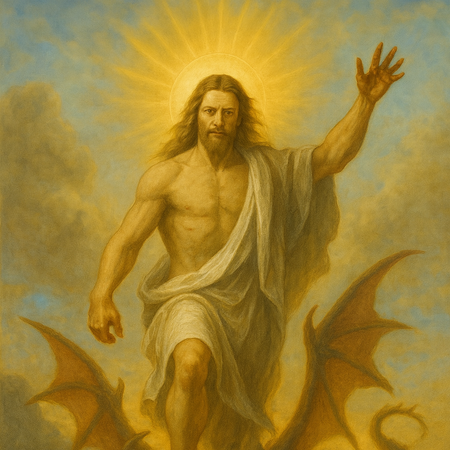
The new beginning for the world begins with the return of Jesus Christ—the literal, physical return of Jesus to the earth.
After God raised Him from the dead and He walked out of the tomb, Jesus spent many days in His new resurrected body, teaching His followers and being with them. When the day and hour came for Jesus to ascend into heaven, as they watched, two angelic messengers appeared and made a promise to His followers:
Acts 1:11 Which also said, Ye men of Galilee, why stand ye gazing up into heaven? this same Jesus, which is taken up from you into heaven, shall so come in like manner as ye have seen him go into heaven.
This isn’t a symbol with a hidden meaning; it will be an actual event. Jesus has been in the spiritual realm where God dwells for over two thousand years, as we count time, since He ascended into heaven. But He is coming back to the earthly realm for us—for you and me—one day.
Thessalonians 4:16-17 “For the Lord himself shall descend from heaven with a shout, with the voice of the archangel, and with the trump of God: and the dead in Christ shall rise first. Then we which are alive and remain shall be caught up together with them in the clouds, to meet the Lord in the air: and so shall we ever be with the Lord.” (KJV)
1 Corinthians 15:52 “In a moment, in the twinkling of an eye, at the last trump: for the trumpet shall sound, and the dead shall be raised incorruptible, and we shall be changed.”
There are believers who will be alive at the moment this happens, and all believers of the Church Age who have died will rise from their sleep in the dust and ashes and from their graves, and we will all be changed and given new, immortal, glorified bodies in the “twinkling of an eye.”
This is God’s promise to us, and it will happen as surely as the sun comes up in the morning. But that’s only the “opening ceremonies,” so to speak.
The completion of God’s grand plan begins when Jesus returns for us, but it doesn’t end there. God has more to do after that, and we will be a part of what He has in store. We will be His helpers and managers in the amazing, everlasting age to come.
So, what comes next in this new beginning is what the Bible calls “the Kingdom.” We’ll look at that next.
Lucas was walking home from school when he spotted a man on the corner holding a cardboard sign that read “THE END IS NEAR.” People hurried past without looking, but Lucas stopped. The man’s shoulders sagged, his eyes heavy with worry, as if he’d been standing there a long time.
Lucas studied the sign, then looked up at him with a small smile. “I think you’ve got it backwards,” he said. “Actually, the beginning is near.” The man blinked, startled. Lucas added, “My mom says every ending starts something new. Maybe things aren’t ending—maybe they’re about to get better.” He waved and continued down the sidewalk, leaving the man staring at his sign, wondering if the boy might be right.
This world and this life are not all there is. The way things are now is not the way they will always be, because God is taking the world to someplace new and very exciting.
What comes after the end of the world? What will it look like as God completes His grand plan to bring His family into a new creation and into everlasting life with Him?
We’ll explore the three most important events, according to God’s promises, that are coming our way as the grand plan unfolds and comes to its completion.
The Return of Jesus Christ
The Kingdom of Heaven
Heaven on Earth Forever
Remember, “In the end, everything will be all right. And if it’s not all right, it’s not the end.”
Let’s look at the “everything will be all right” part together, up next.
The theory of religious relativism is gaining ground in our culture. Simply stated, this type of relativism promotes the idea that there is no Truth, but that every person perceives their own truth as derived from their own experiences and perceptions.
While it is true that we all filter our experiences through our own unique personality and understanding, and that we can change and improve our lives by adjusting our thoughts and words, the basic tenet of relativism – namely, there is no Truth – proposes serious problems for the Bible believing Christian.
Let’s begin with the theory of relativism itself. If truly there is no truth, then that itself becomes Truth, which is counter-intuitive to the foundation of the theory!
Truth be told, the heart of relativism is a useful tool in the arsenal of tools used by our spiritual adversary, the devil, to delude mankind. Relativism must deny not only the existence of a One True God, who is Truth, it must also deny the need for a savior to get us back to God, whom we know to be Jesus Christ. Finally, it must deny the existence of the devil.
Voilé! The deceiver has achieved his ultimate goal: if we do not believe he exists, then evil can be counted for good and good for evil. Nothing we do is “wrong.” No need for repentance or salvation.
Not only that, but “Ye shall be as gods,” becomes cultural truth. The first lie of the devil to mankind is still his greatest promotional tool today. What I find fascinating is that the second part of the devil’s comment to Eve, that not only would they be as gods, but they also would “know good and evil,” fades away into nothingness. There is no good and evil as one embraces relativism and becomes as a god. What a trickster the devil truly is!
In addition, how could we know God anyway, when there is no Truth from which to discern his will, his ways, and his very nature?
The Bible becomes a nice, historical fairy tale about man’s moral condition, with no answers as to how man should conduct himself or how God might be trying to connect with His creation. Creation is not, after all, something God did.
It all begins with the devil effectively negating the reality of Truth. Welcome to Relativism! I once heard the statement concerning the devil, “The secret of his success is in the secrecy of his moves.” I found that to be true then, and I find it to be true now. If we fail to recognize there is Good and there is Evil, then everything can be called good. After all, one cannot judge another man’s truth. Then the worst crimes and the worst criminals must be embraced as part of a positive human experience.
It’s about the victory of God over evil by way of His grand plan through Jesus Christ.
Revelation 11:15 And the seventh angel sounded; and there were great voices in heaven, saying, The kingdoms of this world are become the kingdoms of our Lord, and of his Christ; and he shall reign for ever and ever.
It’s about God winning even when it looks like Satan and the wicked kingdoms of this world have all the power.
Revelation 17:14 These shall make war with the Lamb, and the Lamb shall overcome them: for he is Lord of lords, and King of kings: and they that are with him are called, and chosen, and faithful.
It’s about God’s people staying faithful and trusting in Him – no matter how long it takes until He sets things right.
Revelation 21:3–4 And I heard a great voice out of heaven saying, Behold, the tabernacle of God is with men, and he will dwell with them, and they shall be his people, and God himself shall be with them, and be their God. And God shall wipe away all tears from their eyes; and there shall be no more death, neither sorrow, nor crying, neither shall there be any more pain: for the former things are passed away.
Revelation is meant to encourage and bless God’s people – not scare them or cause them to freak out over 666 and the Antichrist.
Revelation 1:3 Blessed is he that readeth, and they that hear the words of this prophecy, and keep those things which are written therein: for the time is at hand.
The End is Really a Beginning
After Jesus was raised from the dead, he spent many days with his followers, being with them and teaching them about things to come. They asked him about the end of the world as they knew it.
Acts 1:6-7 When they therefore were come together, they asked of him, saying, Lord, wilt thou at this time restore again the kingdom to Israel? And he said unto them, It is not for you to know the times or the seasons, which the Father hath put in his own power.
And the same is true for us today, over 2,000 years later — no one knows when the end times will come. So, if you hear someone say they know the date that Jesus will return, you can be sure that they really don’t know. Only God knows.
Matthew 24:30 & 36 And then shall appear the sign of the Son of man in heaven: and then shall all the tribes of the earth mourn, and they shall see the Son of man coming in the clouds of heaven with power and great glory… …But of that day and hour knoweth no man, no, not the angels of heaven, but my Father only.
But don’t think of it as the end of the world, because it will actually be the beginning of forever — with God and each other in a glorious new creation.
Revelation 21:2-5 And I John saw the holy city, new Jerusalem, coming down from God out of heaven, prepared as a bride adorned for her husband. And I heard a great voice out of heaven saying, Behold, the tabernacle of God is with men, and he will dwell with them, and they shall be his people, and God himself shall be with them, and be their God. And God shall wipe away all tears from their eyes; and there shall be no more death, neither sorrow, nor crying, neither shall there be any more pain: for the former things are passed away. And he that sat upon the throne said, Behold, I make all things new. And he said unto me, Write: for these words are true and faithful.
I’m not sure who first said this, but it’s worth saying again here: “In the end, everything will be all right. And if it’s not all right, it’s not the end.”
Next, we’ll start digging into what that glorious new forever looks like.
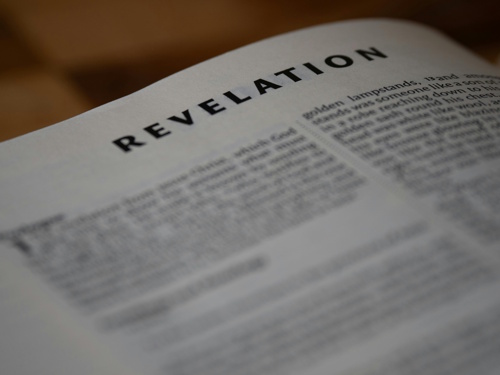
There are lots of fiction novels and movies about the end of the world, and some of those stories use the images and words from the Bible’s Book of Revelation.
Let’s not get all worked up and frightened by novels and movies, though. Let’s look at what Revelation actually says and doesn’t say, rather than what others say about it.
It helps to get an idea of the “who” and “what” of Revelation. It is a short book written around 2,000 years ago by a man named John, describing a vision from God, and then sent out in a scroll to be read to groups of believers.
Our goal here is not to do a deep study of it, but it’s important to understand that Revelation is a vision with deeper meanings beneath what many of the words seem to be saying at first.
At times in the Bible God gave visions and dreams to people, using mysterious pictures and symbols that aren’t meant to be taken literally.
Years Not Ears
Here’s an example from the Old Testament Book of Genesis where Pharaoh tells Joseph about a dream he had and Joseph tells him what it meant:
Genesis 41:22-26 And I saw in my dream, and, behold, seven ears came up in one stalk, full and good: And, behold, seven ears, withered, thin, and blasted with the east wind, sprung up after them: And the thin ears devoured the seven good ears: and I told this unto the magicians; but there was none that could declare it to me. And Joseph said unto Pharaoh…God hath shewed Pharaoh what he is about to do. …the seven good ears are seven years…
See? The ears of corn weren’t meant to be understood as actual ears of corn, they were dream symbols that actually meant years.
Most of Revelation is just like that – you have to understand the symbols and how the people back in that time and place would have understood those symbols. By the way, the time was about 2,000 years ago and the place was Asia Minor, which is the modern-day country of Turkey, under the rule of the ancient Roman Empire.
Symbols in Revelation
Here’s what Jesus looked like in John’s vision in the first chapter of Revelation:
Revelation 1:13-16 And in the midst of the seven candlesticks one like unto the Son of man, clothed with a garment down to the foot, and girt about the paps with a golden girdle. His head and his hairs were white like wool, as white as snow; and his eyes were as a flame of fire; And his feet like unto fine brass, as if they burned in a furnace; and his voice as the sound of many waters. And he had in his right hand seven stars: and out of his mouth went a sharp two-edged sword: and his countenance was as the sun shineth in his strength.
Does Jesus actually look like this? Does he have a sword coming out of his mouth and feet made of brass? No, these are symbols and images to tell us something deeper. And if we want to understand what those symbols mean we first have to understand how the people who first heard and read those words understood them.
That makes for an interesting, but much longer study. For now, let’s take a peek at the overall subject and point of the Book of Revelation. That’s coming next.
Adriana pressed her forehead gently against the cool windowpane, watching the trees sway and dance as if whispering secrets to one another. She could see the branches bend, the leaves shimmer, and the grass ripple in soft waves, yet the wind itself remained invisible—always present, always felt, but never seen. As she watched the world move without a visible mover, she wondered how something so real could hide so completely, as if the wind were a shy friend who preferred to speak through the trees rather than show its face.
In the Bible, ‘heaven‘ often simply means the spiritual realm where God lives, not an actual place up in the clouds with angels, pearly gates, and such.
But where is that place where God lives actually located? I like the way N. T. Wright, a Bible teacher, puts it:
‘Heaven’ and ‘earth’, as I have often said, are not, in biblical theology, separated a great gulf, as they are in much popular imagination. ‘Heaven’, God’s sphere of reality, is right here close beside us, intersecting with our ordinary reality. It is not so much like a door opening high up in the sky, far away. It is more like a door opening right in front of us where before we could only this room, this field, this street. Suddenly, there is an opening leading into a different world…
N.T. Wright – Revelation For Everyone
Going to Heaven?
Did you know that the Bible never uses the phrases “go to heaven” or “going to heaven” to describe what happens to people when they die? That’s because heaven isn’t a place where people are going someday; it’s a place where God is right now.
Heaven isn’t a place that we go as a reward for being good, like Disneyland. It’s not a location on a map, like Chicago or New York, that we can find directions to or roads that take us there.
So, where is that place where God lives? Well, it’s all around us. It’s next to us, above us, and below us. God lives in the unseen places that surround and fill everything.
Like the wind all around us that we can’t see, yet moving the things that we can see.
We’ve talked about heaven quite a bit; next, we’ll take a little tour of how we should think about hell. Ooooohhhhhh!
Is biblical prophecy based on God’s meticulous foreknowledge, or on His power and ability to bend the course of history to His will and grand plan?
If God has predestined everything to happen exactly as it has and will happen, even down to the most minute molecular phenomena, then aren’t we essentially living in a kind of simulation, as some theorists have suggested?
Anyone who knows even a little bit about the Bible and the history of Christianity knows that it was the religious leaders of the time, along with their secular allies, that were responsible for the killing of the prophets, the reformers, and even the Son of God himself, Yeshua our Messiah.
The religious leaders. The wolves in sheep’s clothing. The whited sepulchers. The vipers. The religious leaders.
There is no new thing under the sun. Fallen human nature and the rot of man-made religion hasn’t changed since they murdered the prophets, burned the ‘heretics’, and tortured and crucified our Lord.
That is part of the reason why I do not subscribe to a modern denominational creed of set of doctrines. I don’t think that modern day Evangelicals, or Baptists, or Lutherans, or Catholics are going to burn anyone in the town square – it’s just that I don’t trust organized religion.
I’m non-denominational. I’m a ‘Non’. And there are a lot of others just like me, in fact more and more folks are fleeing traditional ‘churchianity’ every day. Why? More on that in future posts.
Here’s my one and only creed, which I’m happy share with my brothers and sisters in The Fellowship of the Nons:
Creed of the Fellowship of the Nons
Our living God is a loving God and the Bible is His revealed word and will. Our hope and eternal salvation relies entirely on the work of God’s only begotten son, Jesus Christ, who is the way, the truth, and the life.
A huge part of the purpose and reason for the Bible Rebel blog is stated in our mission:
“To examine and question the assumptions of religious tradition and provide a resource for information and inspiration for people of faith who have become dissatisfied with an increasingly lifeless and empty ‘churchianity’.”