Bible Rebel keeps a watchdog’s eye on discoveries in biblical archaeology and brings the information to our readers. Here are some key discoveries and why they support the biblical record.
Dam Wall from the Time of King Joash at the Pool of Siloam (~805-795 BCE)
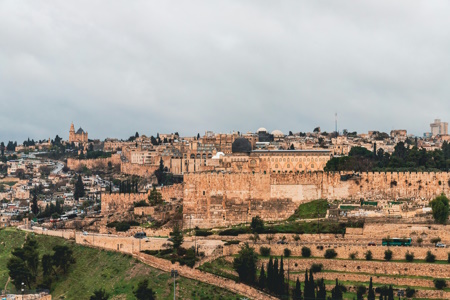
A large dam wall in the City of David, near the Pool of Siloam, has been excavated and dated via carbon-14 to about 805-795 BCE. The walls are substantial: ~21 meters long, ~12 meters high, ~8 meters thick. Bible Archaeology Report
Why it supports biblical history:
- The Bible describes several construction/repair projects by Judahite kings; a major water-infrastructure project fits in with what one might expect of a centralized Judah in that era.
- The dam would have helped manage water supply in times of dryness and flooding, which matches other environmental/climate evidence from the region showing arid conditions with occasional flash floods. Bible Archaeology Report
- It gives physical confirmation of large scale civic/royal activity in Jerusalem in the early 8th century BCE.
Clay Seal (“Bulla”) Inscribed with “Yeda‘yah son of Asayahu” (7th-6th century BCE)
A clay seal impression, or bulla, reading “Belonging to Yed[a‛]yah, son of Asayahu”, from the late 7th / early 6th century BCE. Found via the Temple Mount Sifting Project in soil removed from the Temple Mount area. Bible Archaeology Report
Why it supports biblical history:
- The names “Asayahu” (and variations) appear in the Hebrew Bible, particularly in connection with King Josiah: 2 Kings 22:12; 2 Chronicles 34:20. Bible Archaeology Report
- The bulla confirms that these names (and presumably persons with these names or offices) were in use in Judah at the appropriate period.
- The preservation of writing/sealing activity supports the idea that Judah had administrative bureaucracies with literacy in the late monarchic period.
Olive and Grape Traces Beneath the Church of the Holy Sepulchre / Mount Calvary (1st Century AD Garden Context)
Under the floor of the Church of the Holy Sepulchre, archaeologists found about 2,000-year-old olive pits (stones), grape pips, pollen evidence, and remains of stone walls or features consistent with cultivation. These lie beneath a basilica, in an area associated with Golgotha / Mount Calvary, part of Jerusalem’s ancient quarter. The Times+1
Why it supports biblical history:
- The Gospel of John (and other Gospels) mention that Jesus was crucified at a place called Golgotha, “place of a skull,” outside / near a garden and tomb. The presence of a garden (olive and grape cultivation) at that location in the 1st century AD gives archaeological plausibility to that Gospel description. The Times
- It shows that agricultural use was present in that area just before or around the time of Jesus, rather than all being occupied by other structures.
Identification of Widespread Literacy / Use of Seals in Jerusalem ca. 2,700 Years Ago
An ancient seal discovered in the City of David area (Jerusalem), dating to the First Temple period (approx 700-600 BCE), evidences artistic craftsmanship and inscription. It is taken as evidence that reading, writing, and use of official seals were more widespread than some earlier models of Judahite society assumed. GB News
Why it supports biblical history:
- The Hebrew Bible presumes certain levels of bureaucratic administration — e.g. prophets, kings, scribes, royal decrees, temple officials, etc. Widespread literacy or at least administrative writing (seals) is a necessary component for those functions.
- It helps move faceless administrative structures from being purely literary imagination to part of the archaeological record.