Your Life And What Comes After (18): How God Carries Out His Plan

How does God carry out His big plan?
He does it through people.

Which people?

First, His chosen people—Israel—as we see in the Old Testament.

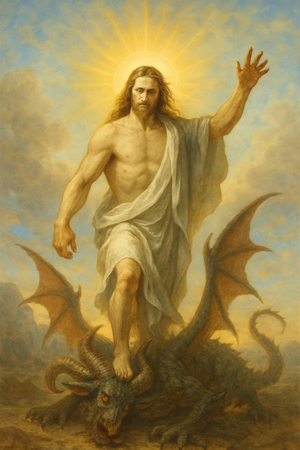
Then, the promised Seed from Genesis 3:15—Jesus Christ—revealed in the New Testament Gospels.

And now, in our time, it’s you and me—the Church—as we read in the rest of the New Testament.


Israel

From the Old Testament up until the birth of Jesus, Israel played a special role in God’s plan. But God’s plan was never just about one nation—it was always about rescuing the whole world (Genesis 12:3; Isaiah 49:6).

Israel was like a delivery vehicle God drove through history to bring the Messiah, Jesus, into the world as Savior.

Along the way, Abraham got on board by trusting God’s promise, even when it didn’t make sense.

Moses rode along by leading Israel out of slavery, showing God’s power and faithfulness.

King David became a passenger too, pointing ahead to the true King who would come from his family line. All of them played their part as God moved His plan forward.

But what we really want to get to is how those guys and gals in the Old Testament discovered their own purpose and best lives by plugging into God’s bigger plan, so that we can learn how to do the same in our own lives.

Stay tuned.
Your Life And What Comes After (7): Why Did God Create People?

The Bible teaches that God created people on purpose and for a purpose: to know Him, reflect His image, take care of His creation, live in real relationship, and bring Him glory. Not because He needed us—but because He chose to share His life, love, and purposes with us.

Let’s break this down.

God Made Us for Relationship

Does God enjoy relationships—connection, conversation, presence—like we do? Absolutely. We’re wired that way because we’re made in His image.

God wants people to spend time with Him. That means talking to Him, listening to Him, and bringing Him into everyday life—not just showing up once in awhile, but walking with Him daily.


God Made Us to Reflect Him

Genesis 1:27
“So God created mankind in his own image.”

1 John 4:8
“God is love.” (And love requires people, not objects.)

Matthew 22:37–39
“Love the Lord your God… and love your neighbor as yourself…”

People were created to reflect who God is and what He’s like in the world. That reflection shows up through our ability to love, reason, create, choose, and care. When we live this out, we act as living mirrors of the Creator.


God Made Us Stewards of Creation

People weren’t created to exploit the world, but to rule responsibly under God’s authority.

Genesis 1:28
“Fill the earth and subdue it… rule over every living creature…”

We take care of God’s creation by protecting it, cultivating it, and adding value—starting with our homes and families, and also moving outward to our communities and the world.


God Made Us for His Glory

Our lives are meant to point beyond ourselves and toward the greatness of God. His glory isn’t about ego—it’s about truth being seen clearly.

Isaiah 43:7
“Everyone who is called by my name, whom I created for my glory.”

1 Corinthians 10:31
“Whether you eat or drink… do all to the glory of God.”

Genesis 1:27–28
“So God created man in his own image, in the image of God created he him; male and female created he them.
And God blessed them, and God said unto them, Be fruitful, and multiply, and replenish the earth, and subdue it: and have dominion…”

The Before and the After

Here’s the hard truth: there’s a before and an after to God’s design for humanity.

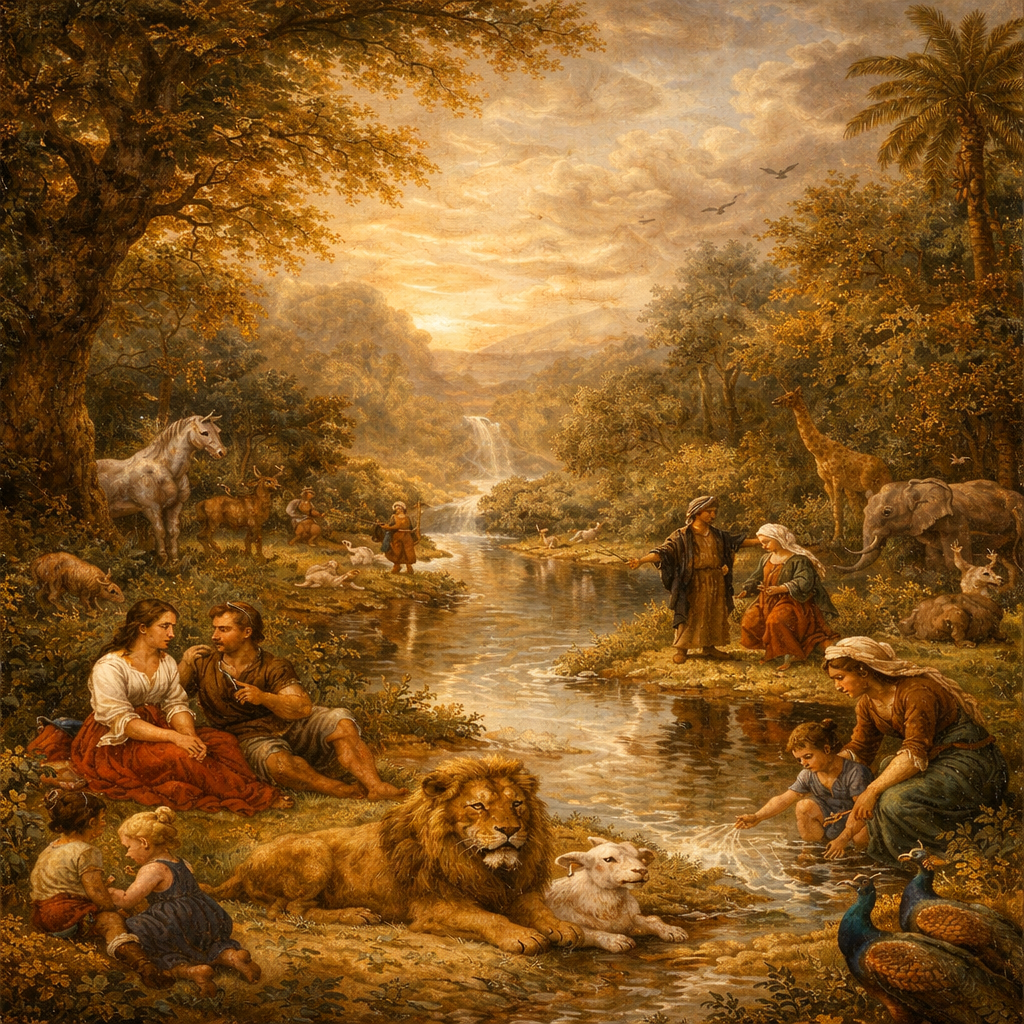
The before shows Adam and Eve living in perfect harmony—with God, with each other, and with creation.

The after shows rebellion. Disobedience. Separation. Everything breaks—and that broken reality is the world we now live in.

So what happens to God’s original purpose? Is it abandoned? Different somehow?

That’s the next question we have to face—and that’s exactly where we’re headed next.

They Said It: Four Quotes On Genesis

Here are some famous quotes about the first book in the Bible, Genesis.

Saint Augustine (354–430 AD)

“In the beginning, God created — these words are the foundation of all that we believe. The world is not eternal; it had a beginning, and that beginning was God Himself.”


C. S. Lewis (1898–1963)

“The first chapters of Genesis give the story of the human condition — not as science, but as revelation — showing us not how man came to be, but why he is as he is.”


John Calvin (1509–1564)

“The Book of Genesis is the fountain from which the whole of Scripture flows. For there we see both the origin of the world and the covenant of God with man.”


Rabbi Jonathan Sacks (1948–2020)

“Genesis is not a book about beginnings alone; it is a book about relationships — between God and humanity, man and woman, brother and brother — and how the drama of freedom unfolds.”

Is Charlie Kirk In Heaven Right Now?

I understand how comforting it is to believe that our love ones who have passed away are alive and well in heaven right now. But is that what the scriptures teach and tell us?

After the brutal public assassination of Charlie Kirk last week, I saw several of his well-intentioned friends and colleagues on TV reassure their viewers that Charlie wasn’t really dead at all, but that he was watching over us from heaven.

But is that what the Bible teaches us about our assurance of everlasting life – that we don’t really die, but rather just immediately transition from this world to the next at the moment of death.

Recall the account in the Garden of Eden and the words of the serpent in Genesis after God’s warning about eating the forbidden fruit:

Genesis 2:17 (KJV):
“But of the tree of the knowledge of good and evil, thou shalt not eat of it: for in the day that thou eatest thereof thou shalt surely die.”

The meaning here wasn’t just that Adam and Eve would die spiritually on that day, but that there was a judgement of actual death and that their lives would one day end rather than going on indefinitely.

Death was a curse then, and it is now. One of the first lies of the serpent was this:

Genesis 3:4-5 (KJV):
“And the serpent said unto the woman, Ye shall not surely die:  For God doth know that in the day ye eat thereof, then your eyes shall be opened, and ye shall be as gods, knowing good and evil.”

Is the truth “Ye shall not surely die…”, or is it that death is a curse and and enemy to be despised?

Is the Christian hope that each believer will gain immediate entrance into ‘heaven’ at the moment of death – or is it that we will all be resurrected from death and decay, or changed if still living at the time, together in God’s determined time, and enjoy eternal life as the family of God in a redeemed creation?

I believe that the scriptures plainly teach the latter, not the former, and that rightly dividing the Word of God on this important truth makes a difference in how we live today.

Stay tuned to Bible Rebel as we dig deeper (no pun intended). 🙂

Death Row Letters: To The Anti-natalists And Nihilists

Dear Anti-natalists and Nihilists,

It may strike you as odd, writing letters to those of you who embrace nihilism and anti-natalism from a person on death row. But as I pointed out in my first letter, we’re all on death row. So not so odd after all, right?

I’ll start by making sure I understand who y’all anti-natalists and nihilists are and what it is that you claim to believe. Definitions.

Anti-natalism, according to the cambridge.org dictionary is defined as “…the belief that it is morally wrong to have children or that people should be encouraged not to have children.”

Allow me to point out the obvious here, I’m glad that my parents didn’t think that way. I understand that there may be some who have reason to believe that life is nothing but a sad and miserable existence, even a tortuous, horrible existence.

But I’m quite certain that the overwhelming majority of folks in the world are pretty happy to be alive. This seems self-evident.

So why not have kids, babies, bambinos, babushkas, little bundles of joy? Is the world and life really that bad for you guys and gals that you don’t want to experience the joy and wonder of parenthood?

Plus, how can you be certain that your little one born into this dark and dreary world won’t be the someone who can make life brighter and better for everyone, or at least for some? No? Well, that’s a level of hopelessness and pessimism I will never understand.

It seems to me that we have a God-given instinct to have and raise children to be noble and awesome beings and to reflect the God of creation, to drive back the darkness, and to fulfill an eternal destiny. How can you, or why would you try to smother that instinct?

Genesis 1:28 states the Creator’s intention and purpose for creation this way:
And God blessed them, and God said unto them, Be fruitful, and multiply, and replenish the earth, and subdue it: and have dominion over the fish of the sea, and over the fowl of the air, and over every living thing that moveth upon the earth. (KJV)

What a calling!

Whoa, where has the time gone? I only got as far anti-natalism and left y’all nihilists out of this letter, even though I meant to address you as well. We’ll chat a bit in the next letter, I promise.

Sincerely,
Your fellow death row occupant