Four interesting quotes from about the Old Testament Book of Ezra:
Matthew Henry
“Ezra was a ready scribe in the law of God, and he used his knowledge not for himself, but for the reviving of true religion among the people.”
Charles Spurgeon
“Ezra was a man of the Book, and therefore a man of power. When God means to revive His people, He sets them first to the reading of His Word.”
F. F. Bruce
“Ezra stands as a model of faithful leadership, showing that true reform begins not with walls or institutions, but with the Word of God shaping the hearts of the people.”
Derek Kidner
“Ezra’s story reminds us that restoration is God’s work, yet He chooses to accomplish it through those who set their hearts to study, obey, and teach His Word.”
This is Episode 9 of Bible Rebel’s 10-part ‘Bible 101’ series. It’s about seven minutes in length and briefly covers the exceptions to the principle of understanding scripture in a strict literal sense.
Here are some interesting and insightful quotes about the fourth book of the Bible, Numbers.
R. K. Harrison (Old Testament Scholar)
“Numbers reminds us that spiritual progress requires trust and obedience. Israel’s wanderings reveal that unbelief stalls the journey, but God’s patience endures even in the midst of human failure.”
Timothy Keller (Pastor & Author)
“In Numbers, we see a God who walks with His people even when they complain, rebel, and wander. Grace is not a New Testament invention—it’s woven throughout the wilderness story.”
Gordon Wenham (Biblical Scholar)
“Numbers is a book of transition—from promise to fulfillment. It shows that while God prepares His people for blessing, He also forms them through discipline, shaping them into a covenant community.”
John MacArthur (Pastor & Commentator)
“The Book of Numbers reveals the seriousness of sin and the faithfulness of God. The wilderness becomes a classroom where God teaches His people to trust His word above their fears.”
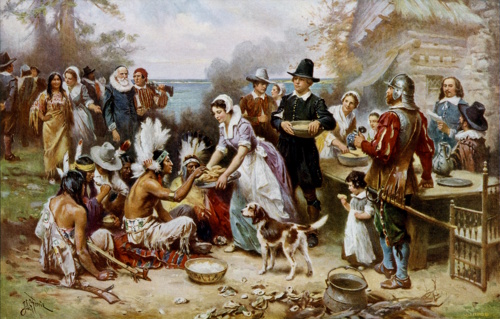
The Pilgrims were predominantly English Separatists, a branch of the Puritan movement within Protestant Christianity.
Separatists believed the Church of England was too corrupt to reform and chose to break away entirely (unlike other Puritans who sought to reform it from within).
Their faith was deeply Protestant, emphasizing personal Bible reading, simple worship without liturgy or ritual, covenant community life, and strong moral discipline.
The Pilgrims were mainly Puritan Separatists — English Protestant Christians who left the Church of England to practice their faith freely.
To monitor current news and events related to faith and culture.
To provide an alternative viewpoint to the world’s pervasive climate of darkness, nihilism, and hopelessness for those seeking truth, light, and purpose.
To examine and question the assumptions of religious tradition and provide a resource for information and inspiration for people of faith who have become dissatisfied with an increasingly lifeless and empty ‘churchianity’.
To present the Biblical truths which reveal God’s nature and purposes and proclaim the lifechanging, world-altering, radical message of Yeshua the Messiah – Jesus Christ, our risen Lord and Savior.
At Bible Rebel, this is our one and only creed: Our living God is a loving God and the Bible is His revealed word and will. Our hope and eternal salvation relies entirely on the work of God’s only begotten son, Jesus Christ, who is the way, the truth, and the life.
So, expect some controversial viewpoints and uncomfortable ideas in some of the coming content from Bible Rebel.
Coming in November and December
More in our “Your Life and What Comes After” series.
More in-depth content on deeper biblical studies and theological issues.
We’ll also be continuing our regular features, guest articles, and series:
Biblical Literacy: What the Bible does and doesn’t say
They Said It: Poignant quotes on a variety of topics
Guest articles
And more…
Watchdogs
As always, we’ll be keeping a watchdogs eye on all of the latest political, religious, biblical archaeology, and cultural news and events from around the world and bringing to you in bite-size chunks to keep you informed.
Here are four common ‘old sayings’ that many folks mistakenly believe are bible verses. While these sayings may contain practical wisdom, and even reflect values taught by scripture generally, they are not inspired scripture.
“God helps those who help themselves.”
This one is commonly attributed to Benjamin Franklin (Poor Richard’s Almanack, 1736).
The Bible teaches dependence on God, not self-sufficiency (see Psalm 121:2, Proverbs 3:5–6). The phrase reflects a moral idea, but it’s not scriptural.
“Cleanliness is next to godliness.”
Popularized by John Wesley in a 1778 sermon.
While the Bible values purity of heart and spiritual cleanliness (James 4:8), it never equates physical cleanliness with godliness.
“This too shall pass.”
Likely from ancient Persian or Hebrew proverbs, but not found in Scripture.
The Bible expresses similar sentiments (e.g., 2 Corinthians 4:17–18, Psalm 30:5), yet the phrase itself never appears.
“Money is the root of all evil.”
This one is a misquotation of 1 Timothy 6:10.
What the Bible actually says: “The love of money is the root of all kinds of evil.” The difference is crucial — Scripture warns against greed, not wealth itself.