Your Life And What Comes After (29): Starting The End Of The World

Adriana, a football fan, wrote a letter to her friend who also really liked following and watching football games. In the letter, Adriana described a high school football game she went to recently like this:

“It was raining cats and dogs as if the sky had sprung a leak, but the game marched on as if the gridiron were Noah’s front yard. The quarterback was trying to thread the needle through a secondary playing tighter than a drum. Some of the fans were hollering that the offense needed to stop shooting themselves in the foot with their false starts and do a better job of establishing the run.

By the second half, the field had turned into a mud pit worthy of a hog-calling contest, and the players were slipping and sliding like greased lightning. The defense was bringing the house with all-out blitzes on three straight downs. Finally, midway through the fourth quarter, our junior kicker split the uprights. The score held, and that missed point-after attempt in the first quarter didn’t come back to haunt our squad.”

If you aren’t familiar with American football, then Adriana’s report on the game would be kind of confusing to you.

Now just try to imagine how strange and confusing that letter would sound to a young girl in a little fishing village in a faraway country who knew nothing about America, football, or the figures of speech in the English language, like “shooting themselves in the foot.” That young girl would have to see everything through the eyes of the friend Adriana wrote the letter to in order to understand its meaning.

The Book of Revelation

Have you ever heard about the Antichrist, or the mark of the beast, 666? How about stars falling from heaven, earthquakes and wars, and the four horsemen of the Apocalypse at the end of the world?

Those are all images from the Book of Revelation, the last book in the Bible, which is full of strange language, numbers, and symbols that some say foretells what will happen at the end of the world.

Here we are in modern times reading Revelation kind of like the young girl in the faraway fishing village reading Adriana’s letter, not really understanding that “raining cats and dogs” doesn’t mean that thousands of cats and dogs are actually falling out of the sky.

So, what do all of those weird visions and scary beasts and such we hear about in stories about the end of the world actually mean? Is Revelation a play-by-play, exact preview of what’s going to happen to us at the end of the world?

Nah.

Next, we’ll take a closer look at it all.

They Said It: Four Quotes On The Books Of Kings

Four quotes from well-known religious figures about the Old Testament Books of I and II Kings:

Augustine of Hippo

“In the Books of Kings we see how the rise and fall of rulers is governed not by chance but by the providence of God, who exalts the humble and brings down the proud.” —Augustine, reflecting on divine sovereignty in Israel’s monarchy

John Calvin

“Kings were set before the people as mirrors, that in their obedience or rebellion the whole nation might behold the blessing of walking with God or the misery of departing from Him.” —Calvin, commenting on the moral purpose of Israel’s kingship

John Wesley

“The history of the Kings shows that no outward form of religion can preserve a nation when the heart turns from God; holiness must begin within.” —Wesley, emphasizing inward faithfulness over ritual

Matthew Henry

“These books teach us that God’s patience with His people is great, yet His justice will not sleep forever; mercy invites, but judgment warns.” —Henry, summarizing the theological rhythm of Kings

Prosperity Gospel, Or Jesus?

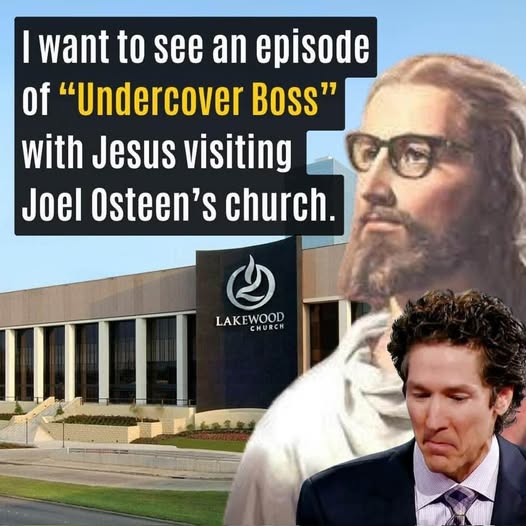
The other day I came across the meme I’m using for this post and it reminded me of a previous series I did on the ‘Prosperity Gospel’ and the ‘Health And Wealth’ theology. So I want to revisit and focus on one of the subjects of that series – Joel Osteen.

Who is Osteen?

Joel Osteen, the senior pastor of Lakewood Church in Houston, Texas, has an estimated net worth that varies across sources. Some reports suggest his net worth is around $100 million (Celebrity Net Worth), while others estimate it to be approximately $40 million to $60 million (Wikipedia).

Additionally, some sources claim his net worth is as high as $180 million (CA Club India).

Osteen resides in a 17,000-square-foot mansion valued at $10.5 million in the River Oaks neighborhood of Houston. He has stated that he does not receive a salary from Lakewood Church, which has an annual budget of $70 million, relying instead on income from his best-selling books and related products (Wikipedia).

But What did Jesus teach?

Well, it seems pretty clear to me—or to anyone else with a lick of common sense—that when Jesus said in Matthew 6:33, “But seek first the kingdom of God and His righteousness, and all these things shall be added to you…” He didn’t have $10 million mansions, private luxury jets, and massive piles of cash in mind.

But what did He have in mind? Read the context:

Matthew 6:25–34 (NKJV)
“Therefore I say to you, do not worry about your life, what you will eat or what you will drink; nor about your body, what you will put on. Is not life more than food and the body more than clothing?
26 Look at the birds of the air, for they neither sow nor reap nor gather into barns; yet your heavenly Father feeds them. Are you not of more value than they?
27 Which of you by worrying can add one cubit to his stature?
28 So why do you worry about clothing? Consider the lilies of the field, how they grow: they neither toil nor spin;
29 and yet I say to you that even Solomon in all his glory was not arrayed like one of these.
30 Now if God so clothes the grass of the field, which today is, and tomorrow is thrown into the oven, will He not much more clothe you, O you of little faith?
31 Therefore do not worry, saying, ‘What shall we eat?’ or ‘What shall we drink?’ or ‘What shall we wear?’
32 For after all these things the Gentiles seek. For your heavenly Father knows that you need all these things.
33 But seek first the kingdom of God and His righteousness, and all these things shall be added to you.
34 Therefore do not worry about tomorrow, for tomorrow will worry about its own things. Sufficient for the day is its own trouble.”

You don’t need an advanced degree in theology or philosophy to understand the plain words spoken by our Lord here. All you need is basic reading comprehension.

What things “shall be added to you”? Mansions? A fleet of luxury fishing boats? A hoard of gold coins? No—the “things” are the necessities of life, like food and clothing.

Does He teach that you can’t or shouldn’t have more than the necessities? No—but our Lord’s message is clear: the desire for God’s righteousness is muddied and distorted when we focus on the riches of this age instead of His kingdom.

It’s impossible to have total reliance on God when one has lots of cash, cars, jets, and Swiss bank accounts to fall back on—right?

Your Life And What Comes After (28): What The Hell

Have you ever heard anyone say, “If you’re bad, you’re going down there!” as they point to the ground?

The idea that you’ll go “up there” if you’re good and “down there” if you’re bad is not an idea found in the Bible, and is not part of God’s grand plan.

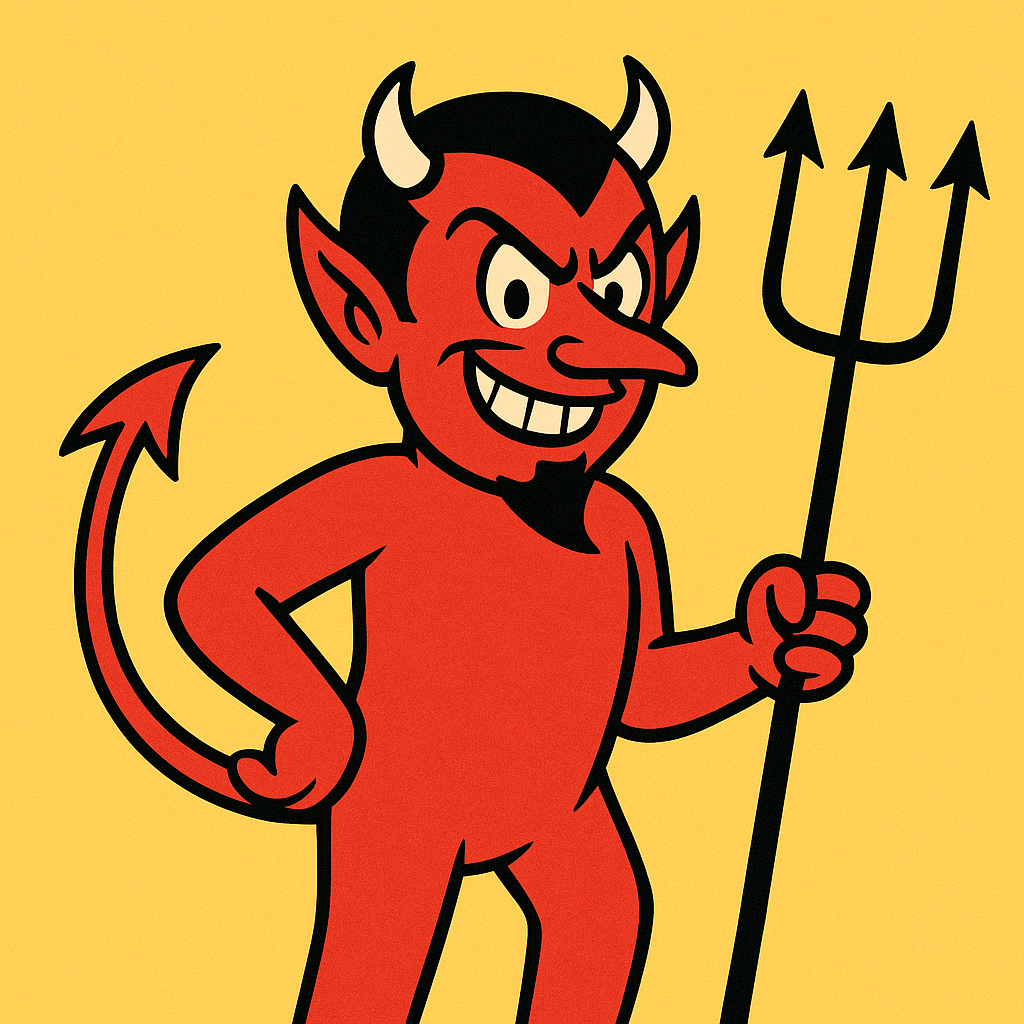
Cartoon devils with pitchforks tossing bad people into flames and movie images of an underground fire pit of hell are pictures and ideas that have been made up by some to scare others for various reasons. Can you think of why some people in the old days, and even now, would do that?

What and Where Is Hell

The Bible does teach that there is some kind of punishment for people, and for evil spiritual forces, who do evil things on purpose and who don’t want or accept God’s love and forgiveness. So, hell is a kind of punishment and judgment for them.

But just like heaven isn’t a location somewhere in the universe but instead the realm where God exists, hell also isn’t a physical location somewhere, but instead a description of God’s judgment on evil.

But punishment and judgment for who, where, and when — and what kind of punishment is it?

Those are questions that people who have studied the Bible, now and in the past, have had very different answers for.

Some believe that everyone who is bad or doesn’t accept God’s forgiveness goes to hell when they die to burn forever, and those who are good and accept God’s forgiveness go to heaven to play harps and sing praises forever. I don’t believe that either of those ideas is what the Bible teaches.

Fear Not

The Bible teaches that God’s plan includes a day and time when God will raise all people from the dead, and then comes the judgment. If we have put our faith in Jesus Christ, then we know that when that day comes, He has taken any punishment or judgment we may deserve on Himself. We are forgiven and cleared for takeoff into eternal life with our Savior and with our Heavenly Father.

Over and over in God’s Word, He encourages His people to “fear not” or “don’t be afraid.” About 140 times, in fact. At least six times in the Bible, it was the first thing angels said when they appeared to people.

When it comes to the topic of hell, we should all focus on the “fear not” message rather than the “be afraid of hell, you sinner” message.

What’s Next?

As I said a little bit ago, God’s plan includes a day and time when God will raise all people from the dead. Next, we’ll be talking about what happens during that day and time, and what it means for you and me.