Why Must We Pray, Anyway: Part 4

Editors note: the guest article appearing here does not necessarily reflect the views of Bible Rebel editors or other guest authors and contributors. Bible Rebel seeks to present a wide range of ideas and viewpoints in order to fulfill our mission to provide resources for “Curious Fearless Faith”. This is Part 4, the final part, in a new series on prayer called ‘Why Must We Pray, Anyway’ by Steve Sann.

Why Must We Pray, Anyway: Part 1
Why Must We Pray, Anyway: Part 2
Why Must We Pray, Anyway: Part 3


Holding Back the Destruction

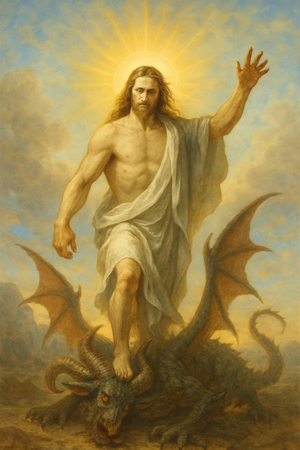
With this in mind, it is easy to understand the spiritual pressure mounting from this world to minimize the importance of prayer. All the while, however, it is only the “believing believers,” those who remain active in prayer, who continue to restrain the powers of darkness from raiding and destroying.

II Thessalonians2:6-8a:

And now you know what is restraining, that he [the “son of perdition”; i.e., the anti-Christ] may be revealed in his own time.
For the mystery of lawlessness is already at work; only He who now restrains will do so until He is taken out of the way.
And then the lawless one will be revealed…

We know Satan is the god, the authority, of this world. It is his to destroy. So, we must ask: Why hasn’t Satan completed his objective of annihilating the earth and all the people in it? After all, he’s “large and in charge!”

As long as the believers—those who actually call upon God in prayer—are intermixed within Satan’s kingdom, the grand finale of Satan’s power cannot be revealed. But the day will come at Christ’s return when the believers will be taken out of the way (1 Thessalonians 4:16-17), and the authorities of Satan will usurp preeminence. This event of our departure is detailed in I Thessalonians 4 and referred to in II Thessalonians 2:1 as the Gathering Together, in more recent times as the Rapture.

Until that day, however, it is the believers who restrain Satan’s rage. Yet, not just any believer; it is the “believing believer” that stands between the people of this world and Satan’s wholesale wrath.

Who are these “believing believers”? These are not just the people who have attended a few church fellowships, perhaps have read a lot of the bible, or even who are merely born-again. Satan has been haply running over these folks for centuries. No—rather, the believers spoken of here are those who have sharpened their skills at bringing the powers of heaven to bear on earth—by walking in their sonship rights, claiming their authority, walking in the spirit, and petitioning God. We are speaking here of the true intercessors, those who bring the fight into the streets.

These are they who cannot be destroyed because they reside within the cone of God’s presence. And until they are taken out of the way at Christ’s return, it is they who restrain Satan’s ultimate will upon this world and its inhabitants.

Since man’s expulsion from the garden, throughout history, there has always been at least one “believing believer” standing, interceding on behalf of protecting God’s people. In fact, in the Old Testament, this was taught: it was understood as a vital responsibility of every man and woman of God to readily intercede for God’s people.

Why Must We Pray, Anyway: Part 3

Editors note: the guest article appearing here does not necessarily reflect the views of Bible Rebel editors or other guest authors and contributors. Bible Rebel seeks to present a wide range of ideas and viewpoints in order to fulfill our mission to provide resources for “Curious Fearless Faith”. This is Part 3 in a new series on prayer called ‘Why Must We Pray, Anyway’ by Steve Sann.

Why Must We Pray, Anyway: Part 1
Why Must We Pray, Anyway: Part 2


The newborn baby is but an heir of man’s disaster. At the moment of birth, without the freedom to choose or even to comprehend his circumstance, each child is launched headlong into a world of hurt. As good a person as he or she may try to be or should ever possibly become, at best they will remain citizens of the kingdom of darkness. Literally, each of us is conceived and born in sin, far apart from the spiritual entrée needed to walk and talk with God.

But now, as a result of Christ, mankind regains the authority to bring God back on the scene wherever we are present! We still reside within the borders of Satan’s kingdom, true, but we are no longer citizens. Sure, within his own kingdom, Satan has every legal right to rule his own subjects. However, we now, being the citizens of heaven (Philippians 3:20), as God’s people, we are released from Satan’s authority (Colossians 1:13), even while still dwelling within his kingdom. “No one is a firmer believer in the power of prayer than the devil; not that he practices it, but he suffers from it!”

Right here, while still in the Devil’s empire, we have new legal rights! But it is up to each of us to claim them. At any time, we have every right to call upon God, who then may enter into Satan’s kingdom to protect and prosper us! We are His now. God is limited only by our willingness to petition Him on our behalf.

When you call upon God in the name of Jesus Christ, you are literally delegating to Him the authority to enter into this world behind these enemy lines to fight for you. God loves it! At that very moment, God has legal authority to utilize whatever resources are at His disposal to respond to that specific need. The insight of Martin Luther in the 16th century still rings true today: “Prayer is not overcoming God’s reluctance, but laying hold of His willingness.”

God’s people are all the time making excuses for the “sovereign” God as to why He did not act, save, or bless when really it is they who did not pray. By their many excuses for God, they are, in effect, blaming God for their own lack of prayer. Those who do pray see His results, tempered only by the weakness to believe. This, then, is why we must pray. And much. The responsibility for God’s good in this troubled world falls back upon us.

Why Must We Pray, Anyway: Part 1

Editors note: the guest article appearing here does not necessarily reflect the views of Bible Rebel editors or other guest authors and contributors. Bible Rebel seeks to present a wide range of ideas and viewpoints in order to fulfill our mission to provide resources for “Curious Fearless Faith”. This is Part 1 in a new series on prayer called ‘Why Must We Pray, Anyway’ by Steve Sann.


The Commandments of the Lord

God takes speaking in tongues seriously. How seriously? In the Pauline Epistles alone, we find there are more verses referencing speaking in tongues than contain the words “heaven” or “hell” combined!

I Corinthians 14 is the richest chapter in the Bible regarding tongues. In it is found an abundance of instructions, promises, and commandments clarifying God’s will for us on this vital subject. But, most notably, it concludes with this stern exhortation for us all:

I Corinthians 14:37-39:
If anyone thinks himself to be a prophet or spiritual, let him acknowledge that the things which I write to you are the commandments of the Lord.
But if anyone is ignorant, let him be ignorant. Therefore, brethren, desire earnestly to prophesy, and do not forbid to speak with tongues.

We are to accept the Lord’s instructions to us regarding tongues not merely as recommendations. These are commandments, not helpful suggestions. He expects every son and daughter to take their place as spirit-filled men and women. Frankly, should church elite, or loved ones agree, is of secondary significance to God. Then it should be to us, as well.

E.M. Bounds, the Civil War era author acclaimed in modern times as the “prophet of prayer,” accurately penned: “Only God can move mountains, but faith and prayer move God.” Yes, we move God…through prayer. If this alone was taught from the pulpits today, the very foundation of churches would be shaken. Yet, it is true: God is limited by the prayers of His people.

If we are to begin to grasp how the all-powerful God depends on us to exercise His power, we must first intelligently answer this question—a question feared by the faithful: “Why must we pray, anyway?” “After all,” the question begs, “if God loves us, knowing our every need even before we ask it, why must we pray at all? Can God not answer our prayers even without asking?!” Shocking to some, the answer is no. If not you, then someone else will have to pray on your behalf before God can meet that need.


Stay tuned for ‘Why Must We Pray, Anyway: Part 2’

Paul Prayed ‘Without Ceasing’ – Part 3

Editors note: the guest article appearing here does not necessarily reflect the views of Bible Rebel editors or other guest authors and contributors. Bible Rebel seeks to present a wide range of ideas and viewpoints in order to fulfill our mission to provide resources for “Curious Fearless Faith”. This is Part 3 in a new series on prayer called ‘Paul Prayed Without Ceasing’ by Steve Sann.

Read Part 1 Here
Read Part 2 Here


The Benefits: Let’s highlight a few of the many benefits richly awarded to you each and every time you utter His words by the spirit. Please turn to these scriptures and study them on your own: a wealth of confidence and appreciation of speaking in tongues will begin to mature in you.

a. We pray bypassing our earthly understanding. Praying by the spirit in another language, we are able to pray for needs beyond our understanding and perception (I Corinthians 14:14-17);
While praying beyond your understanding, the spirit addresses your personal needs—for example, in your family, finances, spirit, soul, and body.

b. We intercede for others according to God’s will. The spirit searches the hearts and lives of others, making requests for needs of which we, in our limited perception, are unaware. (Rom. 8:26,27);
This makes us global prayer warriors. Interceding for others, the spirit identifies and prays for the needs of your loved ones and worldwide for all the saints.

c. God speaks to our spirit unfolding His mysteries, guidance and truths, spiritually renewing, strengthening and edifying you (II Corinthians 5: I Corinthians 14:2,4; Jude 20; Ephesians 3:14-19; John 14:25; 16:13);
When we speak to God in the spirit, He speaks back. He not only reveals spiritual truths, but opens your eyes to wisdom and insight in all aspects of your life, and of others, as well. In addition, He builds up your spirit, preparing and strengthening you in the operation of the other manifestations.

d. We praise and bless God by giving thanks well, speaking the wonderful works of God (I Corinthians 14:16,17; Acts 2:11);
When we “bless with the spirit” we are energizing the Christ within us to bring forth perfect praise to God. If translated, we would hear a litany of the great things God is doing, His nature, and His love for his people. So, by the spirit we “give thanks well”, we are “speaking the wonderful works of God.”

e. We offer the “true worship” the Father seeks. We “worship God in the spirit” (Phil. 3:3). Jesus Christ foretold: “…the true worshippers will worship the Father in spirit and truth; for the Father is seeking such to worship Him. God is Spirit, and those who worship Him must worship in spirit and truth.” (John 4:21-24);
Man has always sought various methods of worshipping God, most of which God is spirit and cannot be truly worshipped in the flesh. Rather, by worshipping in the spirit, scripture assures us we are pleasing Him, as we, with confidence, properly “worship Him in spirit and in truth.”

f. It engenders intimacy with the Father, sharing our heart’s secrets with Him (Rom. 8:15; Gal 4:6; Rom. 8:27; I Corinthians 14:2);
On the surface, it is difficult to become acquainted with the heart of a man. But the inner desires and secrets of our hearts the spirit shares with the Father. We speak with each other tenderly like a child with His Father.

g. The spirit continually reaffirms to us that we are the sons of God. (Rom. 8:14-17; Ephesians 1:13,14);
Speaking in tongues is the absolute proof in the senses realm to you that you have received eternal life, are born-again, and have received the spirit. It confirms to you that the promises of the Word are true.

As with all of God’s promises, these many benefits come to those who expect and believe. By holding these benefits in our hearts, we can acknowledge them as we pray in the spirit. We do not need to understand the specifics of prayer by the spirit to claim and believe to bring it to pass. Build up your faith in these benefits.

Paul Prayed ‘Without Ceasing’ – Part 2

Editors note: the guest article appearing here does not necessarily reflect the views of Bible Rebel editors or other guest authors and contributors. Bible Rebel seeks to present a wide range of ideas and viewpoints in order to fulfill our mission to provide resources for “Curious Fearless Faith”. This is Part 2 in a new series on prayer called ‘Paul Prayed Without Ceasing’ by Steve Sann.

Read Part 1 Here


And, here we once again find another absolute: “without ceasing.” We can’t pray more consistently than “without ceasing,” now can we? This figure emphasizes that we are to have extreme loyalty and committed reliability to prayer. “Praying without ceasing” and “praying always” are traits not commonly found in the weak of will. But, it is a skill set each one of us can develop. God’s expectation is that each of us will do our best to SIT much. We can all—and should all—make every effort to live up to His will on this matter. 

The same commitment to prayer which God requested of His Church, Paul personally demonstrated, serving the example for the Church: 

Romans 1:9: For God is my witness, whom I serve with my spirit in the gospel of His Son, that without ceasing I make mention of you always in my prayers. 

Here, Paul writes that he himself prays “without ceasing.” And he specifically describes how: by serving God in my spirit. How can I serve God “with my spirit”? The context determines if the phrase “my spirit” refers to the human soul life as in I Corinthians 16:18 and II Corinthians 2:13, or the gift of the holy spirit as in I Corinthians 14:14 and 5:4. The topic of this verse reveals it: it is by prayer. Certainly, serving God with the spirit would include prayer in the spirit for the saints, as well as the other manifestations. 

At this same time, Paul makes an extraordinary pledge here: he swears before God that his words are true, and that he is committed to praying without ceasing for his peopleThroughout scripture, on only five occasions did Paul call upon God as his witness of the authenticity of his words. This vow had significance. We hear no hollow, religious platitudes from him as often heard today, like, “I’ll pray for you, brother.” Paul didn’t just promise to pray; he made a pledge before God and the church that he was faithful in prayer. He became the example. 

Paul was challenging the church, setting the bar high for the believers of that day. Repeatedly, they were exhorted to SIT much. Why? Because he was persuaded that a wealth of spiritual benefits was bestowed upon each individual believer who frequently exercised this spiritual power. What, then, are these riches which continue to inspire believers even today to speak in tongues much? 

Paul Prayed ‘Without Ceasing’ – Part 1

Editors note: the guest article appearing here does not necessarily reflect the views of Bible Rebel editors or other guest authors and contributors. Bible Rebel seeks to present a wide range of ideas and viewpoints in order to fulfill our mission to provide resources for “Curious Fearless Faith”. This is Part 1 in a new series on prayer called ‘Paul Prayed Without Ceasing’ by Steve Sann.


Why pray “in the spirit” at every opportunity? Because, speaking in tongues (or “S.I.T.”, as it has often been abbreviated casually) is the optimal tool to use when praying for extended periods of time.

How is that? With the words originating from the spirit, the mind is freed up for other concerns; the decision-making process is bypassed, leaving the mind relatively free for everyday matters. When we SIT, hours can be invested in prayer, even while carrying on our other daily routines. As a result, this enables us to pray continually for people and situations all over the world. And this watchful, constant prayer is critical to assist God in carrying out His purposes. 

Or, as I Thessalonians 5 phrases it, we are to…pray without ceasing, in everything give thanks; for this is the will of God in Christ Jesus for you.
– I Thessalonians 5:17,18. The phrase “in or with the spirit”, in the context of speaking to God, is used interchangeably for tongues, defining it as tongues. For example, I Corinthians 14:14, 15 reads: 

“For if I pray in a tongue, my spirit prays, but my mind is unfruitful. What is the conclusion then? I will pray with the spirit, and I will also pray with the understanding. I will sing with the spirit, and I will also sing with the understanding.” Correspondingly, throughout the New Testament, any form of communication from us directed to God described as being in, with, or by the spirit is referring specifically to tongues, as can be viewed in the following references: 

Praying: Jude 20, Ephesians 6:18, I Corinthians 14:14 Speaking: I Corinthians 12:3
Singing: I Corinthians 14:15
Praising (“blessing”)I Corinthians 14:16 Worshipping: Philippians 3:3, John 4:23, 24 and Crying: Romans 8:15, Galatians 4:6

As Christians, it would seem we are forever in search of “God’s will” for our lives, aren’t we? Well, finally, here it is, God’s will is clearly stated! And it could not be spelled out more plainly: “…pray without ceasing…for this is the will of God in Christ Jesus for you.” Not as glamorous as being called a great apostle to the nations, one might assess, but it is God’s will for each one of us, nonetheless— right? 

Why Did Paul Speak In Tongues So Much?-Part 6

Editors note: the guest article appearing here does not necessarily reflect the views of Bible Rebel editors or other guest authors and contributors. Bible Rebel seeks to present a wide range of ideas and viewpoints in order to fulfill our mission to provide resources for “Curious Fearless Faith”. This is the sixth and final installment in this series on prayer by Steve Sann.

Read Part 1 here
Read Part 2 here
Read Part 3 here
Read Part 4 here
Read Part 5 here


Ephesians 6:18:
Praying always with all prayer and supplication in the Spirit, being watchful to this end with all perseverance and supplication for all the saints. 

In this verse, God isn’t trying to decree a minimum prayer requirement, or else He would say: “…pray 3.5 hours per day. Increase as needed.” Rather, He is emphasizing to us that we should pray to the greatest degree possible—at every available opportunity. 

So, this is a commandment that each of us can live up to. God’s desire for us, then, is really more of an adjustment of attitude and priority than it is an edict. You are the one who determines your potential, the “greatest degree possible” for your lifestyle. And, probably that “greatest degree possible” will increase as you regularly exercise your ability. Paul disciplined himself until he spoke in tongues more that all the Corinthian church. 

As we see, these figures breathe life into our understanding of God’s heart toward prayer. Particularly in this verse this is evident, as Ephesians 6:18 contains not just one, but four absolutes: one “always” and three “all’s”. Each emphasizes a different direction to us regarding prayer. Each gives force to a specific aspect of prayer, each worthy of our focus. For ease, all four are broken-out below. Each figure of speech is used to answer these ques*ons regarding our prayer responsibility: whenwhathow and for whom prayer should be made. 

When? “Praying always
What? …with all prayer and supplication in the Spirit,
How? …being watchful to this end with all perseverance and supplication For whom? …for all the saints.” 

Or, to restate this in everyday understanding: 

We are to be…
• Always praying’ at every available opportunity;
• Offering ‘all prayer’ that’s needed for each specific situation;
• With all endurance’ while vigilantly being on watch and guarding by your prayer;
• For ‘all the saints’. 

Woven into this one verse are all the exhortations needed for us to move prayer up to the top of our daily “To Do” list. The priority of prayer has clearly and squarely been placed upon our shoulders. 

In passing, please note that the believers of the first century commonly referred to speaking in tongues as praying in the spirit. As a matter of fact, every reference in the New Testament to praying, speaking, singing, praising, worshipping or crying in, with or by the spirit, when directed from man to God, we find is related to speaking in tongues! This is why, in Ephesians 6:18, we are encouraged to pray in tongues always…in the spirit.” 

Why Did Paul Speak In Tongues So Much?-Part 5

Editors note: the guest article appearing here does not necessarily reflect the views of Bible Rebel editors or other guest authors and contributors. Bible Rebel seeks to present a wide range of ideas and viewpoints in order to fulfill our mission to provide resources for “Curious Fearless Faith”. This is the fifth installment in an ongoing series on prayer by Steve Sann.

Read Part 1 here
Read Part 2 here
Read Part 3 here
Read Part 4 here


Paul encouraged his people to speak in tongues much. So, how much is much? 

Ephesians 6:18:
Praying always with all prayer and supplication in the Spirit, being watchful to this end with all perseverance and supplication for all the saints. Not one lent to underachievement, Paul instructs us to pray “always…in the spirit.” So, how much should we pray? Always! 

“Always” is literally: “at every opportunity.” We are to seize every available opportunity to pray in the spirit! Like the needle of a compass swinging north, we can coach ourselves to routinely resume praying in the spirit at each available pause throughout our day. 

“Always” describes an absolute amount. One cannot pray more than “always”— which is what characterizes it as an “absolute”. Also, since we physically are unable to literally pray “always” without pausing, this usage then must be a figure of speech. 

To appreciate the force of God’s encouragement here, it is helpful to understand this figure of speech. Absolutes, like alwaysallnever and ever are often used in language as figures of speech, adding greater emphasis and more intense feeling than a literal description possibly could. 

For example, “She’s always smiling,” emphasizes that Susan is exceptionally cheerful—one of the sunniest people we know. Now, we all know that Susan isn’t literally always smiling (which might otherwise warn of a medical condition!), yet somehow this figurative description rings more true to fact than should one state the dry facts themselves; e.g., “Of her waking hours, Susan appears to smile, on average, over 46% of the time.” 

Instead, this figure brings to light the deeper truth, conveying, with feelings, God’s true heart on the matter. In this verse, God isn’t trying to decree a minimum prayer requirement, or else He would say: “…pray 3.5 hours per day. Increase as needed.” Rather, He is emphasizing to us that we should pray to the greatest degree possible—at every available opportunity. 

Why Did Paul Speak In Tongues So Much?-Part 4

Editors note: the guest article appearing here does not necessarily reflect the views of Bible Rebel editors or other guest authors and contributors. Bible Rebel seeks to present a wide range of ideas and viewpoints in order to fulfill our mission to provide resources for “Curious Fearless Faith”. This is the fourth installment in an ongoing series on prayer by Steve Sann.

Read Part 1 here
Read Part 2 here
Read Part 3 here


So, the morning of the Day of Pentecost, when the gift of holy spirit was first received, what did the apostles do? They spoke in tongues as the Lord had commanded. 

And yet, as we look around today, it’s not uncommon to see those seeking tongues becoming discouraged, waiting endlessly in disappointment to “feel” something. Some even have reasoned that God certainly has not granted them this “special gift”. 

Even others have been taught it is exclusively for ministering in foreign languages as a missionary. But in reality, that phenomenon occurred only once in all of scripture (Acts 2): there is no promise offered nor reason suggested that it would be often repeated. Quite the opposite: we speak in tongues because the scriptures stipulate it, not because we expect sensations, or are planning some sort of religious pilgrimage! 

Every one of us has the ability to speak in tongues at the time of the new birth. Physical sensations and other such phenomena are never guaranteed by the Word, and, frankly, are most uncommon. Why should God have to use five senses incentives (emotions, feelings, and the like) to motivate a mature Christian to do what is clearly commanded in His Word? 

No—rather, the scriptures plainly encourage all believers to speak in tongues: “I would that ye all spake with tongues…” (I Corinthians14:5a). God would have all of us manifest, showing forth this ability which is already inherent in each of us. But why, then, should we strive to speak in tongues frequently? Didn’t we fulfill Christ’s directive by merely speaking in tongues the first time? On the contrary. Paul emphasized, when it comes to tongues, more is definitely better. As an example of this most healthy lifestyle, Paul pointed to himself: I thank my God I speak with tongues more than you all. – I Corinthians 14:18 

Paul’s daily habit? He spoke in tongues—much. In fact, he spoke in tongues so much that he surpassed everyone in the entire first-century Corinthian church: “…I speak with tongues more than you all.” Perhaps, as some translate, he actually spoke in tongues more than the entire Corinthian church combined. Whatever the case, by this one declaration in I Corinthians 14:18, Paul commended his own example as the standard for the church of the first century. 

Why Did Paul Speak In Tongues So Much?-Part 3

Editors note: the guest article appearing here does not necessarily reflect the views of Bible Rebel editors or other guest authors and contributors. Bible Rebel seeks to present a wide range of ideas and viewpoints in order to fulfill our mission to provide resources for “Curious Fearless Faith”. This is the third installment in an ongoing series on prayer by Steve Sann.

Read Part 1 here
Read Part 2 here


So, what motivates me to speak in tongues in the first place? Most basically, because Jesus said I should, and Paul said I could. Jesus, in his final instructions on earth, commanded that future believers should speak in tongues: “And these signs shall follow them that believe…. they shall speak with new tongues.” (Mk. 16:17 KJV). And later Paul, encouraged all believers, that they both should and could: I would that ye all spake with tongues…” (I Corinthians 14:5a KJV). So, the morning of the Day of Pentecost, when the gift of holy spirit was first received, what did the apostles do? They spoke in tongues as the Lord had commanded. 

And yet, as we look around today, it’s not uncommon to see those seeking tongues becoming discouraged, waiting endlessly in disappointment to “feel” something. Some even have reasoned that God certainly has not granted them this “special gift”. 

Even others have been taught it is exclusively for ministering in foreign languages as a missionary. But in reality, that phenomenon occurred only once in all of scripture (Acts 2): there is no promise offered nor reason suggested that it would be often repeated. Quite the opposite: we speak in tongues because the scriptures stipulate it, not because we expect sensations, or are planning some sort of religious pilgrimage! 

Every one of us has the ability to speak in tongues at the time of the new birth. Physical sensations and other such phenomena are never guaranteed by the Word, and, frankly, are most uncommon. Why should God have to use five senses incentives (emotions, feelings, and the like) to motivate a mature Christian to do what is clearly commanded in His Word? 

No—rather, the scriptures plainly encourage all believers to speak in tongues: “I would that ye all spake with tongues…” (I Corinthians14:5a). God would have all of us manifest, showing forth this ability which is already inherent in each of us. But why, then, should we strive to speak in tongues frequently? Didn’t we fulfill Christ’s directive by merely speaking in tongues the first time? On the contrary. Paul emphasized, when it comes to tongues, more is definitely better. As an example of this most healthy lifestyle, Paul pointed to himself: I thank my God I speak with tongues more than you all. – I Corinthians 14:18 

Paul’s daily habit? He spoke in tongues—much. In fact, he spoke in tongues so much that he surpassed everyone in the entire first-century Corinthian church: “…I speak with tongues more than you all.” Perhaps, as some translate, he actually spoke in tongues more than the entire Corinthian church combined. Whatever the case, by this one declaration in I Corinthians 14:18, Paul commended his own example as the standard for the church of the first century.