Watchdog Alert: What Is The ‘West Bank’?

Israel Approves 19 New Settlements in the West Bank

Israel’s government officially approved 19 new Jewish settlements in the occupied West Bank, including 11 newly established ones and recognition of previously unauthorized outposts. This move significantly expands settlement territory and draws criticism from Palestinian advocates and international observers for further complicating peace efforts.
From France 24

But what is the ‘West Bank’ historically and why does it matter today?

Biblical History

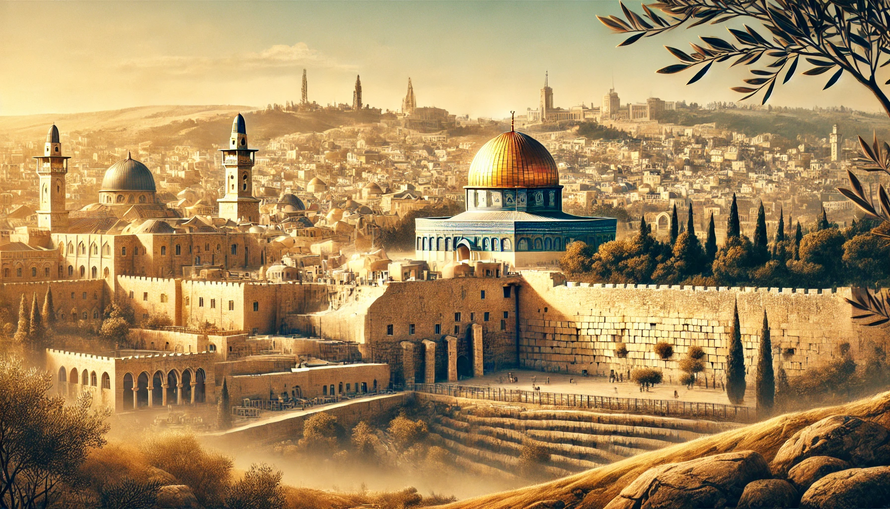
The West Bank corresponds largely to the biblical regions of Judea and Samaria. It was inhabited by ancient Israelites and is central to the narratives of Abraham, David, Solomon, and the prophets. Jerusalem, Hebron, Bethlehem, Shiloh, and Shechem are all located in or adjacent to the area.

Control passed through many empires: Assyrian, Babylonian, Persian, Greek, and Roman. After Jewish revolts against Rome (66–73 AD, 132–135 AD), many Jews were exiled, though a continuous Jewish presence remained.

Modern History

  • During the 1948 Arab-Israeli War, Jordan captured and later annexed the West Bank.
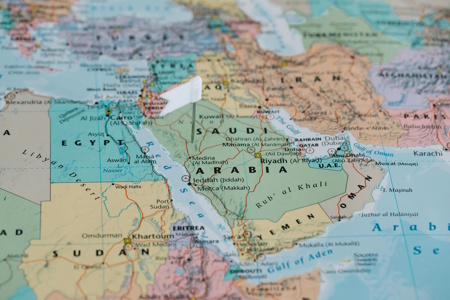
  • The name “West Bank” comes from its location west of the Jordan River.
  • Jordan’s annexation was recognized by only a few countries.
  • Jews were expelled from areas such as East Jerusalem and Hebron, and Jewish holy sites were restricted.
  • Palestinians in the West Bank were granted Jordanian citizenship.

Israeli Control (1967–Present)

  • In the 1967 Six-Day War, Israel captured the West Bank from Jordan.
  • Israel has controlled the territory since then, though it did not formally annex most of it.
  • Jewish settlements were established, beginning in the late 1960s.
  • Palestinians sought self-determination, leading to uprisings (Intifadas) in 1987 and 2000.

Why it Matters

The West Bank is disputed territory under international law. Palestinians seek it as the heartland of a future Palestinian state. Israel cites historical ties, security needs, and unresolved borders.

The region remains fragmented politically and geographically. Tensions continue over settlements, security, governance, and final borders.
Watchdog Alert: Latest From Israel

Photo via cottonbro studio at pexels.com

Benjamin Netanyahu’s Pardon Request & Legal Turmoil

  • The Israeli Prime Minister has formally asked for a presidential pardon in his years-long corruption trial — an unprecedented move while charges (bribery, fraud, breach of trust) are still pending. Reuters
  • The request has sparked sharp criticism: political opponents and legal experts warn that granting a pardon before a verdict could undermine judicial integrity and set a dangerous precedent. AP News
  • Supporters argue a pardon could help unify a deeply divided country amid war and regional instability. Reuters

Hostage Remains Returned from Gaza; Continued Violence Despite Ceasefire

  • Militants in Gaza, according to Hamas, have handed over the body of one of the two remaining hostages from the October 7, 2023 attack — believed to be either an Israeli officer or a foreign national. Israel is preparing to receive the remains via the Red Cross and conduct forensic identification. Reuters
  • The handover comes even as violence persists: an Israeli airstrike in Gaza killed a Palestinian journalist, and Gaza authorities report continued casualties. Reuters
  • The return of remains underscores the fragile and incomplete nature of the ceasefire and hostage-return process, and highlights ongoing humanitarian and security risks. Reuters

Netanyahu Suggests Possible Deal with Syria — New Diplomatic Push

  • Netanyahu has signaled that a deal with Syria could be possible — conditional on Syria’s agreement to establish a demilitarized buffer zone stretching from Damascus to Mount Hermon. Reuters
  • The proposition comes amid ongoing tensions: Israel recently conducted a strike in southern Syria that killed 13 people, reportedly targeting a Lebanese militant group. Reuters
  • If Syria agrees, the deal could reshape regional alignments and constitute a major strategic shift, though deep mistrust remains on both sides. Reuters

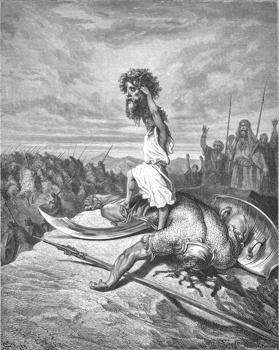
One More Thing About David And Goliath

Here’s a follow-up to the author’s previous piece from this week, ‘About David And Goliath’.


David killed Goliath. End of immediate story, right? We know David went on to become king of Israel (years later), but until recently mulling over this story, I overlooked the immediate end of the story of David and Goliath. It did not end with David and Goliath.

In fact, the beheading of Goliath was just the beginning of that story. Not only did David “get after it” by killing Goliath, the entire army of Israel had to then “get after it” by rallying to the battle and fighting the Philistines until the victory was won and the spoils of war were retrieved.

What if the army had failed to rally? Obviously the giant would have been dead but the battle would not have been won.

I don’t need to give the explanation of this lesson as a type for us. It’s enough to state the facts and allow ourselves to ponder the implications.

One final thought: King Saul offered David his armor and sword, which David refused because he had not “proved it”. The covering of men, even the king, was not going to win this fight. It was the covering of God’s goodness and grace upon David that he relied on, the strong arm of the Lord his God, rather than that of men.

Amen to that.

Digging Up The Past: Biblical Archaeological Discoveries

Bible Rebel keeps a watchdog’s eye on discoveries and news from the world of biblical archaeology and brings it to our readers.

Monumental Dam Wall in the City of David (Jerusalem)

Archaeologists in Jerusalem’s City of David uncovered a massive dam wall dating to around 805–795 BCE — the era of the kings of Judah, possibly King Joash or King Amaziah. The structure measures about 12 meters high, 8 meters wide, and over 20 meters long, making it the largest such dam ever found in ancient Israel.

This discovery supports Biblical references to Jerusalem’s advanced water systems during the First Temple period, including those mentioned in 2 Kings and 2 Chronicles relating to royal construction and fortification near the Gihon Spring and the Pool of Siloam.

Sources:


5,500-Year-Old Flint Blade Workshop at Nahal Qomem (near Kiryat Gat, Israel)

A large flint-blade manufacturing workshop dating to the Early Bronze Age (~3500 BCE) was discovered near Kiryat Gat in southern Israel. The site includes hundreds of underground pits, large flint cores, and finished blades — evidence of full-scale organized production.

Although the workshop predates Israelite settlement, it reflects the advanced culture of the early Canaanite inhabitants of the land. The Bible frequently references the Canaanites as the people living in the land before the Israelites (Genesis 10:15–19; Exodus 13:5), making this discovery relevant background to the Biblical setting.

Sources:


Excavations at Sebastia (Ancient Samaria)

In 2025, archaeologists resumed excavations at Sebastia — the ancient capital of the Northern Kingdom of Israel. They uncovered remains including a paved street leading to the main city gate, decorative columns, and a monumental base structure, marking the first major dig there in a century

Sebastia (Samaria) became the capital of the Northern Kingdom under King Omri (1 Kings 16:23–24) and is mentioned throughout the Old Testament in accounts involving later kings and prophets such as Elijah and Elisha.

Sources:

Watchdog Alert: Israel-Hamas War News

Bible Rebel keeps a watchdog’s eye on events from the Middle East and around the world of interest to people of faith and brings that content to our readers. Here’s the latest from the Israel-Hamas conflict.

Targeted Israeli strike in central Gaza

On 25 October 2025, the Israel Defense Forces (IDF) announced a strike in central Gaza targeting a member of Islamic Jihad Movement in Palestine who was allegedly planning an attack on Israeli troops. The strike took place despite the cease-fire in place since earlier this month. Eyewitnesses reported a drone attack on a car injuring four people, and shelling by Israeli tanks in eastern Gaza City.
Reuters


Nearly 100 Palestinians killed in Gaza since the cease-fire began

According to Gaza’s Health Ministry, at least 93 Palestinians have been killed in the Gaza Strip by Israeli attacks since the cease-fire went into effect on 10 October 2025. Reports also mention Israeli forces shot and wounded at least six Palestinians in various parts of Gaza.
Al Jazeera


U.S. and Qatar engage in Gaza peacekeeping / mediation roles

On 25 October 2025, during a meeting between U.S. President Donald Trump and Qatari Emir Tamim bin Hamad Al Thani, Qatar expressed willingness to contribute to a peacekeeping force in Gaza. This comes amid U.S. diplomatic efforts to shore up the cease-fire and define post-conflict governance in Gaza.
The Times of Israel


Unexploded ordnance injures children in Gaza as families return home

In Gaza City, six-year-old twins Yahya and Nabila Shorbasi were critically injured when they mistook unexploded bombs for a toy in rubble from their damaged home, following the cease-fire. Health officials say hundreds more children have been wounded in similar accidents. The United Nations Mine Action Service (UNMAS) reports over 560 unexploded items found during the cease-fire in Gaza, with many more likely hidden under debris.
AP News

Is Trump ‘Going To Heaven’?

President Trump made some interesting remarks recently on his way to the Middle East for events celebrating the historic peace deal he engineered.

He told reporters on Air Force One, “I don’t think there’s anything going to get me in heaven… I think I’m not, maybe, heaven-bound.” He made the remarks while traveling to Israel, reflecting on his peace efforts and faith. Trump added, “I’m not sure I’m going to be able to make heaven, but I’ve made life a lot better for a lot of people.” https://www.washingtonpost.com/politics/2025/10/13/trump-heaven-christian-faith

There are two big misconceptions that President Trump illustrates here in his remarks.

First, there’s absolutely nothing Trump or anyone else can do through their own works to obtain eternal life. Salvation is by grace alone through the redemptive work of Jesus Christ and is available to anyone and everyone who believes it and accepts it. I’m aware that Calvinists think that the act believing and accepting is the same as ‘works’ – but they are wrong.

Second, the Bible doesn’t teach that we ‘go to heaven’. It clearly and repeatedly teaches that heaven comes to a redeemed creation on earth and that our physical bodies are resurrected to everlasting life with God.

I hope to see Mr. Trump rejoicing with the saints on that day.

Watchdog Alert: Faith Leaders’ Reaction To Hostage Release

Bible Rebel keeps a watchdog’s eye on news and events in the areas of religion and faith from around the world and brings the information to our readers in bite sized chunks. Here are some reactions from various faith leaders about the recent ceasefire and hostage release in Israel and Gaza.

Christian Leaders / Institutions

  • Bishop Robert Stearns (Eagles’ Wings Ministries) spoke of “hope amid historic ceasefire,” saying that God works in the midst of our pain as families reunite. The Jerusalem Post
  • Latin Patriarchate of Jerusalem welcomed the hostage release “with joy,” calling it “a first step” and hoping it would mark “the beginning of the end of this terrible war.” They emphasized urgency of humanitarian relief and the path toward healing and reconciliation. Religion Media Centre
  • The Anglican bishops in parts of England (Southwark, Chelmsford, Gloucester, Norwich) issued statements welcoming the Gaza peace deal, praying for immediate relief and comfort, and calling for a “fundamental shift in attitudes and behaviour” to avoid a return to violence. Religion Media Centre

Faith / Aid Organizations

  • Tearfund (Christian relief agency) welcomed the agreement but stressed that unless the ceasefire holds and humanitarian aid flows without obstruction, lives will continue to be lost. Religion Media Centre
  • Islamic Relief similarly urged that the announcement alone is not enough — there must be enforcement, unrestricted aid, and accountability. Religion Media Centre
  • Christian Aid cautioned that a return to “the old status quo” is not an option; peace must include justice, dignity, and equality for Palestinians and Israelis. Religion Media Centre

Jewish Religious Voices

  • Jewish community and organizational leaders broadly praised the hostage release deal and saw it as a fulfillment of prayers and moral hope. eJewishPhilanthropy
  • Federations and Jewish organizations issued statements calling for conversion of this moment into lasting peace and security for all. eJewishPhilanthropy

Watchdog Alert: Who Are The Palestinians?

In light of the most recent events in the Middle East surrounding a ceasefire and potential long-term peace deal between Israel and Gaza, I wanted to revisit a blog post I did in March of this year which highlights a very interesting and informative article published recently on the Jewish Press website by Dr. Harold Rhode titled “Most Palestinian Families Come from Immigrants from the Past Two Centuries“.

Here are a few excerpts from his piece.

Prior to 1948, the date when the Jewish state was re-established, practically the only people who referred to themselves as Palestinians were the Jews who lived there. The others there, mainly Muslim Arabs, referred to themselves as Muslims.” 

“…The modern Palestinian identity was largely invented in 1964, when the Palestinian Liberation Organization (PLO) was created.”

“…By the 19th century, much of what is now the West Bank and Gaza was sparsely populated and underdeveloped. Travelers such as Mark Twain and former U.S. President Ulysses S. Grant described the region as barren and largely uninhabited. These accounts, written without political bias, provide insight into the state of the land before the demographic shifts that followed.”

And in his conclusion to the article, Dr. Rhode states: “The historical connections between the people of Gaza, the West Bank and British Mandate Palestine are complex—shaped by centuries of migration, trade and political shifts. They are not one people, but a hodge-podge of peoples with no prior connection to pre-1948 Palestine, who settled there during the past two centuries.”

The biblical history of the region is clear – the land and the blessing were given to Abraham and his seed through Isaac by God’s covenant.

Genesis 17:18-21 (KJV) – 18 And Abraham said unto God, O that Ishmael might live before thee!

19 And God said, Sarah thy wife shall bear thee a son indeed; and thou shalt call his name Isaac: and I will establish my covenant with him for an everlasting covenant, and with his seed after him.

20 And as for Ishmael, I have heard thee: Behold, I have blessed him, and will make him fruitful, and will multiply him exceedingly; twelve princes shall he beget, and I will make him a great nation.

21 But my covenant will I establish with Isaac, which Sarah shall bear unto thee at this set time in the next year.

They Said It: Israel/Gaza Ceasefire

Picture via Lara Jameson pexels.com

Bible Rebel continues to keep a watchdog’s eye on events in the Middle East and around the globe, bringing the latest news summaries to our readers. 

U.N. Secretary-General António Guterres

“The United Nations will support the full implementation of the agreement and will scale up the delivery of sustained and principled humanitarian relief … He urged all parties ‘to seize this momentous opportunity to establish a credible political path forward towards ending the occupation, recognizing the right to self-determination of the Palestinian people, and achieving a two-state solution that enables Israelis and Palestinians to live in peace and security.” AJC


UK Prime Minister Keir Starmer

“I welcome the news that a deal has been reached on the first stage of President Trump’s peace plan for Gaza … This is a moment of profound relief that will be felt all around the world, but particularly for the hostages, their families, and for the civilian population of Gaza.” VOZ News


Turkish President Recep Tayyip Erdoğan

“I extend my heartfelt greetings to my Palestinian brothers and sisters who have endured indescribable suffering for two years … We thank the mediators from Qatar, Egypt, and Turkey, who worked with us to make this Historic and Unprecedented Event happen.” AJC


Israeli Prime Minister Benjamin Netanyahu

“This means that ALL of the Hostages will be released very soon, and Israel will withdraw their Troops to an agreed upon line as the first steps toward a Strong, Durable, and Everlasting Peace … With God’s help we will bring them all home.” L’Orient Today

Watchdog Alert: Middle East Peace?

Matthew 24:6-7 – “And ye shall hear of wars and rumours of wars: see that ye be not troubled: for all these things must come to pass, but the end is not yet. For nation shall rise against nation, and kingdom against kingdom: and there shall be famines, and pestilences, and earthquakes, in divers places.” (KJV)

And now, rumors of peace.

Here is a brief summary and analysis of President Trumps 20-point Middle East peace plan, which would go into effect immediately once all parties, including Hamas, agree to it.

Donald Trump’s recently unveiled 20-point Middle East peace plan aims to end the war in Gaza, secure the release of hostages, and establish a transitional governance structure for the territory.

The plan calls for an immediate ceasefire, the release of all hostages, and the dismantling of Hamas’s military capabilities. It envisions a phased Israeli withdrawal paired with Hamas disarmament, with amnesty or safe passage abroad offered to members who renounce violence.

During the transition, Gaza would be overseen by a technocratic authority under international supervision, supported by a multinational security force and eventually leading to Palestinian self-governance under a reformed Palestinian Authority. Importantly, the plan rules out forced displacement of Gazans or Israeli annexation of the territory.

While the framework opens the door to a future Palestinian state, it makes such progress heavily conditional on security guarantees and governance reforms. Critics note that many details remain vague, especially regarding timelines, the composition of the transitional authority, and enforcement mechanisms. Supporters argue the plan represents a pragmatic path to both immediate stability and a long-term settlement, balancing Israeli security needs with Palestinian political aspirations.

Ultimately, the plan’s viability depends on Hamas’s acceptance—something far from guaranteed—as well as the willingness of regional and international actors to fund and enforce the transition. Like Trump’s 2020 “Vision for Peace,” this plan risks being seen as skewed toward Israel’s priorities, but its emphasis on halting the war, preventing annexation, and laying groundwork for Palestinian governance makes it a significant new attempt to reset the diplomatic agenda.