Same Ground, Same Pressure, Same Plan

The headlines out of the Middle East keep tightening—escalation, retaliation, alliances shifting, pressure building from every side. It feels unstable.

But that region has always been a pressure point—not just politically, but spiritually. Nations rise, fall, negotiate, and fight over the same land because it was never just about land. It’s about God’s plan for His creation.

Let’s go back to the beginning, where God tells Abraham in Genesis 17:7–8, “I will establish my covenant as an everlasting covenant between me and you and your descendants after you for the generations to come, to be your God and the God of your descendants after you. The whole land of Canaan, where you now reside as a foreigner, I will give as an everlasting possession to you and your descendants after you.”

Where? Not Ireland or Rome. Not America or France. It’s the land of Canaan—the place where both the modern and ancient state of Israel is and was located. The general area of what we now call the Middle East.

It’s called the Holy Land for a reason.

For how long? God established it by a holy covenant and gave it to Abraham and his seed forever—not just until the Church was born, not paused for a few thousand years, not waiting to restart when Jesus returns.

Forever means forever.

Who? Abraham and his, “…descendants after you for the generations to come, to be your God and the God of your descendants after you.”

The world keeps trying to solve something God already defined. Peace deals come and go. Ceasefires break. Tensions reset.

Everlasting peace doesn’t come from negotiation—it comes from the return of the King. Until then, pressure builds, and the Holy Land still matters. Israel still matters. A lot.

Let’s be vigilant and watch—but not through the eyes of fear. Through the lens God gave us.
Biblical Archaeology: Mass Children’s Grave Discovered

Mass Children’s Grave Discovered at Tel Azekah
April 13, 2026

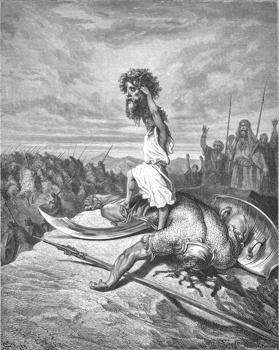
Archaeologists uncovered a burial site containing the remains of numerous children at Tel Azekah, a strategic site mentioned in 1 Samuel 17 (the David and Goliath narrative).

From Associates for Biblical Research
“Archaeologists from Tel Azekah recently published an article in Palestine Exploration Quarterly in which they report the discovery of a mass grave of children that dates to the Persian era. The skeletal remains of between 68 and 89 children were discovered in a cistern that was dated to the fifth century BC based on the pottery and other small finds recovered nearby.”

Azekah was a fortified city in the Kingdom of Judah, and findings here help reconstruct life in the era of Saul and David.

The discovery may shed light on ancient warfare, disease, or ritual practices in Judah’s Shephelah region.

Lions Don’t Have Masters

Photo via cottonbro studio at pexels.com

So far this year, I’ve read two books on Israel’s history and military—The Lion’s Gate by Steven Pressfield and Six Days of War by Michael Oren. Anyone who thinks Israel and the IDF need the USA to do their work for them should read up on the modern history of Israel and the region.

Israel’s War of Independence in 1948, the Six-Day War in 1967, and their numerous subsequent fights for survival have proven time and time again that Israel can take care of itself quite ably in a very, very rough neighborhood.

Israel has been surrounded by hostile enemies who hate them with a perfect hatred and who have ceaselessly sought to annihilate them since their modern rebirth in 1948. They have prevailed against astonishingly superior forces every time.

And they have beaten impossible odds even without American help—just read the history.

Israel is definitely not America’s puppet, and America is definitely not Israel’s puppet. Israel is our friend and ally, as it should be, since they are the only Western‑style democracy and modern free society in the region.

Israel is not our master, and we are not Israel’s master, because lions don’t have masters—lions can handle the wolves and jackals together, or on their own if need be.

Watchdog Alert: Latest From The Holy Land

Photo via cottonbro studio at pexels.com

Bible Rebel keeps a watchdog’s eye on events from the Middle East and around the world of interest to people of faith and brings that content to our readers.

Israeli forces capture militant figure in Lebanon; drone strike kills 3

Israeli forces conducted a cross-border operation in southern Lebanon, capturing a local militant allied with Hamas. Separately, an Israeli drone strike in the region killed three people, including a child, amid continuing hostilities along the Israel-Lebanon border — highlighting ongoing tension with Hezbollah and allied groups following the 2023–24 conflicts. AP

U.S. issues new guidance for ships near the Strait of Hormuz

The U.S. government issued updated navigation guidance for vessels passing through the Strait of Hormuz, a strategic chokepoint for oil exports, urging caution amid rising tensions with Iran. The advisory follows several confrontational incidents between Iranian forces and commercial vessels, even as diplomatic talks continue with Tehran. Reuters

Iran arrests leading reformist politicians

Iranian authorities detained at least four senior reform-minded political figures, accusing them of plotting to undermine the government. The arrests occur amid internal unrest and growing pressure from international tensions — including negotiations with the United States and continued protests. Financial Times

U.S.–Iran tensions persist as Tehran downplays military buildup

Amid continued U.S. military deployments in the region, Iranian officials stated that additional American forces in the Middle East “do not scare us,” while reaffirming Tehran’s position on uranium enrichment — a key sticking point in tensions with Washington. Hindustan Times

Watchdog Alert: Trouble In Iran As Israel Waits

After months of publicly threatening Iran, Israel has gone quiet, waiting to see how the protest movement develops and giving US President Donald Trump space to make his own decision on whether to take action.From CNN

Here’s a brief reminder on the importance of Iran (Persia) in the Bible in relation to Israel in the Old Testament.

In the Bible, the land and people of ancient Persia (roughly corresponding to modern-day Iran) play a significant role in the history of Israel, especially after the Babylonian Exile.

The Persian Empire rose to power in the 6th century BC when Cyrus the Great conquered Babylon and issued a decree allowing the Jewish exiles to return to Jerusalem and rebuild the temple, fulfilling earlier prophetic promises (Isaiah 45:1–2; Cyrus is even called God’s “anointed”) and recorded in Ezra 1:1–4.

Later Persian rulers such as Darius I and Artaxerxes continued to support the restoration of Jerusalem’s worship and governance (Ezra 6; Nehemiah 2). The Book of Esther is set in the Persian royal court at Susa and tells of Jewish deliverance under King Ahasuerus (often identified as Xerxes) and his queen Esther, illustrating Jewish life and providence under Persian rule (Esther 1:1–2).

Persian figures and encounters also appear in prophetic visions (e.g., Daniel 8’s ram symbolizing Media-Persia) and later biblical prophecy (Ezekiel 38:5), showing both its historical influence and ongoing theological significance.

Your Life And What Comes After (20): The Old Testament Road Leads To Jesus

Before moving on to the Gospels, the Good News of Jesus Christ and His kingdom, there are some other men and women in the Old Testament who plugged into God’s plan, that you can read about and see how they put themselves into the flow of God’s purposes.

Moses

Moses is an important leader in the Bible whom God chose to rescue the Israelites from slavery in Egypt and guide them toward the Promised Land. Moses’ story is found mainly in the books of Exodus, Leviticus, Numbers, and Deuteronomy.

Deborah

Deborah was a prophetess, judge, and leader of Israel. You can read her story in the Book of Judges, chapters 4 and 5.

King David

King David plays a big role in God’s grand plan because God chose him to lead Israel and promised that his family line would last forever. David’s story is found mainly in 1 Samuel (chapters 16–31) and 2 Samuel. Also, many of the Psalms were written by David.

Ruth

Ruth was a woman plugged into God’s purposes and in the family line of King David—and ultimately Jesus. Her story is found in The Book of Ruth (Ruth 1–4).

Here Comes Jesus

Next we’re going to look at the one who is the main player in God’s grand plan, the Promised One, Jesus of Nazareth.

Watchdog Alert: Latest From Israel And The Middle East

Photo via cottonbro studio at pexels.com

Bible Rebel keeps a watchdog’s eye on events from the Middle East and around the world of interest to people of faith and brings that content to our readers. Here’s the latest.

New U.S.-Proposed Demilitarized Zone on Israel-Syria Border

Jan 6 2026
The U.S. put forward a proposal during Paris-hosted negotiations that would establish a demilitarized economic zone on the Israel-Syria border. The plan aims to reduce military tensions, involve joint security coordination, and potentially lead to partial Israeli troop withdrawals — a rare move in decades of conflict along that frontier. Axios

Israel Launches Airstrikes Against Hezbollah & Hamas in Lebanon

Jan 5 2026
The Israeli military carried out strikes targeting Hezbollah and Hamas “military infrastructure” in southern and eastern Lebanon. These actions mark a clear escalation in near-daily operations along the northern border, despite a ceasefire that ended the 2023–24 Israel-Hezbollah war. Civilians were evacuated from targeted villages beforehand, but the strikes have drawn international concern over stability in the region. Reuters

Wider Israeli Airstrikes in Lebanon Ahead of Disarmament Talks

Jan 5 2026
In addition to the above, additional airstrikes hit areas including Sidon, described by Israel as weapons storage sites used by militant groups. These strikes come just before crucial Lebanese government efforts to disarm Hezbollah — highlighting ongoing tensions between military pressure and political negotiation. AP News

U.S. & Allied Operations Kill or Capture IS Fighters in Syria

Late Dec 2025
The U.S. Central Command said about 25 Islamic State fighters were killed or captured in Syria during coordinated operations after an ambush that killed U.S. forces. These missions involved airstrikes and coordination with Syrian and regional partners — underscoring continued counter-ISIS activity even amid broader regional tensions. AP News

Why Shepherds?

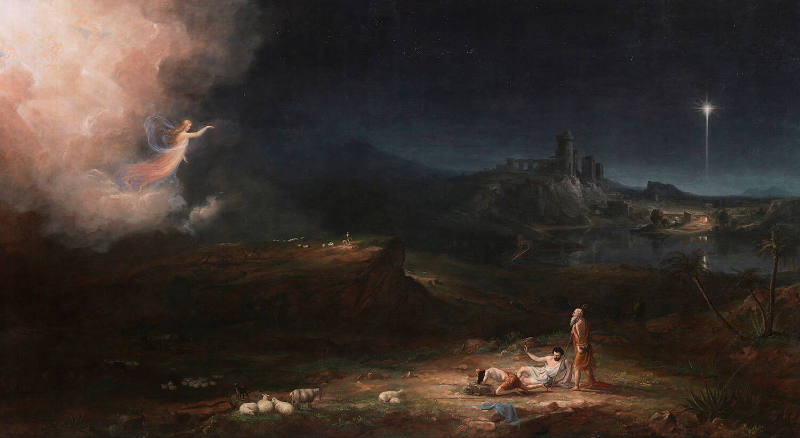
Thomas Cole – The Angel Appearing to the Shepherds

While reading the account of the angel announcing the birth of Jesus in Luke chapter 2, one of my grandchildren asked a great question: “Why did God choose shepherds to hear about it first?”

Here are three well-known commentary perspectives.

God reveals Himself to the lowly, not the powerful

Leon Morris (Tyndale New Testament Commentary – Luke)
Morris notes that shepherds were among the humblest workers in Jewish society. Their selection fits Luke’s repeated theme that God exalts the lowly and bypasses the proud (Luke 1:52). By announcing Jesus’ birth to shepherds rather than kings or priests, God shows that the gospel begins with grace, not status.


Shepherds highlight the theme of Jesus as the true Shepherd

Darrell L. Bock (Baker Exegetical Commentary on the New Testament – Luke)
Bock points out the strong shepherd imagery throughout Scripture and Luke’s Gospel. The angelic announcement to shepherds subtly introduces Jesus’ future role as the one who will shepherd God’s people (cf. Micah 5:2–4). The messianic identity of Jesus is foreshadowed by the audience chosen to hear the news.


Shepherds serve as credible witnesses to God’s work

Joel B. Green (NICNT – The Gospel of Luke)
Green emphasizes that shepherds, though socially insignificant, become the first human witnesses to the Messiah’s birth. Luke consistently shows God using unexpected people to bear witness. Their testimony demonstrates that divine revelation creates trustworthy witnesses, not social rank.

They Said It: Four Quotes On The Book Of Judges

Here are four interesting and insightful quotes about the seventh book of the Bible, Judges.

G. Campbell Morgan

Judges 21:25 (KJV):


Barry G. Webb

Judges 2:10–11 (KJV):


Daniel I. Block

Judges 2:16 (KJV):


Tremper Longman III

Judges 17:6 (KJV):

Watchdog Alert: What Is The ‘West Bank’?

Israel Approves 19 New Settlements in the West Bank

Israel’s government officially approved 19 new Jewish settlements in the occupied West Bank, including 11 newly established ones and recognition of previously unauthorized outposts. This move significantly expands settlement territory and draws criticism from Palestinian advocates and international observers for further complicating peace efforts.
From France 24

But what is the ‘West Bank’ historically and why does it matter today?

Biblical History

The West Bank corresponds largely to the biblical regions of Judea and Samaria. It was inhabited by ancient Israelites and is central to the narratives of Abraham, David, Solomon, and the prophets. Jerusalem, Hebron, Bethlehem, Shiloh, and Shechem are all located in or adjacent to the area.

Control passed through many empires: Assyrian, Babylonian, Persian, Greek, and Roman. After Jewish revolts against Rome (66–73 AD, 132–135 AD), many Jews were exiled, though a continuous Jewish presence remained.

Modern History

  • During the 1948 Arab-Israeli War, Jordan captured and later annexed the West Bank.
  • The name “West Bank” comes from its location west of the Jordan River.
  • Jordan’s annexation was recognized by only a few countries.
  • Jews were expelled from areas such as East Jerusalem and Hebron, and Jewish holy sites were restricted.
  • Palestinians in the West Bank were granted Jordanian citizenship.

Israeli Control (1967–Present)

  • In the 1967 Six-Day War, Israel captured the West Bank from Jordan.
  • Israel has controlled the territory since then, though it did not formally annex most of it.
  • Jewish settlements were established, beginning in the late 1960s.
  • Palestinians sought self-determination, leading to uprisings (Intifadas) in 1987 and 2000.

Why it Matters

The West Bank is disputed territory under international law. Palestinians seek it as the heartland of a future Palestinian state. Israel cites historical ties, security needs, and unresolved borders.

The region remains fragmented politically and geographically. Tensions continue over settlements, security, governance, and final borders.