Tuesday Watchdog: Ninth Circuit Takes Up Religious-Liberty Case

Pic via Malcolm Hill pexels.com

Ninth Circuit will reconsider who a Christian homeless ministry can require employees to be

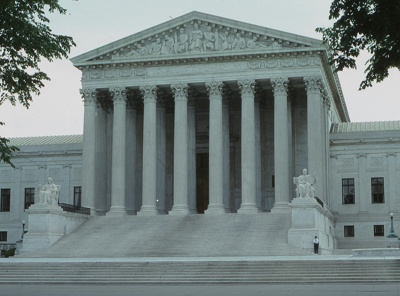
The long-running dispute between Washington state and Yakima Union Gospel Mission is returning to the 9th U.S. Circuit Court of Appeals.

The Christian homeless ministry requires certain employees to share and live according to its religious beliefs. Washington’s anti-discrimination law restricts religious organizations’ ability to make some employment decisions based on sexual orientation and other protected characteristics. The legal question is how far the First Amendment’s protection of religious organizations extends beyond clergy and clearly ministerial employees. Seattle Red

This looks to be a genuinely difficult religious-liberty case.

A Christian ministry obviously shouldn’t be able to say: “We don’t hire Black people.” Slapping “religious belief” on racial discrimination wouldn’t make it legitimate.

But should a Christian ministry be forced to employ someone whose beliefs or conduct directly contradict the religious mission the organization exists to carry out?

Imagine government telling an atheist organization it must hire an evangelist to teach its worldview. Or a Muslim ministry that it must employ somebody openly hostile to Islam. Or a Christian ministry being told it must employ a satanist.

So What?

Religious organizations cannot remain meaningfully religious if government ultimately determines who qualifies to carry out their mission. This should be a slam dunk case for the Ninth Circuit to decide, right?


Saturday Watchdog: Baptist Reversal

Southern Baptist president reverses course on denomination’s abuse crisis

Southern Baptist Convention President Willy Rice, who previously described the SBC sexual-abuse crisis as more “hoax than reality,” is now calling abuse a serious threat requiring “constant vigilance.”

In his first address to the SBC Executive Committee, Rice told churches to establish safeguards, take every allegation seriously, report accusations immediately to law enforcement and cooperate fully with investigations. He also announced a commission on women in pastoral ministry and proposed adding explicit language about gender, sexuality and marriage to the Baptist Faith and Message. The Roys Report

Give Rice credit for changing direction, but Christians shouldn’t miss the larger lesson. When accusations threaten a church’s reputation, the temptation is:

Protect the church.

Protect the pastor.

Protect the ministry.

Protect the denomination.

That is definitely the wrong order.

So What?

Protect the victim FIRST. A church shouldn’t need lawyers, reporters and survivors dragging it toward transparency.

Churches ought to be the first institutions running toward the light, not dragging their feet and covering their eyes from the light.

Tuesday Watchdog: How Far Does Church Autonomy Go?

Abuse Survivor Petitions Texas Supreme Court

Cindy Clemishire has asked the Supreme Court of Texas to revive most of her defamation lawsuit against Gateway Church, disgraced founder Robert Morris and former church elders.

An appeals court dismissed most of her claims under the ecclesiastical abstention doctrine, which limits civil courts from interfering with church doctrine, governance and internal affairs. Clemishire’s lawyers argue the court stretched that protection too far because the dispute concerns public statements about abuse—not theology. Morris pleaded guilty in 2025 to five counts involving sexual abuse of Clemishire when she was a child.

Religious liberty is essential, but religious immunity isn’t.

Government shouldn’t decide whether your church believes in predestination, speaking in tongues, the Trinity or Saturday worship.

However, allegations involving sexual abuse, concealment or publicly defaming a victim aren’t theological doctrines.

So What?

Jesus didn’t tell churches to protect institutions, and He had some extraordinarily severe words about harming “little ones.”

The Texas Supreme Court now has a chance to clarify where the line between church doctrine and criminal behaviour belongs, and it should be a no-brainer.

Read the latest report on Clemishire’s appeal

Bible Rebel September Newsletter: Is Jesus A Republican?

A new national political debate is emerging around candidates such as Texas Democrat James Talarico, Florida state Rep. Angie Nixon and Michigan’s Abdul El-Sayed, who are explicitly incorporating faith into their campaigns. Detroit pastor Lorenzo Sewell accused progressive candidates today of “virtue-signaling” to Christian voters rather than authentically representing biblical Christianity.
See story here.

For decades, Republicans have enjoyed something close to ownership of America’s public Christian vocabulary. That may be changing, and that would be a good thing.

Let Republicans quote Jesus. Let Democrats quote Jesus.

Phillipians 1:15-18

Some indeed preach Christ even of envy and strife; and some also of good will:
The one preach Christ of contention, not sincerely, supposing to add affliction to my bonds:
But the other of love, knowing that I am set for the defence of the gospel.
What then? notwithstanding, every way, whether in pretence, or in truth, Christ is preached; and I therein do rejoice, yea, and will rejoice.

Listen to them all then open the Bible and check them all.

Jesus isn’t Republican or Democrat, and Scripture shouldn’t be retrofitted to whichever political platform we already support.

Rick Tryon
Editor/Publisher Bible Rebel


August/September Highlights

Armchair Apocalypse: What About Those Four Horsemen?

Spiritual Wickedness In High Places

They Said It: Four Quotes On The Book Of Haggai

Video Mini Message: Don’t Fear Death

Ten-episode Bible 101 video series completed

Watchdog Alert: Should AI Tell You What The Bible Means?

Nightclub Church?


Coming in September/October

More of our Armchair Apocalypse series.

“Your Life and What Comes After” book available.

More in-depth content on deeper biblical studies and theological issues.

More Video Mini Messages like this – What Is Heaven?

You can find all of the current Bible 101 episodes and One-Minute Mini Messages here on our YouTube Channel, and you can subscribe to our YouTube channel here.

We’ll also be continuing our regular features, guest articles, and series:

  • Your Life And What Comes After: Plugging Into God’s Forever Plan Now
  • Armchair Apocalypse
  • They Said It: Poignant quotes on a variety of topics
  • Guest articles
  • And more…

Watchdogs

As always, we’ll be keeping a watchdogs eye on all of the latest political, religious, biblical archaeology, and cultural news and events from around the world and bringing to you in bite-size chunks to keep you informed.


Finally, are you interested in contributing content to Bible Rebel?

Bible Rebel is always looking for interesting, compatible content for our biblerebel.com website/blog. We are accepting writing and video submissions for review and possible publication on our platform.

If you have a teaching series, opinion piece, research piece or other content that fits with the Bible Rebel mission we’d like to see it!

If your content fits our mission and creed, included below, then email it to us at in**@********el.com. Written pieces should be no more than 500 words and video content no longer than 7 minutes – either can be submitted as part of a longer series for consideration.

Thanks, and stay tuned for our next newsletter.

Oh, and please go over and give us a follow on Facebook and X (formerly Twitter).

Thursday Watchdog: China’s Imprisoned Religious Minorities

Washington’s Pressure Grows

The bipartisan United States Commission on International Religious Freedom is urging President Trump to make religious prisoners a priority when Chinese President Xi Jinping visits Washington on September 24.
https://religiousfreedominstitute.org/events/ccp-oppression-in-america-and-china

The commission specifically highlights imprisoned Christians along with Uyghur Muslims, Tibetan Buddhists, Falun Gong practitioners and others targeted by Beijing’s religious controls.

A Washington briefing yesterday brought together representatives of several persecuted religious communities to discuss Chinese Communist Party repression and concerns that intimidation extends into the United States.

So What?

Christians should absolutely demand freedom for imprisoned Christians in China.

But will we also demand freedom for the Muslim, Buddhist or Falun Gong prisoner? We should, because religious liberty isn’t Christianity asking government for preferential treatment.

Armchair Apocalypse: What Is ‘Great Tribulation’

We’ll be looking closely at questions and answers about “The Great Tribulation” in a four-part series, starting with Part One here.

Part One: Does Revelation Actually Describe a Seven-Year Tribulation?

Ask most prophecy teachers about the Great Tribulation and you’ll probably get a detailed seven-year timeline involving the Antichrist, the Beast, global war, and judgments arriving one after another.

You might even get a chart.

But if we’re going to understand Revelation, we should begin with what the book actually says—not with the chart.

The phrase “great tribulation” appears in Revelation 7:14, where John sees a huge crowd standing before God:

The Greek word translated “tribulation,” thlipsis, means pressure, distress, affliction, or suffering. It was not a special word reserved only for a future end-times disaster. In fact, John opens Revelation by calling himself his readers’ “companion in tribulation” (Revelation 1:9).

The believers in Smyrna were also experiencing tribulation and were warned that some of them would be imprisoned (Revelation 2:9–10). In Pergamum, a believer named Antipas had already been killed (Revelation 2:13).

For those Christians, tribulation wasn’t a theological theory. They lived under Roman authority in cities where emperor worship was part of public life. Refusing to honor Caesar and the Roman gods could cost them friendships, employment, freedom, or life itself.

Revelation does mention periods of 42 months, 1,260 days, and “a time, times, and half a time.” Each equals approximately three and a half years and draws from the symbolic language of Daniel. What Revelation does not do is combine two of those periods, call the result seven years, and name it “the Great Tribulation.”

The familiar seven-year scenario comes from connecting Revelation with a particular interpretation of Daniel’s seventieth week and several other passages. That may be a valid theological argument, but readers should know that the complete system is assembled from several texts. It is not plainly laid out in Revelation.

So What?

John’s first readers probably weren’t calculating how many years remained before suffering began. They were trying to remain faithful while suffering was already happening.

That changes the question. Instead of beginning with, “When will the Great Tribulation happen?” perhaps we should first ask:

What did tribulation mean within the Jewish and biblical world John’s readers already knew?

We’ll look at that in Part Two.

Tuesday Watchdog: Pastor Calls Native Ceremonies “Idol Worship”

A major Associated Press report published Monday examines the escalating dispute at the Wind River Reservation in Wyoming. Pastor Sarah Lucas of Foundations for Nations publicly condemned traditional Arapaho practices—including the Sundance and sacred pipe ceremonies—as “idol worship.” The sermon triggered protests, and Northern Arapaho leaders have told the church to leave.

There’s a legal complication: the church sits inside reservation boundaries but on privately owned land, making the tribe’s authority to remove it uncertain. Attendance at the church has reportedly fallen by roughly half, and tribal leaders have adopted new rules requiring religious organizations to obtain approval before operating on tribal lands.

Can Christians respect another person’s religious freedom while simultaneously telling them their religion is false? Biblically, yes.

Paul didn’t arrive in pagan Athens and announce that every religion was equally true. He saw a city filled with idols—and then reasoned with the people about the God they didn’t know.

So What?

Christians shouldn’t mock Native Americans or pretend the brutal history of forced religious assimilation never happened.

But neither should a Christian pastor be required to say something she believes is worship of another god is compatible with Christianity. Respecting someone’s right to believe something is not the same as agreeing that what they believe is true.

That’s religious liberty.

But let’s be clear about the basic tenet of our faith as declared by Jesus Christ, and let’s not hesitate to speak the truth boldly:

Saturday Watchdog: Spiritual Wickedness In High Places

Never Forget

Never forget. Because the people who invoke the name of their god as they slaughter thousands of innocent men, women, and children never forget.

Because the spiritual darkness that animates their hatred and inspires the evil acts they commit never rests.

But it appears that too many in our country have indeed forgotten over the past 25 years. Hopefully not enough to open the door to a shocking reminder.

Tuesday Watchdog: Is Jesus A Democrat Or Republican?

A new national political debate is emerging around candidates such as Texas Democrat James Talarico, Florida state Rep. Angie Nixon and Michigan’s Abdul El-Sayed, who are explicitly incorporating faith into their campaigns. Detroit pastor Lorenzo Sewell accused progressive candidates today of “virtue-signaling” to Christian voters rather than authentically representing biblical Christianity.
See story here.

For decades, Republicans have enjoyed something close to ownership of America’s public Christian vocabulary. That may be changing, and that would be a good thing.

Let Republicans quote Jesus. Let Democrats quote Jesus.

Phillipians 1:15-18

Listen to them all then open the Bible and check them all.

Jesus isn’t Republican or Democrat, and Scripture shouldn’t be retrofitted to whichever political platform we already support.

Saturday Watchdog: 47 Dead in Haiti. Christians Should Be Paying Attention

While much of America argues about politics and whatever outrage is trending today, Christians in Haiti are burying their dead.

On August 23, about 150 heavily armed gang members attacked Kenscoff, in the mountains above Port-au-Prince. According to the Associated Press and the United Nations, 47 people were killed and more than 50 kidnapped. Thirty-four people were killed inside or around a church where residents had sought refuge. This week, mourners returned to that same church to bury members of their families. (AP News)

Christian outlets report that the attack centered on the Ark of the New Testament evangelical church, where displaced families had taken shelter, and that many of those killed were Christians. At least five of the dead were children. (CBN)

We should be careful with the word persecution. Haiti’s gangs murder, kidnap and terrorize people indiscriminately, and current reporting does not conclusively establish that every victim was killed because he or she was Christian.

But it isn’t debatable that people seeking safety inside a Christian church were slaughtered there.

Meanwhile, followers of Jesus elsewhere in the world can argue about worship styles, denominations, doctrines, and whether the coffee in the lobby is any good.

But let’s all try to remeber this exortation from Hebrews, because it resonates and reminds us that our comfortable Christianity here in America isn’t neccesarily the norm.

Our brothers and sisters aren’t merely the people sitting beside us Sunday morning. The Body of Christ crosses borders, languages and oceans.

So What?

So today, pray for Haiti. Pray for the kidnapped. Pray for grieving families. Pray for Christians trying to remain faithful in a country where simply gathering together can put them in mortal danger.

And remember them, because much of the world won’t.