Watchdog Alert: Latest From The Middle East

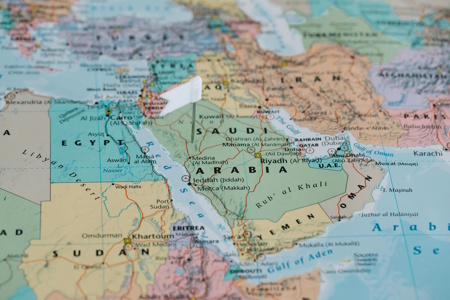
Picture via Lara Jameson pexels.com

Bible Rebel keeps a watchdog’s eye on events from around the world of interest to people of faith and brings that content to our readers.

Houthi rebels attack cargo ship in Red Sea, killing 3 sailors

Yemen’s Houthi rebels launched an assault on the Liberian-flagged, Greek-owned cargo ship Eternity C in the Red Sea. Using fast boats and bomb-laden drones, the attack killed three sailors and wounded two. It marks the first maritime strike by the Houthis since late 2024, raising concerns over renewed threats to vital global trade routes. From the AP


Israel bombs hijacked British ship Galaxy Leader and Houthi targets

On July 7, Israel carried out a major airstrike targeting the Galaxy Leader—a vessel hijacked by Houthi rebels since November 2023—as well as several ports in Yemen (Hodeidah, Ras Isa, Salif) and a coastal power plant. The strikes deployed ~50 munitions and were a direct response to sustained ballistic missile attacks from the Houthis. From The Scottish Sun


Iran receives Chinese surface‑to‑air missile batteries post–Israel cease‑fire

Following its recent cease-fire deal with Israel, Iran has reportedly imported Chinese-made surface-to-air missile systems in exchange for oil. This move is part of efforts to rebuild its air-defence capabilities that were compromised during the conflict. From the Middle East Eye


Iran reports ~1,100 killed in 12‑day conflict with Israel

Iran’s official bodies have confirmed approximately 1,100 deaths during the recent 12-day military confrontation with Israel. The toll, shared by the Foundation of Martyrs & Veterans Affairs, reflects the severity of the short yet intense engagement. From Shafaq

Watchdog Alert: Latest From The Middle East

Bible Rebel keeps a watchdog’s eye on events from around the world of interest to people of faith and brings that content to our readers.

Military briefing: Israel and Iran size up war damage

After 12 days of intense missile and drone exchanges, Israel’s precision airstrikes devastated Iran’s military and nuclear facilities — reportedly destroying over 120 buildings in Tehran, killing 627 Iranians and injuring nearly 4,900. Iran’s missile barrage (550 launches) mostly misfired, striking civilian zones in Israel, resulting in 28 deaths and 1,400 injuries. Analysts say Iran’s nuclear program is set back by months, though Israeli claims suggest delays could span years. From The Financial Times


Ceasefire holds — Khamenei claims “heavy slap” and warns further strikes

Iran’s Supreme Leader Ayatollah Khamenei declared the U.S.–led strikes “achieved nothing” while warning of future U.S. base attacks. He also framed the ceasefire as a regional victory, saying Iran “delivered a heavy slap to America’s face” and hinted at further military action if provoked. From Barron’s


Pope criticizes “diabolical intensity” and humanitarian plight

Pope Leo spoke out on the “diabolical intensity” of the region’s conflict, urging more humanitarian aid for Gaza and a return to international law. His remarks highlight the growing concern over civilian suffering in Gaza amid ongoing hostilities. From reuters.com


Israel halts northern Gaza aid amid theft allegations

Israel has paused humanitarian aid into northern Gaza after video surfaced of masked men on aid trucks. While Israeli officials allege Hamas diversion, clan leaders dispute this, stating they were providing security. From reuters.com

Watchdog Alert: Latest From Israel/Iran War

Here is Jesus, in Matthew 24:6-7, teaching his disciples about the times before end times. But also encouraging them to ‘see that ye be not troubled’.

And ye shall hear of wars and rumours of wars: see that ye be not troubled: for all these things must come to pass, but the end is not yet. For nation shall rise against nation, and kingdom against kingdom: and there shall be famines, and pestilences, and earthquakes, in divers places.” (KJV)

Here’s the latest from the Israel-Iran war as of 6/20/25:

Iran Refuses Nuclear Talks Amid Ongoing Israeli Attacks

Iran’s Foreign Minister Abbas Araqchi announced that Tehran will not enter discussions regarding its nuclear program as long as Israel continues its military strikes. The comments came during a Geneva meeting with European diplomats, which also ended without tangible diplomatic progress. Iran insisted diplomacy must wait until Israeli “aggression stops”.


Bloody Exchanges Continue as War Enters Second Week

A week into the conflict, both sides have carried out substantial airstrikes—Israel targeted missile and nuclear sites in Iran, while Iran responded with missile attacks inside Israel. One notable Iranian strike hit Haifa, injuring at least 19 people, and another hit Beersheba. Civilian casualties continue to rise amid escalating hostilities .


Soroka Hospital Struck by Iranian Missile

On June 19, Iran fired a Sejjil missile that directly hit the Soroka Medical Center in Beersheba. Although the facility had been partially evacuated, the strike resulted in numerous injuries and structural damage, prompting Israeli officials and hospital workers to condemn it as a war crime .


Europe’s Diplomatic Push Yields No Breakthrough

European foreign ministers from the UK, France, Germany, and the EU met with Iran’s FM in Geneva to press for nuclear restrictions and de-escalation. While Iran expressed openness to diplomacy conditional on an end to Israeli attacks, talks concluded without resolution. The U.S. issued a two-week window for Iran to respond before potential involvement .

U.S. Involvement In Israel/Iran War? Simple

Limited U.S. airstrikes with bunker-busters to take out Iran’s Natanz or the Fordow underground nuclear facility? – YES.

Defending American troops overseas and responding with devastating lethal force if even one of our people is attacked or killed over there? – YES! YES! YES!

U.S. boots on the ground in Iran? – NO! NO! NO!

U.S. led push for regime change in Iran? – NO! NO! NO!

Nation building after the war between Israel and Iran? – NO! NO! NO!

ISRAEL vs IRAN — What Should Christians Think?

Editors note: the following was noticed on a FB page and we received permission to copy and paste it for publication here.


The conflict between Israel and Iran is all over the news right now—and a lot of people are wondering what to make of it, especially from a Christian perspective.

Some say it’s part of Bible prophecy unfolding. Others feel Jesus would never support this war.

What do you think?

Here are a few questions to get the conversation going:

• Do you think this conflict has anything to do with end-times prophecy?

• Is modern-day Israel the same “Israel” we read about in the Bible?

• Could this be setting the stage for Christ’s return—or are we overanalyzing?

• Should churches talk about stuff like this on Sundays?

• Can you support Israel as a nation but still disagree with some of its actions?

Let’s talk. Be respectful and share what you believe.

Is Modern Israel The ‘Apple Of God’s Eye”?

Photo via cottonbro studio at pexels.com

The conflict between Israel and Iran is definitely heating up, and many observers in the faith community believe that the modern Jewish state of Israel is the subject of much Old Testament prophecy. Some even believe that current events in the Middle East are a precursor—perhaps even an immediate precursor—to the biblical Armageddon.

On the other hand, there are many sincere Christians with deep knowledge of the Bible who argue that today’s modern Israel, as constituted since 1948, is not the “apple of God’s eye” as it was in ancient times. They contend that, since the destruction of the Temple and the razing of Jerusalem in 70 AD—and the resulting Jewish diaspora—Jews today are not the same bloodline as the children of God’s covenant with Abraham.

It’s an interesting argument and one worth considering, but here’s where the rubber meets the road: Does America (and the rest of Western Christendom) have an obligation to spend our blood and treasure defending Israel simply because they are considered by some to be “God’s chosen people”?

In my opinion, the answer is no.

But here’s the big “but”: America should be ready to defend and support Israel with weapons and intelligence because she is our greatest friend and ally in the Middle East. Our obligation to Israel stems from modern geopolitical realities, not verses from the Old Testament.

Furthermore, our involvement in the current conflict should be limited to intelligence and material support—not boots on the ground. Israel is fully capable of handling the military personnel side of the equation, and there is no reason for American young people to fight and die in another Middle East killing ground.

Watchdog Alert: Israel & Iran On The Brink?

Photo via cottonbro studio at pexels.com

Heightened readiness and U.S. concerns

Recent U.S. intelligence and media reports indicate that Israel is preparing for a possible unilateral strike on Iran’s nuclear facilities in the coming days. Although no formal decision has been made, Israel appears fully prepared to act—even without direct U.S. military involvement, though Washington may still play a supporting logistical or intelligence role. In response, the U.S. has evacuated nonessential personnel from its embassies in Iraq, Bahrain, and Kuwait, tightened travel restrictions in Israel, and repositioned troops across the region to mitigate potential retaliatory threats.


Iran’s posture and potential retaliation

Iran has responded with stern warnings, pledging “forceful and destructive” retaliation—including possible strikes on U.S. bases and interests—should Israel move forward. The IAEA recently censured Iran for breaching nuclear obligations, revealing that Tehran is enriching uranium at 60% purity and planning to open a third, concealed facility. Iran has escalated military exercises and advanced air- and missile-defense drills to prepare for a potential imminent attack.


Diplomatic brinkmanship and strategic constraints

This crisis unfolds against the backdrop of renewed negotiations in Oman between U.S. envoy Steve Witkoff and Iranian officials, yet disagreements over uranium enrichment persist—dramatically raising the stakes. Analysts caution that Israel’s air campaign would be both technically demanding and risky; Iran’s facilities are deeply fortified and geographically dispersed, meaning even a well‑executed strike could fail to incapacitate the program completely—while risking a broader regional conflict. Historically, such Israeli threats often serve as leverage, pressuring Tehran ahead of critical diplomatic rounds, and may still function primarily as strategic messaging—unless American support or internal Israeli pressure tips the balance toward action

Watchdog Alert: Middle East Updates

Picture via Lara Jameson pexels.com

Bible Rebel continues to keep a watchdog’s eye on events in the Middle East. That is not to say that we are watching for any fulfillment of biblical prophecy there, we keep our eyes and ears open to news that affects people of faith from every region around the world.

The Holy Land is of particular interest for three reasons:

  • It is a geographical crossroads, referred to by some the “Center of the Earth”.
  • It is also the historical birthplace of the two largest religions of the world; Christianity and Islam, as well as the ‘Father’ of both those religions – Judaism.
  • It is of major military and strategic importance because of oil production and logistics.

Are the biblical prophecies focusing on geographical locations in the Middle East, especially in and around current-day Israel, relevant to the Church in our times today?

Or will those prophecies only come to pass and be revealed in some future time after the destiny of the Church has been realized? This is a subject Bible Rebel will be exploring in some depth going forward. Stay tuned.

For now, here’s the latest from the Middle East.

Israel Strikes Near Syrian Presidential Palace

Israel conducted an airstrike near Syria’s presidential palace in Damascus, targeting the new Islamist-led government under interim President Ahmed al-Sharaa. The strike aimed to signal Israel’s commitment to defending the Druze minority amid escalating sectarian violence in Syria.
From Reuters

US attacks Yemen port again; Houthis launch missiles at Israel

The Houthi-affiliated Al Masirah TV media outlet has reported that seven US strikes hit the Ras Isa oil port in al-Salif district in Hodeidah in the last few hours, where a US strike at the same port last month killed at least 80 people and wounded 150 in one of the deadliest attacks on the country by US forces.

Earlier Friday, the Houthis claimed responsibility for launching two missiles towards northern Israel, targeting the Ramat David military airbase and the Tel Aviv area, as the group continues its military pressure in solidarity with Palestinians under Israeli fire.
From Al Jazeera

U.S.-Iran Talks Postponed

A fourth round of talks between the United States and Iran, scheduled to take place in Rome, has been postponed. An Iranian official stated that the new date depends on the U.S. approach, citing contradictory behavior and provocative statements from Washington.
From Reuters

Netanyahu calls defeating Israel’s enemies the ‘supreme objective,’ not freeing hostages

Israeli Prime Minister Benjamin Netanyahu said Thursday that defeating Israel’s enemies is more important than securing the release of the remaining hostages in Gaza.

While the prime minister acknowledged that freeing the 59 remaining hostages is a “very important goal,” he described Israel’s fight against its enemies as the “supreme objective” of the war.

“We have many objectives, many goals in this war. We want to bring back all of our hostages,” Netanyahu said. “That is a very important goal. In war, there is a supreme objective. And that supreme objective is victory over our enemies. And that is what we will achieve.”
From CNN

Watchdog Alerts: Iran Nuke Talks And More

Picture via Lara Jameson pexels.com

More A‑10 Warthogs Deploy to the Middle East

From Task & Purpose – The U.S. Air National Guard’s 124th Fighter Wing is sending several A‑10 Thunderbolt II aircraft—and more than 300 airmen—into the CENTCOM area of responsibility. This deployment, set for a 180‑day period, underscores the U.S. military’s intensified buildup in the region as it responds not only to renewed hostilities with Houthi forces in Yemen but also to ongoing counter‑ISIS operations in Iraq and Syria. The surge is viewed as part of broader efforts to maintain readiness amid escalating tensions and frequent missile threats toward U.S. Navy assets.

Iran and the U.S. to Hold Nuclear Talks via Oman

From Al Jazeera – In a noteworthy diplomatic development, Iranian officials have confirmed that indirect negotiations with the United States will take place in Oman focusing on Iran’s contentious nuclear program. Though the talks are set against a backdrop of long‑standing mistrust—with U.S. leadership at times casting doubt on Iran’s motives—this move is being seen as an opening for dialogue and possibly a fresh start to addressing nuclear non‑proliferation concerns. The arrangement highlights the complex interplay of diplomacy and strategic interests in the region.

Arrests in Lebanon Following Rocket Attacks on Israel

From The Independent – Lebanese security forces have detained three individuals—two Lebanese nationals and one Syrian—over their alleged involvement in rocket attacks launched from southern Lebanon into Israeli territory. While militant groups such as Hezbollah have denied direct involvement, the arrests underscore the volatile environment along the Lebanese border and the persistent threat of cross‑border attacks that continue to heighten regional insecurity.

Watchdog Alert: Riviera of the Middle East?

Picture via Lara Jameson pexels.com

Bible Rebel is keeping a watchdog’s eye on events around the world. Here’s some of the latest from the Middle East.

Trump’s ‘out of the box’ Middle East policy is being well-received, says Israeli ambassador

Israeli ambassador to the U.S. Michael Leiter was on ‘Fox News Live’ Sunday to discuss President Donald Trump’s proposing nuclear talks with Iran, his plan for rebuilding Gaza, and the condition of released hostages which sparked outrage in Israel. 

Trump’s suggestion to turn Gaza into “the Riviera of the Middle East” has also sparked a lot of controversy.
https://www.foxnews.com/video/6368564940112

Gaza Ceasefire Deal and Prisoner Swap

Israel and Hamas have conducted a fifth prisoner swap under the Gaza ceasefire deal, exchanging three Israelis for 183 Palestinians.

Israel and Hamas conducted a fifth exchange of prisoners and hostages Saturday as part of a ceasefire agreement that has paused 16 months of war in Gaza.

Hamas released three civilian Israelis and Israel released 183 Palestinian prisoners. It was the fifth swap of hostages for prisoners since the ceasefire began on Jan. 19. Twenty-one hostages and more than 730 Palestinian prisoners have now been freed.AP News

Iran Ready to Negotiate with the U.S.

Iran’s Foreign Minister has stated that Iran is ready to negotiate with the U.S., but not under the “maximum pressure” policy, which Iran views as surrender.

Iran’s Foreign Minister Abbas Araghchi said in a statement on Saturday that “the lifting of sanctions requires negotiations, but not within the framework of a ‘maximum pressure’ policy, because it would not be a negotiation but a form of surrender”. Al Jazeera

Sudan Army Claims Major Advances in Greater Khartoum

The Sudanese army has made significant advances in Greater Khartoum, marking one of the most substantial progressions since the conflict began between army chief al-Burhan and the Rapid Support Forces (RSF).

The army, at war with the RSF since April 2023, has in recent weeks won back large swaths of the capital and its surrounding areas from the paramilitaries.Al Jazeera