You are a miracle, made in God’s image. Act like it.
The Bible For Beginners
Here’s the link to the Bible 101 YouTube series I recently did. Ten episodes, each one between 5 and 8 minutes long, to help anyone at any level learn how to read and better understand the Bible.
Short and to the point.
The Prosperity Gospel, Part 3

Read Part 1 Here
Read Part 2 Here
In Part 2 of this series we discussed some of what Jesus taught concerning the ‘Prosperity Gospel’, I and concluded with this:
Does he teach that you can’t or shouldn’t have more than the necessities? No, but our Lord’s message is clear that the desire for God’s righteousness is muddied and distorted when we focus on the riches of this age instead of His kingdom.
It’s impossible to have total reliance on God when one has lots of cash and cars and jets and Swiss bank accounts to fall back on, right?
Now, in Part 3, the final part in this series, we’ll look at Paul’s message in the epistles regarding how we are to view real wealth and success.
What did the Apostle Paul teach?
Paul’s teaching is an unambiguous refutation of the prosperity gospel. The Apostle Paul’s message was contentment in all circumstances, not a focus on seeking material wealth as a sign of divine favor.
Philippians 4:11-13
11 Not that I speak in respect of want: for I have learned, in whatsoever state I am, therewith to be content. 12 I know both how to be abased, and I know how to abound: every where and in all things I am instructed both to be full and to be hungry, both to abound and to suffer need. 13 I can do all things through Christ which strengtheneth me.
Christ’s strength is sufficient, whether we are wealthy or poor, and contentment in that strength alone is the true mark of godliness, not health and wealth.
Paul also warned us about false teachers who equated godliness and divine favor with worldly wealth.
1 Timothy 6:5-10
5 Perverse disputings of men of corrupt minds, and destitute of the truth, supposing that gain is godliness: from such withdraw thyself. 6 But godliness with contentment is great gain. 7 For we brought nothing into this world, and it is certain we can carry nothing out. 8 And having food and raiment let us be therewith content. 9 But they that will be rich fall into temptation and a snare, and into many foolish and hurtful lusts, which drown men in destruction and perdition. 10 For the love of money is the root of all evil: which while some coveted after, they have erred from the faith, and pierced themselves through with many sorrows
It’s very clear that Paul taught that equating faith with worldly success, fame, and wealth is spiritual error. And when ministers of the gospel choose personal gain over obedience, which may result in sacrifice, it is spiritual error doubled.
The bottom line, as I see it, regarding the prosperity gospel is simply this – faith and godliness cannot be measured by outward appearances like worldly wealth. A rich person is often spiritually poor, and a poor person is often spiritually rich.
Both Jesus and Paul taught that our focus is to be on the Kingdom of God and the restoration of all things in the coming age, regardless of our current status in this age. Period.
Middle East Watchdog Alert
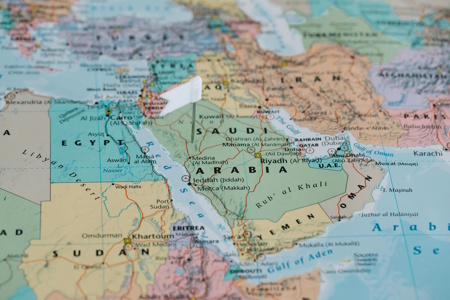
Bible Rebel continues to keep a watchdog’s eye on world events, here’s the latest from the Middle East.
Top US general in Israel for talks amid massive American military buildup in region
United States Gen. Michael Erik Kurilla, head of the US Central Command (CENTCOM), who arrived in Israel earlier this week for an official visit, held an assessment with IDF Chief of Staff Lt. Gen. Eyal Zamir, the Israeli military said Thursday. The IDF says the meeting focused on “strategic security issues across the region.”
From the Times of Israel
Israel launches air attacks on Syria’s Damascus and Hama
Israeli military aircraft have carried out attacks in Syria’s capital Damascus and in the central province of Hama, Israel’s army and local media have said, in the latest string of strikes on the war-torn country.
The state-run Syrian Arab News Agency (SANA) said the attacks on Wednesday targeted the vicinity of the scientific research centre in the Barzeh neighbourhood of the capital, as well as the airport in the Syrian city of Hama.
From Al Jazeera
Turkiye detains over 1,100 as Erdogan blames ‘evil’ opposition for protests
Turkish police have detained 1,113 people across the country over five days of protests as President Recep Tayyip Erdogan blames the main opposition party for the unrest sparked by the detention of his main political rival.
From Al Jazeera
Netanyahu says IDF carving new corridor across Gaza to cut off Rafah, pressure Hamas
Prime Minister Benjamin Netanyahu said Wednesday that advancing IDF forces were carving out a new security corridor across southern Gaza that would likely cut off the city of Rafah from the rest of the Strip, as Israel seeks to pile pressure on Hamas to free the hostages.
From the Times of Israel
Why Did Paul Speak In Tongues So Much?-Part 4
Editors note: the guest article appearing here does not necessarily reflect the views of Bible Rebel editors or other guest authors and contributors. Bible Rebel seeks to present a wide range of ideas and viewpoints in order to fulfill our mission to provide resources for “Curious Fearless Faith”. This is the fourth installment in an ongoing series on prayer by Steve Sann.
Read Part 1 here
Read Part 2 here
Read Part 3 here

So, the morning of the Day of Pentecost, when the gift of holy spirit was first received, what did the apostles do? They spoke in tongues as the Lord had commanded.
And yet, as we look around today, it’s not uncommon to see those seeking tongues becoming discouraged, waiting endlessly in disappointment to “feel” something. Some even have reasoned that God certainly has not granted them this “special gift”.
Even others have been taught it is exclusively for ministering in foreign languages as a missionary. But in reality, that phenomenon occurred only once in all of scripture (Acts 2): there is no promise offered nor reason suggested that it would be often repeated. Quite the opposite: we speak in tongues because the scriptures stipulate it, not because we expect sensations, or are planning some sort of religious pilgrimage!
Every one of us has the ability to speak in tongues at the time of the new birth. Physical sensations and other such phenomena are never guaranteed by the Word, and, frankly, are most uncommon. Why should God have to use five senses incentives (emotions, feelings, and the like) to motivate a mature Christian to do what is clearly commanded in His Word?
No—rather, the scriptures plainly encourage all believers to speak in tongues: “I would that ye all spake with tongues…” (I Corinthians14:5a). God would have all of us manifest, showing forth this ability which is already inherent in each of us. But why, then, should we strive to speak in tongues frequently? Didn’t we fulfill Christ’s directive by merely speaking in tongues the first time? On the contrary. Paul emphasized, when it comes to tongues, more is definitely better. As an example of this most healthy lifestyle, Paul pointed to himself: I thank my God I speak with tongues more than you all. – I Corinthians 14:18
Paul’s daily habit? He spoke in tongues—much. In fact, he spoke in tongues so much that he surpassed everyone in the entire first-century Corinthian church: “…I speak with tongues more than you all.” Perhaps, as some translate, he actually spoke in tongues more than the entire Corinthian church combined. Whatever the case, by this one declaration in I Corinthians 14:18, Paul commended his own example as the standard for the church of the first century.
Royal Seal Of King Hezekiah Found
As reported in Bible History Daily from the Biblical Archaeology Society, a recent discovery has unearthed, literally, a stamped clay bulla bearing the seal of King Hezekiah.
From the article:
“The royal seal of King Hezekiah in the Bible was found in an archaeological excavation. The stamped clay seal, also known as a bulla, was discovered in the Ophel excavations led by Dr. Eilat Mazar at the foot of the southern wall of the Temple Mount in Jerusalem. The discovery was announced in a press release by the Hebrew University of Jerusalem’s Institute of Archaeology, under whose auspices the excavations were conducted...
…Who Was King Hezekiah in the Bible?
King Hezekiah in the Bible, son and successor of Ahaz and the 13th king of Judah (reigning c. 715–686 B.C.E.), was known for his religious reforms and attempts to gain independence from the Assyrians.“
As always, Bible Rebel keeps a watchdog’s eye on the latest news from the world of biblical archaeology and brings it to our readers. Stay tuned.
Why Did Paul Speak In Tongues So Much?-Part 3
Editors note: the guest article appearing here does not necessarily reflect the views of Bible Rebel editors or other guest authors and contributors. Bible Rebel seeks to present a wide range of ideas and viewpoints in order to fulfill our mission to provide resources for “Curious Fearless Faith”. This is the third installment in an ongoing series on prayer by Steve Sann.
Read Part 1 here
Read Part 2 here
So, what motivates me to speak in tongues in the first place? Most basically, because Jesus said I should, and Paul said I could. Jesus, in his final instructions on earth, commanded that future believers should speak in tongues: “And these signs shall follow them that believe…. they shall speak with new tongues.” (Mk. 16:17 KJV). And later Paul, encouraged all believers, that they both should and could: “I would that ye all spake with tongues…” (I Corinthians 14:5a KJV). So, the morning of the Day of Pentecost, when the gift of holy spirit was first received, what did the apostles do? They spoke in tongues as the Lord had commanded.
And yet, as we look around today, it’s not uncommon to see those seeking tongues becoming discouraged, waiting endlessly in disappointment to “feel” something. Some even have reasoned that God certainly has not granted them this “special gift”.
Even others have been taught it is exclusively for ministering in foreign languages as a missionary. But in reality, that phenomenon occurred only once in all of scripture (Acts 2): there is no promise offered nor reason suggested that it would be often repeated. Quite the opposite: we speak in tongues because the scriptures stipulate it, not because we expect sensations, or are planning some sort of religious pilgrimage!
Every one of us has the ability to speak in tongues at the time of the new birth. Physical sensations and other such phenomena are never guaranteed by the Word, and, frankly, are most uncommon. Why should God have to use five senses incentives (emotions, feelings, and the like) to motivate a mature Christian to do what is clearly commanded in His Word?
No—rather, the scriptures plainly encourage all believers to speak in tongues: “I would that ye all spake with tongues…” (I Corinthians14:5a). God would have all of us manifest, showing forth this ability which is already inherent in each of us. But why, then, should we strive to speak in tongues frequently? Didn’t we fulfill Christ’s directive by merely speaking in tongues the first time? On the contrary. Paul emphasized, when it comes to tongues, more is definitely better. As an example of this most healthy lifestyle, Paul pointed to himself: I thank my God I speak with tongues more than you all. – I Corinthians 14:18
Paul’s daily habit? He spoke in tongues—much. In fact, he spoke in tongues so much that he surpassed everyone in the entire first-century Corinthian church: “…I speak with tongues more than you all.” Perhaps, as some translate, he actually spoke in tongues more than the entire Corinthian church combined. Whatever the case, by this one declaration in I Corinthians 14:18, Paul commended his own example as the standard for the church of the first century.
What Is Palestine? Who Are Palestinians?
Who Are The Palestinians?
There’s a very interesting and informative article published recently on the Jewish Press website by Dr. Harold Rhode titled “Most Palestinian Families Come from Immigrants from the Past Two Centuries“.
Here are a few excerpts from his piece.
“Prior to 1948, the date when the Jewish state was re-established, practically the only people who referred to themselves as Palestinians were the Jews who lived there. The others there, mainly Muslim Arabs, referred to themselves as Muslims.”
“…The modern Palestinian identity was largely invented in 1964, when the Palestinian Liberation Organization (PLO) was created.”
“…By the 19th century, much of what is now the West Bank and Gaza was sparsely populated and underdeveloped. Travelers such as Mark Twain and former U.S. President Ulysses S. Grant described the region as barren and largely uninhabited. These accounts, written without political bias, provide insight into the state of the land before the demographic shifts that followed.”
And in his conclusion to the article, Dr. Rhode states: “The historical connections between the people of Gaza, the West Bank and British Mandate Palestine are complex—shaped by centuries of migration, trade and political shifts. They are not one people, but a hodge-podge of peoples with no prior connection to pre-1948 Palestine, who settled there during the past two centuries.”
The biblical history of the region is clear – the land and the blessing were given to Abraham and his seed through Isaac by God’s covenant.
Genesis 17:18-21 (KJV) – 18 And Abraham said unto God, O that Ishmael might live before thee!
19 And God said, Sarah thy wife shall bear thee a son indeed; and thou shalt call his name Isaac: and I will establish my covenant with him for an everlasting covenant, and with his seed after him.
20 And as for Ishmael, I have heard thee: Behold, I have blessed him, and will make him fruitful, and will multiply him exceedingly; twelve princes shall he beget, and I will make him a great nation.
21 But my covenant will I establish with Isaac, which Sarah shall bear unto thee at this set time in the next year.
What Is Palestine?
The following was recently posted on the Thomas Sowell Foundation page by Mr. Sam Fregiato.
“A crash course on history of PALESTINIAN STATE:
1. Before Israel, there was a British mandate, not a Palestinian state
2. Before the British Mandate, there was the Ottoman Empire, not a Palestinian state.
3. Before the Ottoman Empire, there was the Islamic state of the Mamluks of Egypt, not a Palestinian state.
4. Before the Islamic state of the Mamluks of Egypt, there was the Ayubid Arab-Kurdish Empire, not a Palestinian state.
5. Before the Ayubid Empire, there was the Frankish and Christian Kingdom of Jerusalem, not a Palestinian state.
6. Before the Kingdom of Jerusalem, there was the Umayyad and Fatimid empires, not a Palestinian state.
7. Before the Umayyad and Fatimid empires, there was the Byzantine empire, not a Palestinian state.
8. Before the Byzantine Empire, there were the Sassanids, not a Palestinian state.
9. Before the Sassanid Empire, there was the Byzantine Empire, not a Palestinian state.
10. Before the Byzantine Empire, there was the Roman Empire, not a Palestinian state.
11. Before the Roman Empire, there was the Hasmonean state, not a Palestinian state.
12. Before the Hasmonean state, there was the Seleucid, not a Palestinian state.
13. Before the Seleucid empire, there was the empire of Alexander the Great, not a Palestinian state.
14. Before the empire of Alexander the Great, there was the Persian empire, not a Palestinian state.
15. Before the Persian Empire, there was the Babylonian Empire, not a Palestinian state.
16. Before the Babylonian Empire, there were the Kingdoms of Israel and Judah, not a Palestinian state.
17. Before the Kingdoms of Israel and Judah, there was the Kingdom of Israel, not a Palestinian state.
18. Before the kingdom of Israel, there was the theocracy of the twelve tribes of Israel, not a Palestinian state.
19. Before the theocracy of the twelve tribes of Israel, there was an agglomeration of independent Canaanite city-kingdoms, not a Palestinian state.
20. Actually, in this piece of land there has been everything, EXCEPT A PALESTINIAN STATE.”
The Dismal State Of Churchianity

Is traditional denominational church attendance and membership an indicator of the spiritual health of a country or community?
Maybe. But if it is, then America and Western Europe have been are in need of an urgent diagnosis and prognosis, because the patient hasn’t been looking so good in recent years.
According to churchtrac.com, “Church membership and attendance have been on a steady decline in the United States for almost 25 years. A recent (2021) Gallup study discovered U.S. church membership has dipped below 50% for the first time in 80 years.”
In addition, according to a recent Pew Research Religious Landscape Study, “The latest RLS, fielded over seven months in 2023-24, finds that 62% of U.S. adults identify as Christians. That is a decline of 9 percentage points since 2014 and a 16-point drop since 2007.”
That study also indicates that study also found that, “…for the last five years, between 2019 and 2024, the Christian share of the adult population has been relatively stable, hovering between 60% and 64%. The 62% figure in the new Religious Landscape Study is smack in the middle of that recent range.”
So, it’s possible that the decline in traditional churchianty’s attendance and membership has leveled off in recent years, but it seems to be only getting worse in Western Europe.
Catholic Membership in Germany Falls Below 20 Million for the First Time
In a March 27, 2025 piece, The Munich Eye reports that:
“For the first time in history, the number of Catholics in Germany has dipped below the 20 million mark, according to preliminary figures released by the German Bishops’ Conference in Bonn. As of 2024, the Catholic population now accounts for just 23.7% of the total German population, translating to approximately 19,769,237 members.
This significant decline comes despite a slight decrease in the number of individuals formally leaving the Church. In 2024, 321,611 Catholics exited the institution, a reduction from the previous year’s figure of 402,694.“
Why?
Well, you don’t need a weatherman to know which way the wind blows, as the saying goes.
Anyone who has been paying attention to such things knows, both statistically and anecdotally, that Americans and Europeans alike have become increasingly skeptical of, and even hostile towards, denominational Christianity.
This doesn’t mean folks aren’t interested in or craving spiritual matters less, it just means that religiosity has lost much of it’s appeal and credibility.
There are a variety of reasons for this exodus from churchianity, but here are some of the reasons I have observed and noted over the years:
- Denominational and creedal doctrines are confusing and contradictory, often not even biblical, and fail to provide direct answers to direct questions about God and the Bible.
- Clergy and spiritual leadership are often seen as being too focused on raising resources for new buildings, administration, and church functions.
- Church and worship services are too often centered on denominational ceremonies and traditions, which are mostly devoid of spiritual power, or on emotional experiences which are short-lived.
- Teachings from the pulpit that are either boring and irrelevant or are focused on cultural, political, and social issues rather than on the power of the living God and the literal resurrection and literal apocalyptic return Jesus Christ to judge the world, establish His Kingdom, and bring about the everlasting reign of God.
Bible Rebel’s Creed and Mission
The purpose of the Bible Rebel ministry and blog is to provide an alternative resource and connection point for those seeking something more than stale, powerless religion.
Here is our one and only creed:
Our living God is a loving God and the Bible is His revealed word and will.
Our hope and eternal salvation relies entirely on the work of God’s only begotten son, Jesus Christ, who is the way, the truth, and the life.
You can find our Mission Statement here.