Greater Works Than These – Part 2

Editors note: the guest article appearing here does not necessarily reflect the views of Bible Rebel editors or other guest authors and contributors. Bible Rebel seeks to present a wide range of ideas and viewpoints in order to fulfill our mission to provide resources for “Curious Fearless Faith”. This is the Part 2 in a new series on prayer called ‘Greater Works Than These’ by Steve Sann.

Greater Works Than These – Part 1


John 14:12: Most assuredly, I say to you, he who believes in Me, the works that I do he will do also; and greater works than these he will do, because I go to My Father. Can’t you just hear the squawking when you begin broadcasting you can do greater works? “What—you think you can do greater works than Jesus Christ?!” Yet, that is exactly what the Word of God declares.

So, every Christian in modern times must ask himself this question: “What are these greater works that God would have me to perform?” The evidence is found in Mark 16. Here, Jesus Christ foretold specifically of tongues: it was to be a sign of the future believers. It would be a sign simply because it would be a uniquely new work—one not yet available until after Christ’s ascension:

Mark 16:12: And these signs will follow those who believe: In My name…they will speak with new tongues. So, what then qualifies tongues as truly a greater work? Because when we speak, we bring to pass multiple accomplishments simultaneously. By means of tongues, God was able to incorporate into one work nearly all of the greatest works a man can do for God—and perform them perfectly, and simultaneously! For example:

  • praying perfectly,
  • making intercession for others,
  • receiving the mysteries of God,
  • praising and worshipping Him,
  • bonding with Him,
  • acquiring confirmation that you are a son of God…

…and this summarizes only some of the benefits. These are the greatest works believers perform before God. A single work of this magnitude was previously unachievable.

If Jesus Christ called it a “greater work”, wouldn’t that infer that he wished speaking in tongues were available in his day? And why wouldn’t he? Yet, it could not become available until he himself made the ultimate sacrifice.

Take a moment to recall some of what we would think are the super-cinematic “20th Century Fox” greatest works of Jesus Christ: raising the dead, giving sight to the blind, commanding devils out. Water into wine. Walking on water. Yet, above all these, Jesus Christ prized speaking in tongues as a “greater work.” Either we have not yet risen up to realize the raw power of tongues, or just perhaps our value scale of “greatness” is skewed.

But this we know to be certain—looking ahead to the coming of speaking in tongues, Jesus Christ foresaw its impact to be of such enormity that it was to be a “game changer” for the Church. Does it not seem astonishing to you how that which Jesus Christ so highly esteemed, his ministers today have made least significant?

But now, God has preserved this for our time, your tool to rely on throughout life’s travels. Analogous to the revolutionary cellular and internet technologies of recent decades, tongues is a convenience and a time-saver, which as you familiarize yourself with it, becomes easier and more dependable. It is truly a spiritual technological advancement. And like all newer and greater technologies, its purpose is to carry out a greater work.

Is Trump ‘Going To Heaven’?

President Trump made some interesting remarks recently on his way to the Middle East for events celebrating the historic peace deal he engineered.

He told reporters on Air Force One, “I don’t think there’s anything going to get me in heaven… I think I’m not, maybe, heaven-bound.” He made the remarks while traveling to Israel, reflecting on his peace efforts and faith. Trump added, “I’m not sure I’m going to be able to make heaven, but I’ve made life a lot better for a lot of people.” https://www.washingtonpost.com/politics/2025/10/13/trump-heaven-christian-faith

There are two big misconceptions that President Trump illustrates here in his remarks.

First, there’s absolutely nothing Trump or anyone else can do through their own works to obtain eternal life. Salvation is by grace alone through the redemptive work of Jesus Christ and is available to anyone and everyone who believes it and accepts it. I’m aware that Calvinists think that the act believing and accepting is the same as ‘works’ – but they are wrong.

Second, the Bible doesn’t teach that we ‘go to heaven’. It clearly and repeatedly teaches that heaven comes to a redeemed creation on earth and that our physical bodies are resurrected to everlasting life with God.

I hope to see Mr. Trump rejoicing with the saints on that day.

Watchdog Alert: Faith Leaders’ Reaction To Hostage Release

Bible Rebel keeps a watchdog’s eye on news and events in the areas of religion and faith from around the world and brings the information to our readers in bite sized chunks. Here are some reactions from various faith leaders about the recent ceasefire and hostage release in Israel and Gaza.

Christian Leaders / Institutions

  • Bishop Robert Stearns (Eagles’ Wings Ministries) spoke of “hope amid historic ceasefire,” saying that God works in the midst of our pain as families reunite. The Jerusalem Post
  • Latin Patriarchate of Jerusalem welcomed the hostage release “with joy,” calling it “a first step” and hoping it would mark “the beginning of the end of this terrible war.” They emphasized urgency of humanitarian relief and the path toward healing and reconciliation. Religion Media Centre
  • The Anglican bishops in parts of England (Southwark, Chelmsford, Gloucester, Norwich) issued statements welcoming the Gaza peace deal, praying for immediate relief and comfort, and calling for a “fundamental shift in attitudes and behaviour” to avoid a return to violence. Religion Media Centre

Faith / Aid Organizations

  • Tearfund (Christian relief agency) welcomed the agreement but stressed that unless the ceasefire holds and humanitarian aid flows without obstruction, lives will continue to be lost. Religion Media Centre
  • Islamic Relief similarly urged that the announcement alone is not enough — there must be enforcement, unrestricted aid, and accountability. Religion Media Centre
  • Christian Aid cautioned that a return to “the old status quo” is not an option; peace must include justice, dignity, and equality for Palestinians and Israelis. Religion Media Centre

Jewish Religious Voices

  • Jewish community and organizational leaders broadly praised the hostage release deal and saw it as a fulfillment of prayers and moral hope. eJewishPhilanthropy
  • Federations and Jewish organizations issued statements calling for conversion of this moment into lasting peace and security for all. eJewishPhilanthropy

Watchdog Alert: Who Are The Palestinians?

In light of the most recent events in the Middle East surrounding a ceasefire and potential long-term peace deal between Israel and Gaza, I wanted to revisit a blog post I did in March of this year which highlights a very interesting and informative article published recently on the Jewish Press website by Dr. Harold Rhode titled “Most Palestinian Families Come from Immigrants from the Past Two Centuries“.

Here are a few excerpts from his piece.

Prior to 1948, the date when the Jewish state was re-established, practically the only people who referred to themselves as Palestinians were the Jews who lived there. The others there, mainly Muslim Arabs, referred to themselves as Muslims.” 

“…The modern Palestinian identity was largely invented in 1964, when the Palestinian Liberation Organization (PLO) was created.”

“…By the 19th century, much of what is now the West Bank and Gaza was sparsely populated and underdeveloped. Travelers such as Mark Twain and former U.S. President Ulysses S. Grant described the region as barren and largely uninhabited. These accounts, written without political bias, provide insight into the state of the land before the demographic shifts that followed.”

And in his conclusion to the article, Dr. Rhode states: “The historical connections between the people of Gaza, the West Bank and British Mandate Palestine are complex—shaped by centuries of migration, trade and political shifts. They are not one people, but a hodge-podge of peoples with no prior connection to pre-1948 Palestine, who settled there during the past two centuries.”

The biblical history of the region is clear – the land and the blessing were given to Abraham and his seed through Isaac by God’s covenant.

Genesis 17:18-21 (KJV) – 18 And Abraham said unto God, O that Ishmael might live before thee!

19 And God said, Sarah thy wife shall bear thee a son indeed; and thou shalt call his name Isaac: and I will establish my covenant with him for an everlasting covenant, and with his seed after him.

20 And as for Ishmael, I have heard thee: Behold, I have blessed him, and will make him fruitful, and will multiply him exceedingly; twelve princes shall he beget, and I will make him a great nation.

21 But my covenant will I establish with Isaac, which Sarah shall bear unto thee at this set time in the next year.

Biblical Literacy: Setting The Record Straight

Here are three common misconceptions about what the Bible says – and doesn’t say.

Singular, Not Plural

The last book of the Bible is not called ‘Revelations.’ It should be referred to as the ‘Book of Revelation’, singular.


Fruit, Not Apple

The fruit of the tree of the knowledge of good and evil in the first book of the Bible, Genesis, is never called an apple.

Genesis 2:16–17 (KJV):
“And the Lord God commanded the man, saying, Of every tree of the garden thou mayest freely eat:
But of the tree of the knowledge of good and evil, thou shalt not eat of it: for in the day that thou eatest thereof thou shalt surely die.”


Store Cities, Not Pyramids

In Exodus 1:11, it says the Israelites built the “store cities” of Pithom and Raamses for Pharaoh. These were supply or storage centers, not pyramids. The pyramids of Egypt were constructed many centuries earlier, during the Old and Middle Kingdom periods (roughly 2600–1800 B.C.), long before most scholars date the events of the Exodus (often placed between 1500–1200 B.C., depending on interpretation).

So, while the Israelites were enslaved and forced into construction labor, the Bible and archaeology both indicate they built cities and other works, not the pyramids.

The idea that they were building pyramids most likely comes from the Cecil B. DeMille movie, ‘The Ten Commandments‘.

They Said It: Israel/Gaza Ceasefire

Picture via Lara Jameson pexels.com

Bible Rebel continues to keep a watchdog’s eye on events in the Middle East and around the globe, bringing the latest news summaries to our readers. 

U.N. Secretary-General António Guterres

“The United Nations will support the full implementation of the agreement and will scale up the delivery of sustained and principled humanitarian relief … He urged all parties ‘to seize this momentous opportunity to establish a credible political path forward towards ending the occupation, recognizing the right to self-determination of the Palestinian people, and achieving a two-state solution that enables Israelis and Palestinians to live in peace and security.” AJC


UK Prime Minister Keir Starmer

“I welcome the news that a deal has been reached on the first stage of President Trump’s peace plan for Gaza … This is a moment of profound relief that will be felt all around the world, but particularly for the hostages, their families, and for the civilian population of Gaza.” VOZ News


Turkish President Recep Tayyip Erdoğan

“I extend my heartfelt greetings to my Palestinian brothers and sisters who have endured indescribable suffering for two years … We thank the mediators from Qatar, Egypt, and Turkey, who worked with us to make this Historic and Unprecedented Event happen.” AJC


Israeli Prime Minister Benjamin Netanyahu

“This means that ALL of the Hostages will be released very soon, and Israel will withdraw their Troops to an agreed upon line as the first steps toward a Strong, Durable, and Everlasting Peace … With God’s help we will bring them all home.” L’Orient Today

Watchdog Alert: The Bible As History

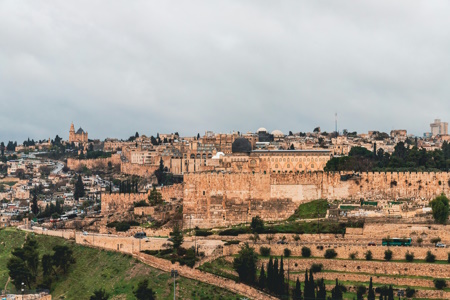
Photo via Виктор Соломоник at pexels.com

Bible Rebel keeps a watchdog’s eye on discoveries in biblical archaeology and brings the information to our readers. Here are some key discoveries and why they support the biblical record.

Dam Wall from the Time of King Joash at the Pool of Siloam (~805-795 BCE)

A large dam wall in the City of David, near the Pool of Siloam, has been excavated and dated via carbon-14 to about 805-795 BCE. The walls are substantial: ~21 meters long, ~12 meters high, ~8 meters thick. Bible Archaeology Report

Why it supports biblical history:

  • The Bible describes several construction/repair projects by Judahite kings; a major water-infrastructure project fits in with what one might expect of a centralized Judah in that era.
  • The dam would have helped manage water supply in times of dryness and flooding, which matches other environmental/climate evidence from the region showing arid conditions with occasional flash floods. Bible Archaeology Report
  • It gives physical confirmation of large scale civic/royal activity in Jerusalem in the early 8th century BCE.

Clay Seal (“Bulla”) Inscribed with “Yeda‘yah son of Asayahu” (7th-6th century BCE)

A clay seal impression, or bulla, reading “Belonging to Yed[a‛]yah, son of Asayahu”, from the late 7th / early 6th century BCE. Found via the Temple Mount Sifting Project in soil removed from the Temple Mount area. Bible Archaeology Report

Why it supports biblical history:

  • The names “Asayahu” (and variations) appear in the Hebrew Bible, particularly in connection with King Josiah: 2 Kings 22:12; 2 Chronicles 34:20. Bible Archaeology Report
  • The bulla confirms that these names (and presumably persons with these names or offices) were in use in Judah at the appropriate period.
  • The preservation of writing/sealing activity supports the idea that Judah had administrative bureaucracies with literacy in the late monarchic period.

Olive and Grape Traces Beneath the Church of the Holy Sepulchre / Mount Calvary (1st Century AD Garden Context)

Under the floor of the Church of the Holy Sepulchre, archaeologists found about 2,000-year-old olive pits (stones), grape pips, pollen evidence, and remains of stone walls or features consistent with cultivation. These lie beneath a basilica, in an area associated with Golgotha / Mount Calvary, part of Jerusalem’s ancient quarter. The Times+1

Why it supports biblical history:

  • The Gospel of John (and other Gospels) mention that Jesus was crucified at a place called Golgotha, “place of a skull,” outside / near a garden and tomb. The presence of a garden (olive and grape cultivation) at that location in the 1st century AD gives archaeological plausibility to that Gospel description. The Times
  • It shows that agricultural use was present in that area just before or around the time of Jesus, rather than all being occupied by other structures.

Identification of Widespread Literacy / Use of Seals in Jerusalem ca. 2,700 Years Ago

An ancient seal discovered in the City of David area (Jerusalem), dating to the First Temple period (approx 700-600 BCE), evidences artistic craftsmanship and inscription. It is taken as evidence that reading, writing, and use of official seals were more widespread than some earlier models of Judahite society assumed. GB News

Why it supports biblical history:

  • The Hebrew Bible presumes certain levels of bureaucratic administration — e.g. prophets, kings, scribes, royal decrees, temple officials, etc. Widespread literacy or at least administrative writing (seals) is a necessary component for those functions.
  • It helps move faceless administrative structures from being purely literary imagination to part of the archaeological record.

Greater Works Than These – Part 1

Editors note: the guest article appearing here does not necessarily reflect the views of Bible Rebel editors or other guest authors and contributors. Bible Rebel seeks to present a wide range of ideas and viewpoints in order to fulfill our mission to provide resources for “Curious Fearless Faith”. This is the first part in a new series on prayer called ‘Greater Works Than These’ by Steve Sann.


The Prayer of the Prophets

“Greater works than these he will do…”

Now, here is a challenging subject to ponder: Today we have tongues as a tool to pray for unforeseeable matters in advance.

But, how did Jesus Christ and the prophets before him make intercession for future events that were beyond their sense knowledge to know anything about? The answer is apparent: they had to rely on revelation, as speaking in tongues became available only after Christ’s ascension. Until that time, when God requested prayer for matters beyond a believer’s senses perception, He had to reveal it with word of knowledge and word of wisdom.

Once details were made known to the believer, prayers could be offered via the understanding. So, before Pentecost, prayer for the unknown was limited by the recipients’ ability to first believe to receive the revelation.

Not so today. Praying by the spirit makes prayer as easy as prayer can be, and yet still be called “prayer!” Now we can pray with the same accuracy and precision that Christ and the prophets were able to achieve by revelation, yet accomplish it “passively” in tongues. This is because the “Christ in you” is actively originating the prayer, and is aware of all needs. As accurate as Christ’s revelation is, so is your prayer in tongues. Likewise, unless your revelation receptivity rivals that of the prophets, speaking in tongues might be the choice for you! Let the spirit obtain the guidance—we need only to speak in tongues with faith for perfect intercession to be successfully made!

Why couldn’t Jesus Christ nor the greatest of Old Testament prophets ever speak in tongues? Because it was simply not available. Only after Jesus Christ was seated at God’s right hand—and we with him—did speaking in tongues become available to the church. Foreseeing this, Jesus Christ declared specifically that we today would do even greater works than he himself was able to perform—a claim that would be censured as blasphemous today, if Christ had not said it himself!