Thursday Watchdog: Sudanese Pastor And Six Others Executed

While everybody was busy arguing about whatever went viral yesterday, two stories involving Christians went mostly unnoticed.

In Sudan, a Christian pastor was reportedly executed along with six others after being detained by an armed faction in the Nuba Mountains. The Rev. Adil Idris Jangoul of the Sudanese Episcopal Church was taken from his church residence in July; his body was later found with six members of the Otoro ethnic group. Sudan’s civil war involves a messy mixture of political, tribal, ethnic and resource conflicts—but recent reports indicate that church leaders and Christian communities are particularly vulnerable. — International Christian Concern, Aug. 11; Open Doors, Aug. 12 (Persecution.org)

Meanwhile, a Nigerian court has handed a Christian convert an important religious-freedom victory. The ruling prohibits Kano State and its Hisbah religious police from pursuing a young woman for converting from Islam to Christianity. The ruling itself came earlier, but the case was publicized internationally this week by ADF International. — ADF International, Aug. 11 (Alliance Defending Freedom International)

Here in America, we sometimes call it persecution when somebody mocks us for quoting the Bible and professing our faith. Elsewhere, living for our risen and returning Lord can mean losing your freedom—or your life.

Maybe those stories deserve a little more of our prayerful attention.

And remember the words of Jesus:

Tuesday Watchdog: D’Souza’s Talking Stones

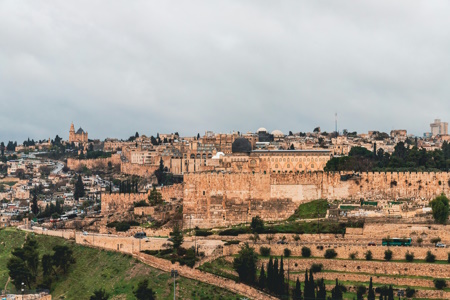
Photo via Виктор Соломоник at pexels.com

The Stones Are Still Talking

For years, skeptics have dismissed parts of the Bible as legends written by ancient people who didn’t know any better. But that narrative keeps getting debunked because archaeologists keep digging stuff up.

Dinesh D’Souza told Fox News that a three-year investigation into biblical archaeology convinced him that discoveries coming out of Israel and the surrounding region provide remarkable support for the Bible’s historical reliability. His findings are the subject of his upcoming book, The Stones Cry Out: Biblical Archaeology, Prophecy, and the Last Days. (Fox News)

Consider Pontius Pilate. For centuries, skeptics questioned the historical evidence for the Roman official described in the Gospels. Then archaeologists discovered the famous Pilate Stone at Caesarea Maritima bearing his name and identifying him as prefect of Judea—the same title associated with his period of rule.

Then there’s Balaam, the mysterious diviner from Numbers who was hired to curse Israel. An ancient plaster inscription discovered in Jordan refers to “Balaam son of Beor”—a striking parallel to the biblical figure.

And how about Caiaphas, the high priest connected to the trial of Jesus?

Archaeologists discovered an ornate first-century ossuary—a stone box used to hold human remains—inscribed with a name commonly translated “Joseph son of Caiaphas.” Once again, somebody we meet in the pages of Scripture appears in the archaeological record.

Does archaeology prove every theological claim in the Bible? No. But it keeps reminding us that the Bible is rooted in real geography, real cultures, real rulers, and real people.

Jesus wasn’t introduced with “Once upon a time.” Christianity makes historical claims—and historical claims can be investigated.

Jesus once said:

Two thousand years later, that’s a pretty interesting choice of words.

So What?

Don’t believe the Bible simply because somebody tells you to. But don’t dismiss it because somebody on TikTok tells you to either. Investigate it. Read it. Ask hard questions.

And pay attention to what keeps coming out of the ground. Read the Fox News article

Saturday Watchdog: El-Sayed And Hassan Piker

image from Korhan Erdol pexels.com

Abdul El-Sayed, who won Michigan’s Democratic U.S. Senate primary on August 4, 2026, says he opposes antisemitism, yet he repeatedly chooses to campaign with Hasan Piker, whose record goes well beyond ordinary criticism of Israel.

So why does El-Sayed keep campaigning with him?

Piker isn’t controversial because he once criticized Benjamin Netanyahu or questioned Israeli policy. Plenty of people do that.

We’re talking about a guy who has called Orthodox Jews “inbred,” called Zionism a “mental illness,” generated controversy over his comments about Hamas and October 7—and once famously declared:

“America deserved 9/11, dude.”

Piker later called his 9/11 wording “inappropriate” and said it was intended as satire and criticism of American foreign policy. I call BS. He only backtracked on his outrageous comment after it received massive public attention and condemnation. Trying to weasel out of an outrageous statement doesn’t magically erase it. In fact, it raises questions about the ugly and insidious thinking behind the original statement.

And this week—after winning Michigan’s Democratic Senate nomination—El-Sayed was again asked whether he would continue working with Piker. He didn’t give a straight answer, even as he continued celebrating with Piker.

El-Sayed has every right to criticize Israel. He has every right to oppose U.S. military aid to Israel. And criticism of Israel is not automatically antisemitism. But anti-Zionism can sometimes become a subtle and convenient hiding place for bigotry.

El-Sayed also has a choice about whom he puts beside him on a campaign stage, and if he continues to cozy up to Piker, that should be disqualifying to anyone with a lick of common sense and decency.

Jesus put it pretty simply:

“Wherefore by their fruits ye shall know them.” — Matthew 7:20 (KJV)

If a Republican Senate candidate repeatedly campaigned alongside someone with an ugly history of remarks about Jews, Muslims, or Black Americans, would the media reasonably ask why?

Of course they would, and of course they have. So why should the standard change here?

Antisemitism is wrong. Anti-Muslim hatred is wrong. Racism is wrong. And deliberately looking the other way because somebody can deliver votes is wrong too.

Your friends don’t automatically define you—but choosing to repeatedly give someone your stage tells us something about your judgment and may tell us something about the biases you’re willing to tolerate.

Because sometimes the biggest red flag isn’t what a politician says—it’s whom he’s unwilling to walk away from.

Thursday Watchdog: Eye On The Middle East

Here are three of the most significant current headlines from the Middle East.

Remember Matthew 24:6-7

Israel launches strikes in southern Lebanon after evacuation warning The Israeli military carried out targeted strikes in southern Lebanon after issuing evacuation orders for the village of Mansouri, saying Hezbollah had violated the existing ceasefire. The strikes came as Israeli and Lebanese officials resumed U.S.-mediated talks in Rome aimed at advancing an agreement involving Israeli withdrawal and Hezbollah’s disarmament. (Reuters)

Iran and Oman move closer to reopening the Strait of Hormuz Iran and Oman announced progress on an agreement to reopen shipping through the strategically vital Strait of Hormuz, one of the world’s most important oil transit routes. Negotiations remain tied to broader U.S.-Iran discussions, while regional tensions continue to affect global energy markets. (The Guardian)

Israel-Lebanon negotiations continue despite renewed fighting Israeli forces remain deployed in parts of southern Lebanon while negotiators prepare for another round of talks in Rome under a U.S.-brokered framework. The discussions seek to reduce border tensions and establish longer-term security arrangements even as sporadic military action continues. (AP News)

    Tuesday Watchdog: So Many Wildfires

    No doubt there are going to be those who claim that the current devastating wildfires in Spokane, Greece, Spain, Montana, and elsewhere are God’s wrath being poured out on a sinful and wicked people.

    And sadly, this kind of “hellfire-and-brimstone” nonsense will be preached by so-called “Christians,” as it has been countless times when death and tragedy strike a particular community or geographical area. No wonder people are abandoning traditional and Evangelical Christian churches in droves.

    Let’s look at the answer Jesus gave to his questioners in Luke 13:1–5 when they asked him about Pilate slaughtering a group of Galileans:

    Our Lord could not be more clear. Disaster, suffering, and death, whether natural or man-made, are not meted out according to the level of sinfulness present in an area. Bad things don’t happen exclusively to bad people, and tragedy is not a sign of God’s judgment in this present age.

    However, there is a time coming when God’s judgment and restoration will fall on the entire creation. The Apocalypse is real, but it is reserved for a future time, and those who have already accepted the sacrifice of the Lamb and are covered by it will be spared from the judgement of that great and terrible day.

    Saturday Watchdog: What Does It Mean To Watch

    Watching Without Losing Your Mind

    Scroll social media for five minutes and you’ll find someone announcing they’ve finally cracked the prophetic code. Look, a red moon! Wow, another war in the Middle East. Did you hear about that earthquake? A politician whose name could be a 666 code. Is AI the Beast of Revelation?

    Apparently, every headline is the headline that proves Jesus is coming back next Tuesday at 3:17 p.m.

    Yes, Jesus absolutely told His followers to watch the signs. He pointed to wars, earthquakes, persecution, deception, and upheaval as reminders that history is moving according to God’s grand plan and toward His appointed conclusion. But He never told us to become prophecy detectives obsessed with predicting dates or identifying every newsmaker as the Antichrist.

    Instead, He said, “So likewise ye, when ye shall see all these things, know that it is near, even at the doors.” (Matthew 24:33, KJV)

    Watch the signs, but don’t worship or obsess over the signs. They are road markers, not the destination. Their purpose isn’t to make us fearful, distracted, or addicted to doom-scrolling. Their purpose is to remind us that God keeps His promises and that His Kingdom is drawing nearer every day.

    So What?

    The real question isn’t, “Can I predict the day?” Jesus already answered that: Nope. The better question is, “If He returned today, would He find me faithfully following Him?”

    It’s good to stay informed. It’s wise to think about and try to understand what biblical prophecy means for us today. But if we spend more time refreshing the news than reading God’s Word, we’ve probably started watching the wrong thing.

    So yes, we’ll keep one eye on the headlines—but we’ll keep busy and focused on the work God is calling us to.

    Love God. Love your neighbor. Speak the truth. Be an example and blessing to others. Pray and manifest power and healing by the spirit God has given you. That’s what watching looks like.

    Because when the King does return, He isn’t looking for people who guessed the date. He’s looking for people who were faithful while they waited.

    Thursday Watchdog: The Stories That Didn’t Trend… But Should Have

    Everyone’s arguing about politics, celebrities, wars, and the latest viral nonsense. Meanwhile, two stories this week barely made a ripple.

    In Nigeria, more Christians were murdered in brutal attacks by Fulani extremist militants, including entire families. In India, church leaders continued warning about growing restrictions and violence targeting Christians and Christian ministries. These aren’t isolated headlines—they’re reminders that faith in our risen and returning Savior still carries a real cost for millions of people.
    (Source: Persecution.org)

    Meanwhile, here in America, people sometimes think being a Christian is “hard” because someone rolled their eyes at a Bible verse on social media. Around the world, many believers are risking prison, losing their homes, or giving their lives simply because they refuse to deny Christ.

    Our Lord never promised popularity. He promised hard truth.

    Who or what will we be faithful and loyal to, even when the crowd goes the other way?

    Maybe we shouldn’t be asking, “Why are Christians persecuted?” as much as we should be asking, “If following our Lord cost me something, would I still follow Him?”

    That’s a question worth thinking about long after today’s headlines disappear.

    Tuesday Watchdog: Don’t Throw Away The Owner’s Manual

    Every generation wants to change the world. That’s not a bad thing. But today’s headlines show something deeper, and more troubling, happening: confidence in free-market capitalism has slipped, many young Americans are questioning the American Dream, and traditional institutions—including marriage and family—continue to lose influence. (The Wall Street Journal)

    But, what if we’re tossing out the owner’s manual before figuring out why it worked in the first place?

    The Bible isn’t a campaign platform for capitalism or any other political ideology or party. But it does praise honest work, personal responsibility, generosity, faithful families, and wise stewardship. Those aren’t outdated, old fogey ideas—they’re God’s design for human flourishing.

    If we abandon hard work because it’s difficult, family because it’s inconvenient, or personal responsibility because someone else should fix everything, we shouldn’t be shocked when society starts wobbling. You can’t delete the blueprint and expect the building to stay standing.

    Pick one biblical value you’ve been ignoring—work hard, honor your parents, keep your word, or serve someone without expecting anything back. Live it out this week. Don’t just complain about culture.

    Be a true rebel and remember—the surest, shortest way to “change the world” is to take care of your family and get involved in your local community.

    Saturday Watchdog: The Only Crown That Matters

    Today’s headlines are once again dominated by the White House and Tehran. The conflict between the United States and Iran continues to escalate, with new military strikes, retaliation, and fears of a wider regional war filling every news feed pretty much every day.
    CNN

    Every generation obsesses over who sits in the palace, the parliament, or the Oval Office. People act like the next election, the next revolution, or the next regime change will finally fix humanity. It won’t

    Governments rise and fall. Kings and Queens die, and Presidents leave office. Supreme Leaders get replaced by Regular Old Leaders pretending they are supreme. And all the while the human heart remains desperately wicked and filled with pride, greed, violence, and brokenness.

    The Bible points us to a different King. One who is surely coming to set things right.

    That doesn’t mean we ignore politics or world events. Christians should care about justice and pray for leaders. But our ultimate hope isn’t in whoever occupies the White House or the palace in Tehran. Our hope is in the return of the King of Kings, who won’t campaign for righteousness—He’ll establish it forever.

    Until then, don’t let headlines rule your heart and mind. Do what you can within your sphere of influence to be God’s image bearer and add value to His creation.

    Thursday Watchdog: What Is Heaven?

    Editors note: The following is an excerpt from my book, Your Life And What Comes After: Plugging Into God’s Forever Plan Now


    Where exactly is heaven? Is it up in the clouds? In outer space? On another planet, or in a galaxy far away?

    Before we can understand where heaven is, we should first know what heaven is. When heaven is mentioned in the Bible, it can either mean any place above the ground or it can mean the realm in which God lives.

    Anywhere Above Ground

    Genesis 1:20

    And God said, “Let the waters bring forth abundantly the moving creature that hath life, and fowl that may fly above the earth in the open firmament of heaven.”

    The birds we often see flying above us are in heaven, so to speak. The stars, clouds, and planets are also above the ground, and there are many verses in the Bible that talk about those things being in the heavens.

    Where God Lives

    Matthew 6:9

    After this manner therefore pray ye: Our Father which art in heaven, Hallowed be thy name.

    This verse says that our Father, God, is in heaven. Does that mean He’s flying around with the birds that are in heaven? No, of course not.

    Here the Bible is talking about a different kind of heaven. This heaven is the realm where God lives—invisible to our eyes, yet very real and near.

    Acts 17:27–28

    That they should seek the Lord, if haply they might feel after him, and find him, though he be not far from every one of us:

    For in him we live, and move, and have our being; as certain also of your own poets have said, For we are also his offspring.

    The main idea about heaven that we should understand is that it is not a place up in the clouds where we go someday after we die to get wings and play harps if we’re good in this life.

    Heaven is a place we can go to now—and every day—in prayer, to be in the presence of our Father, God.