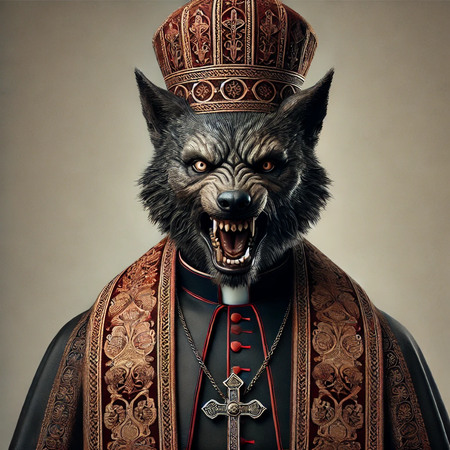
Bible Rebel continues to keep a watchdog’s eye on news and events from the world of churchianity. In this article, we take a look at the process of choosing a new Pope, which is based on Roman Catholic ceremony and tradition – not scripture.
Papal Ceremonies and Biblical Doctrine
While the Catholic Church bases its teachings on scripture, many papal ceremonies are rooted in tradition rather than biblical doctrine. The conclave, the papal coronation, and the rituals surrounding the election are not explicitly found in the Bible. Instead, they evolved over centuries as part of the Church’s governance structure.
Critics argue that certain practices—such as the vesting of the Pope in elaborate robes and the use of Latin in official ceremonies—reflect historical customs rather than biblical mandates. However, the Church maintains that these traditions uphold continuity and reverence within Catholicism.
The selection of a new Pope is a momentous event, steeped in history and ritual. While the process is not biblically mandated, it remains a defining aspect of Catholic tradition.
The Conclave Process
The election of a new Pope follows a centuries-old tradition rooted in secrecy and ritual. When a Pope passes away or resigns, the College of Cardinals—a body of senior Catholic officials—gathers in Vatican City to elect his successor in a process known as a conclave.
The conclave typically begins 15 to 20 days after the Pope’s death. Cardinals under the age of 80 are eligible to vote, with the number of electors capped at 120. The process takes place in the Sistine Chapel, where the cardinals swear an oath of secrecy before casting their votes.
Each cardinal writes the name of their chosen candidate on a ballot, which is then placed in a ceremonial urn. The votes are counted, and if no candidate secures a two-thirds majority, the process repeats until a consensus is reached. After each round, the ballots are burned, producing either black smoke (indicating no decision) or white smoke (signaling the election of a new Pope).
Once elected, the new Pope is introduced to the world from the balcony of St. Peter’s Basilica, where he delivers his first blessing.
Is traditional denominational church attendance and membership an indicator of the spiritual health of a country or community?
Maybe. But if it is, then America and Western Europe have been are in need of an urgent diagnosis and prognosis, because the patient hasn’t been looking so good in recent years.
According to churchtrac.com, “Church membership and attendance have been on a steady decline in the United States for almost 25 years. A recent (2021) Gallup study discovered U.S. church membership has dipped below 50% for the first time in 80 years.”
In addition, according to a recentPew Research Religious Landscape Study, “The latest RLS, fielded over seven months in 2023-24, finds that 62% of U.S. adults identify as Christians. That is a decline of 9 percentage points since 2014 and a 16-point drop since 2007.”
That study also indicates that study also found that, “…for the last five years, between 2019 and 2024, the Christian share of the adult population has been relatively stable, hovering between 60% and 64%. The 62% figure in the new Religious Landscape Study is smack in the middle of that recent range.”
So, it’s possible that the decline in traditional churchianty’s attendance and membership has leveled off in recent years, but it seems to be only getting worse in Western Europe.
Catholic Membership in Germany Falls Below 20 Million for the First Time
“For the first time in history, the number of Catholics in Germany has dipped below the 20 million mark, according to preliminary figures released by the German Bishops’ Conference in Bonn. As of 2024, the Catholic population now accounts for just 23.7% of the total German population, translating to approximately 19,769,237 members.
This significant decline comes despite a slight decrease in the number of individuals formally leaving the Church. In 2024, 321,611 Catholics exited the institution, a reduction from the previous year’s figure of 402,694.“
Why?
Well, you don’t need a weatherman to know which way the wind blows, as the saying goes.
Anyone who has been paying attention to such things knows, both statistically and anecdotally, that Americans and Europeans alike have become increasingly skeptical of, and even hostile towards, denominational Christianity.
This doesn’t mean folks aren’t interested in or craving spiritual matters less, it just means that religiosity has lost much of it’s appeal and credibility.
There are a variety of reasons for this exodus from churchianity, but here are some of the reasons I have observed and noted over the years:
Denominational and creedal doctrines are confusing and contradictory, often not even biblical, and fail to provide direct answers to direct questions about God and the Bible.
Clergy and spiritual leadership are often seen as being too focused on raising resources for new buildings, administration, and church functions.
Church and worship services are too often centered on denominational ceremonies and traditions, which are mostly devoid of spiritual power, or on emotional experiences which are short-lived.
Teachings from the pulpit that are either boring and irrelevant or are focused on cultural, political, and social issues rather than on the power of the living God and the literal resurrection and literal apocalyptic return Jesus Christ to judge the world, establish His Kingdom, and bring about the everlasting reign of God.
Bible Rebel’s Creed and Mission
The purpose of the Bible Rebel ministry and blog is to provide an alternative resource and connection point for those seeking something more than stale, powerless religion.
Here is our one and only creed: Our living God is a loving God and the Bible is His revealed word and will. Our hope and eternal salvation relies entirely on the work of God’s only begotten son, Jesus Christ, who is the way, the truth, and the life.
Bible Rebel continues to keep a watchdog’s eye on what’s happening in the world of religion and churchianity.
Evangelical Clergy and Climate Change
A recent survey revealed that nearly 80% of evangelical Protestant pastors reject the scientific consensus on human-caused climate change. This contrasts with clergy from other Christian traditions, such as Catholics and mainline Protestants, who are less skeptical. See more at Religion Unplugged
Protestant Denominations Facing Decline
Historic U.S. Protestant denominations, including the Episcopal and Presbyterian Churches, are experiencing declines in membership and funding. This has led to staff cuts and efforts to explore new strategies to adapt to changing social contexts. See more at Baptist News
Combating Anti-Christian Bias
Discussions around anti-Christian bias have emerged, with debates on whether certain actions represent genuine concerns or reactions from specific ideological perspectives. This topic has been highlighted in the context of faith-based initiatives and their evolution over different U.S. administrations. See more at Atlanta Daily World
In Part 1 of this series we asked whether Jesus and Paul taught the prosperity gospel and we listed some examples of current ‘health and wealth’ preachers.
Let’s start by taking a closer look at some of those prosperity gospel teachers’ own prosperity.
Joel Osteen
Joel Osteen, the senior pastor of Lakewood Church in Houston, Texas, has an estimated net worth that varies across sources. Some reports suggest his net worth is around $100 million (Celebrity Net Worth), while others estimate it to be approximately $40 million to $60 million (Wikipedia).
Additionally, some sources claim his net worth is as high as $180 million (CA Club India).
Osteen resides in a 17,000-square-foot mansion valued at $10.5 million in the River Oaks neighborhood of Houston. He has stated that he does not receive a salary from Lakewood Church, which has an annual budget of $70 million, relying instead on income from his best-selling books and related products (Wikipedia).
Kenneth Copeland
Kenneth Copeland, a prominent American televangelist and founder of Kenneth Copeland Ministries, has amassed significant wealth throughout his career. Estimates of his net worth vary widely:
$300 million:
As of 2024, his net worth was estimated at $300 million ( scmp.com).
Celebrity Net Worth also reports his net worth to be $300 million (Celebrity Net Worth).
$750 million:
In 2021, the Houston Chronicle referred to him as the wealthiest pastor in America, allegedly having a net worth of $750 million (Wikipedia).
$760 million:
The New York Post reported his net worth to be $760 million (nypost.com).
These discrepancies highlight the challenges in accurately assessing the net worth of high-profile individuals, especially those with diverse income streams and private financial dealings. Copeland’s wealth primarily stems from his extensive ministry operations, including television broadcasts
It’s important to note that net worth estimates for both Osteen and Copeland can vary based on different sources and may not always reflect the most current information. You’ll find similar net worth data for some of the other prosperity gurus online.
What did Jesus teach?
Well, it seems pretty clear to me, or anyone else with a lick of common sense, that when Jesus said in Matthew 6:33, “But seek first the kingdom of God and His righteousness, and all these things shall be added to you…” he didn’t have $10 million mansions, private luxury jets, and massive piles of cash in mind.
But what did he have in mind? Read the context:
Matthew 6:25-34 (NKJV) “Therefore I say to you, do not worry about your life, what you will eat or what you will drink; nor about your body, what you will put on. Is not life more than food and the body more than clothing? 26 Look at the birds of the air, for they neither sow nor reap nor gather into barns; yet your heavenly Father feeds them. Are you not of more value than they? 27 Which of you by worrying can add one cubit to his stature?
28 So why do you worry about clothing? Consider the lilies of the field, how they grow: they neither toil nor spin; 29 and yet I say to you that even Solomon in all his glory was not arrayed like one of these. 30 Now if God so clothes the grass of the field, which today is, and tomorrow is thrown into the oven, will He not much more clothe you, O you of little faith?
31 Therefore do not worry, saying, ‘What shall we eat?’ or ‘What shall we drink?’ or ‘What shall we wear?’ 32 For after all these things the Gentiles seek. For your heavenly Father knows that you need all these things. 33 But seek first the kingdom of God and His righteousness, and all these things shall be added to you. 34 Therefore do not worry about tomorrow, for tomorrow will worry about its own things. Sufficient for the day is its own trouble.”
You don’t need an advanced degree in theology or philosophy to understand the plain words spoken by our Lord here. All you need is basic reading comprehension.
What things “shall be added to you”? Mansions? A fleet of luxury fishing boats? A hoard of gold coins? No, the “things” are the necessities of life like food and clothing.
Does he teach that you can’t or shouldn’t have more than the necessities? No, but our Lord’s message is clear that the desire for God’s righteousness is muddied and distorted when we focus on the riches of this age instead of His kingdom.
It’s impossible to have total reliance on God when one has lots of cash and cars and jets and Swiss bank accounts to fall back on, right?
We’ll look at the Apostle Paul’s teaching to the Church regarding this topic in Part 3.
My wife and I just watched the award-winning movie ‘Conclave’ which portrays the political machinations and processes involved in how the Catholic Bishops choose a new Pope when necessary. Very good movie, highly recommended.
The Vatican has been providing regular updates on Pope Francis’ health. The Pope is currently receiving high-flow oxygen therapy and has undergone bronchoscopies to address his respiratory issues. His prognosis remains guarded, and he continues to receive respiratory physiotherapy. – More at Catholic News Agency
Episcopal churches offer ‘Ashes To Go’ for Ash Wednesday
As I have pointed out previously, the Episcopal Church is becoming a woke, politically far left-leaning organization which is trying to push the gospel of Jesus Christ and his coming Kingdom as a modern social justice message. Reading the headlines and items from the ENS, linked below, is like reading a political agenda statement.
“Episcopal congregations churchwide will begin Lent by offering Ashes to Go on Ash Wednesday, March 5, as a convenience for people unable to attend worship services in the middle of the week.” – More at Episcopal News Service
Montrose judge denies city emergency request to potentially clear church camp for unhoused
We went through the very same issue with a United Methodist Church in my hometown, Great Falls MT, a couple of years ago. We eventually were able to clear the ‘homeless’ camp on the churches parking lot because of the drugs, violence, public defecation, and even prostitution disrupting the homes and businesses surrounding the church.
We didn’t need a court order because our citizens spoke up and the church poobahs gave in and posted trespass notices so that law enforcement could intervene and stop the crimes being committed. The ‘homeless’ folks dispersed soon thereafter.
Yes, we’re to love our neighbors and take care of the less fortunate. But that doesn’t mean we allow our community to be destroyed by irresponsible, many times criminal, people who don’t want to live by the same rules the rest of us have to live by.
“At a hearing in Montrose, on Wednesday, Municipal Court Judge Erin Maxwell rejected a city request for an emergency abatement on a camp of unhoused residents sitting on Montrose United Methodist Church grounds. The abatement would have permitted city authorities to go onto private property to potentially clear the camp, which has drawn controversy in recent weeks.” – More at CPR News
Did Jesus teach the ‘prosperity gospel’? Did the Apostle Paul? Should we? These are some of the questions we’ll attempt to address in this ongoing series.
What is the prosperity gospel?
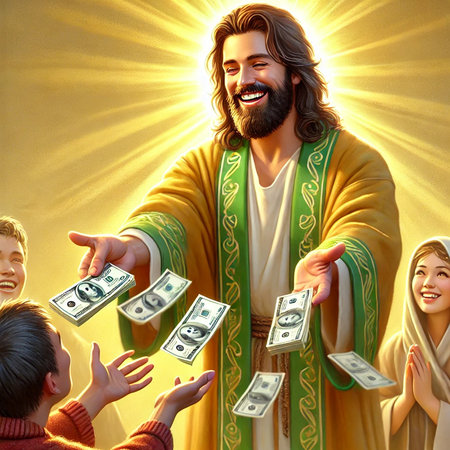
The prosperity gospel, or the health and wealth gospel, is a theologically based school of thought that teaches that God provides financial prosperity and physical health through faith, positive thinking, and positive affirmations of material success, health and prosperity.
Along with faith and positive thoughts and confessions of course donations to the preachers’ ministry will greatly help seekers along the path to personal success, abundance, and happiness.
It’s basically Norman Vincent Peale, Jim Rohn, and Zig Ziglar all rolled into one, but with some Jesus and a few Bible verses sprinkled in.
Who are the top proponents of the prosperity gospel?
There are several, but here are a few of the most popular and recognizable:
Joel Osteen: Joel Osteen is the senior pastor of Lakewood Church in Houston, Texas. Known for his charismatic sermons and positive affirmations, Osteen’s televised sermons reach over 100 million households in the United States every week. His teachings emphasize the power of positive thinking and faith in achieving financial and personal success.
T.D. Jakes: T.D. Jakes is the founder and senior pastor of The Potter’s House in Dallas, Texas. Renowned for his powerful preaching and motivational speeches, Jakes has written over 40 books, many of which have become New York Times bestsellers. His messages often focus on overcoming adversity and achieving prosperity through faith and determination.
Joyce Meyer: Joyce Meyer is a prolific author and speaker who emphasizes the importance of applying biblical principles to everyday life. Her ministry, Joyce Meyer Ministries, operates in over 200 countries and provides humanitarian aid and support to those in need. Meyer’s teachings often highlight the connection between faith, personal growth, and financial success.
Pope Francis is critical but stable as “lifewatch” continues
The current vigil for Pope Francis, referred to as a “lifewatch,” emphasizes the importance of reflection, contemplation, and prayer within the Catholic Church. This period is seen as a time for the Church to prepare for the possibility of the Pope’s passing. See latest from National Catholic Register here.
Alfred Street Baptist Church Ends Contract with Kennedy Center:
Alfred Street Baptist Church in Virginia has decided to end its contract with The John F. Kennedy Center for the Performing Arts due to the center’s new leadership. The church cited the new leadership’s opposition to honoring artistic expression across all backgrounds as the reason for the decision. See latest from MSN here.
Bible Rebel continues keeping a watchdog’s eye on religious news and events, here’s the latest from the Vatican.
On Tuesday, Pope Francis sent a letter to U.S. bishops addressing the Trump administration’s immigration policies and criticizing Vice President J.D. Vance’s interpretation of the hierarchy of love starting with one’s family and extending outward.
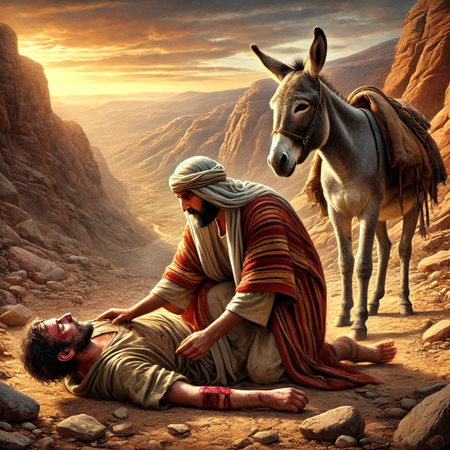
Pope Francis’ own interpretation is that Christian love should be inclusive and compassionate towards all people, regardless of their nationality or legal status and that we should all be meditating on the parable of the Good Samaritan and promoting a fraternity that is open to all.
He argued that measures based on force rather than the inherent dignity of every human being are destined to fail.
“Vatican cracks down on illegal entry into its territory
The document also stipulates that unauthorized overflight of Vatican airspace, including through the use of drones, may be punished with prison sentences from six months to three years in addition to a fine that could reach 25,000 euros (about $26,000).
Anyone convicted of illegal entry will be banned from entering Vatican territory for a period of up to 15 years. If this sanction is breached, the offender may be punished with a prison sentence of one to five years.
In addition, the Vatican’s promoter of justice may summon any person who has committed an offense to appear before the court the day after receiving the complaint or immediately after questioning him.”
Hmmm, reminds me a bit of what Jesus said to the Pharisees in Matthew 15:7-9.
Ye hypocrites, well did Esaias prophesy of you, saying, This people draweth nigh unto me with their mouth, and honoureth me with their lips; but their heart is far from me. But in vain they do worship me, teaching for doctrines the commandments of men…
Whatever your interpretation of ordo amoris, (Latin for “order of love”) shouldn’t it at least be consistent? Maybe the Pope needs to take a look in the mirror so he can better see how to remove that big ol’ beam lodged in there.
All of this is just another example of why people are fleeing churchianity – of all brands.
The Episcopal Church has become little more than a platform for far left cultural and political ideologues to ‘preach’ their ‘woke’, anti-scriptural nonsense to a rapidly diminishing congregation.
Yes, that’s Washington Bishop Mariann Budde on the right in the picture below from the Episcopal News Service. She was the subject of much attention, and an opinion I wrote here last month, stemming from the the political lecture, disguised as a sermon, that she aimed at President Trump, Vice President Vance, and both of their families during the National Prayer Service at the Washington National Cathedral the day after Trump’s inauguration.
Read the article below outlining Presiding Bishop Sean Rowe’s (center in the picture) recent sermon, and I think you may end up with a few of the same conclusions and questions I did.
How can you speak “out against contemporary political divisions as ‘not of God’…” while at the same time in the same sermon introduce rhetoric that includes divisive political language, specifically against President Trump and his agenda?
Exactly where in the Bible does it say that “immigrants, transgender people, the poor and other marginalized communities” are “central to the kingdom Jesus envisioned…”? The King himself and God Almighty are at the center of the coming mediatorial and everlasting Kingdom of Heaven. The Bible says explicitly in Matthew 7:13-14 to, “Enter ye in at the strait gate: for wide is the gate, and broad is the way, that leadeth to destruction, and many there be which go in thereat: Because strait is the gate, and narrow is the way, which leadeth unto life, and few there be that find it.” All are welcome. Jesus Christ is the gate.
Furthermore, Bishop Rowe said, “Those who have been considered at the margins are at the center. They are the bearers of the salvation of the world. Their struggles reveal to us the kingdom of God.” Who is the bearer of the salvation of the world??? This isn’t just nonsense, it’s completely antithetical to everything the Bible explicitly teaches.
As I pointed out earlier, the Episcopal Church is bleeding membership and losing all spiritual credibility and standing.
The Episcopal Church has been experiencing a decline in membership over the past few years. According to the latest reports, the church saw a significant drop in membership, losing about 40,000 members in 2023 alone. This brings the total membership to approximately 1.547 million people.
Despite this decline, there has been a slight increase in average Sunday worship attendance, which reached nearly 411,000 in 2023, up from 373,000 in 2022. This increase is seen as a gradual recovery from the COVID-19 pandemic, when worship attendance had significantly dropped due to lockdowns and public health concerns. https://www.christianpost.com/news/episcopal-church-loses-40k-members-but-worship-attendance-grows.html
Episcopal Bishop Mariann Edgar Budde is getting both criticism and praise for the political lecture, disguised as a sermon, that she aimed at President Trump, Vice President Vance, and both of their families during the National Prayer Service at the Washington National Cathedral the day after Trump’s inauguration.
Was that really an appropriate time and place for a minister to deliver a political speech designed to publicly criticize a newly inaugurated POTUS?
Some say that the pulpit is a perfectly appropriate platform from which to speak truth to power, you know, like Jesus did, right?
But to whom did Jesus direct his most withering truth bombs? To the Roman government officials occupying Judea? To Caesar, mighty Emperor of the known civilized world?
Nope. Jesus spoke truth to the power of the religious leaders of his people, because they were the corrupt and wicked ones, whom Jesus called children of Satan.
Maybe Bishop Budde should focus on speaking truth to the high powers of the Episcopal Church who have presided over several sexual abuse and other scandals involving staff and clergy over the years. Just Google “Episcopal church scandals”.
Or maybe her time would be better spent exploring the reasons why the Episcopal Church continues to lose members and adherents. She could then speak truth to the power of the causes of a dying, empty church with no answers for spiritual hungry people.
Here’s a truth that Jesus spoke and which is relevant to us all, including those like Bishop Budde who treat the pulpit as a self-serving political tool, rather than a moral and spiritual responsibility – “Thou hypocrite, first cast out the beam out of thine own eye; and then shalt thou see clearly to cast out the mote out of thy brother’s eye.”