Watchdog Alert: The Latest Biblical Archaeology News

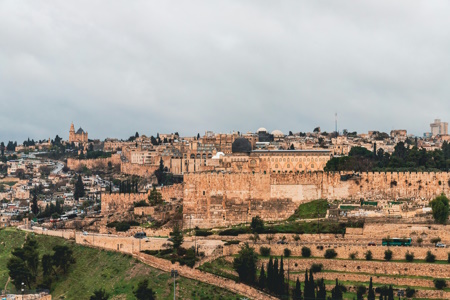
Photo via Виктор Соломоник at pexels.com

Bible Rebel keeps a watchdog’s eye on discoveries and news from the world of biblical archaeology and brings it to our readers.

Rare gold coin of Queen Berenice II found in Jerusalem (Aug 20, 2025)
Archaeologists in the City of David uncovered a ~2,200-year-old pure-gold quarter-drachma depicting the Ptolemaic queen Berenice II (3rd c. BCE). It’s the first of its type found in a controlled excavation in Jerusalem and sheds light on Hellenistic-period Jerusalem’s economy and connections with Egypt.
The Times of Israelעיר דוד

“For the Redemption of Zion” revolt coin near the Temple Mount (Jul 31, 2025)
A rare bronze coin minted in Year Four of the Great Jewish Revolt (69–70 CE) was discovered by the Israel Antiquities Authority at the Jerusalem Archaeological Garden–Davidson Center. The coin’s paleo-Hebrew inscription shifts from earlier “Freedom of Zion” issues to “Redemption of Zion,” reflecting besieged Jerusalem’s mood shortly before the Temple’s destruction.
The Times of Israelעיר דוד

Temple Mount bulla with biblical-era personal names (Jul 30, 2025)
The Temple Mount Sifting Project announced a 2,600-year-old clay sealing (bulla) reading “Belonging to Yed[a]yah son of Asayahu,” names that appear in the Hebrew Bible. Though found in sifted soil (not an in-situ context), it adds to epigraphic evidence for First Temple–period Jerusalem’s administrative activity. OmnesArchaeology

Dead Sea Scrolls redated using radiocarbon + AI (Jun 4, 2025)
A peer-reviewed PLOS ONE study combined new radiocarbon testing (after removing 1950s castor-oil contamination) with an AI handwriting model (“Enoch”). Results suggest many scrolls—some biblical—are older than previously thought, with two fragments potentially contemporary with their presumed authors. This recalibrates timelines for script development and Second Temple-era texts.
Live Science

Subscribe To Our Newsletter

Please take a minute to subscribe to the Bible Rebel monthly newsletter – it’s free and will keep you up-to-date on all our articles, videos, and features.

Our Mission at Bible Rebel

  1. To monitor current news and events related to faith and culture.
  2. To provide an alternative viewpoint to the world’s pervasive climate of darkness, nihilism, and hopelessness for those seeking truth, light, and purpose.
  3. To examine and question the assumptions of religious tradition and provide a resource for information and inspiration for people of faith who have become dissatisfied with an increasingly lifeless and empty ‘churchianity’.
  4. To present the Biblical truths which reveal God’s nature and purposes and proclaim the lifechanging, world-altering, radical message of Yeshua the Messiah – Jesus Christ, our risen Lord and Savior.

At Bible Rebel, this is our one and only creed:
Our living God is a loving God and the Bible is His revealed word and will.
Our hope and eternal salvation relies entirely on the work of God’s only begotten son, Jesus Christ, who is the way, the truth, and the life.

So, expect some controversial viewpoints and uncomfortable ideas in some of the coming content from Bible Rebel.


June And July Highlights

Rethinking The Rapture: What Does Delivered From Wrath Mean?

Rethinking The Rapture: What Does Delivered From Wrath Mean? Part 2

They Said It: Quotes About Luther And The Reformation (A new feature from Bible Rebel)

Who Cares: One-Minute Video Message

Ten-episode Bible 101 video series completed

Watchdog Alert: Biblical Archaeology News

Why Must We Pray, Anyway: Part 4


Coming in July and August

Continuing the “Rethinking The Rapture” series.

More in-depth content on deeper biblical studies and theological issues.

You can find all of the current Bible 101 episodes and One-Minute Mini Messages here on our YouTube Channel, and you can subscribe to our YouTube channel here.

We’ll also be continuing our regular features and guest articles and series:

  • Rethinking The Rapture
  • They Said It
  • Guest articles
  • And more…

Watchdogs

As always, we’ll be keeping a watchdogs eye on all of the latest political, religious, biblical archaeology, and cultural news and events from around the world and bringing to you in bite-size chunks to keep you informed.


Finally, are you interested in contributing content to Bible Rebel?

Bible Rebel is always looking for interesting, compatible content for our biblerebel.com website/blog. We are accepting writing and video submissions for review and possible publication on our platform.

If you have a teaching series, opinion piece, research piece or other content that fits with the Bible Rebel mission we’d like to see it!

If your content fits our mission and creed, included below, then email it to us at in**@********el.com. Written pieces should be no more than 500 words and video content no longer than 7 minutes – either can be submitted as part of a longer series for consideration.

Thanks, and stay tuned for the next newsletter in August.

Oh, and please go over and give us a follow on Facebook and X (formerly Twitter).

Rick Tryon
Editor/Publisher
Bible Rebel & biblerebel.com

Watchdog Alert: Recent Discoveries In Biblical Archaeology

Photo via Виктор Соломоник at pexels.com

Rediscovery of Byzantine Christian settlement in Jordan

Archaeologists from Mu’tah University led by Musallam R. Al‑Rawahneh uncovered what is believed to be the lost Byzantine town of Tharais, near the Dead Sea. Finds include pottery shards, glass fragments, fossils, and architectural remains of a basilica‑style church with mosaic flooring and an olive‑oil press. Ancient inscriptions—possibly linked to Christian funerary rites—were also found. The site was likely abandoned in the 7th century due to shifting trade routes, environmental changes, and the region’s transition from Byzantine to Islamic rule. From the New York Post


Evidence for Jesus’s first miracle site in Galilee

Historian‑archaeologist Tom McCollough proposes that the real location of Jesus’s first miracle—turning water into wine—may be Khirbet Qana, not the traditional Kafr Kanna. Excavations revealed a 1,500‑year‑old complex of Christian veneration caves marked with crosses and inscriptions like “Kyrie Iesou”, as well as a stone altar and space for six ceremonial jars—matching the Gospel of John. McCollough’s findings align with early historical texts describing the area as a Jewish village. From the New York Post


Cave once thought to be Salome’s burial may belong to Herodian royalty

A cave southwest of Jerusalem, long believed to be the burial site of “Salome the midwife of Jesus,” may instead belong to a member of the Herodian royal family, possibly Herod the Great’s sister. The cave’s monumental architecture and ornate features typical of elite Herodian tombs support this claim. Hundreds of clay lamps—likely sold to Christian pilgrims—were also found, attesting to the site’s Byzantine-era veneration. Experts caution more evidence is needed to confirm identity. From Live Science


Ancient grape and olive traces at Golgotha support Gospel narratives

Italian archaeologists from Sapienza University uncovered 2,000‑year‑old grape pips and olive stones beneath the floor of the Church of the Holy Sepulchre, traditionally regarded as Mount Calvary. Soil and pollen analysis suggest that vineyards and olive cultivation existed on the site before Emperor Hadrian’s time—consistent with Gospel descriptions of a garden at Jesus’s crucifixion locale. This restoration-linked discovery has support from both Israeli authorities and major Christian denominations. From The Times

Watchdog Alert: Biblical Archaeology News

Bible Rebel keeps a watchdog’s eye on discoveries and news from the world of biblical archaeology and brings it to our readers.

Excavators evacuated from Shiloh amid Middle East tensions

Biblical archaeologists working at Shiloh in Israel were recently evacuated after regional escalation involving Iran. Despite the security threats, the team remains committed to continuing their excavation when conditions stabilize. From the Jerusalem Post


‘Salome Cave’ may be Herodian royal burial, not midwife’s tomb

Archaeologists re-examined a cave once believed to belong to Salome, the “midwife of Jesus.” Now they suggest it may instead be adorned as a royal tomb—possibly for Salome, sister of King Herod the Great (1st century B.C.). From livescience.com


Grapes & olives uncovered under Church of the Holy Sepulchre

Sapienza University researchers have unearthed 2,000‑year‑old grape pips and olive stones beneath the Church of the Holy Sepulchre, aligning with Gospel descriptions of a garden at the crucifixion site (John 19:41). The dig, involving multiple Christian denominations and the Israel Antiquities Authority, temporarily paused during Easter for pilgrims. From The Times


Evidence emerges for ancient Battle of Megiddo (Armageddon)

Egyptian pottery fragments discovered at Tel Megiddo strongly suggest Egyptian military presence during the biblical Battle of Megiddo (c. 609 B.C.), when Pharaoh Neco II defeated King Josiah of Judah. Researchers believe the pottery likely belonged to Egyptian soldiers rather than merchants. From wikipedia

Watchdog Alert: Biblical Archaeology

Photo via Виктор Соломоник at pexels.com

Ancient Cave Burial Reinterpreted as Herodian Royal Tomb

A cave southwest of Jerusalem, long venerated as the burial site of Salome, the midwife of Jesus, is now believed by archaeologists Vladik Lifshits and Nir-Shimshon Paran to be the tomb of a Herodian royal, possibly King Herod the Great’s sister, also named Salome. The site’s monumental architecture and ornate features align with elite Herodian-era tombs. Rediscovered in the 1980s, the cave contained hundreds of oil lamps, likely sold to Byzantine Christian pilgrims. While an ossuary inscribed with the name Salome was found, the name’s commonality necessitates further evidence to confirm the tomb’s occupant. – From Live Science


Evidence of Garden at Crucifixion Site Unearthed

Italian archaeologists from Sapienza University have uncovered 2,000-year-old grape and olive traces beneath the Church of the Holy Sepulchre in Jerusalem, traditionally identified as the site of Jesus’s crucifixion. This discovery supports the Gospel of John’s account of a garden at the crucifixion site. Soil and pollen analyses revealed ancient grape pips and olive stones, indicating cultivation before Emperor Hadrian’s reign, aligning with the time of Christ. The excavation, part of a restoration project begun in 2022, has been conducted with sensitivity due to the site’s religious significance, involving collaboration among major Christian denominations and the Israel Antiquities Authority. – From the New York Post


3,800-Year-Old Canaanite Scarab Found by Toddler

At Tel Azekah in Israel’s Shephelah region, a 3-year-old named Ziv Nitzan discovered a 3,800-year-old Canaanite scarab amulet during a family outing. The artifact, shaped like a dung beetle and dating to the Middle Bronze Age, was verified by expert Daphna Ben-Tor as a seal used for religious or status purposes. Scarabs held sacred symbolism in ancient Egypt, representing life and creation. Tel Azekah is historically notable for its biblical association with the story of David and Goliath. The find underscores the site’s historical richness and provides a tangible link to the ancient past. – From the New York Post


Subatomic Imaging Reveals Hidden Structures in Ancient Jerusalem

A team of Israeli archaeologists and physicists has employed muon detectors—devices that utilize cosmic-ray muons—to non-invasively explore subterranean structures in ancient Jerusalem. Focusing on “Jeremiah’s cistern” near the City of David, the detectors have begun mapping hidden voids and structural anomalies beneath the surface. This innovative approach allows researchers to investigate areas that are otherwise inaccessible due to practical and political constraints, offering new insights into Jerusalem’s 5,000-year history without the need for destructive excavation methods. – From Christianity Today

Royal Seal Of King Hezekiah Found

As reported in Bible History Daily from the Biblical Archaeology Society, a recent discovery has unearthed, literally, a stamped clay bulla bearing the seal of King Hezekiah.

From the article:
The royal seal of King Hezekiah in the Bible was found in an archaeological excavation. The stamped clay seal, also known as a bulla, was discovered in the Ophel excavations led by Dr. Eilat Mazar at the foot of the southern wall of the Temple Mount in Jerusalem. The discovery was announced in a press release by the Hebrew University of Jerusalem’s Institute of Archaeology, under whose auspices the excavations were conducted...


Who Was King Hezekiah in the Bible?

King Hezekiah in the Bible, son and successor of Ahaz and the 13th king of Judah (reigning c. 715–686 B.C.E.), was known for his religious reforms and attempts to gain independence from the Assyrians.

As always, Bible Rebel keeps a watchdog’s eye on the latest news from the world of biblical archaeology and brings it to our readers. Stay tuned.

Biblical Archaeology Watchdog: Noah’s Ark And Gath

Noah’s Ark Evidence

Analyses of the Durupinar formation near Mount Ararat in Turkey revealed traces of marine deposits and a ship-shaped structure matching biblical dimensions of Noah’s Ark.

From Townhall.comThis past week, the Jerusalem Post reported that “analyses revealed traces of marine deposits and a ship-shaped structure matching biblical dimensions” of Noah’s Ark. The “ship-shaped” mound, called the “Durupinar formation,” was first discovered in 1948 by a Kurdish farmer near Mount Ararat’s summit in Turkey. Modern studies beginning in 2021 have found more convincing evidence. Thus, if this discovery is Noah’s Ark, one can anticipate more “magic show” tales waiting to be revealed through advanced archaeological technology. 

Rephaim Valley Location

A study suggests the biblical Valley of Rephaim may lie closer to the ancient Philistine city of Gath, rather than near Jerusalem as traditionally thought.

From Greek ReporterA new study challenges long-held beliefs about the biblical Valley of Rephaim, offering a fresh perspective on its location and historical meaning. Researcher Sabine Kleiman suggests the valley may lie east of the Elah Valley, closer to the ancient Philistine city of Gath, rather than near Jerusalem as traditionally thought.

Latest Fascinating Discoveries In Biblical Archaeology

Bible Rebel continues to update readers from the world of biblical archaeology. Here’s the latest.

Ancient Gold Processing Facility Discovered in Egypt

Archaeologists have uncovered a 3,000-year-old gold processing complex at Jabal Sukari, near the Red Sea. The site includes grinding and crushing stations, filtration and sedimentation basins, and ancient clay furnaces used for gold smelting. This discovery sheds light on the mining techniques used by ancient Egyptians. See more from Bible Archaeology Report

Ancient Tomb in the Negev Highlands

A 2,500-year-old tomb compound was discovered in the Negev Highlands, containing the remains of dozens of individuals. The burials are believed to be associated with trade caravans from Arabia, as the site is situated at a junction of ancient trade routes. Artifacts found include copper and silver jewelry, Egyptian scarabs, and alabaster beehive jars. See more from Bible Archaeology Report

Deciphered Dead Sea Scroll Reveals 364-Day Calendar

Researchers have recently deciphered one of the last two remaining Dead Sea Scrolls. Written in code, the scroll describes a 364-day calendar used by the Qumran community that lived in the Judean Desert. See more from BIBLICAL ARCHAEOLOGY SOCIETY

Israel’s Oldest Chinese Inscription Found on Mt. Zion

Excavators with the Israel Antiquities Authority and the German Protestant Institute of Archaeology made an unexpected discovery while excavating on Jerusalem’s Mt. Zion. They found Israel’s oldest Chinese inscription, adding a new layer to the historical connections between these regions. See more from BIBLICAL ARCHAEOLOGY SOCIETY

Watchdog Report: Biblical Archaeology

Here are three recent reports from discoveries in biblical archaeology, all from Bible Archaeology Report.

Tomb of Doctor who “Treated the Pharaoh Himself” Discovered in Egypt:

A French-Swiss team of archaeologists discovered a 4,100-year-old tomb at Saqqara belonging to Teti Neb Fu, a doctor who treated the Egyptian pharaoh. The tomb dates to the Old Kingdom period and contains vibrant paintings of Teti Neb Fu’s life and work.

Discoveries Made at Hatshepsut’s Mortuary Temple:

Egyptian archaeologist Zahi Hawass announced several discoveries around the mortuary temple of Egypt’s female pharaoh, Hatshepsut. The excavation team found the temple’s foundation deposit, including stones with Hatshepsut’s cartouche and several tools. They also unearthed nearly 1500 painted blocks from Hatshepsut’s nearby valley temple.

Structure on the Eastern Slope of the City of David Identified as an Ancient Place of Worship:

A recent article in the journal ‘Atiqot interprets a structure on the eastern slope of the City of David in Jerusalem as an ancient place of worship. The structure was in use from the Middle Bronze Age to the mid-eighth century BC.

Biblical Archaeology Recent Discoveries

Bible Rebel is keeping a watchdog’s eye on the recent archaeological discoveries confirming the biblical record of history.

Abram, Father of Monotheism

“The Mari Letters (18th century BCE) indicate that the Amorites (one of the seven Canaanite nations) were nomadic pastoralists who moved across the Fertile Crescent quite frequently. Burial sites from this period (e.x.; tumuli or cairns) in parts of the Levant and Mesopotamia are associated with mobile pastoralist groups. Abraham’s movement is thus consistent with the broader socio-political and environmental conditions that existed at the time.” – Times of Israel

Ancient Roman Tablets Found in Israel

Archaeologists at Abel Beth Maacah in northern Israel discovered ancient Roman tablets that mention previously unknown towns named Tirthas and Golgol. The tablets are a Tetrarchic boundary stone from Emperor Diocletian’s reign. – Greek Reporter

Early Spread of Christianity Confirmed

“An 1800-year-old silver amulet with a Latin inscription invoking the name of the Lord Jesus Christ is being hailed as evidence of the early spread of Christianity. The amulet was discovered near Frankfurt, Germany under the chin of a man buried in a tomb dating to AD 230–270.” – Bible Archaeology Report